


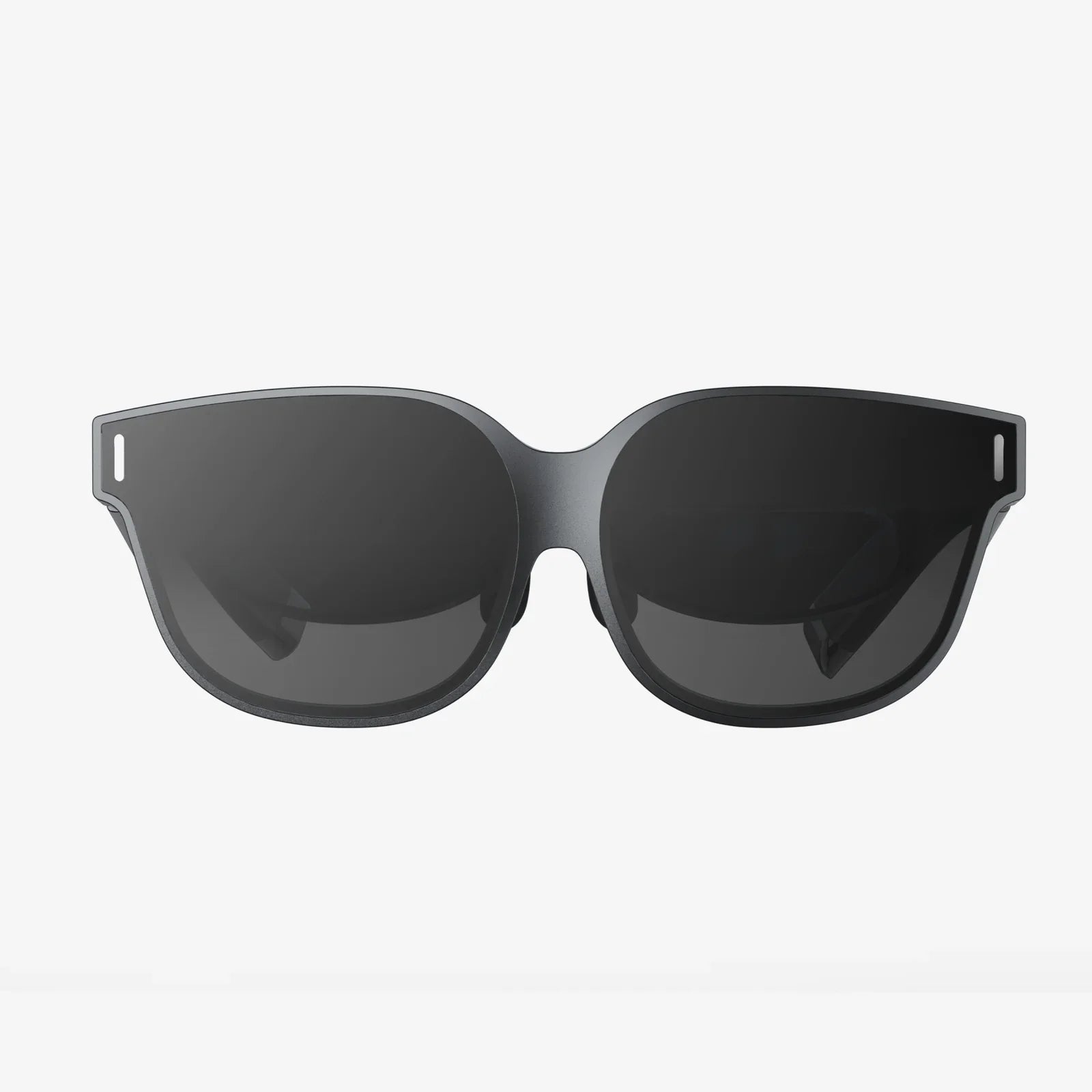
- by wangfred
AR Glasses India: The Dawn of a New Visual Revolution
- by wangfred
Imagine walking through a bustling Indian market, and with a simple voice command, real-time translations of street signs appear before your eyes. A mechanic, deep in a remote village, receives expert guidance with digital arrows and instructions overlaid directly onto a faulty engine. A medical student in Mumbai practices a complex surgical procedure on a holographic patient. This is not a distant science fiction fantasy; it is the imminent future being unlocked by Augmented Reality (AR) glasses, a technological wave that is poised to crash upon the shores of India, reshaping reality as we know it.
Before delving into the Indian narrative, it's crucial to understand what sets this technology apart. Augmented Reality glasses are wearable computers that blend digital information—images, videos, 3D models, and data—seamlessly with the user's view of the physical world. Unlike Virtual Reality (VR), which creates a completely immersive digital environment, AR enhances the real world, making it interactive and contextually intelligent.
The core components enabling this magic include:
Globally, the technology has evolved from clunky, expensive prototypes to more refined, enterprise-focused devices and is now inching towards consumer-ready spectacles. This global progression sets the stage for its adoption in a market as vast and complex as India.
India presents a unique and fascinating landscape for the adoption of any transformative technology. Its massive population, rapid digitalization, and thriving tech talent pool create a fertile ground for innovation. However, this is balanced by significant infrastructural and economic hurdles.
The adoption will be a story of gradual infiltration, beginning with sectors where the Return on Investment (ROI) is most clear and immediate.
In manufacturing, technicians wearing AR glasses can see digital work instructions overlaid directly on the machinery they are repairing. They can stream their point-of-view to a remote expert thousands of kilometers away who can then annotate their real-world view with arrows, circles, and notes, guiding them through complex procedures. This reduces downtime, minimizes travel costs for specialists, and upskills the workforce rapidly. In architecture and real estate, developers can walk clients through holographic models of buildings yet to be constructed, allowing for immersive design changes and virtual property tours.
Textbook diagrams of the human heart can spring to life as a beating, interactive 3D model that students can walk around and explore. History lessons can transport students to virtual recreations of ancient Indian civilizations. Complex scientific concepts in physics and chemistry can be visualized and manipulated, transforming abstract theory into tangible understanding. This has the power to bridge the quality gap in education between urban and rural India.
Surgeons can have critical patient vitals, ultrasound data, or pre-operative scans displayed in their field of view without looking away from the operating table. Medical students can practice procedures on detailed holographic patients, making mistakes without consequences. Perhaps most transformative is the potential for telemedicine: a community health worker in a village, equipped with AR glasses, could be guided by a doctor in a metropolitan hospital to perform a preliminary examination, vastly expanding the reach of quality healthcare.
Imagine visualizing how a new sofa would look in your living room, trying on dozens of outfits virtually, or seeing how a new shade of paint would transform your walls—all from your home. AR glasses will merge the convenience of online shopping with the confidence of physical retail, reducing return rates and creating engaging new customer experiences.
For this future to be realized, a collaborative effort is essential. The government can play a pivotal role by fostering innovation through supportive policies, funding research and development in core technologies, and integrating AR into public sector projects, especially in education and healthcare. Educational institutions must begin incorporating AR/VR development into their curricula to build a future-ready workforce.
Investors need to look beyond short-term gains and fund deep-tech startups working on solving the fundamental challenges of cost, hardware, and content creation. The industry must focus on forming partnerships—between hardware makers, software developers, telecom providers, and enterprise clients—to create integrated solutions rather than working in silos.
The journey will be iterative. The first wave will be enterprise-led, driven by clear productivity gains. This will, in turn, fuel innovation, drive down costs, and lead to the development of more refined and affordable consumer devices. As the ecosystem matures, we will see the emergence of a killer app—the equivalent of a "WhatsApp" or "Uber" for AR—that will catapult the technology into the mainstream consciousness.
The convergence of 5G, edge computing, artificial intelligence, and advanced optics is creating a perfect storm for augmented reality to finally take off. India, with its unique blend of challenges and opportunities, is not just a passive market for this global trend. It has the potential to become a global hub for AR innovation, developing frugal engineering solutions and impactful applications that could be exported to the world. The glasses through which India will view its future are being designed today, and they promise a vision where the digital and physical worlds are no longer separate, but are woven together into a richer, more informed, and infinitely more connected reality.
The next time you look at the world around you, remember—it's a blank canvas. Soon, with a simple pair of glasses, we will all become artists, painting it with data, stories, and possibilities limited only by our imagination.