


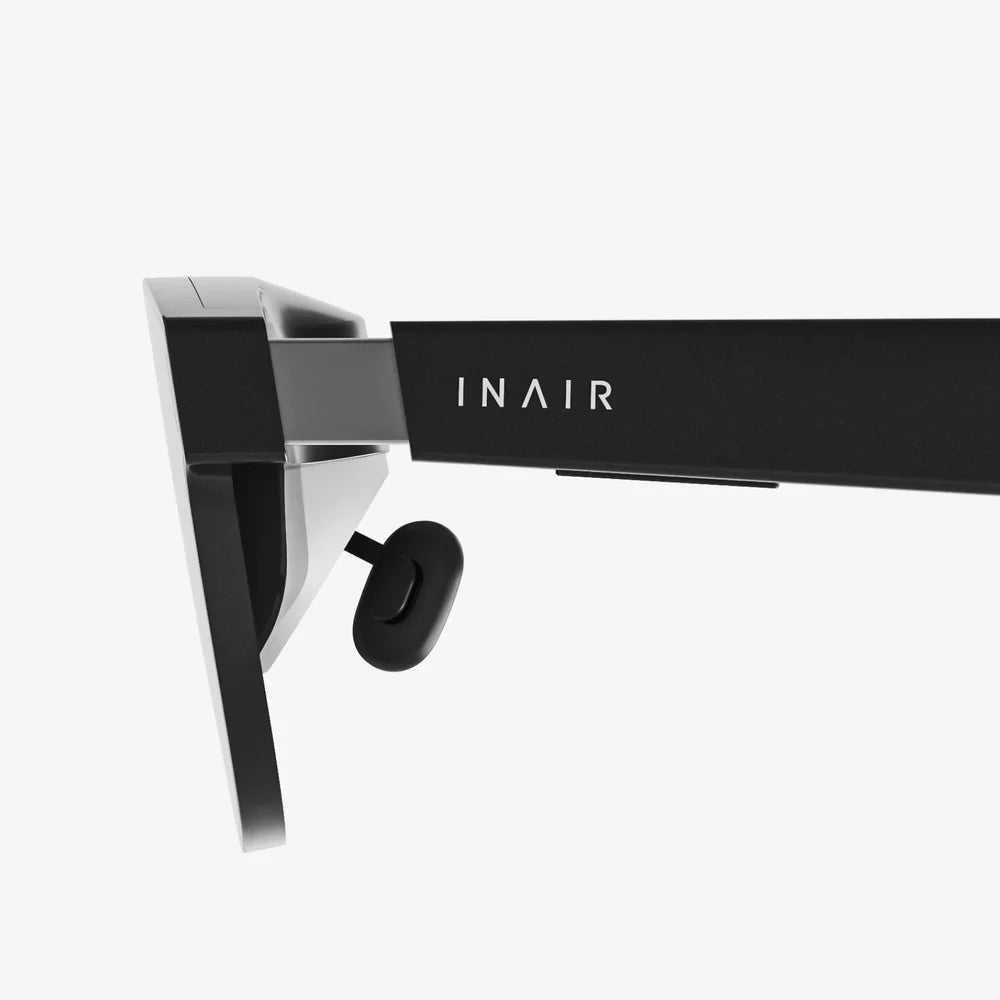
The sleek, futuristic frames you once saw only in science fiction are rapidly materializing on factory lines and in research labs across the globe. The buzz surrounding augmented reality glasses has reached a fever pitch, not as a distant promise but as a tangible, fast-approaching reality. This isn't just about a new gadget; it's about a fundamental shift in how we interact with information, our environment, and each other. The industry is in a state of exhilarating flux, with every week bringing a new headline, a new partnership, or a new technological leap that brings the dream of seamless digital overlay closer to our everyday lives. For those watching closely, the AR glasses industry news is a thrilling narrative of innovation, competition, and the birth of what many believe will be the next major computing platform.
Beyond the Hype: A Market Poised for Exponential Growth
Recent market analysis reports have painted a staggeringly optimistic picture for the AR hardware sector. After years of being perceived as a niche market for enterprise and developers, forecasts now predict a compound annual growth rate that dwarfs many other tech sectors. This surge is not based on speculation alone but is underpinned by a significant increase in venture capital funding, strategic corporate investments, and a clear roadmap from some of the world's most influential technology companies. The narrative has decisively shifted from "if" to "when" and "how." Industry news is dominated by these financial movements, signaling deep-seated confidence that consumer-grade AR glasses will achieve the price-performance ratio necessary for mass adoption within this decade.
Enterprise Adoption: The Stealth Engine Driving Innovation
While consumer applications capture the imagination, the real-world success stories and revenue are currently flowing from the enterprise sector. This is a critical piece of industry news that often gets overshadowed by flashier consumer concepts. Companies in manufacturing, logistics, field services, and healthcare are deploying AR glasses at an accelerating rate, realizing immense returns on investment. Technicians are using them to overlay repair manuals and schematic diagrams onto complex machinery, seeing step-by-step instructions hands-free. Warehouse workers are guided by visual cues to pick items faster and with fewer errors. Surgeons are accessing vital patient data and imaging without looking away from the operating field.
These enterprise applications are not just generating crucial revenue for AR companies; they are serving as the ultimate testing ground. They are proving the technology's utility in high-stakes, real-world environments, providing invaluable data on user interface design, battery life demands, connectivity needs, and hardware durability. This feedback loop is directly fueling the development of more advanced, comfortable, and affordable consumer models. The lessons learned on the factory floor are directly informing the design for the living room.
The Form Factor Revolution: From Bulky Headsets to Stylish Spectacles
Perhaps the most visually obvious trend in recent industry news is the dramatic evolution of design. The first generation of AR devices were often bulky, tethered, and socially isolating headsets. Today, the relentless pursuit of miniaturization is yielding results. The holy grail remains a pair of glasses that are indistinguishable from regular eyewear in terms of weight, size, and style, yet packed with powerful computing capabilities.
Breakthroughs in micro-optics, such as waveguides and holographic gratings, are allowing for thinner and more efficient projection systems. Advances in micro-LED displays are providing the incredible brightness and efficiency needed for clear images in various lighting conditions, all while consuming minimal power. The integration of sophisticated spatial audio speakers into the temples of glasses is becoming more refined. This convergence of advancements is making the dream of all-day wearable AR a tangible engineering goal rather than a fantasy.
The Connectivity Conundrum: 5G and Wi-Fi 6E as Essential Enablers
For AR glasses to deliver truly immersive, low-latency experiences, they require a constant, high-bandwidth, and ultra-responsive connection to the cloud and other devices. This is where the latest in wireless technology becomes front-page industry news. The rollout of 5G networks, with their high speed and low latency, is a game-changer. It enables complex rendering to be offloaded from the device itself to more powerful cloud servers, a concept known as cloud rendering or edge computing. This means the glasses can be lighter and more energy-efficient, as they don't need to house a supercomputer on someone's face.
Similarly, Wi-Fi 6E is providing a massive boost for indoor and local area connectivity, ensuring seamless streaming of high-fidelity AR content and robust multi-user experiences within the same environment. The development of these connectivity standards is not happening in a vacuum; it is happening in lockstep with the AR industry, each fueling the advancement of the other.
The Battle for the Ecosystem: Operating Systems and App Development
Hardware is only one piece of the puzzle. The real war for dominance in the AR space will be won or lost on the software and ecosystem front. Recent industry news has been ablaze with announcements regarding new operating systems built specifically for spatial computing. These platforms are designed to manage how digital content interacts with the physical world, understanding surfaces, depth, and occlusion.
The push to attract developers is more intense than ever. Software development kits are becoming more powerful and accessible, lowering the barrier for creators to build compelling AR applications. The emergence of robust app stores dedicated to spatial experiences is anticipated to follow the hardware launches, creating a virtuous cycle where better hardware attracts more developers, whose better apps, in turn, drive more hardware sales. The company that successfully builds the definitive AR platform—the equivalent of iOS or Android for this new medium—will hold immense power.
Content is King: The Rise of Spatial Experiences
An AR glasses platform is nothing without compelling content. Industry news is increasingly focused on the creation of this new content medium. This goes far beyond simple filters and overlays. We are seeing the development of full-fledged spatial experiences: immersive navigation cues painted onto the streets, interactive learning models hovering over textbooks, live sports statistics and replays integrated into the broadcast view, and persistent digital art installations located in public spaces.
Major players in media, gaming, and education are investing heavily in R&D departments focused exclusively on spatial content. The storytelling language for AR is being written right now, exploring how to guide user attention, create intuitive interactions, and build narratives that blend seamlessly with reality. This creative explosion is a sure sign that the industry is maturing beyond the technology itself and focusing on the human experience.
Navigating the Hurdles: Privacy, Safety, and Social Acceptance
Amidst the excitement, sobering headlines remind the industry of the significant challenges that remain. The concept of devices with always-on cameras and sensors raises profound privacy concerns. Industry leaders are proactively addressing this, developing hardware features like physical camera shutters and LED recording indicators, alongside software frameworks that ensure user data is handled transparently and ethically.
Safety is another paramount issue, particularly for glasses meant to be worn while navigating the real world. How do we ensure that immersive digital content does not become a dangerous distraction? Solutions involve sophisticated context-aware systems that can dim or pause content during critical tasks like crossing a street or operating a vehicle. Furthermore, the industry must navigate the path to social acceptance—transitioning AR glasses from a conspicuous geeky device to a socially normalized piece of technology, much like Bluetooth earpieces evolved into AirPods.
A Glimpse into the Immediate Future: What to Watch For
The next 12 to 24 months are poised to be the most transformative period in the industry's history. The headlines will likely be dominated by several key events: the launch of second-generation devices from major players with significantly improved specifications, the announcement of strategic partnerships between tech giants and traditional eyewear companies to marry fashion with technology, and potentially, the unveiling of the first true "killer app" that demonstrates the indispensable utility of AR to a mass audience.
Furthermore, keep an eye on advancements in key enabling technologies like battery innovation, which is crucial for all-day wear, and eye-tracking, which enables intuitive interface control and revolutionary new forms of user interaction and accessibility.
The arc of technological progress is bending decisively toward our eyes. The continuous stream of AR glasses industry news is your live feed into this revolution, documenting every stumble, leap, and breakthrough along the way. This is no longer a peripheral niche in the tech world; it is the main stage being set for the next act of human-computer interaction. The devices that will fundamentally reshape our reality are being forged in labs today, and their arrival will redefine everything from how we work and learn to how we play and connect. The future is not just bright; it's augmented.
Share:
VR React: Building Immersive Virtual Reality Experiences with Modern Web Technology
AI Tools for Everyday Use: The Invisible Revolution Reshaping Your Daily Life