


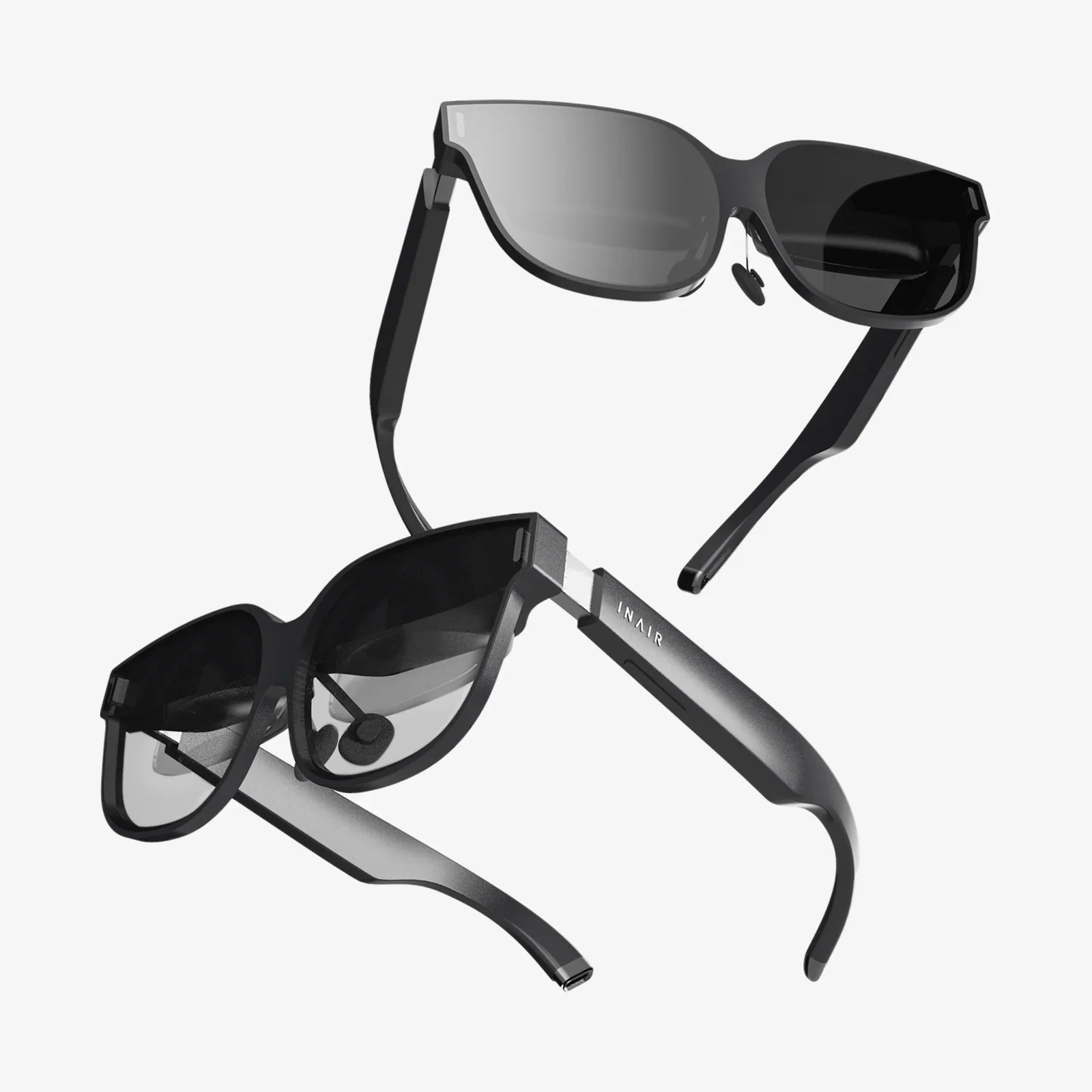
Imagine a world where digital information doesn't live on a screen in your hand, but is seamlessly woven into the fabric of your reality. Directions float on the street before you, a colleague's avatar helps you fix a complex engine from across the globe, and the history of a monument unfolds before your eyes as you gaze upon it. This is the promise of augmented reality, and at the very heart of every device striving to deliver this vision lies a single, critical component: the AR glasses module. This isn't just another piece of tech; it's the condensed soul of the machine, the tiny universe of optics and electronics that will determine whether AR becomes a transformative tool or a forgotten gimmick. The race to perfect this module is the silent battle defining our next computing revolution.
Deconstructing the Module: More Than Meets the Eye
To call an AR glasses module simply a "display" is a profound understatement. It is a feat of micro-engineering, a highly integrated system that combines several advanced technologies into a single, compact unit designed to be worn on the face. Its primary mission is to generate a digital light field and superimpose it onto the user's view of the real world, but its responsibilities extend far beyond that.
The module's architecture typically consists of several core subsystems:
- The Microdisplay Engine: This is the digital canvas, the source of the image. Technologies here are diverse and fiercely competitive. MicroLED arrays are often hailed as the holy grail for their incredible brightness, high resolution, and energy efficiency, though manufacturing them at scale remains a significant challenge. Liquid Crystal on Silicon (LCoS) and advanced OLED on Silicon (OLEDoS) are other prominent contenders, each with trade-offs in brightness, contrast, and power consumption. The choice of microdisplay technology directly dictates the module's potential clarity and viability in various lighting conditions.
- The Optical Combiner (Waveguide): If the microdisplay is the projector, the optical combiner is the magical screen that makes the image appear to float in space. This is arguably the most complex and proprietary element within the module. Waveguide technology, which uses microscopic gratings to bend and direct light from the display into the eye, has become the dominant approach for sleek, glasses-like form factors. Designing these waveguides involves navigating immense challenges in field of view (FOV), eyebox (the sweet spot where the image is visible), clarity, and optical efficiency. A larger FOV is desirable for immersion, but it often conflicts with making the module small and light.
- The Projection Lenses and Beam Shaping Optics: Between the display and the combiner lies a series of precise lenses and prisms. This assembly takes the raw image from the microdisplay, corrects for aberrations, and prepares the light beams to be correctly injected into the waveguide. The precision of these components is measured in microns, and any misalignment can result in a blurry or distorted image.
- Sensing and Tracking Suite:
Modern AR modules are not just output devices; they are also input devices. They must understand the world to interact with it. This is why high-end modules often integrate a suite of sensors directly into their housing. This can include:
- Cameras: Used for simultaneous localization and mapping (SLAM), object recognition, and gesture tracking. They constantly scan the environment to understand surfaces, depth, and the position of the user within the space.
- Inertial Measurement Units (IMUs): These accelerometers and gyroscopes provide high-frequency data on the head's movement and orientation, crucial for stabilizing the digital overlay and preventing latency-induced motion sickness.
- Eye-Tracking Cameras: By monitoring the user's pupils, these sensors enable foveated rendering—a technique where the highest resolution is rendered only where the user is looking, drastically reducing the processing power required. They also enable intuitive UI interactions based on gaze.
- Depth Sensors: Some modules incorporate dedicated time-of-flight (ToF) or structured light sensors to precisely map the geometry of the environment in 3D, essential for placing virtual objects that convincingly occlude and interact with real ones.
Integrating these sensors into the module itself, rather than elsewhere on the glasses frame, minimizes calibration errors and ensures a unified and accurate spatial understanding.
The Relentless Pursuit of the Perfect Form Factor
The history of AR glasses modules is a story of miniaturization and integration. Early prototypes and industrial systems were bulky, helmet-mounted affairs with limited utility. The driving force behind module evolution has been the consumer desire for a product that resembles ordinary eyeglasses.
This pursuit is a constant battle against physics. A wider field of view traditionally requires larger optics, directly opposing the goal of a small, lightweight module. Similarly, adding more sensors and a brighter display increases power consumption and thermal output, demanding larger batteries and heat dissipation solutions that add weight and bulk.
Breakthroughs in materials science, nanofabrication for waveguides, and more efficient microdisplays have allowed engineers to slowly bend these constraints. The transition from birdbath optics to pancake lenses to advanced waveguides represents a journey toward thinner and more socially acceptable designs. The ultimate goal remains a module that is powerful enough for compelling AR experiences yet small and efficient enough to be packaged into a form factor indistinguishable from standard prescription glasses. We are not there yet, but the trajectory is clear.
Manufacturing: The Precision Engineering Challenge
Producing AR glasses modules is not like assembling a smartphone. The tolerances are astronomical, and the process is closer to crafting a scientific instrument than consumer electronics. Aligning the microdisplay to the injection optics, which must then be perfectly married to the waveguide, is a task that often requires active alignment—a process where components are adjusted in real-time while a laser beam is run through the system to ensure optimal performance.
This painstaking process is a major barrier to mass production and a key reason why high-performance AR glasses remain expensive. Automation and new assembly techniques are being developed to tackle this, but yield rates for perfect modules are still a primary concern for manufacturers. The cleanliness of the production environment is also critical, as a single speck of dust trapped inside the module can appear as a permanent blob in the user's augmented view, rendering the unit faulty.
Beyond Consumer Entertainment: Enterprise and Specialized Applications
While consumer applications like gaming and social media often grab headlines, the most impactful use cases for AR modules today are in enterprise and specialized fields. Here, the value proposition is so high that the current limitations of form factor and cost are more easily overcome.
- Field Service and Repair: A technician wearing AR glasses can see schematics, instruction manuals, and expert guidance overlaid directly on the machinery they are repairing, freeing their hands and drastically reducing error rates and training time.
- Healthcare and Surgery: Surgeons can visualize patient data like MRI scans or vital signs directly in their line of sight without looking away from the operating table. Medical students can learn anatomy through interactive 3D models projected onto a cadaver.
- Logistics and Warehousing: Warehouse workers can have order-picking information and optimal routing directions displayed in their vision, significantly accelerating fulfillment processes and reducing fatigue.
- Design and Architecture: Architects and engineers can walk through full-scale 3D models of their designs before a single foundation is poured, allowing for immersive collaboration and design validation.
In these scenarios, the AR glasses module is not a toy; it is a powerful tool for enhancing human capability, safety, and efficiency.
The Future is Modular and Connected
As the technology matures, we may see the rise of a more modular ecosystem. One compelling vision is the concept of a standalone processing unit, perhaps in the form of a small smartphone-like device or even a dedicated chipset worn on the body. This "brain" would handle the intense number crunching for SLAM, rendering, and AI, communicating wirelessly with the glasses module on the face.
This separation would allow the module itself to become even lighter and more comfortable, as it would only need to house the core display, optics, and sensors. The user could then upgrade their processing power independently of their display, or vice versa. Furthermore, the module itself could become a standardized component, allowing different manufacturers to create glasses frames for various purposes—safety, fashion, prescription—all powered by the same core AR engine.
Ethical and Social Considerations on the Horizon
The power of the AR glasses module comes with profound societal questions. A device that can seamlessly record everything the user sees raises immense privacy concerns for both the wearer and those around them. The ability to alter perception opens the door to new forms of misinformation and advertising, where the very reality around us could be sponsored or manipulated.
These are not problems for the engineers designing the modules to solve alone, but they are intrinsic to the technology they are building. The industry will need to engage with policymakers, ethicists, and the public to establish norms, regulations, and built-in safeguards—like clear recording indicators and ethical design frameworks—to ensure this powerful technology develops responsibly.
The tiny, unassuming AR glasses module, for all its technical complexity, is a gateway. It is the physical bridge between our analog past and a digitally-augmented future. Its continued evolution will determine not just what is possible, but how we choose to integrate these possibilities into the human experience. The companies and innovators who conquer the immense challenges of brightness, size, field of view, and cost will not just be selling a product; they will be defining the lens through which we will all someday see the world.
Share:
Top AI Use Cases 2025: The Most Transformative Applications Shaping Our Future
Prescription AR Safety Glasses: The Ultimate Guide to Next-Generation Eye Protection