


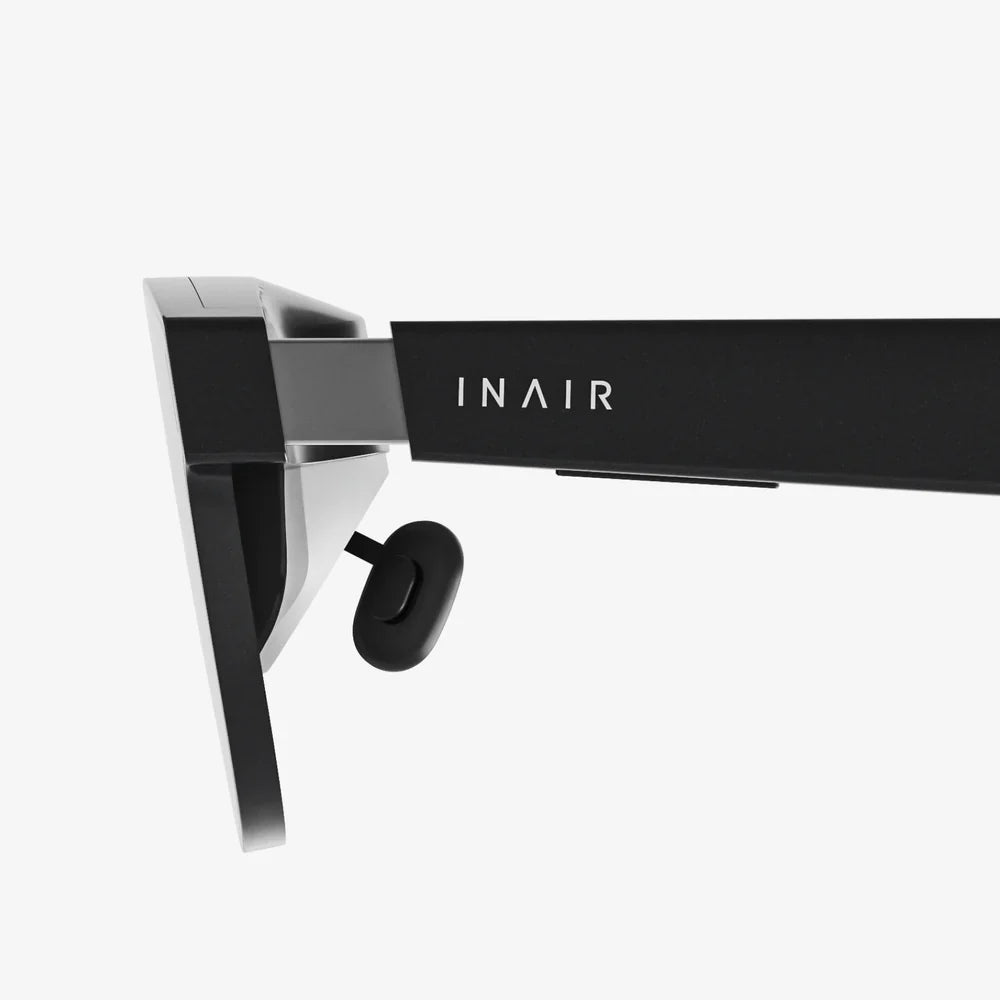
Imagine your entire digital world—every application, browser tab, and video stream—floating perfectly in space before you, accessible with a glance, utterly untethered from a physical slab of glass on your desk. This isn't a scene from a science fiction film; it's the imminent reality promised by the rapid evolution of augmented reality glasses, a technology swiftly moving from a niche gadget to a serious contender for the most important piece of hardware you own: your computer monitor. The concept of AR glasses as a monitor replacement is no longer a futuristic fantasy but a tangible revolution, one that will fundamentally alter our relationship with work, entertainment, and the very space around us. This shift promises to liberate us from the tyranny of the desk, offering a seamless, boundless, and deeply personal computing experience that a traditional display could never hope to match.
The Inevitable Convergence: From Pixels in a Frame to a Canvas of Reality
The history of the computer monitor is one of incremental improvement: bigger sizes, higher resolutions, faster refresh rates, and slimmer bezels. Yet, its core function has remained unchanged for decades: to act as a stationary portal into the digital realm. We have contorted our physical lives—our postures, our office layouts, our homes—to accommodate these glowing rectangles. Augmented reality glasses represent a paradigm break from this model. Instead of going to the portal, the portal comes to you, overlaying digital information onto your perception of the real world.
The underlying technology making this possible is advancing at a staggering pace. Modern waveguide optics, micro-OLED displays smaller than a postage stamp but sharper than a 4K monitor, and sophisticated spatial tracking systems work in concert to project vibrant, stable virtual screens that feel as real as your physical desk. These are not the low-resolution, jittery experiences of a decade ago. Today's prototypes and consumer-grade devices can already deliver stunning high-definition visuals that are more than adequate for text, code, and high-fidelity media, effectively functioning as a wearable monitor replacement for a wide array of tasks.
Unshackled Productivity: The Infinite Workspace Revolution
The most immediate and compelling application for AR glasses is in the realm of productivity. For knowledge workers, developers, designers, and anyone who lives inside multiple applications simultaneously, the traditional monitor setup is a constant constraint. We buy massive ultra-wide screens or link together multiple displays in a desperate attempt to expand our digital real estate, yet we are always bounded by the physical limits of our desks and the edges of the panels.
AR glasses obliterate these constraints. They offer the promise of a truly infinite workspace. Imagine:
- Effortlessly pinning your email client to the wall on your left.
- Having your coding environment or design canvas float directly in front of you at a perfect ergonomic distance.
- Keeping a vital reference document or communication Slack channel open on your right.
- All without a single physical cable or bezel to break your flow.
This environment is not just bigger; it's smarter and more context-aware. Your virtual monitors are no longer tied to a specific location. You can work from your desk, then move to your couch or a coffee shop, and your entire multi-screen setup moves with you, perfectly arranged. This portability transforms the device into the ultimate tool for remote work and digital nomadism. Your office is wherever you are. Furthermore, the ability to resize, position, and layer windows in 3D space adds a new dimension to organizing information, allowing for workflows that are simply impossible on a flat, 2D plane.
Beyond the Office: Redefining Entertainment and Personal Computing
While productivity is a killer app, the implications extend far beyond the workday. The concept of a personal theater is completely reimagined. Instead of watching a movie on a TV that dominates a room or on a small laptop screen, you can project a massive, cinema-quality screen onto a blank wall—or even into the black void of space—from the comfort of your favorite chair or while lying in bed. The audio can be piped seamlessly through accompanying earbuds for a fully immersive, private experience that doesn't disturb others and isn't limited by room size.
For gamers, the potential is even more profound. AR glasses can transform a standard living room into a hybrid game board, overlaying game elements onto your physical furniture or allowing strategy games to sprawl across your entire table. While VR fully replaces your vision for immersion, AR enhances your reality, creating new genres of social and spatial gameplay that blend the digital and physical. This seamless integration also extends to everyday computing. Checking a recipe can be done with a virtual screen hovering just above your mixing bowls, following you as you move around the kitchen. Video calls can place life-sized representations of loved ones in your living room, making conversations feel more natural and present than a grid of faces on a monitor ever could.
Overcoming the Hurdles: The Path to Mainstream Monitor Replacement
For all its promise, the vision of AR glasses as a ubiquitous monitor replacement is not without significant challenges that must be overcome for widespread adoption.
- Form Factor and Comfort: To be worn for extended periods, perhaps an entire workday, the glasses must be lightweight, comfortable, and socially acceptable. Current technology often struggles with a balance between power, performance, and size. The ideal device should be no more obtrusive than a heavy pair of sunglasses. Advances in materials and miniaturization are crucial here.
- Visual Fidelity and Ergonomics: While resolution is high, other factors like text clarity (a challenge known as the "screen door effect" in early devices), color accuracy, brightness for use in well-lit environments, and sufficient field of view to feel natural are all areas of active development. Furthermore, long-term eye strain is a concern that developers are addressing with advanced focus planes and dynamic lighting adjustment.
- Battery Life and Processing Power: Driving high-resolution virtual displays requires significant power. Whether the processing is done on-board the glasses, via a wired connection to a phone or computer, or through a wirelessly connected companion device, the system needs to deliver all-day battery life without becoming a burden.
- Software and Ecosystem: The hardware is nothing without a robust operating system and application ecosystem. Developers need to create and adapt apps to function within a 3D spatial context. Operating systems must provide intuitive and consistent ways to manage these virtual windows, with gestures, voice commands, or a companion device that feels natural and powerful.
These are formidable challenges, but the trajectory of technology suggests they are solvable. Each year brings lighter materials, more efficient chips, brighter micro-displays, and more sophisticated software.
A Glimpse into the Future: The Always-Available Interface
Looking further ahead, the replacement of the monitor is merely the first step. The true endgame for AR glasses is to become our primary, always-available interface to the digital world—a constant companion that enhances our perception and cognition. Beyond static screens, we will interact with 3D data models we can walk around, receive contextual information about people we meet and places we see, and have AI assistants visualized right beside us, capable of pulling information from the cloud and presenting it exactly when and where we need it.
This transition will be as profound as the move from the command line to the graphical user interface. It will redefine not just how we work, but how we learn, socialize, and navigate our lives. The physical monitor, a technology that has served us so well, will likely never disappear entirely, much like dedicated cameras persist in a world of powerful smartphone cameras. But its role will diminish, becoming a specialized tool for specific high-end applications rather than the default gateway to computing.
The journey toward this future is already underway. Early adopters are already using these devices to code on virtual screens on trains, play games on tabletops, and watch movies on imagined giant screens in their bedrooms. The technology is proving its value. As the hurdles of form, function, and affordability are cleared, we will witness a mass migration away from the static, limited monitor toward the dynamic, infinite, and personal canvas offered by augmented reality. It is a shift from computing as a place you go, to computing as an environment that is always with you, seamlessly woven into the fabric of your reality.
The era of being chained to a desk, squinting at a fixed rectangle of light, is finally coming to an end. The next time you find yourself wishing for just one more monitor, or struggling to get comfortable with your laptop on the couch, know that a solution is emerging—one that will not just add another screen, but will replace the very concept of a screen altogether, offering a universe of information, perfectly placed in your world, waiting for you to look up and see it.
Share:
VR Headset with Controller: Your Ultimate Portal to Immersive Digital Worlds
What Is AR and MR? A Deep Dive Into Our Blended Reality