


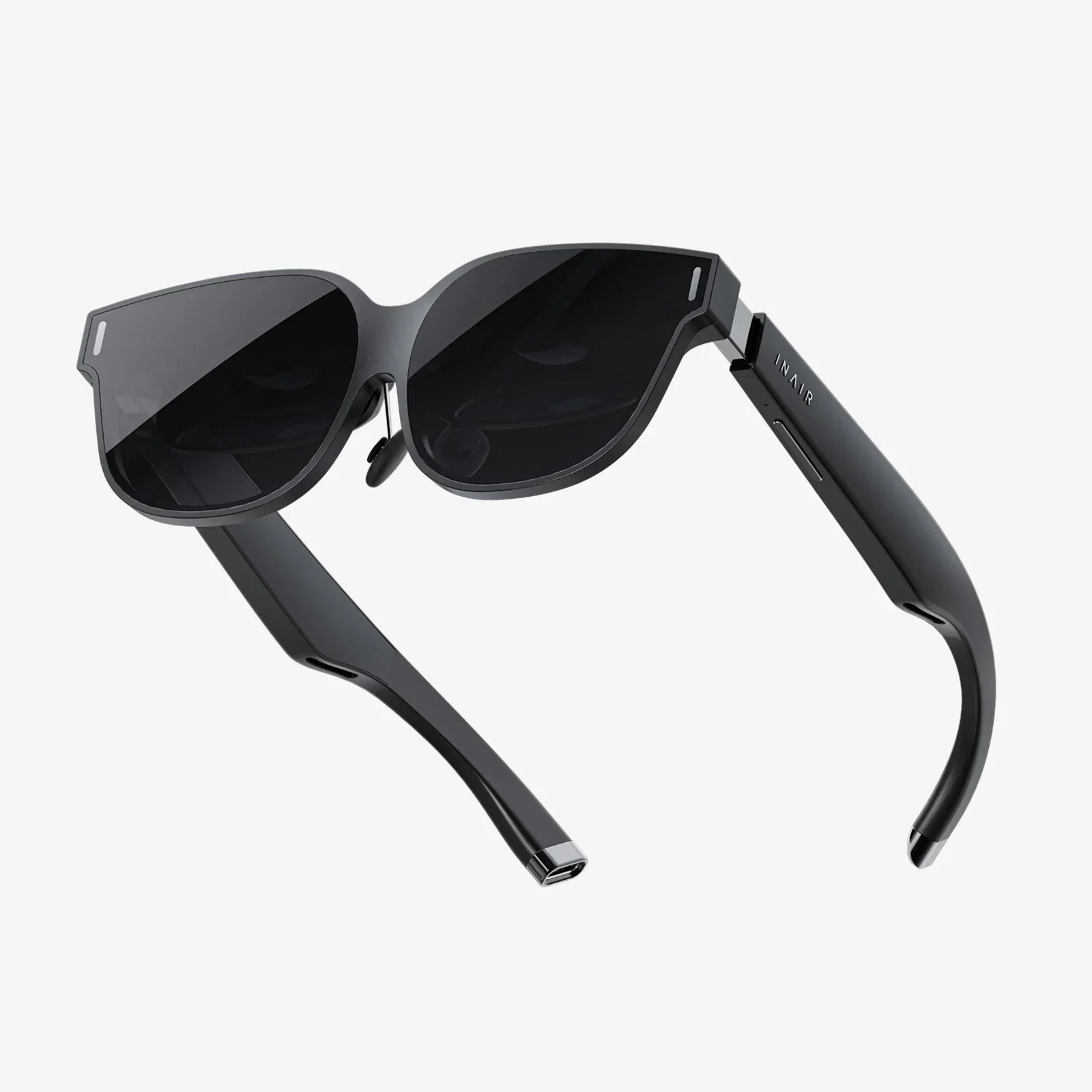
Imagine your workspace, unbounded by the physical limits of your desk. Your research material floats to your left, your primary writing document sits centered in your field of view, a communication window with your team hovers discreetly to the right, and your favorite music app is pinned just above, all visible not on clunky monitors, but through a pair of sleek, lightweight glasses. This isn't a scene from a science fiction film; it's the imminent reality powered by AR glasses with multiple screens, a technological leap that promises to shatter the confines of our two-dimensional digital worlds and redefine personal productivity, entertainment, and connectivity.
The Evolution of the Digital Workspace: From One to Infinity
For decades, the paradigm of personal computing has been tethered to the screen. We progressed from single, monolithic cathode-ray tubes to multiple flat-panel displays, each iteration offering more real estate but always constrained by physical space, cost, and cabling. The quest for more screen space was a linear one: buy a bigger monitor, add a second, then a third. This approach, while effective, hits a hard wall defined by the dimensions of our walls and the reach of our wallets. Augmented Reality glasses represent a fundamental break from this tradition. Instead of adding more physical glass, they project virtual screens into our perception of the real world, effectively offering an infinite desktop limited only by the processing power of the companion device and the resolution of the displays within the glasses.
How It Works: The Magic Behind the Virtual Canvases
The core technology enabling this multi-screen marvel is a sophisticated blend of hardware and software. Inside the AR glasses, miniature displays, often using waveguide or holographic optical elements, project high-resolution images directly into the user's eyes. These optical systems are engineered to be see-through, allowing the digital screens to appear superimposed onto the physical environment. Advanced sensors, including gyroscopes, accelerometers, and sometimes lidar or depth sensors, constantly track the user's head movements and the geometry of the surrounding space. This tracking is crucial. It allows the virtual screens to be "pinned" in space. When you turn your head, the screens remain locked in their position, just like a physical monitor on your desk would. This creates a stable, believable illusion of persistent digital objects coexisting with reality.
Unleashing Productivity: A New Era of Focus and Flow
The most immediate and profound impact of AR multiple screens is on productivity. The ability to create a bespoke, panoramic digital workspace tailored to a specific task is transformative.
The Ultimate Focus Environment
With traditional monitors, distractions are a click away. With AR, you can dedicate an entire virtual screen to your deep work application—be it a complex code editor, a detailed CAD model, or a writing interface—freeing it from the clutter of other apps. Notifications can be relegated to a separate, smaller screen outside your immediate focus, reducing context-switching and preserving a state of flow.
Contextual Computing
Imagine repairing a complex piece of machinery with the schematic diagram floating right next to it, or practicing a speech with your notes visible only to you. AR multiple screens provide information contextually and spatially, aligning data with the relevant objects and tasks in the real world, drastically reducing cognitive load and error rates.
Seamless Mobility
Your entire multi-screen setup is no longer anchored to a desk. It travels with you. A developer can have a full coding environment on a train, a financial analyst can review live market data and reports from a coffee shop, and a creative professional can edit a video timeline while referencing source footage on separate virtual displays, all without carrying anything more than their glasses and a computing device.
Beyond the Office: Revolutionizing Entertainment and Social Connection
The applications extend far beyond work. The entertainment potential is staggering. Users can project a massive, private cinema screen onto a blank wall while traveling or lying in bed. For gaming, virtual HUDs and informational panels can surround the player, creating an immersive experience that blends the game world with their living room. Socially, this technology could allow for shared virtual spaces where friends and family, regardless of physical location, can watch movies together on a virtual big screen or collaborate on a virtual whiteboard, feeling a sense of shared presence that video calls cannot replicate.
Navigating the Challenges: The Path to Mainstream Adoption
For all its promise, the vision of ubiquitous AR multi-screen use faces significant hurdles that must be overcome.
The Form Factor Dilemma
Current generations of capable AR glasses often struggle with balancing performance, battery life, and aesthetics. The goal is to achieve a form factor that is socially acceptable, comfortable for all-day wear, and comparable to standard eyewear. Advances in micro-OLED displays, battery technology, and processing efficiency are rapidly driving us toward this goal.
User Interface and Interaction
How do we interact with a dozen floating screens without a traditional keyboard and mouse? The solution lies in a combination of voice commands, hand tracking, gesture recognition, and innovative wearable controllers. Developing intuitive, frictionless, and socially courteous interaction paradigms is a critical area of ongoing research and development.
Digital Eye Strain and Safety
Prolonged use of near-eye displays raises valid concerns about visual fatigue. Manufacturers are addressing this through techniques like high refresh rates, accurate depth rendering, and ensuring virtual screens are placed at comfortable focal distances. Furthermore, full situational awareness is paramount; the technology must be designed to keep users aware of their physical surroundings for safety.
The Future is Spatial: What Lies Ahead
As the technology matures, the concept of "multiple screens" will evolve into something even more integrated. We will move beyond simply mimicking 2D rectangles in space. Screens will become dynamic, fluid objects that can be curved, resized, and manipulated in three dimensions. Data visualizations will become truly volumetric, and information will be tagged directly to objects and locations, creating a world where the digital and physical are seamlessly woven together. The device itself will likely converge, moving from a companion model reliant on a separate processing unit to a standalone, all-in-one pair of glasses powered by increasingly potent on-device AI.
The era of hunched shoulders and neck strain from peering at small laptop screens is drawing to a close. AR glasses offering multiple, customizable virtual displays are not merely an incremental upgrade; they are the key to a spatial computing revolution. They promise to liberate our digital lives from the shackles of brick-and-mortar setups, empowering us to work, learn, play, and connect in ways that are more natural, immersive, and profoundly human-centric. The infinite desktop is calling, and it’s waiting for you to put on your glasses and step into a world where your digital canvas is as vast as your imagination.
Share:
Future of Workplace Technology: Redefining Productivity, Culture, and Human Potential
HD Virtual Reality Headset: The Ultimate Portal to Unparalleled Immersive Experiences