


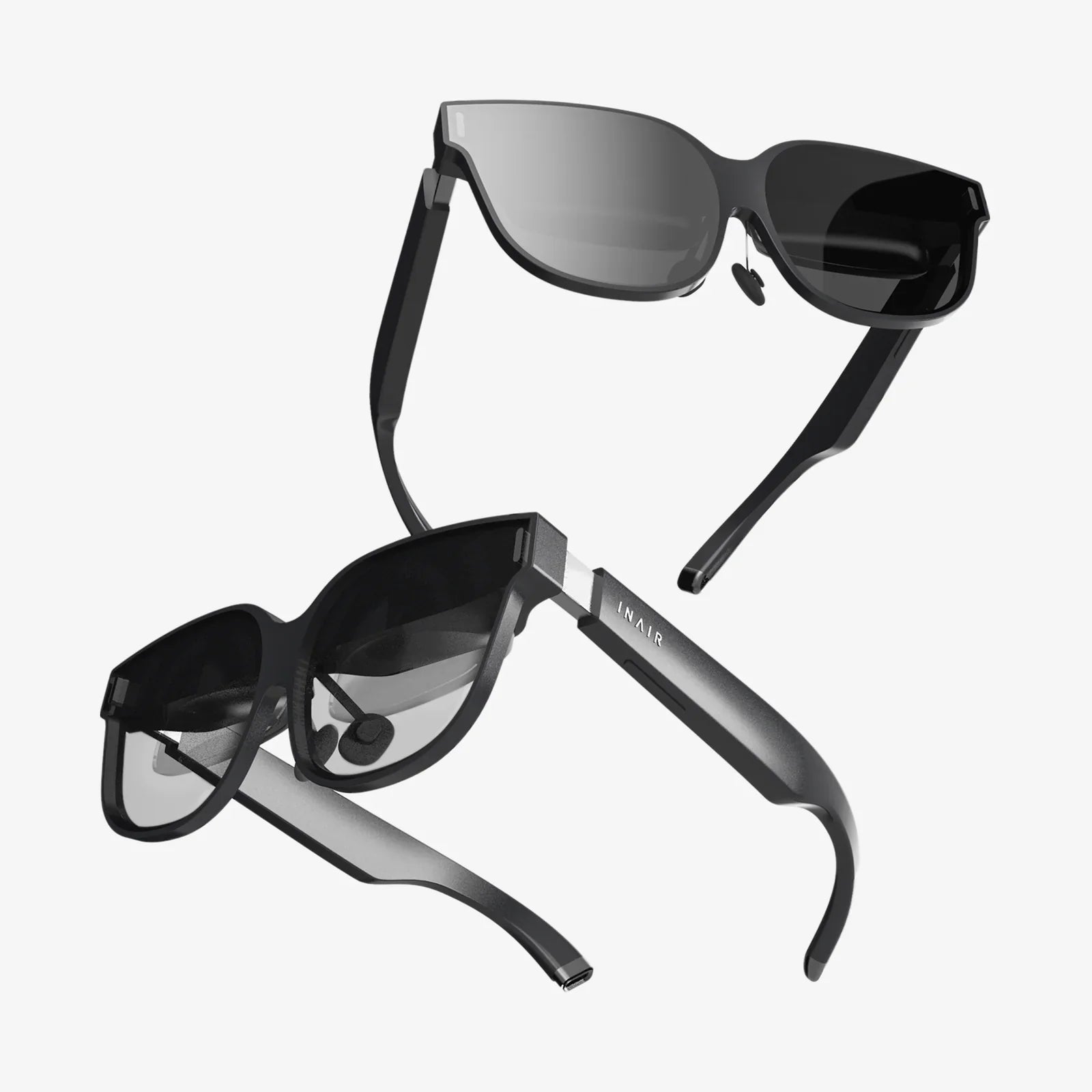
Imagine slipping on a device and instantly being transported. The familiar confines of your room dissolve, replaced by the vertiginous peak of a mountain, the intricate detail of a human cell, or the bustling bridge of a starship. This is no longer the grainy, pixelated dream of science fiction; it is the crystal-clear, heart-pounding reality offered by the modern HD virtual reality headset. This technological marvel is more than just a piece of hardware; it is a passport to impossible places, a tool for unprecedented creation, and a window into the future of how we connect, work, and play. The journey into this hyper-realistic digital realm begins with understanding the incredible engineering packed into every unit.
The Engine of Illusion: Core Technologies Powering HD VR
The magic of a truly immersive HD VR experience is not magic at all—it is the meticulous orchestration of cutting-edge hardware and software. The quest for visual fidelity starts with the screens themselves.
High-Resolution Displays and the War on Screen Door Effect
Early VR was plagued by the "screen door effect" (SDE), a visible grid of lines between pixels that made it feel like looking through a mesh door. HD VR headsets have declared all-out war on SDE. This is achieved through two primary methods: skyrocketing resolution and advanced optical techniques.
Modern headsets utilize custom-made Fast-Switch LCD or OLED panels with resolutions exceeding 4K per eye. By packing an immense number of sub-pixels into a small space, the gaps between them become virtually invisible to the human eye. Furthermore, techniques like RGB Stripe subpixel layouts and custom fill factors enhance this effect, ensuring the virtual world appears as a seamless, continuous image rather than a collection of distinct dots.
The Critical Role of Lenses and Field of View
High-resolution panels are useless without sophisticated optics to focus and shape the light for your eyes. Fresnel lenses, known for their thin, lightweight design with concentric grooves, have been the industry standard. They allow for a wide field of view (FOV)—the diagonal measurement of what you can see inside the headset, typically between 90 and 120 degrees. A wider FOV increases immersion by reducing the binocular-like "goggle" effect.
The next frontier is pancake lenses. These compact, multi-element lenses use polarization folding to drastically reduce the distance needed between the screen and your eye. This allows for significantly slimmer and lighter headset designs without compromising on optical clarity or FOV, marking a monumental leap in ergonomics and comfort.
Precision Tracking: How the Headset Knows Your Every Move
Visuals are only half the battle. For the illusion to hold, the virtual world must respond to your movements with imperceptible latency. This is handled by a sophisticated tracking system.
Inside-Out Tracking: This is the dominant method in modern consumer HD VR headsets. Multiple wide-angle cameras mounted on the headset itself constantly scan the surrounding environment. By identifying unique features in your room—a painting, a bookshelf, a window frame—the headset's internal processor triangulates its position in real-time in six degrees of freedom (6DoF): forward/back, up/down, left/right, and pitch, yaw, and roll. This eliminates the need for external sensors, making setup effortless and portable.
Outside-In Tracking: Historically, this was the gold standard for precision. External sensors or base stations placed around the room emit lasers or track LEDs on the headset. While offering supremely accurate tracking for professional applications, it requires a dedicated space and more complex calibration, making it less common for mainstream HD VR headsets.
Audio: The Forgotten Half of Immersion
An HD visual experience is crippled without equally high-fidelity spatial audio. True immersion is broken the moment a sound seems to come from "everywhere" or the wrong direction. Advanced HD VR headsets incorporate head-related transfer function (HRTF) audio. This technology uses complex algorithms to simulate how sound waves interact with the unique shape of your head, ears, and torso. The result is convincing 3D audio: you can hear the distinct whisper from behind your left shoulder or the roar of a waterfall precisely where it exists in the virtual space, completing the sensory illusion.
Beyond Gaming: The Expansive Universe of HD VR Applications
While gaming remains a powerhouse application, the value of an HD virtual reality headset extends far beyond entertainment. Its ability to create a persuasive sense of presence is revolutionizing numerous fields.
Revolutionizing Education and Training
Imagine medical students performing intricate virtual dissections without ever touching a cadaver, or history classes walking through a meticulously reconstructed ancient Rome. HD VR makes this possible.
- Medical Simulation: Surgeons practice complex procedures in a risk-free environment with haptic feedback that simulates the feel of tissue. The high resolution is critical for identifying minute anatomical details.
- Technical Skills: Mechanics can train on virtual engines, astronauts prepare for spacewalks, and welders can hone their technique without consuming materials or facing safety hazards.
- Virtual Field Trips: Students can explore the depths of the ocean, the surface of Mars, or the inside of a volcano, experiences that would be logistically impossible or prohibitively expensive in the real world.
Transforming Enterprise and Remote Collaboration
The concept of the office is being redefined. With an HD VR headset, remote work evolves into collaborative presence. Teams from across the globe can meet in a virtual boardroom, interact with 3D models of products they are designing, and brainstorm on virtual whiteboards as if they were in the same physical space. Architects and clients can walk through building designs at a 1:1 scale before a single brick is laid, making changes in real-time.
The New Frontiers of Healthcare and Therapy
Therapeutic applications are among the most profound uses of HD VR technology.
- Exposure Therapy: Therapists use controlled, immersive environments to help patients safely confront and overcome phobias, such as fear of heights, flying, or public speaking.
- Pain Management: Immersive, engaging VR experiences have been proven to distract patients from acute and chronic pain, reducing the reliance on pharmacological painkillers during procedures like wound care or physical therapy.
- Cognitive Rehabilitation: Patients recovering from strokes or brain injuries can use VR tasks to retrain neural pathways and improve motor skills and cognitive function in engaging, motivating environments.
Unleashing Creativity and Social Connection
VR is a powerful medium for artists and storytellers. 3D sculpting and painting applications allow creators to work in a fully dimensional space. Social VR platforms are creating new digital town squares where people can meet, watch concerts, play games, and simply hang out, represented by expressive avatars. The high definition is crucial for reading subtle social cues and feeling genuinely connected to other people, forging a new path for human interaction in an increasingly digital world.
Choosing Your Portal: Key Considerations
Navigating the market for an HD VR headset requires balancing several factors to find the right fit for your needs and budget.
The Great Divide: Tethered vs. Standalone
This is the most fundamental choice. Tethered headsets connect via a high-speed cable to a powerful external computer or console. This connection provides the processing muscle needed for the most graphically intensive, high-fidelity experiences with the highest resolutions and most complex physics. The trade-off is limited mobility and the requirement of a expensive, high-end computer.
Standalone headsets have all the necessary computing power built directly into the device. They are completely wireless, offering unparalleled freedom and ease of use—you can simply put them on and go. While their graphical capabilities have improved dramatically, they still cannot match the raw power of a tethered setup, often resulting in slightly lower visual fidelity for the most demanding applications.
Comfort and Ergonomics: The Long-Term Experience
A headset can have the best specs on paper, but if it's uncomfortable, you won't use it. Key ergonomic factors include weight distribution (a front-heavy design causes neck strain), adjustable head straps (rigid, halo, or elite straps), and facial interface materials (leatherette vs. breathable foam). The ability to find a sweet spot where the image is clear without excessive tightening is paramount for enjoying longer sessions.
The Ecosystem: Content is King
The hardware is a vessel; the software is the journey. Before investing, consider the ecosystem. What experiences, applications, and games are available for the platform? Is there a robust store with a steady stream of new content? Are the applications you need for work or creativity available? The value of a headset is directly tied to the quality and quantity of experiences it can access.
The Horizon of Possibility: What's Next for HD VR?
The evolution of the HD virtual reality headset is accelerating at a breathtaking pace. Several emerging technologies promise to shatter the remaining barriers between the real and the virtual.
- Varifocal Lenses and Eye-Tracking: Current headsets have a fixed focal plane, causing a conflict between where your eyes converge and focus, leading to strain. Next-gen headsets with eye-tracking and varifocal lenses will dynamically adjust the focus to match where you are looking, creating a more natural and comfortable experience that can also be used for foveated rendering—drastically increasing performance by rendering only the center of your vision in full detail.
- Haptic Feedback and Full-Body Tracking: The future of immersion lies in engaging the sense of touch. Advanced haptic gloves and suits are in development, allowing users to feel the texture, weight, and resistance of virtual objects. Combined with full-body tracking, this will enable avatars to mirror our movements with perfect accuracy, deepening social and physical interaction.
- Brain-Computer Interfaces (BCI): Looking further ahead, the ultimate interface may be neural. Early-stage BCI research aims to allow users to control virtual environments through thought alone, potentially bypassing controllers entirely and creating a direct link between the mind and the digital realm.
The humble living room is on the verge of becoming the most exciting destination on Earth. With each passing year, the headset becomes lighter, the screens sharper, the tracking more precise, and the experiences more profound. We are rapidly approaching a future where putting on an HD virtual reality headset is as simple and transformative as stepping through a doorway—a doorway to anywhere, and anything, you can imagine. The only question that remains is not if you will take that step, but where your first journey will take you.
Share:
AR Glasses Multiple Screens: The Future of Personal Computing is Now
Computer Vision Spatial Analysis: The Unseen Engine Reshaping Our World