


Imagine a world where your surroundings are not just seen but deeply understood, where every pixel in an image tells a story about space, movement, and interaction. This is no longer the realm of science fiction but the tangible reality being built today through the powerful synergy of computer vision and spatial analysis. This convergence is quietly revolutionizing industries, solving age-old problems, and posing profound new questions about our relationship with technology and privacy. It is the unseen engine analyzing the fabric of our physical world, and its implications are nothing short of revolutionary.
The Confluence of Sight and Space
At its core, computer vision is a field of artificial intelligence that trains computers to interpret and understand the visual world. By processing digital images from cameras and videos, machines can accurately identify and classify objects. Spatial analysis, traditionally a domain of geography and cartography, is the process of examining the locations, attributes, and relationships of features in spatial data to address questions and detect patterns. When these two disciplines merge, they create a potent capability: the ability for an AI to not only recognize what an object is but also to comprehend its position, dimensions, and dynamics within a three-dimensional space. This moves analysis from the two-dimensional plane of 'what is it?' to the four-dimensional realm of 'where is it, how is it moving, and how does it relate to everything else?'
How It Works: From Pixels to Understanding
The journey from a raw image to spatial intelligence is a complex, multi-stage process powered by sophisticated algorithms, primarily deep learning and convolutional neural networks (CNNs).
1. Image Acquisition and Pre-processing
The first step involves capturing visual data. This can come from a vast array of sources: standard RGB cameras, thermal sensors, LiDAR (Light Detection and Ranging), radar, and satellite imagery. This raw data is often noisy and inconsistent. Pre-processing techniques like noise reduction, normalization, and image enhancement are applied to clean the data and prepare it for analysis, ensuring the algorithms work with the highest quality input possible.
2. Object Detection and Semantic Segmentation
This is where the 'vision' part truly begins. Object detection algorithms, such as region-based CNNs (R-CNN) and You Only Look Once (YOLO), scan the image to locate and classify objects, drawing bounding boxes around them. A more granular approach is semantic segmentation, where the AI labels every single pixel in an image with a class label (e.g., car, road, pedestrian, building). This creates a detailed map of the scene, distinguishing between different entities and their boundaries.
3. The Leap to Spatial Analysis
Once objects are identified, the spatial analysis begins. This involves extracting meaningful geometric and relational data.
- Depth Estimation and 3D Reconstruction: Using stereo vision (comparing two images from slightly different angles) or data from depth sensors like LiDAR, the system calculates the distance to each object, building a three-dimensional point cloud of the environment.
- Geometric Measurements: By understanding the scale and perspective, the system can perform precise measurements: calculating the area of a field, the volume of a stockpile, the dimensions of a room, or the gap between a vehicle and a curb.
- Tracking and Trajectory Analysis: Across a sequence of video frames, the AI can track the movement of multiple objects simultaneously. This allows it to calculate speed, direction, and predict future positions, which is critical for applications like autonomous driving and crowd monitoring.
- Spatial Relationship Mapping: The AI analyzes how objects interact with each other and their environment. Is a person within a designated safe zone? Is a car encroaching into a bike lane? How is traffic flow correlated with the time of day and weather conditions?
Transformative Applications Across Industries
The fusion of computer vision and spatial analysis is not a niche technology; it is a horizontal enabler with vertical applications slicing across every major sector.
Revolutionizing Urban Planning and Smart Cities
Municipalities are leveraging this technology to create dynamic, responsive urban environments. Traffic management systems analyze live video feeds to optimize signal timings, reduce congestion, and respond to incidents in real-time. Parking solutions use overhead cameras to identify empty spots, guiding drivers via mobile apps. Urban planners use aerial and satellite imagery to monitor land use changes, assess the health of green spaces, and plan public transit routes based on actual pedestrian and vehicle flow patterns, moving from static models to living, breathing digital twins of cities.
Autonomous Vehicles and Advanced Transportation
This is perhaps the most demanding application. A self-driving car is essentially a supercomputer on wheels performing real-time computer vision spatial analysis. It must continuously segment its visual field, identify other cars, pedestrians, signs, and lanes, calculate their exact distance and velocity, and predict their trajectories to navigate safely. This requires an immense, instantaneous synthesis of visual and spatial data to make life-or-death decisions, a testament to the technology's advanced capabilities.
Retail and Warehouse Optimization
In the retail sector, stores are analyzing customer movement patterns to optimize store layouts, product placement, and checkout line management. In warehouses, automated guided vehicles (AGVs) navigate vast spaces by understanding their location relative to racks and inventory. Sophisticated picking systems use spatial analysis to identify and locate specific items on a shelf, guiding robotic arms to retrieve them with precision, dramatically accelerating logistics and fulfillment operations.
Healthcare and Medical Imaging
In healthcare, the technology moves beyond external environments into the human body. Radiologists use AI-powered tools to analyze MRI, CT, and X-ray scans. Here, spatial analysis involves measuring the size and volume of tumors, tracking their change over time, identifying anomalies in organ structures, and precisely planning surgical interventions. This provides quantitative, objective data that augments human expertise, leading to earlier diagnoses and more personalized treatment plans.
Agriculture and Environmental Monitoring
Precision agriculture uses drones equipped with multispectral cameras to fly over fields. Computer vision algorithms analyze these images to assess crop health, identify pest infestations, and monitor water stress. The spatial component allows farmers to pinpoint exactly which areas need attention, enabling targeted application of water, fertilizers, and pesticides. This boosts yields while promoting sustainability. Similarly, conservationists use satellite imagery to track deforestation, monitor wildlife populations, and assess the impact of climate change on ecosystems.
Navigating the Ethical and Practical Challenges
With great power comes great responsibility. The proliferation of computer vision spatial analysis brings a host of significant challenges that society must urgently address.
The Privacy Paradox
The ability to continuously track individuals' movements in public and semi-public spaces represents a monumental shift in surveillance capabilities. While it can enhance security, it also creates a panopticon effect, potentially chilling free assembly and expression. The debate over facial recognition is just the tip of the iceberg; the next frontier is the tracking of behavior, associations, and activities across space and time. Establishing clear legal and ethical frameworks that balance security with fundamental human rights is one of the most pressing issues of our technological age.
Algorithmic Bias and Fairness
These systems are only as good as the data they are trained on. If training data lacks diversity, the algorithms will perform poorly for underrepresented groups. A well-documented example is object detection systems that have historically failed to accurately detect pedestrians with darker skin tones, a terrifying flaw for autonomous vehicle systems. Ensuring fairness, transparency, and accountability in these models is not just a technical problem but a moral imperative to prevent the automation and scaling of discrimination.
Technical Hurdles and Limitations
The technology is not infallible. It struggles with occlusions (objects blocking each other), extreme weather conditions that obscure vision, and highly complex, dynamic environments. Furthermore, these systems are computationally intensive, requiring significant processing power that can be a barrier to real-time deployment on edge devices. Continuous research is focused on making models more efficient, robust, and capable of learning from less data.
The Future: An Integrated Spatial Layer of Intelligence
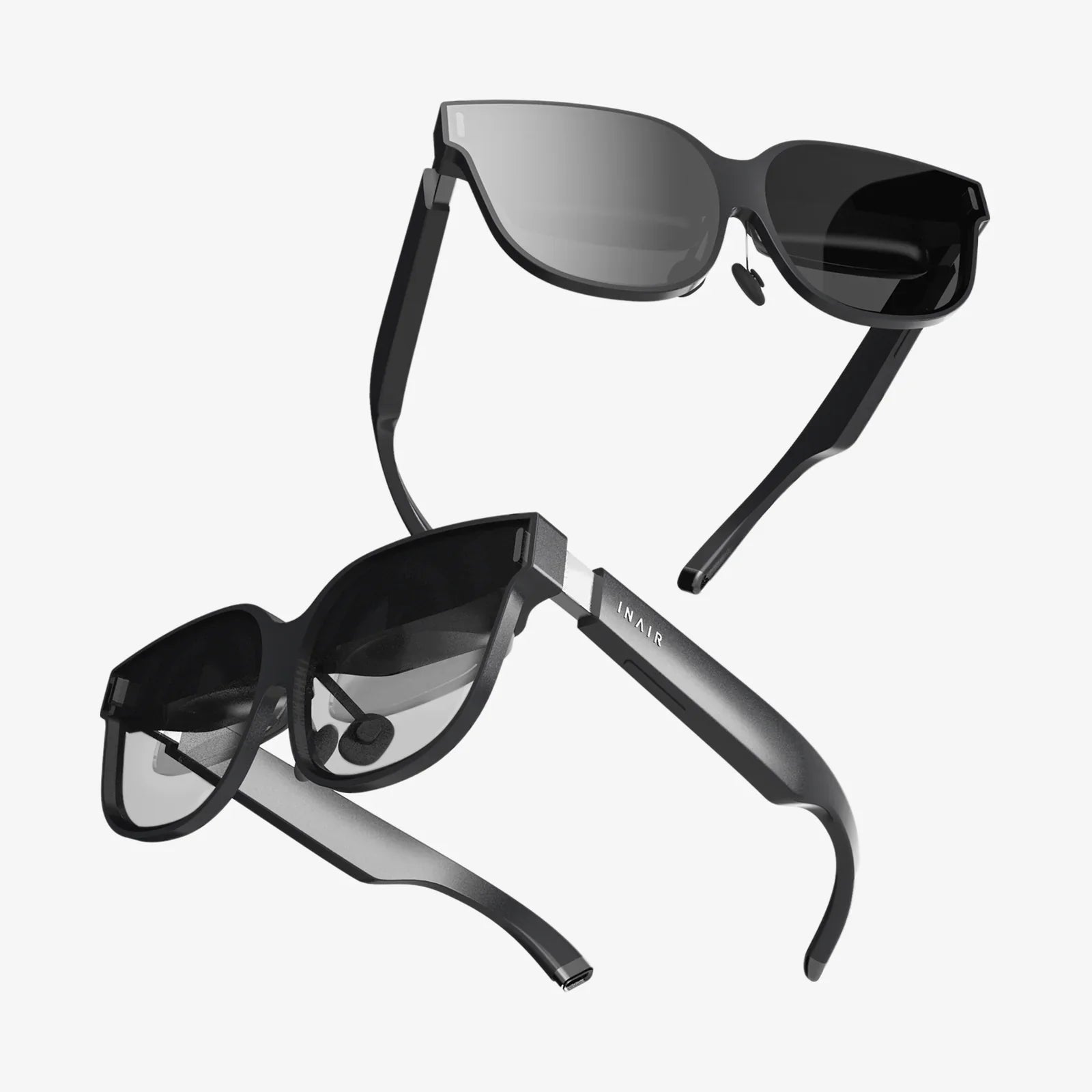
The trajectory of computer vision spatial analysis points towards a future where a seamless layer of visual intelligence is integrated into the fabric of our daily lives. We are moving towards the creation of hyper-accurate, real-time digital twins of entire cities and natural environments. Augmented reality (AR) glasses will overlay contextual information onto our field of view, identifying objects, translating signs, and providing directions by understanding our precise location and orientation in space. Robotics will become more dexterous and capable, navigating and manipulating objects in unstructured environments with human-like proficiency.
The invisible dance of pixels and coordinates is rapidly constructing a new layer of reality—one where our environment is not just observed but is intelligent, responsive, and quantified. Computer vision spatial analysis is the key that unlocks this world, offering unprecedented tools for efficiency, safety, and understanding. Yet, as we stand on the brink of this new era, the choices we make today about governance, ethics, and inclusion will determine whether this powerful tool becomes a force for universal benefit or a catalyst for division. The technology is ready; the question is, are we?
Share:
HD Virtual Reality Headset: The Ultimate Portal to Unparalleled Immersive Experiences
System Windows Interactivity: The Unseen Dialogue Between User and Machine