


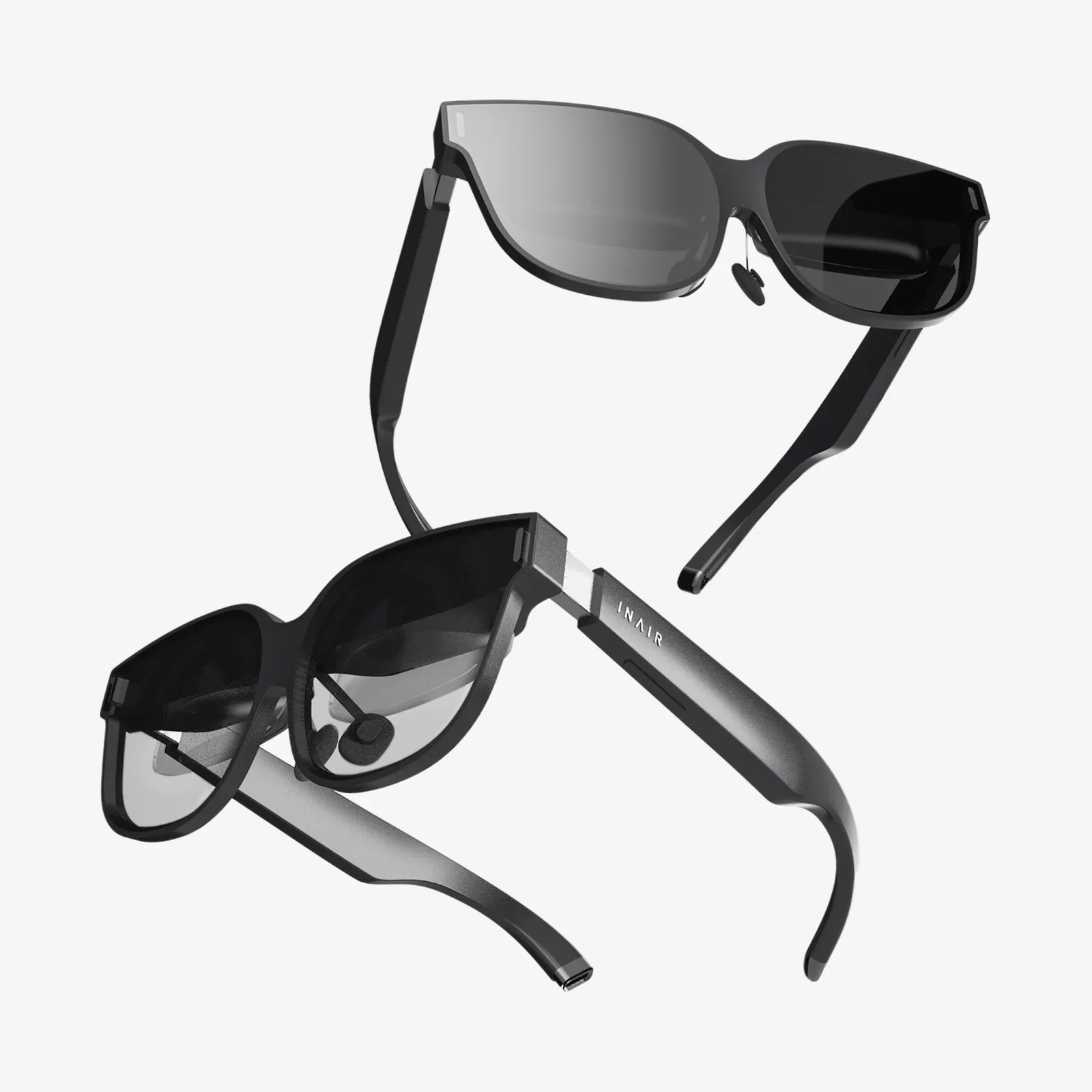
The dream of seamlessly blending the digital and physical worlds through a sleek pair of spectacles has tantalized technophiles for decades. For years, the promise of Augmented Reality (AR) glasses has been shackled by two formidable chains: clunky, impractical hardware and eye-watering, prohibitive costs. If you've ever been intrigued by the concept but recoiled at the price tag of early prototypes and professional-grade units, you are not alone. But the winds of change are blowing, and they are blowing hard towards the consumer. The year 2025 is not just another tick on the calendar; it is poised to be the pivotal inflection point where AR glasses shed their niche, expensive skin and emerge as a bona fide mainstream consumer electronics category. The central question on everyone's mind is no longer if it will happen, but how much it will cost to be a part of this new reality. The conversation around AR glasses price 2025 is fundamentally a conversation about accessibility, innovation, and the final push towards a ubiquitous computing paradigm.
The Historical Price Barrier: Why AR Has Been So Expensive
To fully appreciate the market shift expected in 2025, one must first understand the complex and costly components that have historically made AR glasses a luxury. Early devices were less consumer products and more miniature engineering marvels, packing immense capability into a tiny form factor.
- Micro-Optics and Waveguides: The core magic of AR glasses lies in their ability to project images directly onto the user's retina, making them appear as part of the real world. This is achieved through incredibly complex optical systems like waveguides, holographic gratings, and micro-LED projectors. Manufacturing these components with nanometer precision is a notoriously difficult and expensive process, often involving rare materials and low yields.
- Processing Power and Thermal Management: Rendering high-fidelity 3D graphics in real-time requires serious computational horsepower. Initially, this meant tethering glasses to a powerful external computer or packing a smartphone-grade processor into the temple of the glasses, which created significant challenges in heat dissipation and battery life, further driving up cost and size.
- Advanced Sensors: For digital objects to interact convincingly with the physical environment, glasses need a sophisticated array of sensors: high-resolution cameras for simultaneous localization and mapping (SLAM), depth sensors, inertial measurement units (IMUs), and eye-tracking modules. Each sensor adds cost and complexity.
- Low-Volume Production: Until recently, the market for full-fledged AR glasses was limited to enterprise and developer kits. Manufacturing at low volumes prevents companies from achieving the economies of scale that dramatically lower per-unit costs in consumer electronics.
These factors conspired to keep prices for capable AR systems in the thousands, and often tens of thousands, of dollars. The consumer market was an afterthought, an unreachable horizon.
The Perfect Storm: Catalysts Driving Down AR Glasses Price in 2025
The path to affordability is being paved by a convergence of technological advancements, manufacturing maturation, and intense market competition. Several key catalysts are creating a "perfect storm" that will break the price barrier in 2025.
1. Technological Maturation and Economies of Scale
The underlying technologies are no longer in their infancy. Optical manufacturers have refined waveguide production techniques, significantly improving yields and reducing cost. The supply chains for micro-displays and sensors, once custom-built for niche applications, are now benefiting from investments made by the entire tech industry. Furthermore, as major players commit to consumer launches, they are placing orders in the millions, not the thousands. This massive scale allows component suppliers to drop prices precipitously, a saving passed on to the end-user.
2. The Rise of Specialized AI Chips
Perhaps the most significant driver is the development of ultra-low-power, specialized processors designed explicitly for AR/VR workloads. These systems-on-a-chip (SoCs) integrate the CPU, GPU, and, crucially, a neural processing unit (NPU) for on-device AI tasks like hand-tracking, scene understanding, and voice assistance. By offloading processing from the main CPU and optimizing for efficiency, these chips deliver the necessary performance without the thermal throttling and battery drain of past solutions. This eliminates the need for external processing packs or bulky designs, slashing both the physical footprint and the bill of materials cost.
3. The "Smartphone Companion" Model
While standalone AR glasses are the ultimate goal, the most effective gateway drug for consumers in 2025 will be the "companion" model. These glasses leverage the powerful smartphone already in your pocket to handle the heavy computational lifting, communicating via a high-speed wireless connection like Wi-Fi 6/7 or a proprietary protocol. This design drastically simplifies the glasses themselves, requiring only the essential displays, sensors, and a lightweight communication chip. This model is a key factor in enabling a lower AR glasses price 2025, making a sub-$300 price point highly feasible for a compelling experience.
4. Fierce Market Competition
The AR landscape is no longer a quiet playground for a few startups. Tech titans, smartphone manufacturers, and ambitious newcomers are all vying for a piece of what is predicted to be the next major computing platform. This intense competition is a powerful deflationary force. Companies are acutely aware that winning the market requires winning on price and accessibility, not just on features. This will lead to aggressive pricing strategies, bundled offerings with phone contracts, and potentially even hardware subsidies to build out ecosystem loyalty, all working in the consumer's favor.
The 2025 AR Glasses Price Spectrum: Three Tiers of Adoption
By 2025, the market will not be monolithic. We expect a clear stratification into three distinct tiers, each with its own price point and target audience.
Tier 1: The Budget-Conscious Companion ($150 - $400)
This tier will represent the entry point for millions of new users. Devices in this range will be primarily smartphone-dependent companions. They will focus on a few core, high-value AR functions:
- Overlaying navigation arrows and contextual information onto the real world.
- Delivering notifications and message pop-ups in your periphery.
- Acting as a large, private display for media consumption from your phone.
- Basic photo and video capture from a first-person perspective.
Expect these glasses to prioritize style and lightweight comfort, perhaps sacrificing field of view (FOV) and processing independence. They will be the AR equivalent of basic smartphones—functional, accessible, and a gateway to the technology.
Tier 2: The Premium Standalone ($400 - $1,000)
This will be the sweet spot for tech enthusiasts and professionals seeking a fully untethered experience. Glasses in this tier will feature their own dedicated processing, higher-resolution displays, a wider FOV, and a more comprehensive sensor suite for robust environmental interaction. They will be true wearable computers, capable of running sophisticated applications without a phone in sight. The AR glasses price 2025 in this bracket will be comparable to a high-end smartphone, reflecting their advanced capabilities. Key features will include advanced SLAM for persistent digital objects, sophisticated hand and eye-tracking for intuitive control, and all-day battery life (potentially with a small external battery pack).
Tier 3: The Enterprise & Professional Grade ($1,000+)
At the top end, price will remain less of a constraint because the value proposition is tied to productivity and ROI. Enterprise-grade glasses for field service, complex manufacturing, design, and medical applications will continue to command premium prices. These devices will offer industrial-grade durability, specialized sensors (e.g., thermal cameras), maximized FOV, and bespoke software solutions. For these users, the cost is justified by massive gains in efficiency, accuracy, and safety.
Beyond the Sticker Price: The Total Cost of AR Ownership
When considering the AR glasses price 2025, it's vital to look beyond the initial hardware purchase. The true cost of ownership will encompass several factors:
- Software and Subscriptions: While core functionality will be included, premium applications, immersive games, and enterprise software suites will likely operate on a purchase or subscription model, adding to the long-term cost.
- Cloud Services: Many AR experiences will rely on cloud-based AI for object recognition, spatial mapping, and content streaming. A robust 5G or fiber internet connection will be essential, and some cloud services may require fees.
- Accessories: Prescription lens inserts, custom nose bridges, alternative frame styles, protective cases, and additional battery packs will all be add-on expenses for many users.
- Insurance: As with any high-end portable electronics, insurance against loss, theft, or damage will be a prudent consideration for premium models.
Navigating the 2025 Market: A Buyer's Considerations
As prices drop and choices proliferate, making an informed decision will be key. Before purchasing, consumers should weigh several factors against the price tag:
- Ecosystem Lock-in: Are the glasses designed to work best within a specific smartphone or software ecosystem? This can be a benefit for seamless integration but a limitation for flexibility.
- Battery Life and Form Factor: Is the design comfortable for all-day wear? How is the battery life for intended use cases, and how is it achieved (e.g., via a bulky temple or a separate pack)?
- Display Quality: Resolution, brightness, and FOV are critical to immersion. A cheaper device may have a "tunnel vision" effect or perform poorly outdoors.
- Privacy and Data Policy: AR glasses, by their nature, are equipped with always-on cameras and microphones. Understanding how a company collects, uses, and protects this sensitive data is paramount.
The year 2025 marks the end of the beginning for consumer augmented reality. The exorbitant costs that once defined this futuristic technology are crumbling under the weight of innovation, competition, and scale. We are moving swiftly from a world where AR was a fantastical concept confined to trade shows and corporate warehouses to one where it is an affordable, stylish, and practical tool for enhancing everyday life. The question will shift from "Can I afford them?" to "How will they improve my day?" The market will offer a path for everyone, from the curious novice dipping their toes in with a sub-$300 companion device to the power user investing in a standalone wearable computer. The digital world is preparing to step out of our screens and into our surroundings, and the ticket to this revolution is finally becoming accessible to all.
Share:
Most Powerful Standalone VR Headset - The Uncompromised Frontier of Immersive Technology
VR Headset Won't Turn Off: A Comprehensive Troubleshooting and Safety Guide