


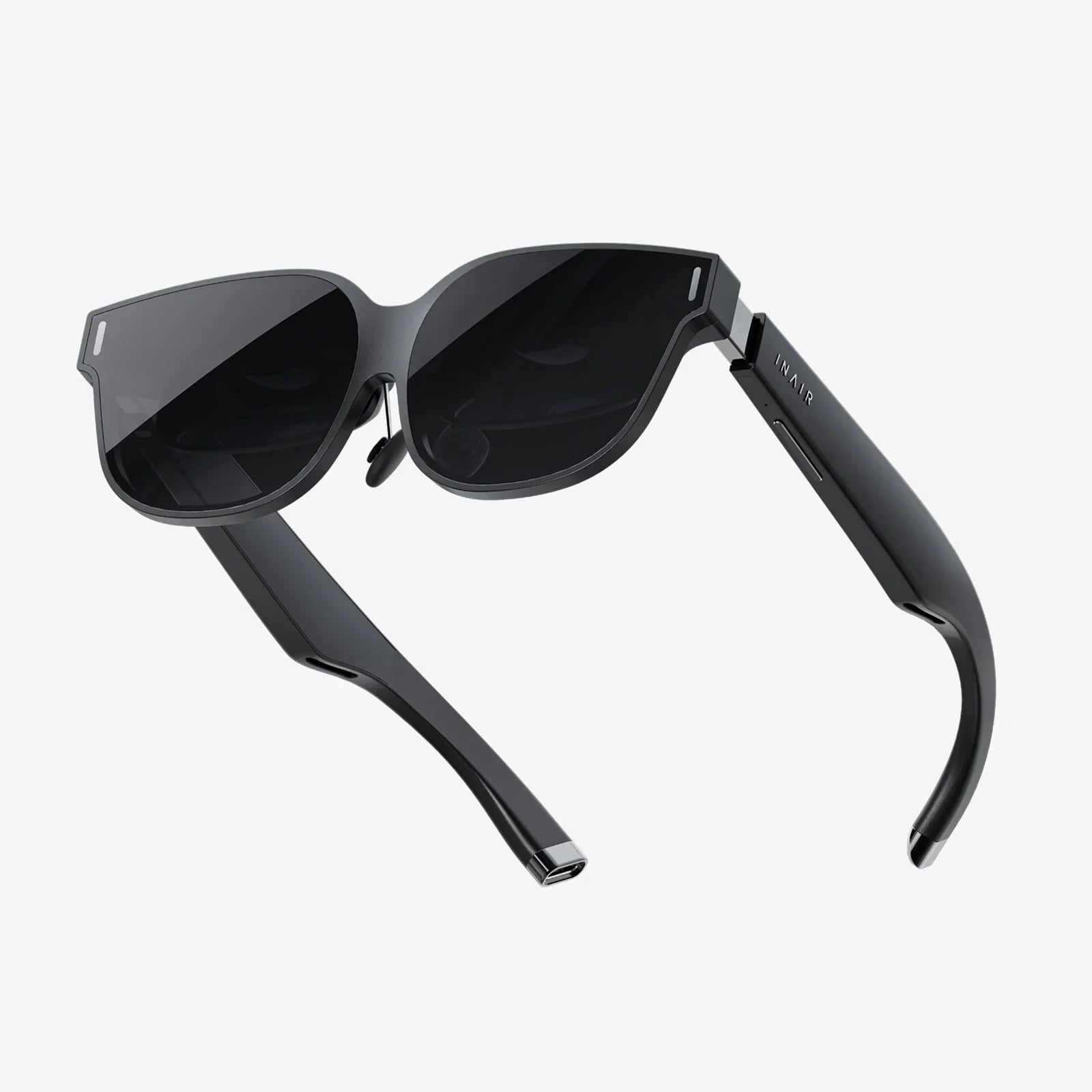
Imagine a world where the digital and physical realms are no longer separate, but elegantly, seamlessly intertwined. This is the ultimate promise held within the ambitious and rapidly evolving domain of the AR glasses project. For decades, the concept of augmented reality eyewear has captivated technologists, sci-fi enthusiasts, and futurists alike, representing a paradigm shift in how we interact with information, our environment, and each other. Today, that promise is inching from the realm of fantasy into tangible reality, driven by relentless innovation and a vision to fundamentally augment human capability. The journey of an AR glasses project is a complex ballet of advanced optics, miniaturized electronics, intuitive software, and human-centered design, all converging to create a window into an enhanced world.
The Core Technological Pillars of an AR Glasses Project
At the heart of every successful AR glasses project lies a sophisticated interplay of several critical technologies. Understanding these pillars is key to appreciating the immense challenge and ingenuity involved.
Optical Engines and Waveguide Displays
The primary magic of any AR glasses project happens in the optical stack. The goal is to project high-resolution, bright digital imagery onto transparent lenses so it appears superimposed on the real world. This is most commonly achieved through two main methods. Birdbath optics use a combiner, a partially reflective mirror, to fold the image from a micro-display into the user's eye. While effective for certain form factors, it can sometimes result in a bulkier design.
The more advanced and promising path, especially for sleek, everyday glasses, is through waveguide technology. Waveguides are incredibly thin, transparent substrates that use diffraction gratings (either surface relief or holographic) to pipe
light from a projector at the temple into the eye. This technology is the holy grail for many an AR glasses project, as it allows for a much wider field of view, better transparency, and a design that closer resembles conventional eyewear. The development of mass-produced, high-fidelity, and affordable waveguides remains one of the single biggest hurdles in the industry.
Processing Power and Sensor Fusion
An AR glasses project is a data-processing powerhouse on your face. To understand and interact with the world, these devices are equipped with a suite of sensors, including high-resolution cameras, depth sensors (LiDAR, time-of-flight), inertial measurement units (IMUs) for tracking head movement, microphones, and often eye-tracking cameras.
Sensor fusion is the complex software process of taking all this raw data—what the cameras see, where the head is moving, where the user is looking—and synthesizing it into a coherent understanding of the 3D environment. This requires immense, efficient computational power. While some early prototypes offloaded processing to a connected smartphone or computer, the trend for a truly untethered AR glasses project is toward powerful, miniaturized systems-on-a-chip (SoCs) that can handle these tasks locally, balancing performance with the critical constraints of thermals and battery life.
Spatial Computing and the Digital Twin
The software layer, often termed spatial computing, is the brain of the operation. This is where the environment is mapped in real-time, creating a persistent digital understanding of the space. This can involve creating a point cloud of the room, recognizing surfaces (floors, walls, tables), and identifying objects. This environmental understanding allows digital content to behave in physically believable ways—a virtual screen can be pinned to a wall, a digital character can hide behind a real sofa, and annotations can remain fixed to a specific machine on a factory floor.
This leads to the concept of a digital twin,
where a virtual representation of the physical world is maintained. For an enterprise-focused AR glasses project, this might mean a precise digital model of an entire factory floor, allowing for remote expert guidance where instructions are directly overlaid onto the actual equipment.
The Grand Challenges: Design, Battery, and the Social Hurdle
Beyond the raw technology, an AR glasses project faces a triumvirate of daunting challenges that have, until recently, kept general consumer adoption at bay.
The Form Factor Conundrum
The most immediate barrier to adoption is design. The ideal AR glasses project results in a device that is indistinguishable from a stylish pair of regular glasses—lightweight, comfortable, and socially acceptable to wear all day. We are not there yet. The conflict between performance (field of view, brightness, compute power) and form factor (size, weight, battery life) is the central tension in every product development cycle. Engineers are constantly battling physics, trying to shrink components, improve battery density, and develop new optical materials to collapse this trade-off. The success of the entire category hinges on solving this conundrum.
The Perpetual Quest for All-Day Power
Power consumption is a brutal constraint. Driving bright displays, multiple sensors, and powerful processors drains batteries incredibly quickly. Early devices often struggled to last more than two hours. A viable consumer AR glasses project must offer all-day battery life to be truly useful. This is being addressed through a multi-pronged approach: developing more power-efficient components, creating sophisticated power management software that only activates power-hungry sensors when needed, and exploring novel solutions like swappable battery packs or low-power always-on
contextual awareness modes that only fire up the full stack when necessary.
The Social and Psychological Hurdle
Perhaps the most underestimated challenge is the social contract. Wearing a camera on your face raises immediate concerns about privacy, both for the user and for those around them. The concept of being recorded, even if just for environmental mapping, is a significant societal barrier that must be overcome through transparent design, clear indicator lights, and robust privacy controls. Furthermore, there is a psychological aspect to interacting with someone wearing AR glasses—are they present in the conversation, or are they distracted by notifications and data streaming into their field of view? Solving for attention and shared experience is a critical software and UX problem that goes far beyond the hardware.
Transforming Industries: The Enterprise AR Revolution
While the consumer market is the long-term goal, the most immediate and impactful applications for AR glasses projects are in enterprise and industrial settings. Here, the value proposition is clear, ROI is easily measured, and users are often already wearing protective or specialized eyewear, making the form factor less of an issue.
Remote Expert and Guided Assistance
This is the killer app
for enterprise AR today. A field technician facing a complex repair can don AR glasses and share their live view with an expert located anywhere in the world. The remote expert can then draw arrows, highlight components, and pull up diagrams and manuals that are anchored directly onto the machinery in the technician's view. This drastically reduces travel costs, resolves issues faster, and empowers less experienced workers to perform complex tasks with expert guidance.
Digital Work Instructions and Complex Assembly
In manufacturing and logistics, an AR glasses project can revolutionize training and assembly lines. Instead of looking back and forth between a physical product and a paper manual or static screen, workers see the next step—which part to pick, where to place it, which torque setting to use—overlaid directly onto their workspace. This reduces errors, improves speed and quality, and significantly shortens the training time for new employees. It enables a shift from paper-based, sequential instructions to dynamic, visual, and context-aware guidance.
Design, Prototyping, and Architecture
Architects, interior designers, and engineers can use AR glasses to visualize their 3D models at full scale within a physical space. A designer can place
a virtual piece of furniture in a client's living room to check for fit and style before purchase. An architect can walk through a full-scale building model on an empty plot of land, assessing sightlines and spatial relationships long before ground is broken. This ability to prototype and iterate in the real world saves immense time and resources.
The Future Consumer Horizon: Beyond the Smartphone
The ultimate ambition for many is to create a device that becomes as indispensable as the smartphone, but far more intuitive and integrated into our daily lives.
Contextual and Perpetual Computing
The future AR glasses project will act as a contextual assistant. Walking through an airport, your flight gate and boarding time subtly hover in your periphery. In a foreign city, historical facts and translations appear over landmarks and menus as you look at them. In a meeting, a colleague's name and role are discreetly displayed when you glance their way. This shift from pull
computing, where we actively search for information on a phone, to push
computing, where relevant information surfaces automatically based on context, location, and gaze, represents a fundamental change in our relationship with technology.
The Spatial Web and Shared Experiences
AR glasses are the primary gateway to the spatial web—an evolution of the internet where digital content is not trapped behind screens but is mapped onto the world itself. This will enable shared, persistent experiences. Friends in different physical locations could meet as lifelike avatars in a shared virtual space that is anchored to a real-world location. Artists could create digital sculptures and murals that anyone with glasses could see, transforming cities into dynamic galleries. The line between a physical and digital gathering would begin to blur entirely.
Redefining Accessibility and Personal Expression
The potential for accessibility is profound. AR glasses could provide real-time closed captioning for conversations for the hearing impaired, describe scenes for the visually impaired, or offer cognitive assistance by highlighting lost keys or guiding someone through a recipe step-by-step. Furthermore, they will become a new canvas for personal expression—not just through the frame design, but through the digital layers and filters users choose to apply to their perception of reality, creating a new form of identity and interaction.
The path forward for any AR glasses project is fraught with immense technical and societal challenges, but the destination is a world of unimaginable potential. We are standing on the precipice of a new computing revolution, one that promises to weave the digital fabric of information directly into the tapestry of our physical reality, forever changing how we work, learn, connect, and see the world around us. The next time you put on a pair of glasses, you might just be putting on a new lens for reality itself.
Share:
AI Visibility Tool: The Ultimate Guide to Unlocking Unprecedented Digital Insights
Growth of Smart Devices: Reshaping Humanity's Daily Existence