


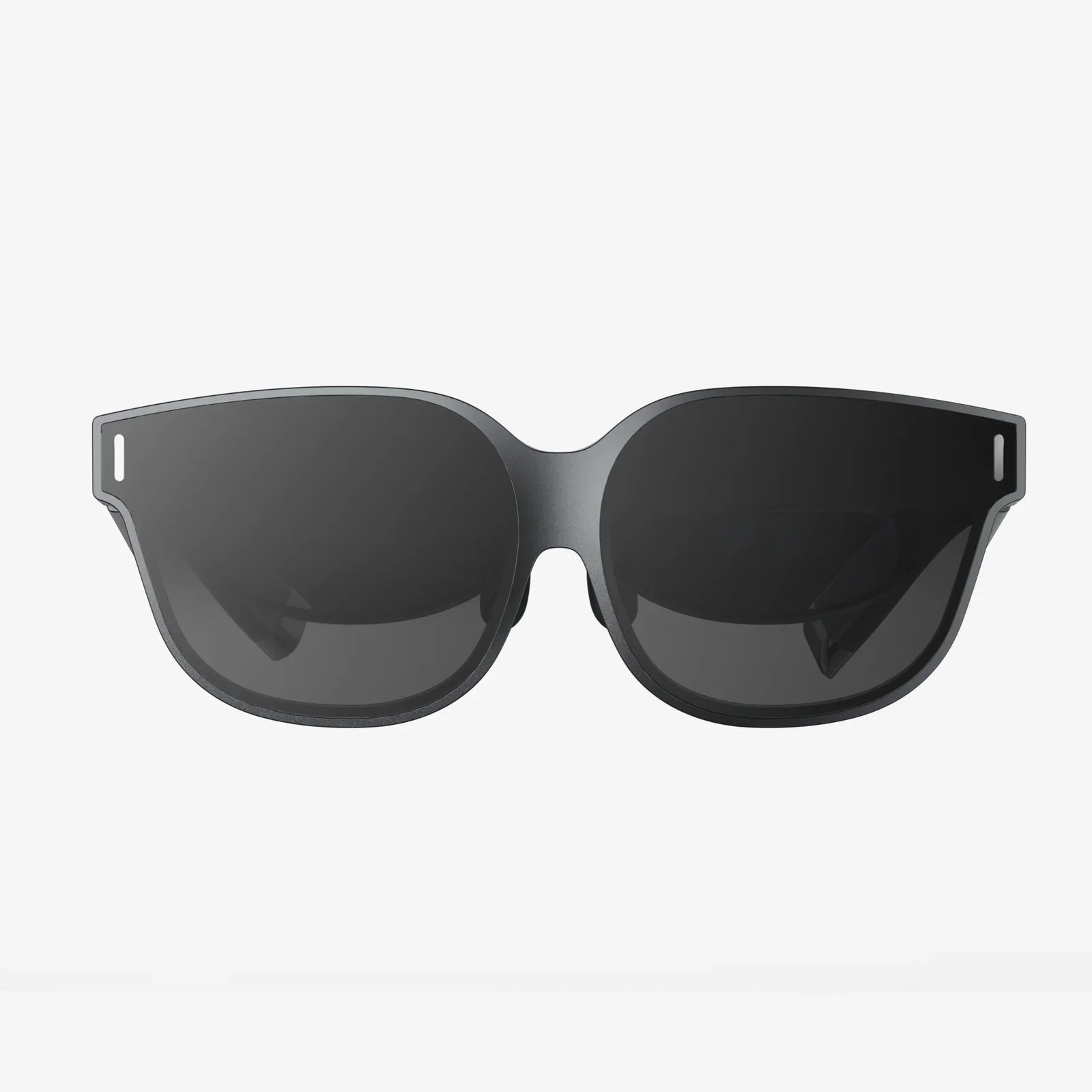
Imagine a world where digital information doesn't live trapped behind a glass screen but flows freely into your field of vision, enhancing everything you see, do, and experience. This is no longer the stuff of futuristic films; it's the promise being delivered today by AR glasses that work with apps. This powerful synergy between wearable hardware and sophisticated software is unlocking a new dimension of computing, one that is contextual, intuitive, and seamlessly integrated into the fabric of our daily routines. The ability to overlay data, manipulate 3D models, receive real-time guidance, and connect with others through a simple pair of spectacles is fundamentally altering our relationship with technology, and it's all powered by the apps you already know and use.
The Engine Behind the Experience: How AR Glasses and Apps Connect
At its core, the magic of AR glasses working with apps is a symphony of advanced hardware and intelligent software communication. Understanding this foundation is key to appreciating the capabilities and limitations of current systems.
The Hardware Foundation
Modern AR glasses are engineering marvels packed into a compact form factor. They are built upon several critical components that enable the augmented experience:
- Optical Waveguides: These are transparent lenses embedded with microscopic structures that bend light from tiny projectors located on the temple of the glasses, directing digital images directly into the user's eyes while allowing them to see the real world. This technology is what creates the illusion that holograms are existing in your physical space.
- Spatial Sensors: An array of cameras, depth sensors, accelerometers, and gyroscopes continuously scan the environment. These sensors are the "eyes" of the device, mapping the room, understanding surfaces, tracking the position of the glasses in space, and detecting hand gestures. This real-time data is crucial for anchoring digital content persistently and accurately.
- Processing Power: This can be handled in two ways. Some glasses are tethered, relying on the processing might of a connected smartphone or a dedicated computing unit worn on the body. Others are standalone, with a system-on-a-chip (SoC) integrated directly into the frames, housing the CPU, GPU, and memory needed to run applications independently.
The Software Bridge: APIs and SDKs
The hardware is useless without a way for applications to talk to it. This is where Application Programming Interfaces (APIs) and Software Development Kits (SDKs) come in. Major technology platforms provide these toolkits to developers, which act as a universal translator and a set of blueprints.
- SDKs (Software Development Kits): These provide developers with the necessary tools, libraries, sample code, and documentation to build AR experiences specifically for a platform's glasses. They handle complex tasks like environmental understanding, surface detection, and gesture recognition, allowing developers to focus on their app's unique functionality.
- APIs (Application Programming Interfaces): These are the communication protocols that allow an app, whether on a phone or running natively on the glasses, to request data from the sensors or display information on the lenses. For example, a navigation app uses the API to call the GPS and then display directional arrows onto the roadway.
This standardized approach means a navigation app, a game, or a remote assistance tool can work across different models of AR glasses that support the same platform, creating a cohesive ecosystem rather than a series of walled gardens.
A Universe of Apps: Categories Transforming Reality
The true value of any computing platform is defined by its software. The ecosystem of apps compatible with AR glasses is vast and growing exponentially, spanning nearly every aspect of life and work.
Productivity and Enterprise
This is where AR glasses are making an immediate and measurable impact. Enterprises are adopting this technology to increase efficiency, reduce errors, and enhance remote collaboration.
- Remote Assistance and Guidance: Field technicians, whether repairing complex machinery or installing HVAC systems, can use AR glasses to stream their first-person view to an expert located anywhere in the world. The expert can then draw annotations—arrows, circles, notes—directly into the technician's field of view, overlaying precise instructions onto the real equipment. This drastically reduces downtime, minimizes travel costs, and allows less experienced workers to perform complex tasks.
- Digital Work Instructions and Logistics: In warehouses and on manufacturing floors, AR glasses can visually guide workers through picking and assembly processes. Instead of checking a clipboard or a screen, the next item to pick is highlighted with a digital marker on the shelf, and assembly instructions are superimposed directly onto the product being built. This has been shown to significantly improve accuracy and speed while reducing training time.
- 3D Design and Modeling: Architects, engineers, and interior designers can project their 3D models into the real world at full scale. They can walk around a virtual building structure, assess the fit of mechanical parts before they are manufactured, or place virtual furniture in a client's living room to visualize the final result, all interacting with the models using hand gestures.
Navigation and Information
This category brings a true heads-up display experience to everyday life, freeing users from constantly looking down at their phones.
- Context-Aware Navigation: Walking or driving directions are overlaid onto the real world. A large, floating arrow points to the next turn on the actual street, and the name of your destination is visually tagged onto the building as you approach. This allows for navigation without taking your eyes off your surroundings, enhancing both convenience and safety.
- Real-Time Information Overlays: Imagine looking at a restaurant and instantly seeing its star rating and today's specials floating beside it. Or looking at a landmark and having its historical facts appear. This layer of contextual data, pulled from the internet and displayed based on what you're looking at, is a core promise of AR, turning the entire world into an interactive information space.
Social Connection and Communication
AR glasses are poised to redefine how we connect with others, making digital communication feel more present and personal.
- Avatars and Holographic Communication: Instead of flat video calls, apps can project life-like, 3D avatars or holograms of participants into your environment, creating the feeling that they are in the room with you. You can make eye contact, see body language, and collaborate on virtual objects together as if sharing a physical space.
- Shared Experiences: Friends separated by distance can watch a virtual movie on a virtual screen placed on a virtual wall they both can see. They can play AR games that inhabit the same physical space in both of their locations, or co-design a 3D model together in real time.
Health, Wellness, and Education
The implications for healthcare and learning are profound, offering new tools for visualization, training, and personal improvement.
- Medical Visualization and Surgery: Surgeons can have vital patient statistics, ultrasound data, or 3D scans of anatomy projected directly into their view during procedures, allowing them to maintain focus without looking away from the operating field. Medical students can practice on detailed, interactive holograms of the human body.
- Interactive Learning: Education is transformed from passive reading to active exploration. Students can dissect a virtual frog, walk through a historical battle site with events unfolding around them, or explore the solar system with planets orbiting around their classroom. This experiential learning leads to dramatically improved engagement and retention.
- Fitness and Coaching: A personal trainer can be in your view during a workout, demonstrating proper form. Fitness apps can track your repetitions, provide real-time feedback on your posture, and display your heart rate and calories burned in the corner of your vision, all without interrupting your flow.
Overcoming the Hurdles: Challenges on the Path to Ubiquity
Despite the incredible progress, the journey towards AR glasses becoming as commonplace as smartphones is not without significant obstacles.
- Battery Life and Thermal Management: Processing high-resolution 3D graphics and sensor data is incredibly power-intensive. Balancing all-day battery life with performance and a small, comfortable form factor remains a major engineering challenge. This often leads to trade-offs, with some devices opting for tethered designs to offload processing.
- Social Acceptance and Design: For mass adoption, the technology must become something people actually want to wear. This means moving beyond the bulky, geeky prototypes of the past to designs that are stylish, lightweight, and socially inconspicuous. The goal is for AR glasses to look and feel as normal as a premium pair of sunglasses.
- Privacy and Security: Devices with always-on cameras and microphones understandably raise privacy concerns. Clear and transparent user controls about what data is collected, how it is used, and when recording is happening are non-negotiable. Developers and manufacturers must build trust through robust security and ethical data policies.
- Developing for a New Medium: Designing user interfaces and experiences for AR is fundamentally different from designing for a 2D screen. Developers must learn new principles of spatial design, information hierarchy, and interaction models (like voice and gesture) to create apps that are intuitive and not overwhelming.
The Future is Transparent: What Lies Ahead
The convergence of AR glasses and apps is on a rapid trajectory of improvement. We are moving towards a future where the technology will become more powerful, less obtrusive, and deeply woven into the fabric of society. We can anticipate glasses with wider fields of view, more realistic holograms, and longer battery life becoming the norm. The app ecosystem will explode with experiences we haven't even conceived of yet, driven by AI that can understand context and intent at a deeper level. The line between interacting with an app and interacting with the world will simply vanish.
The potential is limitless. This technology could give a sighted experience to the visually impaired by enhancing contrast and highlighting obstacles. It could preserve and overlay historical views of cities for tourists. It could revolutionize how we shop, learn, work, and play. The seamless integration of AR glasses with a rich tapestry of apps is not just an incremental step in tech evolution; it is the foundation for the next great computing platform, one that promises to augment human potential in ways we are only beginning to imagine. The world is about to get a whole new layer, and it's waiting for you to put on your glasses and see it.
Share:
Interactive Animated 3D Background: The Future of Digital Engagement
AR Glasses Now: The Present Reality and Future Vision of Augmented Wearables