


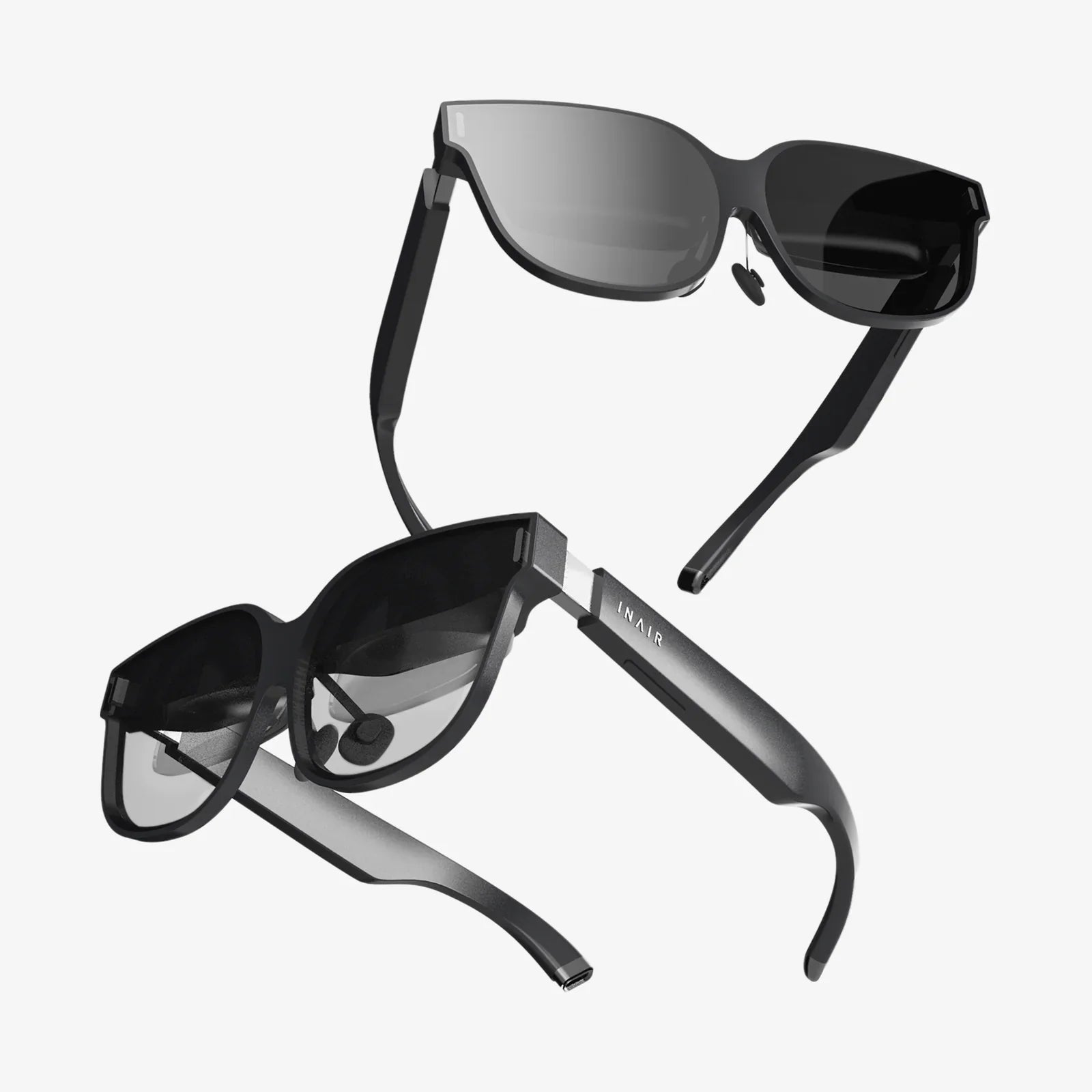
Imagine a world where digital information doesn't live trapped behind a glass screen but is seamlessly woven into the fabric of your reality. Directions float on the pavement before you, the history of a landmark overlays your view of it, and a colleague's 3D schematic hangs in the air between you for collaborative tweaking. This isn't a distant sci-fi fantasy; it's the promise of augmented reality, and it’s a promise that is being delivered now. The technology has vaulted from research labs and speculative fiction into a burgeoning market of devices you can actually purchase and use today. While the ultimate goal of indistinguishable, all-day wearable smart glasses remains on the horizon, the current generation of AR glasses is already powerful, practical, and profoundly transformative. The era of augmentation is not coming; it has already begun.
The Foundation: Understanding AR Glasses Technology
At their core, AR glasses are wearable computers that superimpose digital information—images, video, 3D models, and text—onto the user's view of the physical world. Unlike Virtual Reality (VR), which creates a completely immersive, digital environment, AR enhances reality by adding a layer of useful data and graphics. The magic of current devices hinges on a sophisticated blend of hardware and software.
The primary components include:
- Optical Systems (Waveguides): This is the heart of the visual experience. Modern AR glasses use advanced waveguides—thin, transparent pieces of glass or plastic etched with microscopic patterns—to pipe light from micro-displays on the temple to the user's eye. This technology allows for relatively sleek designs compared to the bulky helmets of the past.
- Spatial Mapping Sensors: Cameras, depth sensors, and LiDAR scanners constantly scan the environment. They create a real-time 3D map of the room, understanding the geometry of surfaces, the position of objects, and the user's position within that space. This allows digital content to be "placed" on a physical table or to occlude realistically behind a real-world object.
- Processing Power: This spatial understanding and graphic rendering requires immense computational power. Some glasses are "tethered" devices, leveraging the processor of a connected smartphone or a dedicated compute pack worn on a belt. Others are moving towards standalone units with onboard chipsets, though this presents significant challenges in balancing performance with battery life and thermal management.
- Intuitive Input Methods: Interacting with a floating interface requires new paradigms. Current systems employ voice commands, hand-tracking cameras that interpret gestures, touchpads on the temple, or simple companion controllers.
The convergence of these technologies has finally reached a point of maturity where they can be packaged into consumer and enterprise-grade hardware. The miniaturization of components, improvements in battery efficiency, and breakthroughs in optical science have made the current generation of AR glasses not just possible, but viable.
Beyond the Hype: Tangible Applications Today
While the consumer market often dreams of AR for gaming and social media filters (which are indeed a growing area), the most impactful applications of AR glasses today are in enterprise and specialized fields. Here, the technology solves real problems, improves efficiency, and enhances safety, providing a clear return on investment.
Revolutionizing Industry and Manufacturing
On factory floors and in warehouses, AR glasses are becoming indispensable tools. Technicians performing complex assembly or maintenance procedures can have digital work instructions, schematic diagrams, and video tutorials overlaid directly onto the machinery they are working on. This "see-what-I-see" capability allows remote experts to guide on-site workers through repairs by drawing arrows and circles directly into their field of view, drastically reducing downtime and the need for travel. In logistics, workers fulfilling orders can have picking routes and item information displayed, guiding them through warehouses with maximum efficiency and near-zero error rates.
Transforming Healthcare and Medicine
In the medical field, the stakes are high and the benefits of AR are immense. Surgeons can use AR glasses to view critical patient data—such as heart rate, blood pressure, or a 3D model of a tumor derived from MRI scans—without ever looking away from the operating field. This maintains sterility and focus. Medical students can learn anatomy through interactive 3D models projected onto a mannequin or even each other. Furthermore, AR is aiding in complex procedures like vein detection, where a near-infrared image of a patient's vasculature is projected onto their skin to make injections easier and less painful.
Redefining Design and Remote Collaboration
Architects, engineers, and interior designers are using AR glasses to step inside their creations before a single physical resource is spent. They can walk through a full-scale 3D model of a building's interior, assessing spatial relationships and lighting. In remote collaboration, a geographically dispersed team can all share the same virtual "room," interacting with and manipulating 3D prototypes as if they were physically present. This collapses distance and fosters a new level of iterative, creative teamwork.
The Consumer Experience: A Glimpse of the Future
For early adopters and consumers, current AR glasses offer compelling, if still evolving, experiences. They serve as portable, private giant screens for media consumption, allowing users to watch movies or play games on a virtual screen that feels hundreds of inches wide. Navigation becomes intuitive, with turn-by-turn directions mapped onto the street. Travelers can get real-time translations of signs and menus or historical context for a museum exhibit. While the form factor and battery life may not yet be suitable for all-day everyday use, they provide a thrilling preview of the future of personal computing.
The Challenges on the Path to Ubiquity
Despite the incredible progress, significant hurdles remain before AR glasses can achieve the mass-market adoption of smartphones. Acknowledging these challenges is crucial to understanding the current state of the technology.
- Form Factor and Social Acceptance: The ultimate goal is a pair of glasses that look no different from fashionable eyewear. Current models are often still too bulky, heavy, or "techy" looking for widespread social acceptance. Making the technology invisible is the key design challenge.
- Battery Life: High-resolution displays, spatial sensors, and powerful processors are energy-intensive. Achieving all-day battery life in a slim form factor is a monumental task that will require breakthroughs in both battery chemistry and power-efficient chip design.
- The "Killer App": While enterprise has found its killer apps in training and remote assist, the consumer market is still searching for the single, undeniable application that will drive every household to want a pair. It could be a revolutionary social platform, a new gaming genre, or an AI assistant that is truly contextual and proactive.
- Connectivity and Ecosystem: For AR to reach its full potential, it will require robust, high-speed, low-latency connectivity (like 5G and beyond) and a mature ecosystem of apps and services built from the ground up for spatial computing.
The Horizon: What's Next for AR Glasses?
The development of AR glasses is accelerating at a breathtaking pace. In the very near future, we can expect to see rapid improvements in all the challenging areas. Waveguide technology will become more efficient, allowing for brighter images and wider fields of view in smaller packages. Advances in micro-LED displays will offer better color and contrast. AI co-processors will handle more of the spatial understanding and context-aware tasks, making interactions smoother and more intuitive.
Perhaps the most exciting evolution is the integration of powerful Artificial Intelligence. Future AR glasses will act as a true contextual assistant, powered by AI that understands what you are looking at, what you are trying to do, and what information you might need at that exact moment. It could whisper a recipe step as you glance at your ingredients, remind you of a colleague's name as you walk into a meeting, or automatically translate a conversation in real time. The glasses will move from being a display device to being an intelligent visual companion.
The path forward is one of convergence—where the physical and digital worlds cease to be separate places and become a single, enhanced continuum of experience. The technology is moving out of the laboratory and onto the faces of professionals and pioneers, solving real-world problems today while building the foundation for a transformed tomorrow.
The question is no longer if you will eventually wear a pair of augmented reality glasses, but when you will choose to join the revolution that is already underway. The next time you squint at your phone for directions or wish you could remember a fact at the precise moment you need it, remember: the solution is being built, tested, and worn right now. The future of seeing is here, and it’s looking brighter—and far more intelligent—than ever before.
Share:
AR Glasses That Work With Apps Are Revolutionizing Daily Life and Digital Interaction
What Are 3D Virtual Reality Glasses - A Portal to Digital Worlds