


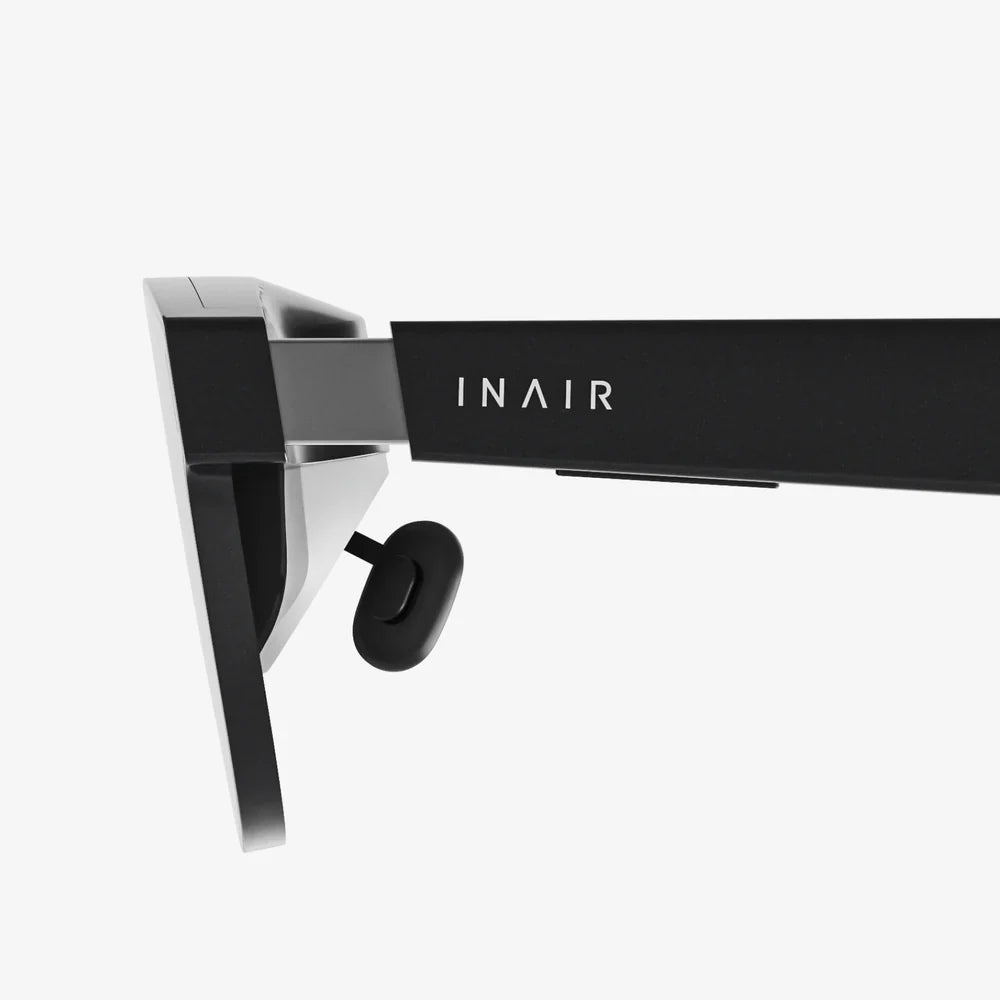
Imagine slipping on a pair of sleek, futuristic glasses and instantly being transported. One moment you're in your living room; the next, you're walking on the surface of Mars, standing center stage in a packed concert hall, or peering into the intricate workings of a human cell. This is the promise, the magic, and the technological marvel of 3D virtual reality glasses. They are not merely a screen you watch but a portal you step through, offering an experience that is less about viewing content and more about inhabiting it. This immersive power is fundamentally changing how we play, learn, work, and connect, blurring the lines between the physical and the digital in ways once confined to science fiction.
The Core Principle: Crafting the Illusion of Presence
At its heart, the function of 3D virtual reality glasses is deceptively simple: to trick the human brain into believing it is somewhere it is not. This illusion, known as "presence," is achieved through a sophisticated combination of hardware and software working in concert to replicate how we perceive the real world.
The primary technological pillars that make this possible are:
- Stereoscopic 3D Vision: Human depth perception relies on binocular vision—each eye sees a slightly different image, and our brain merges them into a single, three-dimensional picture. VR glasses mimic this by displaying two separate images, one for each eye, on a high-resolution screen or a pair of screens housed within the headset. This creates a powerful and natural sense of depth and scale.
- Head Tracking: For the virtual world to feel solid and real, it must remain consistent as you move your head. VR glasses are equipped with a suite of sensors—including gyroscopes, accelerometers, and magnetometers—that precisely track the rotation and orientation of your head in real-time. As you look up, down, left, or right, the view within the glasses adjusts instantaneously, reinforcing the illusion that you are inside a stable environment.
- Positional Tracking: Going beyond just head rotation, advanced systems also track your physical position within a room. This is often accomplished using external sensors or inward-facing cameras that map your environment (Inside-Out Tracking). This allows you to lean side-to-side, walk a few steps, crouch, or even kneel to examine a virtual object from below, adding a crucial layer of physical interaction and immersion.
- Focus and Field of View: The lenses in VR glasses are perhaps the most critical component. They are placed between your eyes and the screen, focusing and reshaping the flat image into a stereoscopic, panoramic field of view. A wide field of view (typically 90 to 110 degrees or more) helps to peripheral vision and further sells the illusion, making the digital environment feel all-encompassing.
Deconstructing the Hardware: What's Inside the Frame?
While designs vary, most modern 3D virtual reality glasses share a common set of core components that enable their immersive capabilities.
- Display Panels: High-resolution, fast-switching LCD or OLED panels are used to render the dual images for each eye. Key metrics include resolution (e.g., 1832 x 1920 per eye or higher), refresh rate (90Hz, 120Hz, or beyond), and pixel density. A higher refresh rate reduces motion blur and latency, which is critical for preventing discomfort and simulator sickness.
- Lenses: Custom Fresnel lenses, aspheric lenses, or pancake lenses are used to provide a wide field of view and a clear image across the entire display, allowing your eyes to focus comfortably on objects both near and far within the virtual space.
- Tracking Systems: This includes the internal sensors (IMUs) for head rotation and, in many cases, external base stations or cameras for precise positional tracking. Inside-Out tracking systems, which use cameras on the headset itself to observe the room, have become the standard for consumer-friendly devices.
- Audio Systems: Spatial or 3D audio is a vital part of immersion. Integrated headphones or audio straps deliver sound that changes dynamically based on your head's position and orientation. If a virtual bird chirps to your left, it will sound like it's coming from your left, even if you turn your head.
- Controllers: Handheld motion controllers are typically paired with the glasses. These are also tracked in space, allowing you to see and use your virtual hands to manipulate objects, push buttons, draw, or fire weapons, providing a direct link for interaction within the digital world.
- Computational Power: High-fidelity VR experiences require immense processing power. This can be supplied by an external, powerful computing device connected via a cable, or it can be built directly into the headset itself in the case of standalone devices, which have seen a massive surge in popularity due to their convenience and accessibility.
A Spectrum of Experiences: More Than Just Gaming
While the gaming industry has been the most visible driver of VR adoption, the applications for 3D virtual reality glasses extend far beyond entertainment, permeating numerous professional and educational fields.
Revolutionizing Education and Training
VR provides an unparalleled tool for experiential learning. Instead of reading about ancient Rome, history students can take a guided tour through a meticulously reconstructed digital replica of the Colosseum. Medical students can practice complex surgical procedures on virtual patients without risk, allowing for repetition and mistake-making in a consequence-free environment. Similarly, VR is used for training pilots, astronauts, welders, and police officers, providing realistic, high-stakes scenarios that would be too dangerous, expensive, or impractical to replicate in the real world.
Transforming Design and Architecture
Architects, engineers, and interior designers use VR as the ultimate visualization tool. Rather than looking at blueprints or 3D models on a monitor, they can step inside their designs at a 1:1 scale. A client can "walk through" their unfinished home, experiencing the flow of space, the lighting at different times of day, and the feel of the design long before construction begins. This allows for informed feedback and changes at a stage where they are far less costly to implement.
Expanding Healthcare and Therapy
The therapeutic potential of VR is vast. It is being used for exposure therapy, helping patients with phobias (like fear of heights or flying) confront their triggers in a safe, controlled setting. It aids in physical rehabilitation by turning exercises into engaging games, motivating patients to complete their routines. VR is also used for pain management, distracting burn victims during painful wound care procedures by immersing them in a calming, icy landscape.
Redefining Social Connection and Remote Work
Social VR platforms allow people to meet, interact, and share experiences as personalized avatars in virtual spaces. This goes far beyond a video call, fostering a sense of shared presence. For remote work, teams can collaborate in virtual boardrooms, brainstorm on 3D whiteboards, or examine life-sized 3D models of products together, making distance feel irrelevant.
The User Experience: What Does It Actually Feel Like?
For a first-time user, the experience of putting on a quality pair of VR glasses is nothing short of breathtaking. The initial sensation is often a moment of disorientation, quickly replaced by wonder. The world around you vanishes, replaced by a new reality. You feel a compelling urge to reach out and touch things. The brain, despite knowing the truth, is readily fooled. You might feel a visceral thrill when standing on the edge of a virtual skyscraper or an instinctual duck when a virtual object is thrown at your head.
However, the experience is not without its challenges. Some users experience "VR sickness," a form of motion sickness caused by a disconnect between what the eyes see (movement) and what the inner ear feels (stationary). Technological advancements like higher refresh rates, lower latency, and better tracking have significantly reduced this issue, but it remains a consideration for some. Furthermore, current generations of hardware, while impressive, still have limitations in visual fidelity, field of view, and ergonomics, reminding users they are in a simulated environment.
The Future Horizon: Where is the Technology Headed?
The evolution of 3D virtual reality glasses is moving at a breakneck pace. The future points towards devices that are lighter, more comfortable, wireless, and with resolution so high the digital world becomes indistinguishable from the real one—a concept known as "visual fidelity."
Key areas of development include:
- Varifocal and Eye-Tracking: Future headsets will track your eyes to understand where you are looking. This will enable "foveated rendering," where the headset renders the area you are directly looking at in high detail while subtly reducing the detail in your periphery, massively improving performance. It will also allow for more natural depth of focus and avatars that make real eye contact.
- Haptic Feedback and Gloves: The next frontier of immersion is touch. Advanced haptic gloves are in development that can simulate the feeling of touching different textures, the resistance of squeezing an object, or even the sensation of a virtual rainstorm.
- Brain-Computer Interfaces (BCIs): Looking even further ahead, research into BCIs aims to allow users to control virtual environments through neural signals alone, potentially doing away with controllers entirely and creating the most intuitive interface imaginable.
- The Metaverse: VR glasses are positioned to be the primary gateway to the "metaverse," a persistent network of interconnected virtual spaces. This envisioned future internet would be experienced, not browsed, with VR and AR blending seamlessly into our daily lives for work, socialization, and leisure.
3D virtual reality glasses are far more than a gaming peripheral; they are a new paradigm for human-computer interaction. They represent a fundamental shift from observing information to experiencing it. From the classroom to the operating room, from the design studio to the social space, this technology is breaking down barriers of distance, scale, and even physical possibility. While challenges remain in making the technology ubiquitous and comfortable for all, the trajectory is clear. These devices are steadily evolving from a niche novelty into a powerful platform that will undoubtedly play a significant role in shaping our digital future, offering glimpses into worlds we've only ever dreamed of and fundamentally expanding the canvas of human experience.
The journey into virtual reality is just beginning, and each technological leap brings us closer to a world where the only limit is the imagination itself. The next time you see a pair of these headsets, know that you are looking at more than just glasses; you are looking at a key—a key to unlock doors to anywhere and anything.
Share:
AR Glasses Now: The Present Reality and Future Vision of Augmented Wearables
Comprehensive List of AI Tools: The Ultimate Guide to Navigating the Future of Technology