


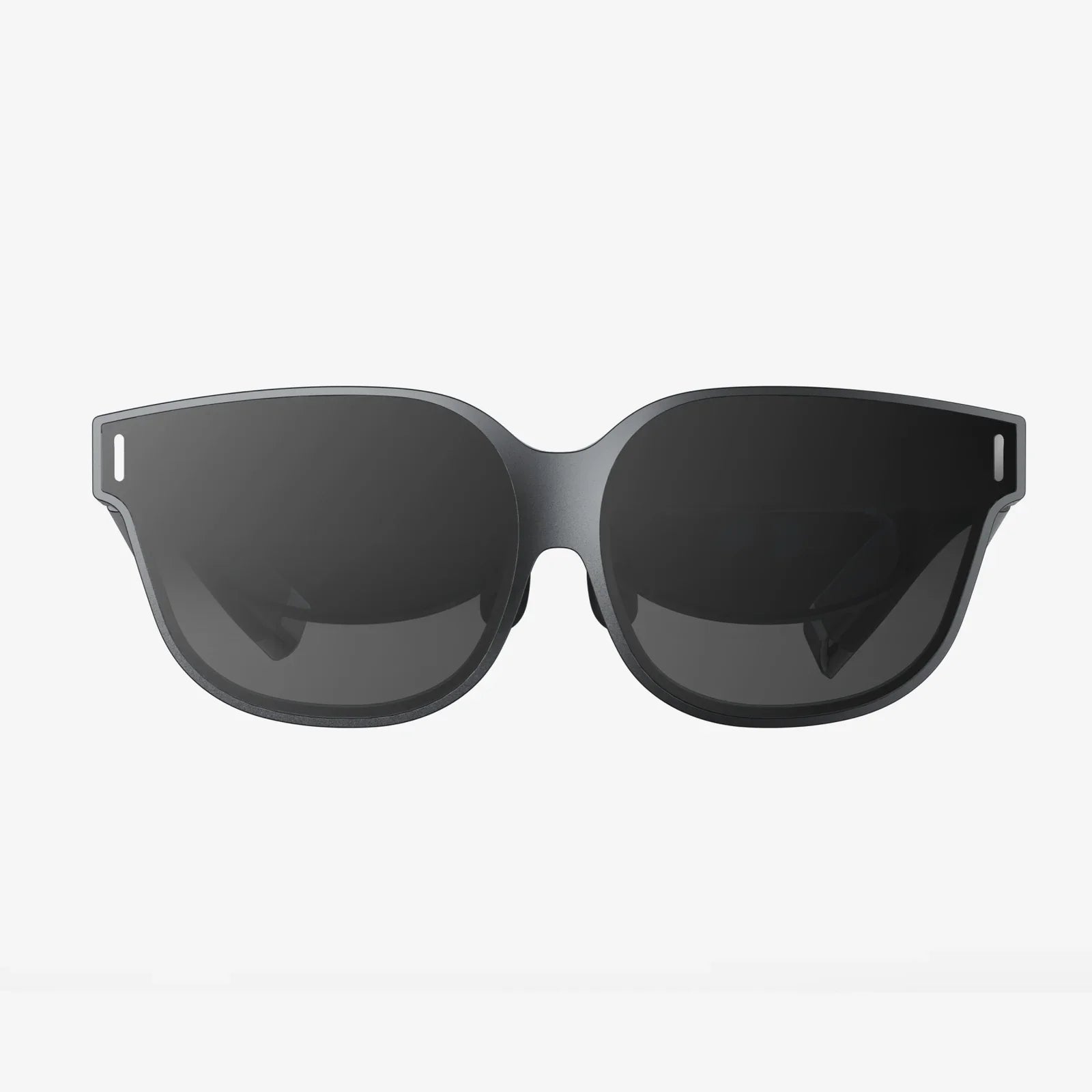
Imagine a world where digital information doesn't live trapped behind a screen but flows seamlessly into your physical reality. Directions float on the pavement before you, a recipe hovers next to your mixing bowl without a smudge, and a colleague's 3D model can be examined from every angle as if it were sitting on your desk. This isn't a distant sci-fi fantasy; it's the promise held within a deceptively simple-looking pair of eyewear. The race to perfect this technology is one of the most intense in the tech world, promising to redefine our relationship with computers and with each other. But to understand the hype, we must first ask the fundamental question: what exactly are these devices, and how do they perform their digital magic?
Defining the Digital Overlay
At their core, AR glasses are wearable computer glasses that add a layer of digital information—images, text, animations, 3D models—onto the user's view of the physical world. Unlike Virtual Reality (VR) headsets, which immerse you in a completely digital environment and block out the real world, AR glasses are designed for augmentation. They keep you grounded in your actual surroundings while enriching it with contextual, interactive data. This key difference positions them not as escape pods from reality, but as tools to enhance human perception and capability within it.
A Brief Journey Through Time: The Evolution of AR Glasses
The concept of augmented reality is older than many realize. The term was coined in 1990, but the foundational ideas date back even further. However, the journey to wearable glasses has been a story of fits and starts.
The first major attempt to bring AR to the masses was a spectacular failure that became a legendary cautionary tale. In the early 2010s, a prototype device offered a heads-up display, a camera, and internet connectivity. But it was plagued by a clunky design, a short battery life, significant privacy concerns due to its always-on camera, and a high price tag. It was a classic case of technology outpacing social acceptance and practical design. Despite its failure, it served as a crucial proof-of-concept and a valuable lesson for the entire industry on what not to do.
For years afterward, AR lived mostly on smartphones, using their cameras and screens to overlay graphics. The real breakthrough began with a shift in focus from consumer entertainment to enterprise and industrial applications. Companies began developing smart glasses for field technicians, warehouse logistics experts, and manufacturing assemblers. In these controlled environments, the value proposition was clear: increased efficiency, reduced errors, and hands-free access to crucial information. This enterprise focus provided the funding and real-world testing needed to refine the underlying technologies without the intense scrutiny of the consumer market.
How Do They Actually Work? The Magic Deconstructed
The wonder of AR glasses lies in the sophisticated integration of hardware and software. They are miniature marvels of engineering, packing a suite of components that work in concert.
The Hardware Suite
Inside the frames, you'll typically find:
- Microdisplays: These are tiny, high-resolution screens, often based on OLED or MicroLED technology, that generate the digital images. They are the source of the light that will become the virtual content.
- Waveguides and Optical Combiners: This is the true magic trick. Instead of projecting images directly onto the user's eye, most advanced glasses use waveguides—thin, transparent pieces of glass or plastic etched with microscopic patterns. Light from the microdisplay is injected into the waveguide, "surfing" along it through total internal reflection before being directed out towards the eye. The optical combiner is the element that merges the digital light from the waveguide with the natural light from the real world, creating the fused augmented image.
- Sensors: A full array of sensors acts as the eyes and ears of the glasses. This includes cameras for computer vision, depth sensors (like LiDAR) to map the environment in 3D, accelerometers, gyroscopes for tracking head movement, and ambient light sensors.
- Processor (SoC): A mini-computer on a chip that handles all the data processing, from understanding the sensor input to rendering the graphics and running the operating system.
- Battery: A necessary compromise between size, weight, and longevity, often housed in the temple arms or on a separate pack.
- Audio System: Bone conduction speakers or tiny directional speakers that deliver sound directly into the ear without blocking ambient noise, allowing users to stay aware of their surroundings.
The Software Brain
Hardware is useless without intelligent software. The operating system of AR glasses is responsible for:
- Simultaneous Localization and Mapping (SLAM): This is the critical technology that allows the glasses to understand their position in space. It continuously scans the environment, identifying features and surfaces to create a real-time 3D map, ensuring digital objects stay locked in place in the real world.
- Computer Vision: Algorithms that interpret what the cameras see. This allows for object recognition (e.g., identifying a specific machine part), reading text, or tracking hand gestures for input.
- User Interface (UI) & User Experience (UX): Designing interfaces that feel natural and intuitive in a spatial context is a unique challenge. Menus might be pinned to walls, and information cards might float nearby, all controllable by voice, touchpads on the frames, or gesture control.
Beyond the Hype: Real-World Applications Today and Tomorrow
While the consumer future is bright, the most impactful uses of AR glasses are already here in professional settings.
Enterprise and Industry
This is where AR glasses have already proven their worth. Technicians can see schematics overlaid on the machinery they are repairing, with animated guidance for each step. Warehouse pickers see optimal routes and item locations highlighted in their vision, dramatically speeding up order fulfillment. Remote experts can see what an on-site worker sees and annotate their field of view with arrows and notes to guide them through complex procedures, saving on travel costs and downtime. In design and architecture, 3D models can be visualized at scale on a construction site before a single foundation is poured.
Healthcare and Medicine
Medical students can practice procedures on virtual anatomy overlays. Surgeons can have vital signs, ultrasound data, or 3D scans projected into their view during an operation without looking away from the patient. This can improve precision and reduce cognitive load. They also have potential in assisting patients with low vision, highlighting obstacles and enhancing contrast in their environment.
Everyday Life and Consumer Use
This is the frontier. The potential includes:
- Navigation: Turn-by-turn directions painted onto the streets, with arrows and markers seamlessly integrated into the cityscape.
- Information and Translation: Look at a restaurant menu and see reviews or translations instantly appear next to each dish. Look at a landmark and see its history pop up.
- Social Connection and Entertainment: Imagine watching a movie on a virtual giant screen in your living room or playing a board game that comes to life on your table. Friends could appear as avatars on your couch for a virtual hangout.
- Personal Productivity: Have your calendar, messages, and notifications available in your periphery without ever taking out your phone, allowing for true context-aware computing.
The Hurdles on the Road to Ubiquity
Despite the exciting potential, significant challenges remain before AR glasses can become as commonplace as smartphones.
Technical Challenges
Form Factor: The holy grail is a pair of glasses that look, feel, and weigh as much as regular eyewear. Current technology often requires trade-offs between performance, battery life, and size. Making powerful components small and energy-efficient enough is a monumental engineering task.
Visual Fidelity and Field of View (FoV): The digital overlay must be bright, high-resolution, and convincingly integrated into the real world. Many current devices have a limited field of view—like a small floating window—which breaks immersion. Expanding this to a full, natural field of view is difficult and expensive.
Battery Life: Powering all these components for a full day of use is a major constraint. Innovations in battery technology and extreme power efficiency are required.
Social and Ethical Challenges
Privacy: This is arguably the biggest societal hurdle. Glasses with always-on cameras and sensors raise profound questions about surveillance and consent. How do we prevent recording in private spaces? How do we ensure people know when they are being recorded? Robust digital ethics and new social norms will need to be established.
Digital Distraction and Safety: While designed to be less intrusive than phones, constantly having notifications and information in your field of vision could lead to new forms of distraction, especially in situations like driving or walking in busy areas.
The Digital Divide: As with any transformative technology, there is a risk that it could exacerbate social inequalities if it becomes a prerequisite for full participation in society and the economy.
A Glimpse into the Future
The trajectory is clear: AR glasses will become more powerful, smaller, and more socially accepted. We are moving toward a future where your digital world is un-tethered from your hand and instead lives in the space around you, accessible with a glance. The ultimate goal is a device so intuitive and useful that it becomes an invisible extension of our minds, a constant companion that enhances our understanding of and interaction with the world. They won't replace smartphones overnight, but they represent the next logical step in the long human quest to integrate technology more naturally into our lives.
The true potential of this technology lies not in flashy graphics, but in its ability to make us more capable, connected, and informed humans. It promises a world where technology understands our context and serves us, rather than us serving it. The next time you see someone wearing a pair of high-tech frames, look closely—you might just be glimpsing the beginning of the next computing revolution, one that will quite literally change our perspective on everything.
Share:
Creating Augmented and Virtual Realities: The Technology Reshaping Our World
Meeting Room Smart Glass: The Future of Dynamic Workspaces is Transparent