


Imagine a world where digital information seamlessly overlays your physical surroundings, where you can learn, work, and play in entirely fabricated universes that feel as real as the one you were born into. This is the promise held within the intricate and fascinating process of creating augmented and virtual realities, a technological frontier that is rapidly moving from science fiction to tangible reality. The journey from a blank slate to an immersive experience is a complex symphony of art, science, and engineering, and it is fundamentally altering our relationship with technology itself.
The Foundational Pillars: Hardware and Software
Before a single virtual object can be rendered or an augmented overlay designed, a robust foundation must be established. This foundation is built upon two critical pillars: the hardware that delivers the experience and the software that powers it.
The hardware for immersive technologies is a marvel of modern engineering. For Virtual Reality (VR), this primarily involves head-mounted displays (HMDs). These devices are far more than simple screens strapped to the face. They incorporate:
- High-Resolution Displays: Positioned mere centimeters from the eyes, these displays require incredibly high pixel densities and fast refresh rates (90Hz and above) to create a convincing, smooth image and prevent user discomfort or simulator sickness.
- Precision Tracking Systems: To sell the illusion of being in a virtual world, the system must know exactly where the user is looking and how they are moving. This is achieved through a combination of internal and external sensors. Inside-Out tracking uses cameras and sensors on the headset itself to map the environment, while Outside-In tracking relies on external base stations or sensors placed in the room to precisely monitor the headset's position and rotation in real-time.
- Advanced Optics: Complex lens systems are used to focus the image from the close-up displays onto the user's retinas, creating a wide field of view that sells the immersion. These lenses must carefully manage issues like distortion and chromatic aberration.
- Audio Solutions: Immersive 3D spatial audio is non-negotiable. Sound must come from the correct direction and distance, changing dynamically as the user moves their head. This is often achieved through binaural audio processing, which tricks the brain into perceiving sound in three-dimensional space.
- Controllers and Haptics: Input devices range from simple handheld controllers with buttons and joysticks to sophisticated gloves that track individual finger movements. Haptic feedback, which provides tactile sensations, is crucial for interaction, from feeling a virtual button click to the recoil of a virtual weapon.
Augmented Reality (AR) hardware shares some DNA with VR but faces unique challenges. While VR fully controls the user's visual field, AR must digitally augment the real world. This is achieved through either:
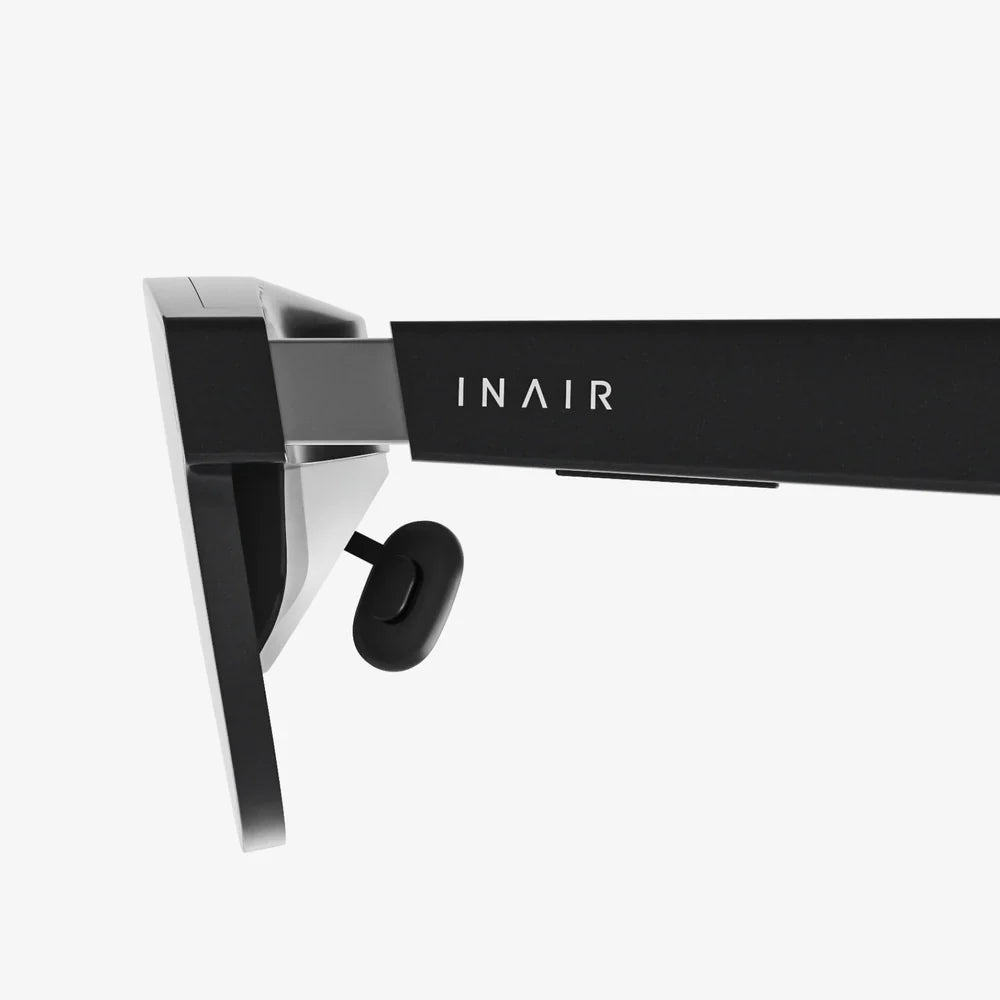
- Optical See-Through: Using semi-transparent waveguides or mirrors, these devices, often in the form of glasses, allow users to see the real world directly while projecting digital images onto the lenses. This requires miniature projectors and complex optical combiners.
- Video See-Through: Cameras on the device capture the real world, a processor composites digital elements into the video feed, and the combined image is displayed on an opaque screen. This allows for more vivid digital effects but can introduce latency.
On the software side, the engine is the heart of the operation. Powerful game engines have become the default platform for creating augmented and virtual realities. These engines provide the essential tools and frameworks for:
- Rendering: Generating the complex 3D graphics at the high frame rates required for immersion.
- Physics Simulation: Governing how objects move, collide, and interact within the experience, ensuring they obey the laws of physics (or a chosen set of rules).
- Asset Management: Handling the 3D models, textures, animations, and audio files that make up the experience.
- SDK Integration: Providing plugins and software development kits (SDKs) that allow developers to access the specific features of various VR/AR hardware, from tracking data to controller input.
The Development Pipeline: From Concept to Experience
Creating augmented and virtual realities is a multidisciplinary process that blends creative storytelling with rigorous technical execution. The pipeline often mirrors game development but is constrained by the unique demands of immersive media.
1. Concept and Pre-Production
Every compelling experience begins with a strong concept. Is it a training simulation for surgeons? A virtual tour of ancient Rome? A multiplayer AR game played in a city park? This phase involves defining the core idea, target audience, and platform. Storyboarding is crucial, but it evolves into experience storyboarding, mapping out not just narrative beats but user movement, interaction points, and emotional cadence. This is also where technical feasibility is assessed, determining the project's scope based on the capabilities of the target hardware.
2. Asset Creation: Building the Digital World
This is the domain of artists and 3D modelers. Every object, character, and environment that the user will see and interact with must be created.
- 3D Modeling: Artists use digital sculpting and polygonal modeling software to create the 3D meshes of objects. For VR/AR, optimization is paramount; models must be detailed enough to look convincing but efficient enough to render twice (once for each eye) at high frame rates.
- Texturing and Materials: A simple 3D model is brought to life through textures—image files that are wrapped around the model to give it color, detail, and surface properties like roughness, metallicity, and glossiness. Advanced material systems use physics-based rendering (PBR) to make surfaces react to light in a physically accurate way, greatly enhancing realism.
- Animation: Animators bring characters and objects to life. This includes everything from character locomotion and facial expressions to the movement of machinery. In VR, first-person player animations must be perfectly synced with the user's actual movements to avoid a disconnect that causes nausea.
- Audio Design: Sound designers create and implement the soundscape. This is not just background music but every footstep, door creak, and interface sound, all spatially positioned in 3D to match their virtual source.
3. Programming and Implementation
Programmers are the architects who assemble the assets and breathe logic into the experience. Using the engine's scripting language, they:
- Create Interactions: Write code that defines what happens when a user picks up an object, presses a button, or looks at a specific item. This is the core of user agency within the experience.
- Implement Gameplay Logic: Build the systems that govern the rules, objectives, and progression of the experience.
- Optimize Performance: This is a constant and critical task. Developers must ensure the experience maintains a steady, high frame rate. Techniques include level-of-detail (LOD) systems (where simpler models are used for distant objects), occlusion culling (not rendering objects blocked from view), and efficient lighting and shadow solutions.
- Integrate Hardware APIs: Connect the software to the hardware, ensuring head tracking, controller input, and haptic feedback are all working flawlessly and with minimal latency.
4. User Experience (UX) and User Interface (UI) Design
UX design for immersive media is arguably its own unique discipline. Traditional screen-based metaphors often fail. Designers must answer fundamental questions: How does a user navigate? How do they select and manipulate objects? How is information presented without breaking immersion?
UI in VR/AR is often diegetic—meaning it exists within the world itself, like a holographic dashboard projected from a character's wrist or a control panel built into a virtual spaceship. Non-diegetic UI (floating menus) is also used but must be carefully designed to be comfortable and legible. The key principles are spatial awareness, intuitive interaction, and minimizing cognitive load. A bad UX design in VR doesn't just make an app hard to use; it can literally make users sick.
5. Testing, Iteration, and Deployment
Testing is relentless. Unlike a flat screen, an immersive experience has infinite potential viewpoints and interaction possibilities. Testers, often called quality assurance (QA) specialists, must methodically try to break the experience, searching for bugs in geometry, lighting, interaction, and performance. Crucially, they also provide feedback on "comfort"—identifying any elements that cause eye strain, nausea, or disorientation.
Based on feedback, the development team iterates, refining interactions, optimizing performance, and polishing the experience. Finally, the application is packaged and deployed to digital storefronts or distributed directly to enterprise clients.
The Cutting Edge: Pushing the Boundaries of Immersion
The field of creating augmented and virtual realities is not static; it is accelerating at a breathtaking pace. Research and development are continuously pushing the boundaries of what is possible.
- Photorealistic Graphics: Advancements in real-time ray tracing, which simulates the physical behavior of light, are enabling levels of visual fidelity that are nearing photorealism. This, combined with ever-increasing display resolutions, is closing the "uncanny valley" and making virtual worlds indistinguishable from reality.
- Haptic Feedback and Full-Body Tracking: The future of immersion lies beyond visual and auditory senses. Advanced haptic suits can simulate touch, temperature, and even impact across the entire body. Full-body tracking, using cameras or sensors, allows for a user's entire digital avatar to mirror their real-world movements perfectly, enabling deeply social and expressive interactions in virtual spaces.
- Brain-Computer Interfaces (BCIs): The most futuristic frontier involves bypassing controllers altogether. Early-stage BCIs can read neural signals to interpret a user's intent, potentially allowing for control of a virtual environment through thought alone. This technology, though in its infancy, points toward a future of truly seamless interaction.
- 5G and Cloud Streaming: The high bandwidth and low latency of 5G networks enable cloud-based VR and AR. Instead of requiring a powerful local computer, the complex rendering could be done on remote servers and streamed to lightweight, wireless headsets. This would dramatically lower the barrier to entry for high-end experiences.
- Artificial Intelligence: AI is being integrated at every level. It can be used to create more believable non-player characters (NPCs) with advanced behaviors, to dynamically generate expansive worlds, to enhance foveated rendering (where only the area the user is directly looking at is rendered in full detail), and to improve inside-out tracking through better environmental understanding.
Beyond Entertainment: The Transformative Applications
While gaming is a massive driver, the impact of creating augmented and virtual realities extends far into nearly every professional field.
- Education and Training: Medical students can practice complex surgeries on virtual patients without risk. Mechanics can learn to repair engines with digital instructions overlaid on the physical machinery. History students can walk through digitally reconstructed ancient cities. This "learning by doing" in a safe, simulated environment is profoundly effective.
- Enterprise and Design: Architects and interior designers can walk clients through unbuilt structures. Global teams can collaborate in a shared virtual workspace around 3D prototypes of new products, making design changes in real-time regardless of their physical location.
- Healthcare and Therapy: VR is being used for exposure therapy to treat phobias and PTSD, allowing patients to confront triggers in a controlled setting. It is also used for physical rehabilitation, turning exercises into engaging games, and for managing pain by distracting the brain with immersive experiences.
- Retail and Commerce: AR allows customers to "try on" clothes, glasses, or makeup through their smartphone camera or to see how a new piece of furniture would look in their living room at true scale before purchasing.
- Social Connection: Immersive social platforms are emerging where people can meet, attend concerts, watch movies, and simply hang out as personalized avatars, offering a sense of presence and shared space that video calls cannot match.
Ethical Considerations and The Path Forward
With such powerful technology comes significant responsibility. The process of creating augmented and virtual realities must be guided by a strong ethical framework. Key concerns include:
- Privacy and Data: These technologies can collect unprecedented amounts of biometric and behavioral data—precise eye movement, gait, voice recordings, and even emotional responses. How this data is stored, used, and protected is a paramount concern.
- Accessibility and the Digital Divide: Ensuring these experiences are available and usable to people with different physical abilities is critical. There is also a risk that these technologies could become a luxury good, exacerbating social and economic inequalities.
- Psychological Impact and Addiction: The compelling nature of immersive worlds raises questions about overuse, addiction, and the potential for users to withdraw from physical reality. The line between healthy engagement and unhealthy escapism must be carefully considered.
- Safety and Harassment: Virtual spaces can be subject to the same societal problems as physical ones, including harassment and abuse. Creating safe and inclusive environments, especially in social VR, requires proactive design and moderation policies.
- Misinformation and Reality Blurring: As AR and VR become more photorealistic, the potential for deepfakes and manipulated experiences grows. This could have serious implications for everything from legal evidence to public trust.
The act of creating augmented and virtual realities is one of the most ambitious technological undertakings of our time, a grand fusion of art, science, and human psychology. It is not merely about building new gadgets but about architecting new layers of human experience and redefining the very fabric of communication, work, and play. The virtual and physical realms are on a convergent path, and the creators building these bridges are not just coding applications—they are quietly constructing the next chapter of human reality, one immersive experience at a time. The door to these new worlds is now open, and the journey inside is only just beginning.
Share:
The Future of Work & Technology: Navigating the Next Great Transformation
AR Glasses What Are They: A Deep Dive Into The Future On Your Face