


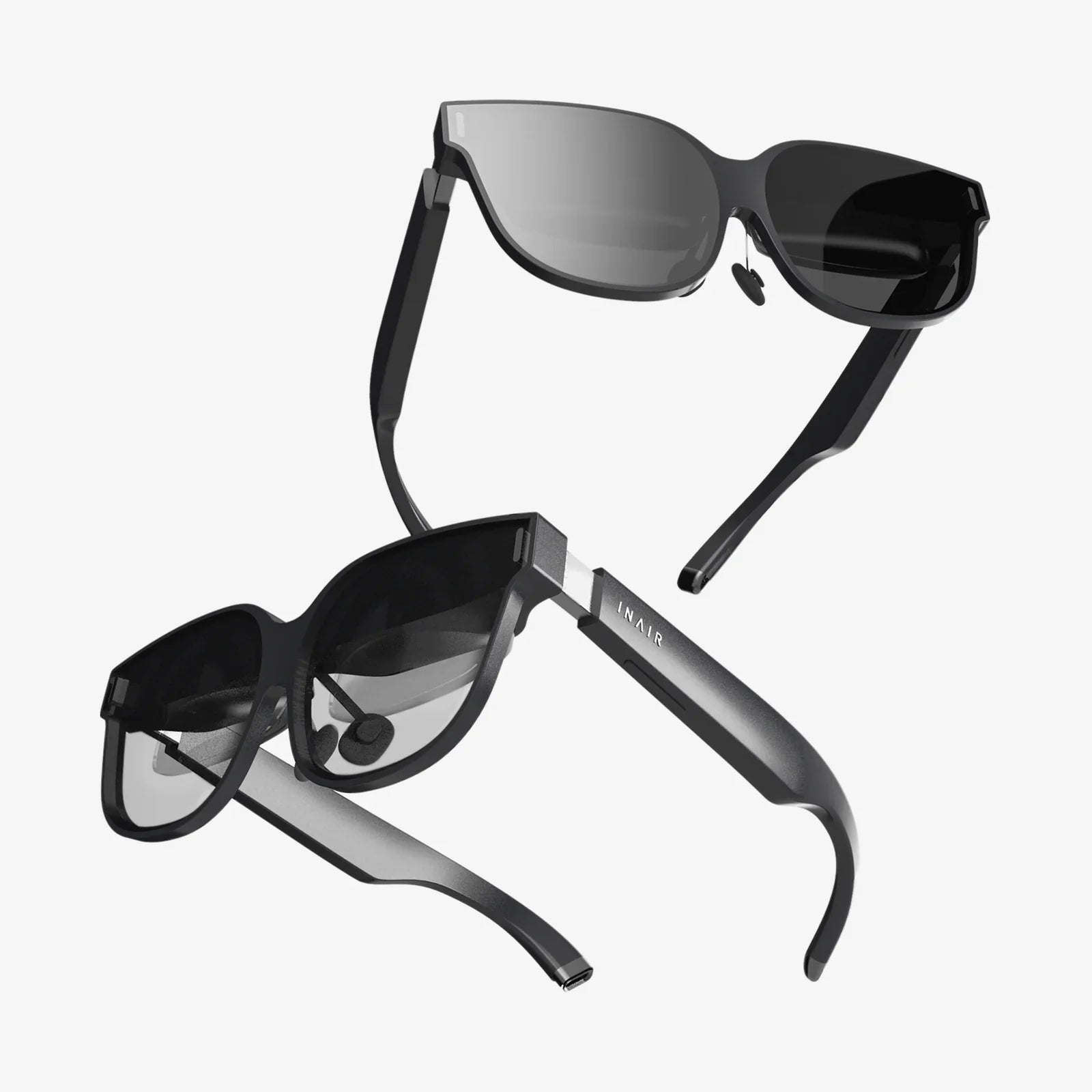
Imagine a world where your reality is not a fixed, immutable canvas but a dynamic, interactive layer cake of information, entertainment, and social connection, all seamlessly painted onto the world before your eyes. This is the promise, and the profound challenge, of the next technological frontier: augmented reality glasses. This isn't just another gadget; it's a potential new lens for human consciousness, a tool that will fundamentally recalibrate the relationship between what we see and what we know. The journey into this new visual paradigm is not merely about technological capability; it's about understanding how this powerful fusion of the digital and physical will reshape our lives, our societies, and our very perception of truth.
The Technological Bridge: From Screens to Sight
The core magic of advanced AR eyewear lies in its ability to act as a technological bridge, closing the gap that has existed since the dawn of computing between the user and the screen. For decades, we have been trained to look at devices—first at large monitors, then at laptops, and now at the small rectangles we carry in our pockets. This act creates a distinct separation between our digital and physical lives. AR glasses seek to dissolve this boundary entirely.
This is achieved through a sophisticated combination of hardware. Miniaturized displays, often using waveguide or holographic techniques, project images directly onto the lenses and into the user's field of view. Simultaneously, a suite of sensors—including cameras, depth sensors, LiDAR, and inertial measurement units (IMUs)—constantly scans the environment. This sensor fusion allows the device to understand the world in real-time: it maps surfaces, identifies objects, tracks the user's head position and gaze, and calculates precise spatial relationships. Powerful onboard processors then synthesize this environmental data with digital content, anchoring a virtual object to your real-world desk or displaying navigation arrows that appear to be painted onto the street ahead. The result is a convincing and stable illusion that the digital and physical coexist in the same space.
Redefining Human Interaction and Social Connection
One of the most immediate and profound impacts of pervasive AR will be on the nature of human interaction. Social platforms will evolve from feeds on a phone to shared experiences in physical space. Imagine meeting a friend for coffee while both wearing AR glasses. You could silently share a digital document, hovering above the table for you both to annotate. A graph of recent sports statistics could materialize beside you as you debate a player's performance. Your friend, who is an architect, could project a 3D model of their latest design onto the café floor, walking you through it from every angle.
This new layer of shared visual context has the potential to make communication richer and more efficient. However, it also introduces complex social dynamics. Will we develop new etiquette for when it's appropriate to engage with this digital layer during a conversation? The concept of "presence" will be challenged. Is someone truly present with you if their visual field is cluttered with notifications, emails, and other digital distractions? We may see the emergence of a new digital divide, not just in access to technology, but in the ability to interpret and engage with these augmented social cues. The very act of making eye contact could change, as the other person may be looking at information superimposed over your face.
The Professional and Industrial Metamorphosis
Beyond social spheres, the professional world is poised for a metamorphosis driven by AR visualization. The phrase "what we see" takes on a powerful new meaning in fields where precision, information, and context are paramount.
- Medicine and Surgery: A surgeon could see a patient's vital signs, ultrasound data, or a 3D model of a tumor directly overlaid on their body during an operation, allowing for unprecedented precision and access to real-time data without looking away from the surgical field.
- Engineering and Manufacturing: A factory technician performing complex repairs could see digital instructions and arrows pointing directly to the components they need to adjust. An architect could walk through a full-scale, virtual model of a building still under design, identifying structural or design flaws before a single brick is laid.
- Education and Training: Students studying astronomy could have the night sky above them annotated with the names and trajectories of stars and planets. Medical students could practice procedures on hyper-realistic virtual patients, receiving real-time feedback superimposed on their actions.
This shift represents the ultimate realization of "just-in-time" information, transforming how we work, learn, and solve complex problems by making crucial data an innate part of our visual field.
The Advertising and Consumer Experience Revolution
The commercial implications of controlling what users see are staggering. The business model of the internet has long been built on advertising, and AR presents the ultimate canvas. Billboards in the physical world could become dynamic and personalized. Walk past a restaurant, and your glasses could display today's specials and a reservation link. See a poster for a movie, and a trailer might begin playing in a virtual window beside it.
This creates a potent form of contextual advertising but also raises the specter of a world cluttered with digital spam. The ability to filter our reality will become a critical feature, if not a paid service. Will we subscribe to ad-free reality layers? Furthermore, the line between public space and corporate space will blur. A city park could be visually transformed by different companies for different users, leading to debates about visual pollution and the commercialization of our shared environment. Our reality could become a battleground for our attention, with our gaze as the ultimate commodity.
The Philosophical and Ethical Labyrinth
The most profound questions raised by AR glasses are not technical but philosophical. They force us to confront the very nature of perception and reality. If two people in the same physical location can see entirely different visual information, can we still say they share the same reality? This technology has the potential to create personalized realities, or "filter bubbles" in physical space, where our individual beliefs, preferences, and biases are constantly reinforced by the digital layer we choose to overlay on the world.
This power makes the developers and curators of these AR platforms the arbiters of a new kind of truth. They will decide what information is available, how it is presented, and what is hidden. The potential for misuse is enormous, from state-sponsored propaganda that alters historical monuments in real-time to malicious actors creating convincing, dangerous illusions in the world. The concept of "seeing is believing" becomes dangerously obsolete. How do we verify what is real when our own eyes can be systematically deceived? Establishing a new literacy for this medium—a critical eye for discerning the source and intent behind the digital layers we see—will be one of the great educational challenges of the coming decade.
Privacy in a World of Augmented Sight
The always-on, sensor-rich nature of AR glasses creates a privacy paradox. To seamlessly blend the digital and physical, the device must be constantly watching, listening to, and analyzing the world around you. This means it is also constantly collecting data about that world, which includes other people. The potential for ubiquitous surveillance is unprecedented. While a smartphone camera is pointed deliberately, AR glasses could record passively and continuously.
This data collection extends beyond video. It includes detailed spatial maps of homes and offices, biometric data inferred from gaze-tracking and heart rate monitoring, and a perfect record of a user's interests and interactions based on what they look at and for how long. Who owns this data? How is it stored and used? The very concept of anonymity in public space could vanish if these devices can recognize faces and pull up linked social media profiles on command. Navigating the balance between personalized utility and the right to privacy will require robust new legal frameworks and ethical standards developed in tandem with the technology itself.
The Path Forward: Designing for Humanity
The future of AR is not predetermined. Its impact will be shaped by the choices made by engineers, designers, policymakers, and users today. The goal must be to design these systems not for maximum engagement or data extraction, but for human benefit. This means building in privacy from the ground up, creating clear and intuitive controls for what is seen and shared, and fostering interoperability so that no single entity controls our view of reality.
It means prioritizing applications that enhance our human capabilities without replacing them—that help a mechanic see better rather than think for them. It requires a broad societal conversation about the ethical red lines we will not cross. The technology itself is neutral, but its implementation is not. We have the opportunity to build a new layer of reality that is inclusive, empowering, and truthful, rather than divisive, distracting, and manipulative. The challenge is immense, but so is the opportunity to augment not just our sight, but our understanding of the world and each other.
The world through AR glasses is a world of infinite possibility, a canvas waiting to be painted with the brightest ideas and most troubling impulses of humanity. The view it offers is not just of the world as it is, but as it could be—for better or for worse. The ultimate question isn't what the technology will allow us to see, but what we, as a society, will choose to make visible. The next era of human vision is dawning, and it promises to be the most revealing—and potentially the most distorting—lens we have ever peered through.
Share:
Super Virtual Reality: The Next Evolutionary Leap in Human Experience and Connection
11 Inch Portable Computer: The Ultimate Guide to Maximum Mobility and Power