


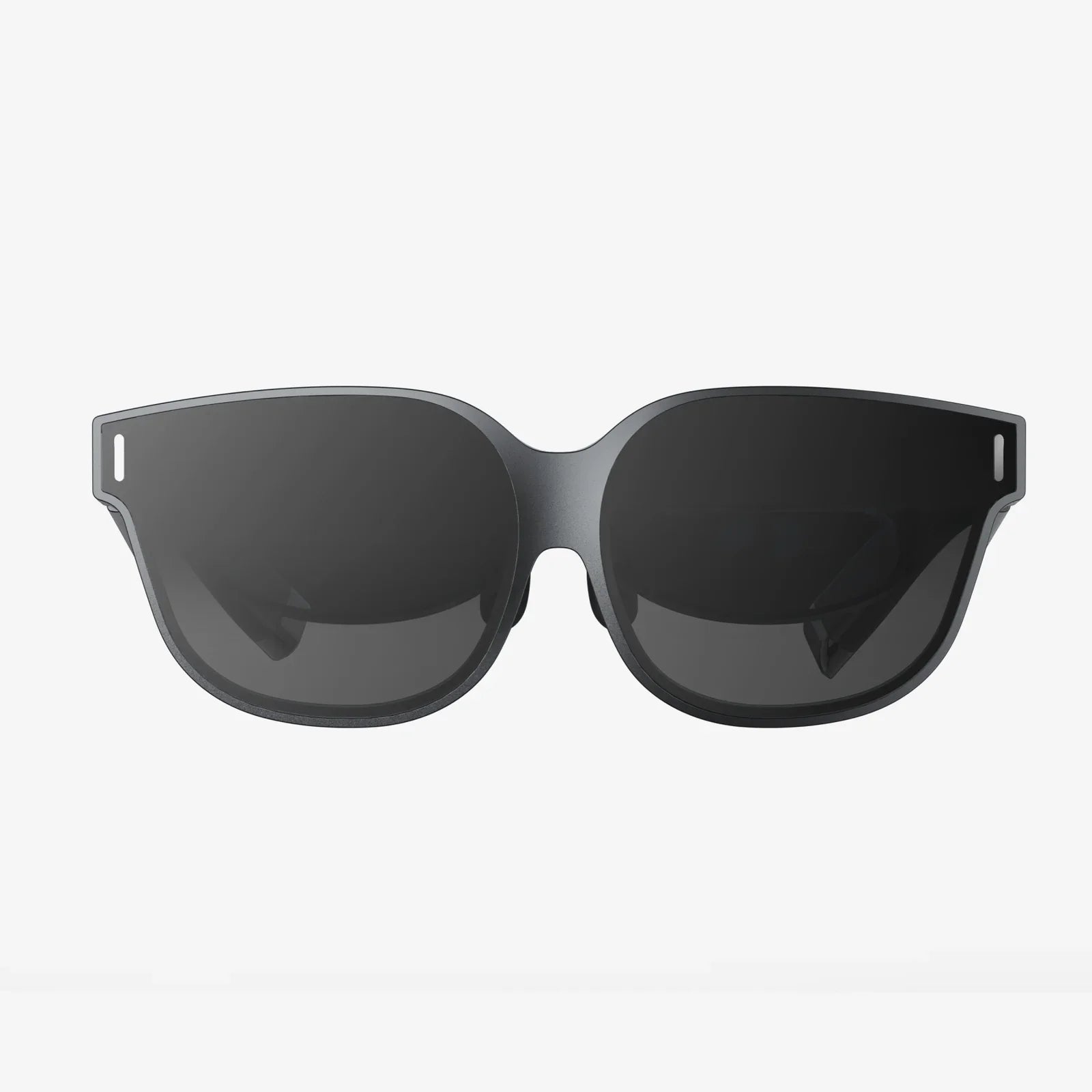
Imagine a world where the line between the digital and the physical doesn't just blur—it vanishes. A world where you can feel the spray of a virtual ocean on your skin, share a conversation with a historical figure rendered in perfect detail, or design a skyscraper with your hands, manipulating beams of light as if they were tangible steel. This is the promise of Super Virtual Reality, a technological revolution poised to unlock experiences we've only ever dared to dream of. It’s not merely an upgrade; it’s a fundamental reimagining of reality itself, and it’s closer than you think.
Beyond the Headset: Defining the "Super" in Virtual Reality
To understand Super Virtual Reality, we must first move beyond the current generation of technology. Today's systems offer a glimpse into digital worlds, but they are largely defined by their limitations: screen-door effects, limited fields of view, clunky controllers, and a distinct feeling of being an observer in a world, not an inhabitant. Super Virtual Reality shatters these constraints. It is not defined by a single piece of hardware but by a convergence of several groundbreaking technologies that work in harmony to create a seamless, perceptually convincing experience.
The "Super" denotes a qualitative leap across several key axes:
- Visual Fidelity: Resolution so high it is indistinguishable from natural human sight, with dynamic lighting, realistic textures, and a field of view that encompasses our entire peripheral vision.
- Haptic Immersion: The ability to not just see a virtual object but to feel its weight, texture, temperature, and resistance. This goes beyond simple vibration motors to include full-body force feedback, tactile suits, and even neural interfaces.
- Auditory Precision: 3D spatial audio that is so accurate your brain can pinpoint the exact location of a sound, from a leaf crunching underfoot behind you to a whisper from across a virtual room.
- Neurological Integration: Moving beyond external stimuli to interfaces that can read neural signals for control and write sensory information directly to the brain, potentially bypassing traditional senses altogether for a purer form of experience.
- Persistent Worlds: Vast, shared digital environments that continue to exist and evolve whether you are logged in or not, powered by immense cloud computing resources and sophisticated artificial intelligence.
This combination transforms a simulated experience into a genuine one. It’s the difference between watching a documentary about climbing Mount Everest and actually feeling the biting cold and thin air as you grip the icy ridge.
The Technological Pillars Building Our New Reality
Such a profound shift cannot be achieved by a single invention. Super Virtual Reality is being built on a foundation of several interdependent technological pillars, each advancing rapidly and feeding into the others.
Photorealistic Graphics and Real-Time Rendering
The quest for visual perfection is driven by exponential growth in computing power, particularly through specialized processors designed for parallel processing tasks like ray tracing. Ray tracing simulates the physical behavior of light, calculating how individual rays interact with surfaces to create reflections, refractions, and shadows that are perfectly lifelike. Coupled with artificial intelligence-driven super-sampling, which intelligently enhances resolution without overburdening the hardware, these technologies are erasing the uncanny valley. We are moving towards visuals that are not just high-resolution, but emotionally resonant and physically accurate.
The Haptic Revolution: The Internet of Touch
If visuals are the eyes of SVR, haptics are its hands and skin. Next-generation haptic technology is exploring a multitude of approaches. High-frequency, high-fidelity actuators embedded in gloves and suits can simulate a stunning range of textures, from the rough grain of sandpaper to the gentle brush of silk. More advanced systems use targeted ultrasonic waves or electro-tactile stimulation to create the sensation of touch mid-air, without any wearable device. For experiencing force and weight, robotic exoskeletons—both full-body and for limbs—can apply precise pressure and resistance, allowing you to feel the kick of a virtual rifle or the strain of pushing a heavy object. This "Internet of Touch" will be crucial for tasks requiring dexterity, from virtual surgery to mechanical repair.
Brain-Computer Interfaces: The Final Frontier
The most radical and transformative pillar of SVR is the development of non-invasive brain-computer interfaces (BCIs). While current VR relies on our biological sensors (eyes, ears, skin), BCIs aim to communicate directly with the brain. Imagine wanting to raise your virtual hand and having it happen not because you moved a muscle tracked by a camera, but because you simply thought about it. Early-stage BCIs can already interpret basic intent and neurological feedback. In the context of SVR, this technology could evolve to write sensory information directly to the cortex. Instead of wearing headphones, your brain could be fed the precise neural signature of a symphony orchestra playing around you. Instead of a haptic suit simulating a breeze, your somatosensory cortex could be stimulated to feel it directly. This represents the ultimate immersion—a complete bypass of the body’s hardware for a direct software-to-mind connection.
The AI Nervous System
None of this hardware would be intelligent without a sophisticated AI backbone. Artificial intelligence is the invisible engine of SVR, performing countless tasks in real-time. AI algorithms power the non-player characters (NPCs), endowing them with believable behavior, emotional intelligence, and the ability to hold contextually relevant conversations. AI manages the rendering pipeline, dynamically allocating resources to where the user is looking to maximize efficiency (a technique called foveated rendering). It also generates vast swathes of content on the fly, from unique landscapes to entire storylines, ensuring that no two experiences are ever exactly the same. This AI nervous system makes the world feel alive, responsive, and infinitely complex.
Transforming Industries: The Practical Power of SVR
While the entertainment applications of SVR are obvious and thrilling—from hyper-immersive gaming to interactive concerts and movies—its most profound impact will be felt across core industries, solving real-world problems and creating new paradigms for work and learning.
Healthcare: The Scalpel and the Sympathetic Heart
The medical field stands to be utterly transformed. Surgeons will practice complex procedures on perfect digital replicas of their actual patients, rehearsing every cut and suture in a risk-free environment before ever entering an operating room. Medical students will move beyond textbooks to perform virtual dissections and diagnose illnesses in interactive, AI-driven simulations. For mental health, SVR offers unparalleled tools for exposure therapy, allowing patients to confront phobias in safe, controlled environments. It can also foster empathy; a medical professional could experience a day in the life of a patient with Parkinson's disease, gaining a deeper, more intuitive understanding of their challenges.
Engineering and Architecture: Building in the Ether
The days of blueprints and 2D screens are numbered. Architects and engineers will step inside their designs long before the first brick is laid. They will walk through a building at full scale, assessing sightlines, testing structural integrity in simulated earthquakes, and experimenting with lighting and acoustics in real-time. Collaborative design reviews will see teams from across the globe inhabiting the same virtual model, pointing out flaws and making adjustments as if they were in a physical room together. This will drastically reduce errors, save immense costs on physical prototypes, and lead to more innovative, human-centric design.
Remote Work and Collaboration: The Death of Distance
The video call grid is a poor facsimile of human interaction. SVR will create the ultimate telepresence platform. Colleagues will gather around a virtual conference table as photorealistic avatars, capable of making eye contact, reading body language, and sharing 3D data models they can all manipulate together. A factory expert in one country can teleport into a facility on the other side of the world, seeing through cameras and sensors and guiding a local technician's hands with visual overlays. This will not only make remote collaboration more effective but also more human, preserving the subtle nuances of interaction that drive innovation and build company culture.
Education and Training: The Ultimate Field Trip
Education will shift from passive learning to active experience. History students won't just read about ancient Rome; they will walk its streets, hear the marketplace chatter, and witness the Senate debates. Biology students will journey through the human bloodstream, and astronomy students will stand on the surface of Mars. Training for high-stakes professions—from pilots to firefighters to police officers—will involve hyper-realistic simulations of emergency scenarios that are too dangerous or expensive to recreate in the real world. Learning will become an adventure, dramatically improving retention and engagement.
The Human and Societal Implications: A Double-Edged Sword
With such transformative power comes profound responsibility. The advent of SVR will not be an unalloyed good; it will present complex challenges that society must confront with careful thought and ethical foresight.
The Reality Gap and Identity Fragmentation
If a virtual world becomes more appealing, comfortable, or rewarding than physical reality, what incentive do people have to engage with the real one? We risk a new form of dissociation, where individuals may neglect their physical health, real-world relationships, and responsibilities in favor of a curated digital existence. Our very sense of self could become fluid and fragmented as we toggle between different avatars and identities. Establishing a healthy balance and a strong anchor in physical reality will be a critical psychological challenge.
The Privacy Paradox
BCIs and advanced biometric tracking represent the final frontier of data collection. These technologies won't just know what you clicked on; they will know how you felt about it. They will be able to monitor your focus, your emotional arousal, your subconscious reactions, and even your unformed thoughts. The potential for misuse by corporations or governments is staggering. Who owns your neural data? How is it stored and used? Establishing a robust ethical and legal framework for "neuro-rights" is not a future consideration—it is an urgent present-day necessity.
Economic Disruption and the Digital Divide
SVR will create entirely new economies based on virtual goods, services, and real estate. It will also disrupt existing ones, potentially making certain forms of travel, retail, and entertainment obsolete. This economic shift could be jarring. Furthermore, the cost of access to high-fidelity SVR could create a new, extreme digital divide—a chasm between those who can afford to experience this new layer of reality and those who are locked out, potentially leading to widespread social and economic inequality.
The Authenticity of Experience
When any experience can be simulated, what value do we assign to authenticity? If you can have a perfect virtual dinner with a simulated version of a deceased loved one, does that cheapen the memory of the real thing? If you can climb Everest without risk or effort, does the achievement lose its meaning? SVR will force us to re-evaluate what we consider to be "real" and what gives experiences their inherent value and meaning.
The dawn of Super Virtual Reality is not just a story of technological progress; it is the beginning of a new chapter in the human story. It presents a mirror held up to our species, reflecting our deepest desires for connection, exploration, and creation, while also amplifying our fears about alienation, control, and the nature of our own existence. The virtual worlds we build will be a testament to our creativity, but the wisdom with which we navigate them will be the ultimate test of our humanity. The headset is booting up. A universe of limitless possibility awaits. What will you create? Who will you become? The only way to know is to step through the portal and see for yourself.
Share:
AI Basic Concepts: The Foundational Knowledge Everyone Needs in the Modern Age
AR Glasses What We See: A New Vision of Reality and Its Implications