


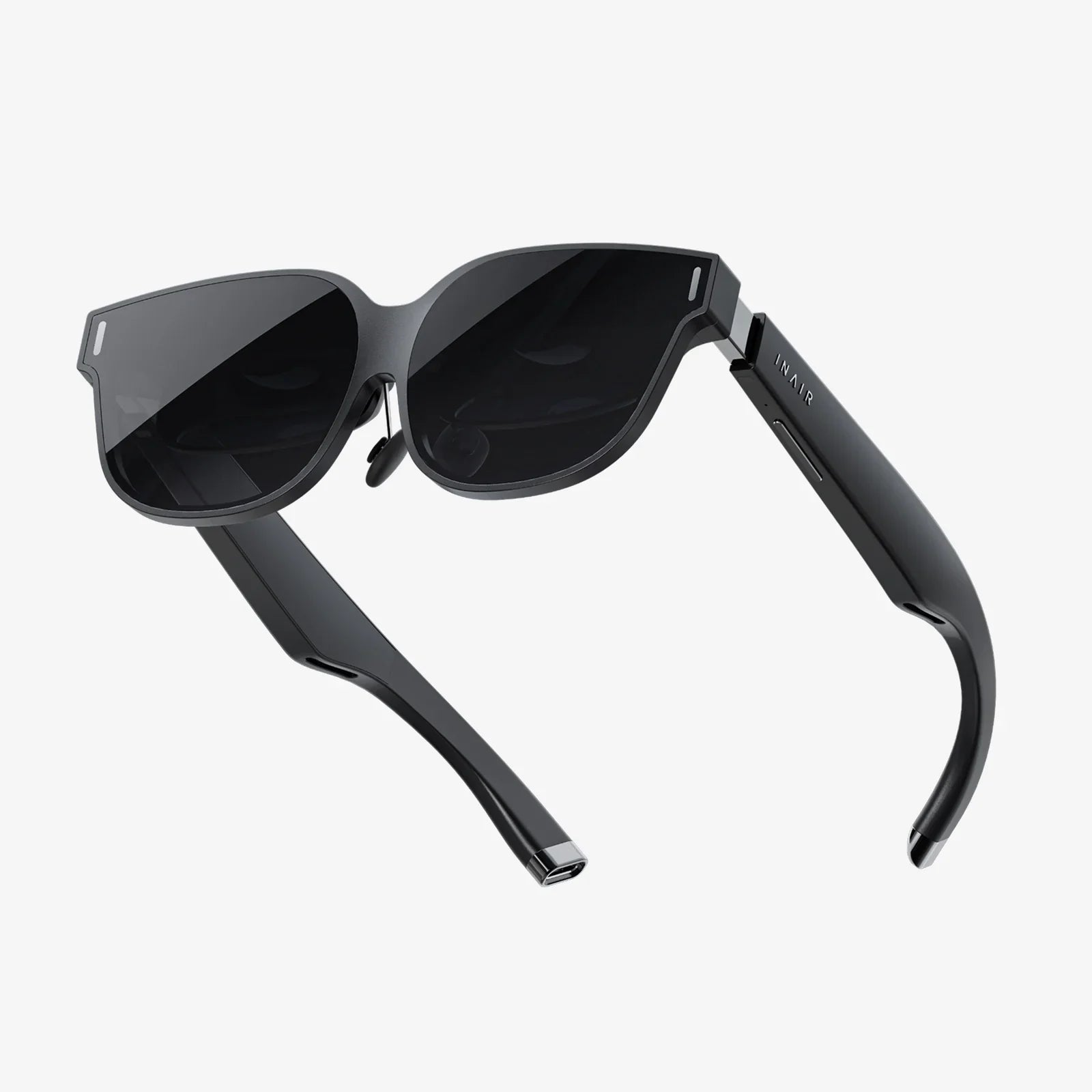
Imagine a world where information doesn’t live on a screen in your pocket but is painted onto the very fabric of reality around you. Directions appear as a glowing path on the sidewalk, the history of a landmark unfolds before your eyes, and a complex engine repair is guided by digital arrows hovering over the components. This is not a distant science fiction fantasy; it is the imminent future being unlocked by a new class of wearable technology: Augmented Reality googles. These devices are poised to become the most personal and powerful computers we have ever known, fundamentally altering our perception of and interaction with the world.
The Core Technology: How AR Googles Create a New Reality
At their essence, AR googles are sophisticated systems designed to seamlessly blend computer-generated perceptual information with the user's real-world environment. This magic is achieved through a symphony of advanced hardware components working in perfect concert.
Display Systems: Windows to a Digital Layer
The most critical component is the display technology, which projects digital images onto the user's field of view. Several methods exist, each with its own advantages. Waveguide displays use microscopic gratings to bend light from a projector into the eye, allowing for sleek, lightweight designs. Another approach utilizes micro-LED or OLED microdisplays, offering incredibly high brightness and contrast to ensure virtual objects are visible even in direct sunlight. These systems create the illusion that holographic content is coexisting with physical objects at various depths.
Spatial Mapping and Tracking: The Digital Nervous System
For digital content to feel anchored in the real world, the device must understand its environment with incredible precision. This is accomplished through a suite of sensors. Cameras, LiDAR (Light Detection and Ranging) scanners, and depth sensors continuously scan the surroundings, creating a real-time 3D mesh map of the room, object, or outdoor space. Simultaneous Localization and Mapping (SLAM) algorithms process this data, allowing the goggles to understand its own position and orientation within that mapped space. This is why a virtual character can convincingly walk behind your real-world sofa—the goggles know the geometry of the room.
Processing Power and Connectivity: The Brain Behind the Scenes
The computational demand of these tasks is immense. High-performance processors, often with dedicated chips for AI and computer vision, are required to interpret sensor data, render complex graphics, and run applications. This processing can happen on-board the device itself for a self-contained experience, or the heavy lifting can be offloaded to a connected companion device or even the cloud via high-speed wireless connections like Wi-Fi 6E or 5G, enabling even more complex simulations and persistent digital worlds.
Intuitive Interaction: Beyond the Touchscreen
Interacting with a floating screen requires a new language of control. AR googles employ innovative input methods. Hand-tracking cameras allow users to pinch, select, and manipulate virtual objects with natural gestures. Voice commands provide a hands-free way to search and control apps. Some systems even explore eye-tracking, which can be used for nuanced menu selection and creating a more realistic sense of depth of field in the virtual imagery.
A World of Applications: Transforming Industries and Daily Life
The potential applications for this technology stretch far beyond novel games and filters. They are set to revolutionize nearly every professional field and aspect of daily life.
The Industrial and Enterprise Metaverse
This is where AR is already delivering immense value today. In manufacturing and field service, technicians wearing googles can see schematics overlaid on machinery, receive remote expert guidance from a colleague who can draw annotations into their field of view, and follow step-by-step instructions hands-free, drastically reducing errors and training time. Architects and engineers can walk through full-scale 3D models of their designs before a single brick is laid, identifying potential issues and experiencing the space intuitively. In logistics and warehousing, workers can see optimal picking paths and item information displayed directly on shelves, supercharging efficiency.
Redefining Social Connection and Communication
AR googles promise to evolve remote communication from flat video calls into shared spatial experiences. Instead of looking at a grid of faces on a screen, you could feel as if you are sitting around a virtual table with photorealistic avatars of your colleagues or family members, all able to interact with shared 3D models and data. This sense of "telepresence"—feeling like you are truly somewhere else—could make distance irrelevant, fostering deeper and more productive connections.
The Future of Entertainment and Storytelling
Entertainment will be unshackled from the rectangle of a television or monitor. Imagine watching a sports game with live stats floating around the players, choosing your own camera angle by simply turning your head, or even having the action play out on your coffee table. Narrative storytelling will become immersive and participatory, with stories unfolding all around you in your living room or a park. Gaming will transform into a physical activity where your entire environment becomes the playground.
Enhancing Everyday Mundane Tasks
The technology will also seep into the mundane, making daily life more efficient and informed. Navigation will become intuitive, with arrows and signs guiding you seamlessly through a complex airport or a new city. Shopping will be transformed, allowing you to see how a new piece of furniture fits in your room or how a pair of virtual shoes looks on your feet before you buy. Learning a new skill, like cooking or playing an instrument, could be guided by interactive instructions projected onto your tools.
The Challenges and Considerations: Navigating the Uncharted
For all their promise, the path to ubiquitous AR adoption is fraught with significant technical, social, and ethical hurdles that must be thoughtfully addressed.
The Hardware Hurdle: Form Factor and Battery Life
The dream device is a pair of stylish, lightweight glasses that can be worn all day. Current technology often requires trade-offs between performance, battery life, and size. Achieving all-day battery life while powering high-resolution displays and powerful processors is a monumental engineering challenge. Furthermore, creating a single device that works for the vast diversity of human face shapes, prescriptive vision needs, and personal style remains an obstacle to mass-market appeal.
The Software Ecosystem: The Need for a "Killer App"
Hardware is nothing without compelling software. While enterprise has found its killer apps in remote assistance and digital work instructions, the consumer market is still searching for the undeniable, must-have application that will drive mainstream adoption. Developers need powerful and accessible tools to build these immersive experiences, and a thriving ecosystem of apps is essential for the platform's success.
The Privacy Imperative: A World Under Constant Observation
This is perhaps the most critical challenge. AR googles, by their very nature, are equipped with always-on cameras and sensors that continuously capture the world around the user. This raises profound privacy concerns. How do we prevent continuous surveillance? What are the rules for recording people in public without their consent? How is the captured data stored, used, and protected? Robust, transparent, and user-centric privacy frameworks must be built into the foundation of this technology, not bolted on as an afterthought.
The Social and Psychological Impact
Widespread adoption will inevitably change social dynamics. Will it further erode our attention spans and our ability to be present in the moment? How do we navigate public spaces when everyone is partially immersed in their own digital layer? There are also concerns about the "digital divide," where access to this powerful information layer creates a new class of haves and have-nots. The long-term psychological effects of persistently altering our perceived reality are still unknown and warrant careful study.
The Road Ahead: A Gradual Fusion of Realities
The adoption of AR googles will not be a sudden revolution but a gradual evolution. We will likely see them first become commonplace in specific professions before trickling down to prosumers and early adopters. The technology will improve iteratively: displays will get sharper, batteries will last longer, and forms will become more socially acceptable. The line between what is "real" and what is "digital" will increasingly blur, not because the technology tricks us, but because the digital information becomes so contextually relevant and useful that we accept it as a natural part of our environment.
The ultimate goal is not to escape reality but to augment it—to enhance our human capabilities, unlock new forms of creativity, and solve complex problems. It’s a future where knowledge is contextual, assistance is ambient, and our digital tools respect and elevate our physical world rather than distract us from it. The journey towards that future is already underway, and it is being viewed through a transparent, wearable lens.
We stand at the precipice of a fundamental shift in human-computer interaction, one that will dissolve the barrier between the information we seek and the world we inhabit. The next time you look up from your phone to navigate the real world, consider this: soon, you may not need to look down at all. The map, the message, the manual, and the magic will all be waiting for you, layered perfectly over everything you see, inviting you to experience a richer, smarter, and undeniably augmented life.
Share:
Web Based AR Platform: The Future of Immersive Experience is in Your Browser
New VR Technology Is Blurring the Line Between the Digital and Physical Realms