


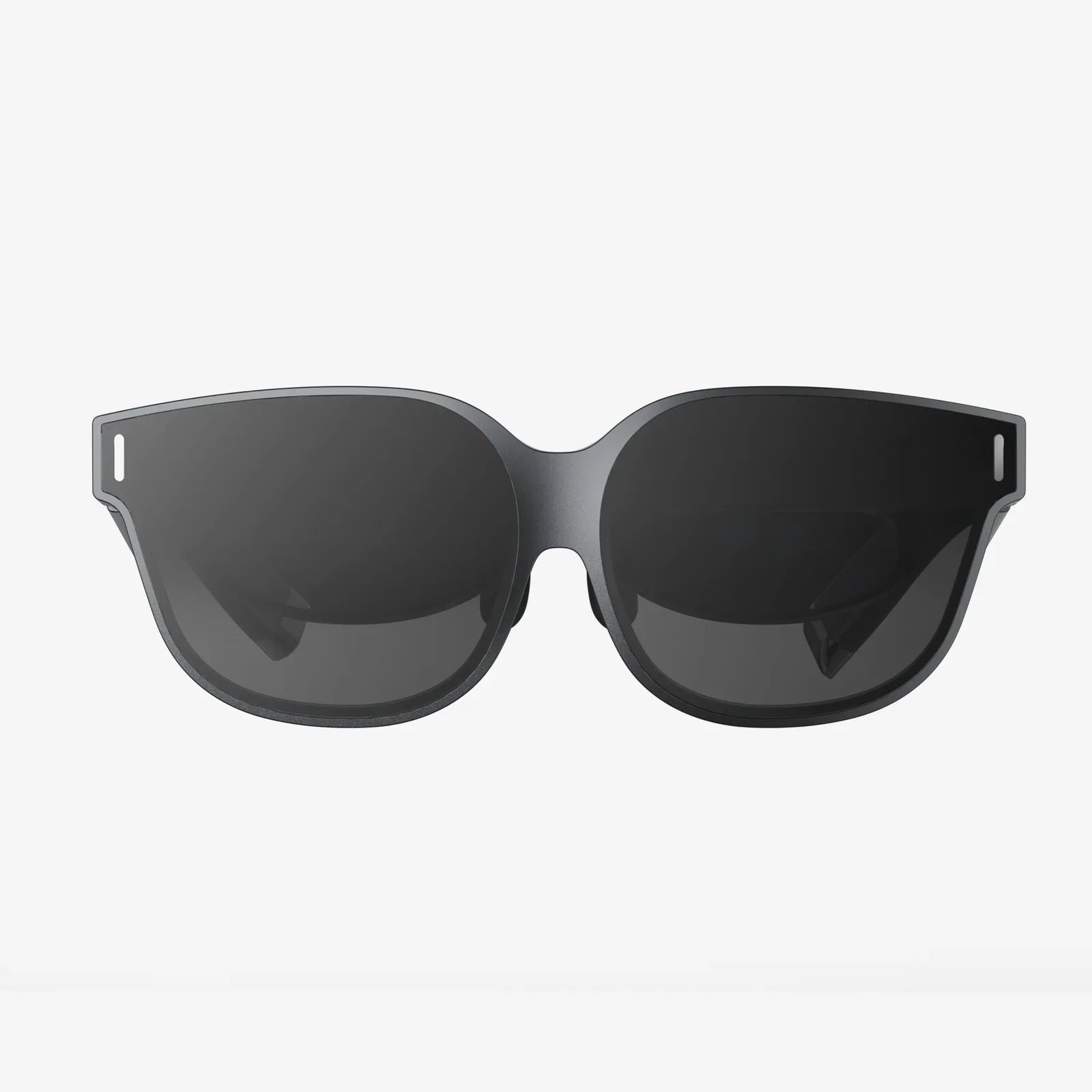
Imagine slipping on a headset and, in an instant, not just seeing a digital world, but feeling the sun on your skin, smelling the rain on a virtual pavement, and interacting with a colleague's avatar with such lifelike precision that you forget they are halfway across the globe. This is no longer the stuff of science fiction. A seismic shift is underway in the realm of immersive computing, propelled by a wave of new VR technology that is fundamentally redefining our very perception of reality. We are standing at the precipice of a new era, where the line between our physical existence and digital potential is not just crossing—it's dissolving.
The Evolution: From Novelty to Fidelity
The journey of virtual reality has been one of fits and starts. Early iterations, while revolutionary for their time, were often characterized by bulky hardware, low-resolution displays, and a pervasive issue known as latency—the slight delay between a user's movement and the visual response in the headset. This disconnect was a primary culprit for the motion sickness that plagued many early adopters and confined VR primarily to the domains of gaming and niche simulations.
The new VR technology addressing these core challenges is built on a foundation of dramatically increased processing power and sophisticated software algorithms. The result is a leap in what is known as 'presence'—the unequivocal sensation of being in another place. This is achieved through several key technological pillars working in concert.
The Pillars of Next-Generation Immersion
Hyper-Realistic Visuals and Varifocal Displays
At the forefront of this revolution is a monumental improvement in visual fidelity. New VR headsets are employing micro-OLED displays that offer resolutions so high that the dreaded 'screen door effect'—where users could perceive the gaps between pixels—is becoming a relic of the past. These displays support high dynamic range (HDR), producing brighter brights, darker darks, and a color gamut that mirrors the real world.
Perhaps more impressively, new VR technology is solving a fundamental problem of human vision: vergence-accommodation conflict. In the real world, our eyes both converge (point inward) and accommodate (change focus) when looking at nearby objects. Traditional VR fixes the focal plane at a specific distance, forcing our eyes to converge without accommodating, which causes eye strain and breaks immersion.
Cutting-edge solutions involve varifocal and light field displays. These systems use eye-tracking to precisely determine where a user is looking and then mechanically or computationally adjust the focal plane of the display in real-time. This allows your eyes to focus naturally on objects at different virtual distances, creating a profound and comfortable sense of depth and realism that was previously impossible.
Haptic Feedback and Sensory Expansion
True immersion is not a purely visual experience. New VR technology is expanding into the realm of touch, force, and even temperature through advanced haptics. Gone are the days of simple controller rumble. We are now seeing the development of:
- High-Fidelity Haptic Gloves: These gloves are embedded with a network of actuators, force feedback mechanisms, and ultrasonic sensors. They can simulate the texture of a rough surface, the resistance of squeezing a rubber ball, or the precise shape of a virtual tool you are holding.
- Full-Body Haptic Suits: Garments equipped with haptic feedback points can translate digital events into physical sensations. Imagine feeling the impact of a virtual raindrop, the brush of a butterfly's wing, or the recoil of a tool within a training simulation.
- Thermal Feedback Devices: Emerging technology can manipulate the temperature of a user's skin, adding another layer of sensory input. Walking from a virtual desert into a shaded cave could be accompanied by a palpable drop in temperature.
This multisensory approach is crucial for building a cohesive and believable virtual experience, moving interaction beyond simple button presses to intuitive, natural engagement.
Inside-Out Tracking and Embodied Avatars
The clunky external sensors and lighthouse boxes required for early room-scale VR are disappearing. New VR technology has fully embraced inside-out tracking. Using a array of high-resolution cameras embedded on the headset itself, the device can map its environment in real-time, understanding the geometry of a room, the position of furniture, and the user's precise movements within it. This not only simplifies setup immensely but also enables mixed reality (MR) experiences, where digital objects can be convincingly anchored to and interact with your physical surroundings.
This precise tracking extends to the user's body. Advanced inside-out tracking, combined with dedicated hand-tracking algorithms, allows users to see and use their own hands within the virtual space without the need for controllers. Furthermore, new VR technology employs inverse kinematics models to infer the position of your elbows, shoulders, and entire body from the data points of your head and hands, creating a fully embodied avatar that moves in a natural and believable way. This eliminates the 'floating hands' phenomenon and is critical for social applications where non-verbal communication is key.
Transforming Industries Beyond Entertainment
While gaming remains a powerful driver, the implications of this new VR technology extend far beyond. We are witnessing its transformative power across numerous sectors.
Revolutionizing Healthcare and Therapy
In medicine, VR is becoming an indispensable tool. Surgeons use hyper-realistic simulations to practice complex procedures, reducing risk to patients and allowing for the refinement of skills in a zero-stakes environment. For medical students, it offers an unparalleled opportunity to explore human anatomy in three dimensions, 'walking' through the circulatory system or examining organs from every angle.
Perhaps most profoundly, new VR technology is revolutionizing mental health treatment through exposure therapy. Patients with phobias (like fear of heights or flying) or PTSD can be gradually and safely exposed to their triggers within a controlled virtual environment. The heightened realism provided by new sensory feedback makes these therapeutic experiences more effective, enabling patients to confront and manage their conditions in ways previously unimaginable.
Redefining Education and Corporate Training
Education is shifting from passive learning to active experience. Instead of reading about ancient Rome, students can walk through a historically accurate reconstruction of the Forum. Instead of watching a video about cellular mitosis, they can stand inside a cell and witness the process unfold around them. This experiential learning dramatically improves retention and engagement.
In the corporate world, new VR technology is making training safer, cheaper, and more effective. Employees can practice operating heavy machinery, handling hazardous materials, or navigating difficult customer service scenarios without any real-world risk. The ability to repeat complex procedures in a photorealistic simulation builds muscle memory and confidence.
The Future of Remote Work and Collaboration
The concept of the 'metaverse' is often discussed in abstract terms, but new VR technology is providing a tangible glimpse of its potential for remote collaboration. Imagine a design team spread across three continents meeting in a virtual workshop around a 3D model of a new product. They can pick it up, examine it from all angles, make adjustments with their hands, and collaborate as if they were in the same physical room. This spatial collaboration offers a sense of shared presence and intuitive interaction that flat video conferencing can never match, potentially reshaping the future of global teamwork and reducing the need for business travel.
The Ethical Frontier: Challenges in a Hyper-Real World
With such profound power comes significant responsibility. The very realism that makes new VR technology so compelling also raises critical ethical questions that society must confront.
- Data Privacy and Biometrics: These devices are data collection powerhouses. Eye-tracking reveals not just where we look, but our focus, interest, and even cognitive state. Heart rate, breathing patterns, and vocal inflections can be monitored. This biometric data is incredibly sensitive, and robust frameworks must be established to ensure it is not misused for manipulation, advertising, or surveillance.
- The Reality-Liability Gap: If a user experiences a traumatic event in a hyper-realistic simulation, where does liability lie? If a surgeon makes a error in a VR training simulation that was found to have a software bug, who is at fault? Our legal and ethical systems need to evolve to address the blurring of lines between virtual actions and real-world consequences.
- Psychological Impact and Addiction: As virtual worlds become more appealing than reality for some, we must grapple with the potential for new forms of addiction and the societal impact of mass dissociation. Ensuring healthy usage patterns and understanding the long-term psychological effects of prolonged immersion will be a critical challenge.
- The Digital Divide: This technology, in its highest form, will be expensive. There is a risk of creating a new kind of inequality—a chasm between those who can afford to experience and shape these new digital realities and those who cannot, potentially limiting access to future education, employment, and social opportunities conducted within them.
We are not merely adopting a new gadget; we are cultivating a new layer of human experience. The path forward requires not just technological innovation, but thoughtful discourse, inclusive design, and proactive ethical stewardship to ensure that these virtual worlds enhance our humanity rather than diminish it.
The headset is no longer a window into a crude digital facsimile; it is becoming a portal to a parallel existence with tangible weight, palpable texture, and profound consequence. The businesses that will thrive are those that understand this is not about games, but about human connection and experience. The individuals who will flourish are those ready to reach out, not with a controller, but with their hands, and grasp a future that is already here, waiting to be shaped.
Share:
AR Googles: The Future of Reality is Transparent and Wearable
AR in Web: The Invisible Revolution Reshaping Our Digital Experience