


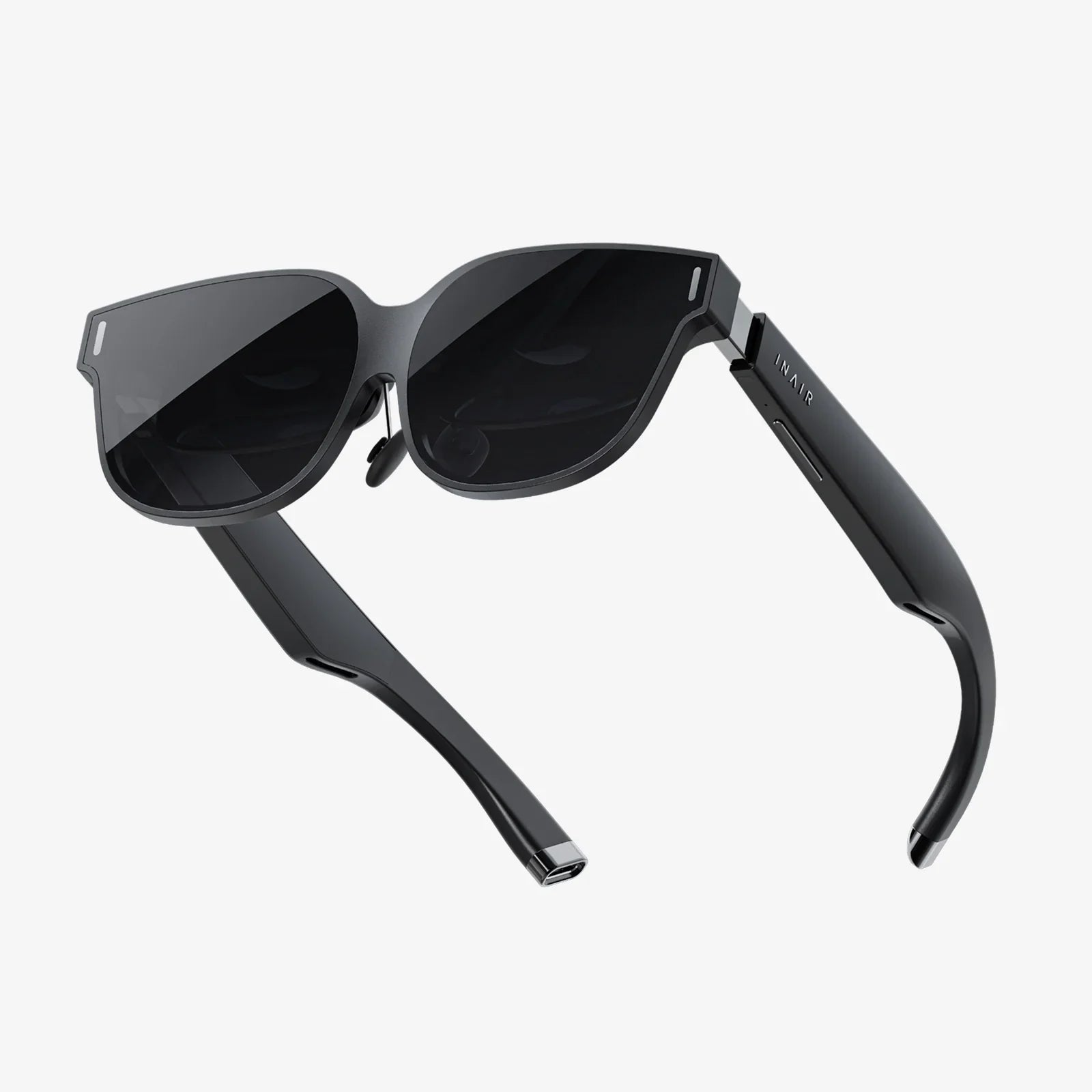
Imagine a world where the digital and physical realms don’t just coexist but are seamlessly, intelligently intertwined—where information appears not on a screen in your hand, but contextually in the world around you, and your digital life is an overlay you can interact with as naturally as you do a physical object. This is the promise of the AR headset in 2025, a promise that is finally moving from science fiction to tangible reality. The coming year is not just another incremental step; it is being heralded as the inflection point, the moment this technology sheds its prototype skin and steps into the mainstream spotlight, ready to redefine our daily lives.
The Evolution of a Vision: From Clunky to Compelling
The journey to the AR headset of 2025 has been long and fraught with technical hurdles. Early iterations were often characterized by bulky designs, limited fields of view, underwhelming battery life, and a distinct lack of compelling reasons for anyone outside of specific industrial or enterprise applications to wear them. They were solutions in search of a widespread problem.
However, the foundational years leading up to 2025 have been anything but stagnant. Breakthroughs in micro-optics, semiconductor miniaturization, and sensor fusion have been quietly accumulating, setting the stage for a dramatic leap in capability and user experience. The AR headset of 2025 is the beneficiary of this decade-long R&D sprint, representing a convergence of technologies that have finally matured in unison.
Seeing the Light: The Display Revolution
At the heart of any AR experience is the display technology—the magic that paints digital information onto your view of the real world. This has historically been one of the biggest challenges, but by 2025, several key innovations have become standard.
Waveguide and Light Field Technology: Traditional optics are giving way to sophisticated waveguide displays that pipe light to the eye using nanoscale gratings. These allow for slimmer, lighter form factors that look more like fashionable eyewear and less like a welding mask. More importantly, advancements in light field technology are solving critical issues like the vergence-accommodation conflict—the eye strain caused when your eyes focus on a virtual object that appears at a different depth than its actual focal plane. In 2025, digital objects can exist with true volumetric presence, appearing to occupy real space with correct depth cues, drastically reducing fatigue and increasing realism.
Resolution and Field of View (FoV): The "ski goggle" effect of looking through a small window into the digital world is finally receding. A significantly expanded field of view, approaching the human peripheral vision, is now achievable. Coupled with 4K+ resolution per eye and high dynamic range (HDR), the visual fidelity is stunning. Text is razor-sharp, colors are vibrant and true to life, and virtual objects cast accurate shadows, making them indistinguishable from their physical counterparts.
The Brain Behind the Beauty: Processing and AI
A beautiful display is useless without a powerful brain to drive it. The computational demands of overlaying persistent, context-aware graphics onto a dynamic, real-world environment are immense. It requires understanding the geometry of a space, tracking the user's position and gaze with millimeter precision, and rendering complex visuals in real-time—all while being worn on a person's head.
On-Device AI Chipsets: The solution in 2025 is a combination of specialized silicon and distributed computing. Dedicated AI processors within the headset handle the immense workload of simultaneous localization and mapping (SLAM), object recognition, and gesture tracking with extreme efficiency. These neural processing units (NPUs) are designed specifically for the continuous, low-latency inference required for AR, offloading these tasks from the main processor to save precious battery life.
The Contextual Operating System: The software has evolved into a true contextual operating system. It’s no longer about running flat apps pinned in space. Instead, the system understands your environment. It recognizes your desk, your coffee mug, your TV, and the people you are talking to. Intelligence is ambient. Your to-do list might appear as a gentle glow on your physical notebook. A recipe automatically pulls up and hovers at the correct step as you glance at your kitchen counter. This is made possible by a persistent understanding of your environment, stored locally and privately on the device, and accessed instantaneously by a powerful, on-device AI that anticipates your needs.
A New Language of Interaction: Beyond Controllers
How we interact with this blended reality is perhaps the most human-centric evolution. The goal is intuitive, effortless control that feels like a natural extension of ourselves.
Precision Eye and Hand Tracking: Controllers are largely optional in 2025. High-fidelity eye-tracking cameras understand not just where you are looking, but for how long and with what intent—enabling "look to select" interactions. Combined with sophisticated hand-tracking from built-in sensors, you can reach out and manipulate digital objects with your fingers, pinch to zoom, or give a thumbs-up to approve a design. The combination of gaze and gesture creates a powerful and efficient input language that feels magical because it requires no learning curve.
Voice and Spatial Audio: Voice assistants have evolved into true conversational AI partners, deeply integrated into the AR experience. You can ask complex, contextual questions like, "How do I reassemble this part?" while looking at a disassembled engine, and the AI will provide step-by-step visual guides overlaid on the components. Spatial audio completes the immersion, making a voice call sound as if the person is standing right next to you, or ensuring notification sounds emanate from their relevant virtual source.
Powering the Experience: All-Day Endurance
The bane of early wearable technology was the constant anxiety of a dying battery. The AR headset of 2025 tackles this through a multi-pronged approach. Ultra-low-power displays and efficient processors form the foundation. Many models adopt a hybrid processing model, where the headset itself handles the immediate, low-latency tasks, while a companion device in your pocket—be it a smartphone or a dedicated compute puck—offloads more intensive computations. Furthermore, aggressive power management, like putting non-essential sensors to sleep when not in active use, and the adoption of new battery chemistries, finally enables all-day use on a single charge, making the technology truly wearable for an entire workday or adventure.
Transforming Industries: The Professional Playground
While consumer applications are flashy, the most immediate and profound impact in 2025 continues to be in enterprise and specialized fields.
Remote Collaboration and Telepresence: The concept of a "telepresence" meeting has been completely redefined. Instead of staring at a grid of faces on a screen, colleagues from across the globe appear as life-like holograms in your living room, able to interact with shared 3D models. An expert engineer in another country can see what a field technician sees and annotate the real world in front of them, guiding them through a complex repair with arrows and diagrams drawn directly onto the machinery.
Design and Manufacturing: Architects and product designers can walk through their full-scale creations before a single physical material is used. Surgeons can visualize a patient's anatomy from MRI scans overlaid directly on the patient during preoperative planning, and even practice complex procedures on a perfect digital twin.
Integrating into Daily Life: The Consumer Horizon
For the average consumer, the value proposition in 2025 is becoming irresistibly clear.
Navigation and Contextual Information: Walking through a new city, directional arrows appear on the sidewalk, historical facts pop up as you gaze at a monument, and restaurant reviews and ratings float above their entrances. The world becomes instantly more informative and navigable.
Personalized Entertainment: Your living room can transform into a private cinema with a screen that feels 100 feet wide. Video games escape the confines of the television and take over your entire space, with characters hiding behind your real furniture. This is immersive entertainment at its most personal and powerful.
Enhanced Social Connection: Sharing experiences moves beyond photos and videos. You can share a moment as you see it, leaving holographic messages for family members in specific locations or co-watching a virtual screen with a friend who lives miles away, feeling as if you are on the same couch.
Navigating the Inevitable Challenges
This future is not without its significant challenges. The success of the AR headset in 5 hinges on addressing critical concerns around privacy and social acceptance. Devices with always-on cameras and microphones scanning our environments understandably raise red flags. In 2025, transparency and user control are paramount. Leading devices incorporate physical hardware shutters for cameras, clear visual indicators when sensors are active, and a strict philosophy of on-device processing, ensuring that the most sensitive data about a user's environment and behavior never leaves their control. The goal is to build trust as diligently as they build technology.
Furthermore, the social etiquette of wearing computers on our faces in public is still being written. Design plays a huge role here. The push is towards stylish, normalized eyewear that people feel comfortable wearing, moving away from the tech-centric aesthetic of the past.
The AR headset of 2025 is more than just a piece of hardware; it is a gateway. It is the culmination of decades of research, a testament to human ingenuity, and a platform for a new way of computing that is spatial, contextual, and profoundly human-centric. It promises to augment not just our reality, but our own human potential—enhancing our memory, our creativity, and our ability to connect with both information and each other. The device itself will fade into the background, becoming an invisible lens through which a richer, more informed, and more magical world is revealed. The future is not something we will watch on a screen; it is something we will step into and shape with our own hands.
Share:
AR Headset News Updates: The Future is Now and It's Transparent
Best Buy VR Headset: Your Ultimate Guide to Navigating the Virtual Frontier