


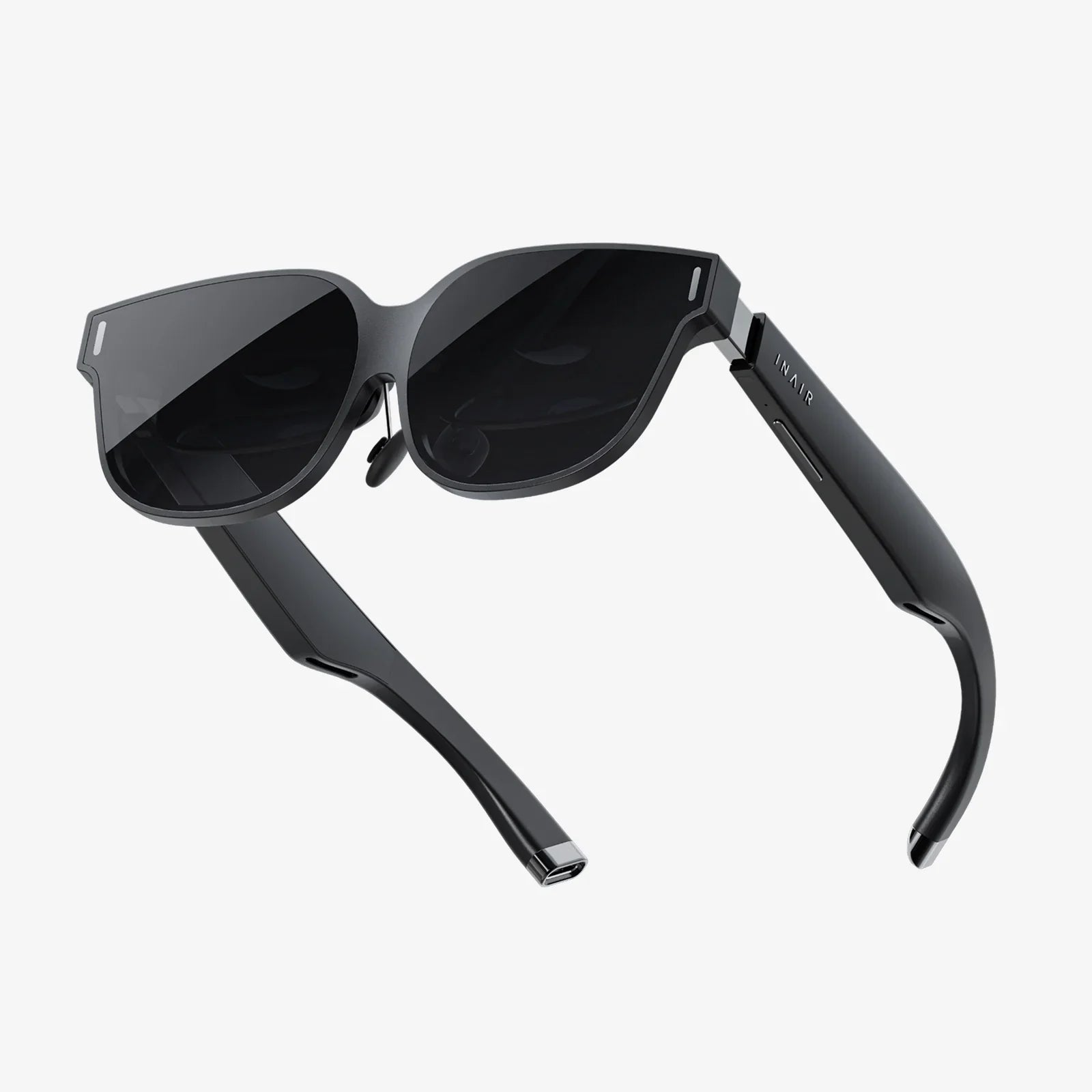
You slip it on, and the real world melts away, replaced by a dazzling layer of digital information, interactive holograms, and immersive experiences. This is the promise of augmented reality, a future where computing is seamlessly integrated into our perception. But that future hinges on a single, critical, and often overlooked factor: can you wear the device for more than five minutes without wanting to tear it off your face? The race for AR supremacy isn't just being fought over processor speed or field of view; it's a silent, intense battle being waged in the realm of AR headset comfort design, a multifaceted engineering challenge that will ultimately determine which devices become indispensable tools and which end up collecting dust on a shelf.
The Anatomy of Discomfort: Why AR Headsets Are Inherently Challenging
Unlike their virtual reality cousins, which can often be bulky by design as they block out the world, AR headsets face a unique set of constraints that directly impact their comfort. The fundamental goal is to overlay digital content onto the real world, which requires a complex optical stack often referred to as optical combiners or waveguides. These systems, which include projectors, lenses, and transparent displays, must be precisely aligned with the user's eyes. This necessity forces a significant portion of the device's weight and complexity to the front, creating a pronounced forward moment—a lever arm that constantly pulls down on the bridge of the nose and the tops of the cheeks.
This front-heavy design is the primary source of a host of comfort issues:
- Pressure Points: The weight concentrated on the nose pad and the contact points on the forehead and temples can quickly become painful, leading to red marks, headaches, and an overwhelming desire to remove the device.
- Neck Strain: Even a few hundred grams, when positioned several centimeters in front of the face, can place a surprising amount of strain on the neck muscles over extended periods.
- Slippage: Any movement—talking, chewing, or simply looking down—can cause the headset to shift, breaking immersion and requiring constant readjustment.
- Thermal Management: High-performance processors and bright displays generate significant heat. Trapping this heat against the skin is not only uncomfortable but can also cause sweating and skin irritation.
These challenges are compounded by the intended use case for AR. The vision is for all-day wear, transforming the headset from a occasional-use gadget into a constant companion for work, communication, and navigation. This demands a comfort level comparable to eyeglasses, a bar that current technology struggles to reach.
The Holy Grail: Balancing Mass, Form Factor, and Performance
At the heart of AR headset comfort design lies a brutal trade-off: performance versus weight. More powerful processors, brighter displays for outdoor use, larger batteries for all-day life, and wider fields of view for immersion—all of these desirable features add mass and bulk. Engineers and designers are therefore engaged in a constant tug-of-war, seeking innovative ways to minimize the perceived weight without sacrificing capability.
The most critical strategy in this battle is weight distribution. It's not just about the total number of grams; it's about where those grams are located. A well-distributed 500 grams can feel lighter than a poorly distributed 300 grams. The key is to counteract the front-heavy load. This is achieved through clever counterbalancing, often by moving the battery pack to the rear of the headstrap. This simple act transforms the headset from a nose-crushing device into a more balanced system that encircles the head, distributing pressure more evenly.
Beyond counterbalancing, the choice of materials is paramount. The industry is moving away from cold, heavy metals and plastics and exploring advanced polymers, magnesium alloys, and carbon fiber composites. These materials offer exceptional strength-to-weight ratios, allowing for rigid structural components that are incredibly light. Furthermore, the materials that contact the skin are seeing immense innovation. Silicone-based gels, memory foams with breathable covers, and soft-touch polymers are being developed to provide a secure yet gentle grip that minimizes pressure points and allows for airflow.
Beyond Weight: The Critical Role of Ergonomics and Fit
Assuming the weight is managed, the next frontier of comfort is personalized fit. Human heads are not one-size-fits-all; they vary dramatically in width, circumference, and shape. A design that fits one person perfectly may be agony for another. Modern AR headset comfort design is embracing this diversity through adjustable and sometimes modular systems.
This includes:
- Adjustable Headbands: Not just in circumference, but in height and angle. Dial-fit systems, similar to those on high-end sports helmets, allow for micro-adjustments to achieve a perfect, custom fit.
- Interchangeable Components: Swappable nose pads of different sizes and shapes, and even different styles of forehead rests, can accommodate a wider range of facial structures.
- Articulating Arms: Temple arms that can flex and conform to the side of the head help distribute pressure and improve stability during movement.
The goal is to create a system where the force of the headset is borne not by a few small points, but by the larger, more capable structures of the human head: the bony ridge of the brow, the sturdy crest of the occiput at the back of the skull, and the fleshy but resilient temples. A successful design turns the skull into a foundation, not a pincushion.
Taming the Inferno: Thermal Management as a Comfort Feature
An often underestimated aspect of comfort is heat. A warm, sweaty interface is a major reason users abandon a device. The compact nature of AR headsets creates a perfect storm for thermal buildup. The processors, displays, and batteries are all packed into a small volume with minimal airflow, pressed directly against the skin.
Advanced thermal management is therefore non-negotiable. This involves a systems-level approach:
- Heat Spreading: Using materials with high thermal conductivity, like graphite sheets or vapor chambers, to pull heat away from critical components and spread it over a larger internal surface area.
- Strategic Venting: Designing clever passive ventilation channels that allow hot air to escape without allowing dust or light to leak in, disrupting the experience.
- Active Cooling: In some high-performance concepts, tiny, silent fans or even piezoelectric cooling systems are being explored to actively move heat away from the user's face, though these add complexity and weight.
- Externalization: The most effective solution, employed by some designs, is to move the primary heat-generating computer into a separate module that can be worn on a belt or in a pocket, connected via a thin cable, fundamentally isolating the user from the device's warmth.
A cool headset is a comfortable headset, and managing thermals is just as important as managing weight for long-term wearability.
The Human Factor: Psychology and the Perception of Comfort
Comfort is not purely a physical metric; it is also a psychological state. A user's perception of a device's comfort can be influenced by factors beyond mere grams and pressure. A visually appealing, sleek design that feels premium and futuristic can positively influence a user's tolerance. Conversely, a clunky, medical-looking apparatus might be dismissed as uncomfortable before it's even worn.
Furthermore, the value of the experience plays a role. If the digital content is incredibly compelling, useful, and immersive, users may be willing to tolerate a higher level of physical discomfort, at least in the short term. This is known as the "immersion discount." However, for true mass adoption and all-day use, this discount is not a sustainable strategy. The physical comfort must eventually become a non-issue, receding into the background of the user's consciousness.
This is why user-centered design processes, involving extensive testing with diverse groups of people in real-world scenarios, are crucial. It's not enough for a device to measure well on a mannequin head in a lab; it must feel good on a real human who is moving, talking, and living their life.
The Future of Comfort: From Headsets to Eyewear
The ultimate goal of AR headset comfort design is to make the technology disappear—not the visuals, but the physical awareness of the device itself. The trajectory points toward a future where AR is integrated into forms that are indistinguishable from standard eyeglasses. This requires breakthroughs in multiple fields:
- Micro-optics: Shrinking the complex optical systems down to a size that can be embedded into a standard eyeglass lens frame.
- Battery Technology: Developing energy-dense batteries that can power a full day of computing in a package small enough to be integrated into the temples of glasses.
- Low-Power Computing: Creating ultra-efficient processors and displays that provide high performance without the associated heat and power drain.
We are already seeing early steps in this direction with simpler devices that offer limited AR features in a glasses-like form factor. The path forward will be iterative, with each generation becoming lighter, smaller, cooler, and more comfortable than the last. The integration of biometric sensors to monitor user strain and even automatically adjust fit or content could be the next frontier in personalized comfort.
The companies that win the AR race will not be the ones with the most powerful specs on a datasheet, but the ones that best solve the human equation. They will be the ones who master the art and science of AR headset comfort design, creating devices that we forget we're wearing until we need them, seamlessly blending into our lives and, ultimately, enhancing our reality without encumbering it. The perfect AR headset won't feel like a piece of technology; it will feel like a part of you.
Imagine a world where your digital workspace follows you onto the train, where navigation arrows appear on the sidewalk in front of you, and where a friend's avatar can sit on your couch for a conversation. This isn't science fiction; it's the inevitable endpoint of a relentless focus on the human face. The true magic of AR won't be in the code, but in the gentle, forgotten comfort of the device that brings it to life, making the extraordinary feel utterly natural.
Share:
Extended Reality Uses: Transforming Industries and Redefining Human Experience
VR Headset Watch Movies: The Ultimate Guide to Cinematic Immersion