


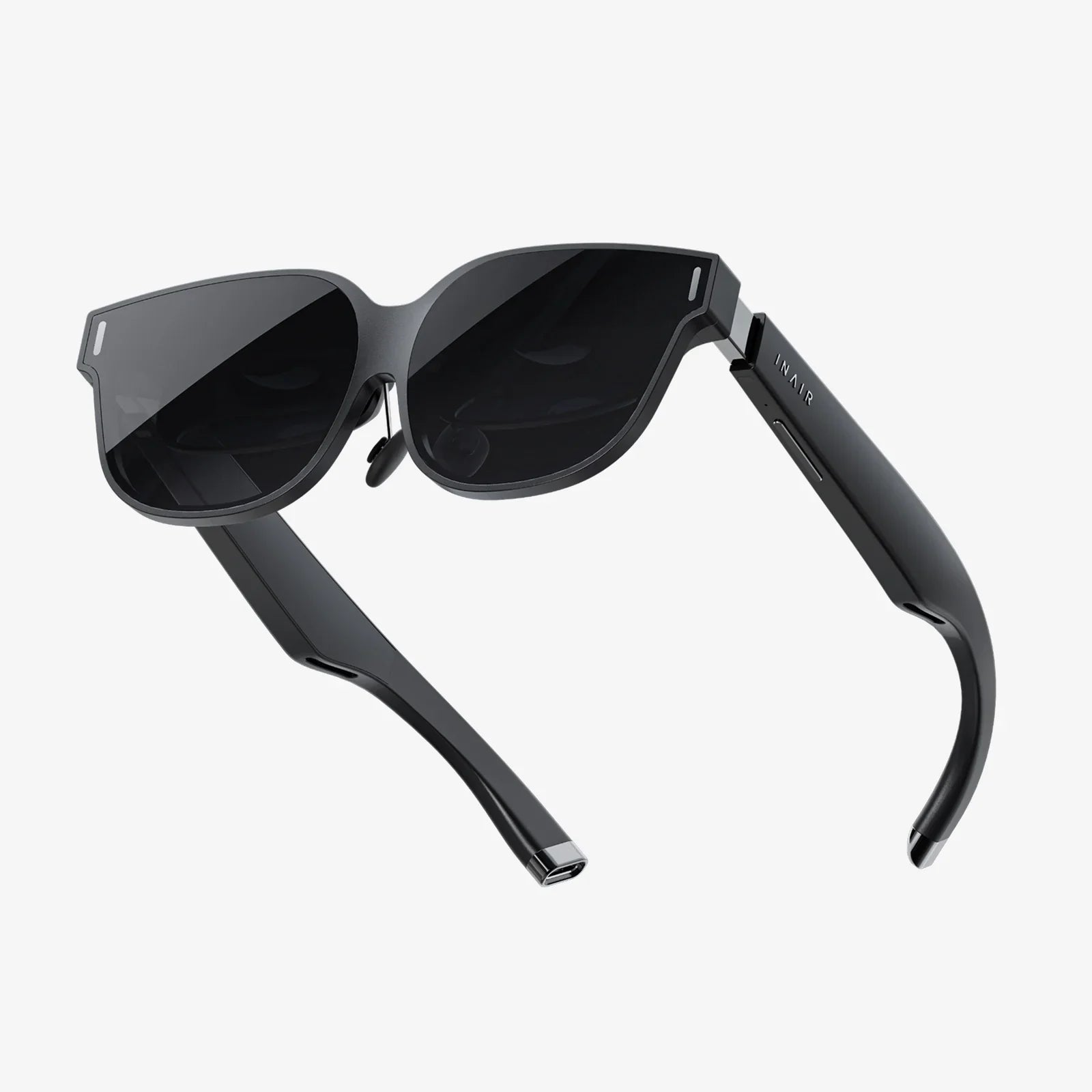
Imagine a world where a surgeon in London can guide a life-saving procedure in Mumbai without ever boarding a plane, where a history student can walk through ancient Rome as it once stood, or where a factory technician can see a holographic schematic overlaid directly onto a malfunctioning machine. This is not a distant science fiction fantasy; it is the rapidly emerging present, powered by the transformative capabilities of Extended Reality. The convergence of our physical and digital worlds is unlocking possibilities that were once unimaginable, pushing the boundaries of human experience and industrial capability. The journey into this blended realm is already underway, and its applications are as vast as they are revolutionary.
The XR Spectrum: Understanding the Tools of Transformation
Before diving into its myriad uses, it's crucial to define the spectrum that constitutes Extended Reality. XR is an umbrella term encompassing all combined real-and-virtual environments, including its primary subsets:
Virtual Reality (VR) immerses users in a fully digital, computer-generated environment, completely replacing the real world. This is typically achieved through a head-mounted display that tracks the user's head and, often, hand movements, creating a compelling sense of "presence"—the feeling of actually being in the virtual space.
Augmented Reality (AR) overlays digital information—such as images, text, or 3D models—onto the user's view of the physical world. Unlike VR, AR does not replace reality but enhances it. This is commonly experienced through smartphone screens or, more immersively, through transparent glasses or lenses.
Mixed Reality (MR) is the most advanced and interactive point on the spectrum. It not only overlays digital objects but anchors them to the real world, allowing users to interact with both physical and digital elements simultaneously. In MR, a digital character can hide behind a real sofa, or a virtual control panel can be affixed to a real wall, responding to the user's touch.
These technologies form the toolkit that is being leveraged across sectors, each chosen for its unique strengths in solving specific challenges.
Revolutionizing the Frontlines of Healthcare and Medicine
The healthcare industry has emerged as one of the most promising and impactful fields for extended reality uses, offering solutions that enhance training, improve surgical precision, and revolutionize patient therapy.
Surgical Training and Planning
Traditionally, surgical training has relied on cadavers, textbooks, and observation. VR is transforming this by providing a risk-free, highly detailed, and repeatable simulation environment. Trainee surgeons can practice complex procedures countless times, encountering rare complications and learning to manage them without any risk to a patient. Furthermore, MR and VR are used for pre-operative planning. Surgeons can import a patient's specific scan data—such as MRI or CT scans—into a VR environment to explore a 3D model of the patient's unique anatomy before making a single incision. This "virtual rehearsal" leads to better-prepared surgical teams, reduced operation times, and improved patient outcomes.
Medical Therapy and Rehabilitation
XR is proving to be a powerful tool in physical and psychological therapy. For physical rehabilitation, AR games can motivate patients to complete repetitive exercises by turning them into engaging challenges. For instance, a patient recovering from a stroke might be tasked with "popping" virtual bubbles by lifting their arm to a specified height, making the arduous process of recovery more engaging and measurable.
In mental health, VR exposure therapy is safely treating conditions like PTSD, phobias, and anxiety disorders. Therapists can gradually and controllably expose patients to their triggers within a virtual environment, helping them develop coping mechanisms in a safe space. This controlled dosage of exposure is far more effective and manageable than traditional imagination-based techniques.
Remote Assistance and Telemedicine
AR smart glasses enable remote expert assistance. A specialist located anywhere in the world can see what a local medic or surgeon sees through their glasses and can annotate the real-world view with arrows, notes, or instructions, effectively guiding them through a procedure. This democratizes access to expert knowledge, particularly in rural or underserved areas.
Transforming Education and Corporate Learning
The move from passive learning to active experiencing is perhaps one of the most profound extended reality uses in education. XR shifts the paradigm from "learning about" something to "experiencing" it.
Immersive Historical and Scientific Exploration
Instead of reading about the Roman Empire, students can don a VR headset and take a guided tour through a historically accurate reconstruction of the Forum. Biology students can "shrink down" and take a journey through the human bloodstream, watching red and white blood cells float by. This level of immersion fosters empathy, improves knowledge retention, and sparks curiosity in a way that a textbook simply cannot match.
Skills Training and Safety Simulations
In corporate and industrial settings, XR is invaluable for training employees for high-stakes or dangerous situations without the associated risks. Aviation technicians can practice repairing a jet engine using an AR manual that projects step-by-step instructions onto the physical components. Oil rig workers can undergo VR safety training to experience and learn how to respond to emergency scenarios like fires or gas leaks. This "muscle memory" developed in a virtual space directly translates to competence and confidence in the real world.
Soft Skills and Leadership Development
VR is increasingly used for "soft skills" training, such as public speaking, sales pitches, and difficult conversations. Employees can practice delivering a presentation to a virtual audience that reacts in real-time, or navigate a challenging performance review with a virtual employee. This provides a safe space to fail, receive feedback, and improve without the social pressure of a real-life scenario.
Redefining Enterprise and Industrial Operations
Beyond training, extended reality uses are streamlining complex industrial processes, enhancing productivity, and reducing errors on the factory floor, in the field, and in the design studio.
Design, Prototyping, and Architecture
In manufacturing and architecture, MR and VR have revolutionized the design review process. Instead of building expensive physical prototypes or clay models, designers and engineers can create and interact with full-scale 3D digital prototypes. An automotive design team can walk around a life-size virtual model of a new car, examining the interior ergonomics and exterior styling long before any metal is cut. Architects can walk their clients through a photorealistic virtual rendering of a building, allowing for design changes to be made quickly and cheaply at the conceptual stage.
Remote Collaboration and Field Service
Global teams can collaborate in shared virtual spaces as if they were in the same physical room. Engineers from different continents can examine and manipulate the same 3D model simultaneously, discussing changes in real-time. For field service technicians, AR is a game-changer. When faced with a complex repair, a technician can use AR glasses to stream their point-of-view to a senior engineer back at headquarters, who can then draw arrows and diagrams directly into the technician's field of view, pointing precisely to the component that needs attention.
Logistics and Warehouse Management
In massive warehouses, AR smart glasses can display picking instructions, navigation routes, and item verification data directly into a worker's line of sight. This "hands-free" technology allows workers to locate items faster, significantly reduce errors, and streamline the entire logistics chain, leading to greater efficiency and lower operational costs.
Unleashing Creativity and New Frontiers in Entertainment
The entertainment industry was an early adopter of XR, but its applications are evolving far beyond simple games and 360-degree videos.
Immersive Storytelling and Gaming
VR gaming places the player directly inside the game world, creating unparalleled levels of immersion and emotional connection. But the potential extends to narrative storytelling. filmmakers and artists are creating immersive experiences where the audience is no longer a passive viewer but an active participant within the story, able to explore the environment and influence the narrative from within.
Live Events and Social Connection
XR is breaking down geographical barriers for live events. Music fans can attend a virtual concert from their living room, sharing a social experience with friends represented as avatars. Conferences and trade shows are building virtual exhibition halls where attendees can network, attend keynote speeches, and visit virtual booths, vastly expanding their global reach and accessibility.
Art and Experimental Expression
Artists are using XR as a new medium, creating sculptures that exist only in digital space or AR art installations that can be placed and viewed in public spaces through a smartphone. This democratizes art, making it more accessible and interactive, and allows for new forms of expression that are impossible in the physical world.
Navigating the Challenges and Looking to the Future
Despite its immense potential, the widespread adoption of extended reality faces significant hurdles. Hardware needs to become more comfortable, affordable, and socially acceptable. Issues of data privacy, digital addiction, and the potential for a stark "reality divide" must be addressed thoughtfully. Furthermore, creating high-quality XR content remains complex and expensive, though this barrier is lowering rapidly.
The future of XR is inextricably linked to other technological advancements. The rollout of high-speed, low-latency networks will enable more complex and seamless cloud-based XR experiences. Advances in artificial intelligence will make virtual interactions more intelligent and responsive. The development of more natural human-computer interfaces, like advanced haptic gloves and neural interfaces, will further blur the line between the real and the virtual.
The trajectory is clear: Extended Reality is evolving from a novelty into a fundamental utility, a new layer of computing that will be woven into the fabric of our daily lives. It promises a future where digital information is not confined to rectangles in our pockets but is contextualized and integrated into our physical reality, enhancing our perception, amplifying our abilities, and connecting us in ways we are only beginning to conceive. The door to this blended world is now open, and the steps we take next will define not just the future of technology, but the future of human experience itself.
Share:
VR Headset Won't Turn On: A Comprehensive Troubleshooting and Prevention Guide
AR Headset Comfort Design: The Unseen Battle for Your Face