


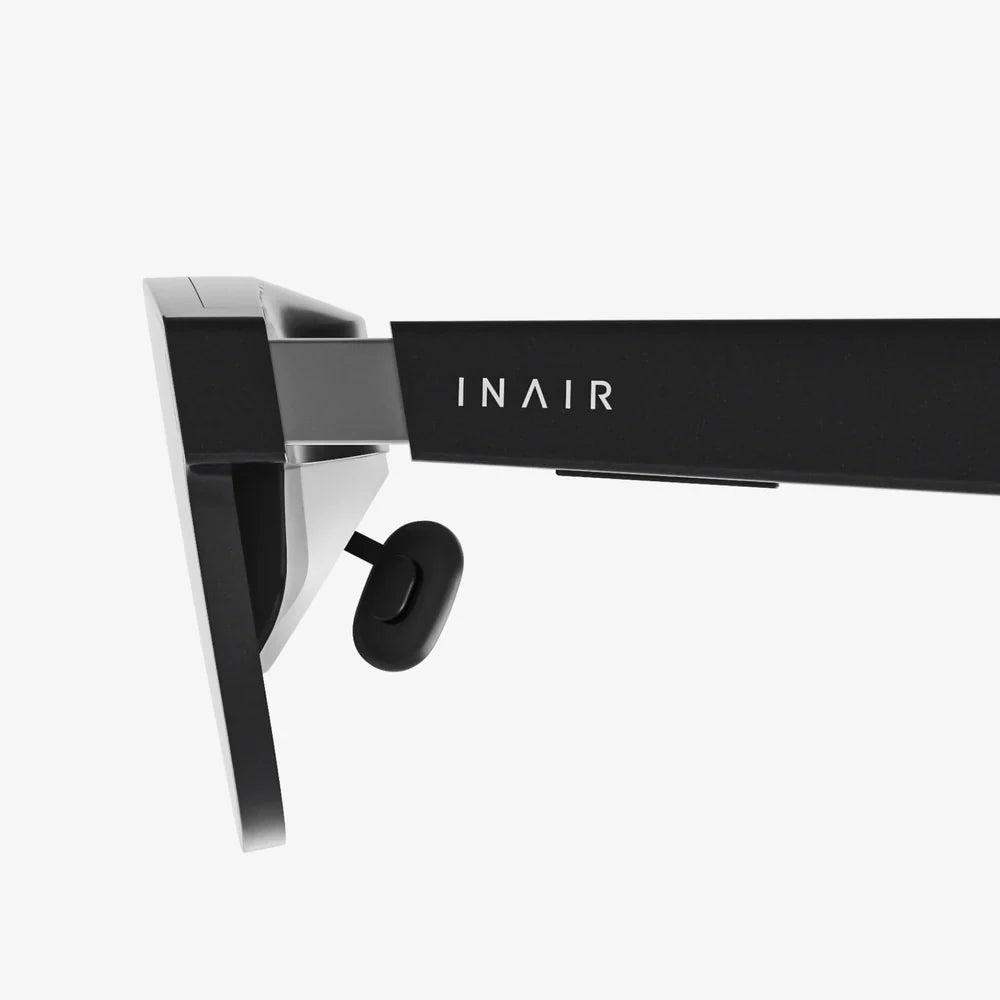
Remember the first time you held a smartphone? That sense of holding the future in your palm? Fast forward to 2025, and that feeling is back, but this time, it’s not in your hand—it’s on your face. The AR headset news cycle of 2025 has been nothing short of a relentless tidal wave of innovation, marking a definitive turning point where science fiction has become our new workplace, classroom, and playground reality. This isn't just an incremental update; it's the year the dam broke, and augmented reality flooded into the mainstream consciousness with a clarity and purpose previously reserved for tech keynotes and concept videos.
The Display Revolution: Seeing the Unseeable
For years, the holy grail of AR has been a form factor that rivals ordinary eyeglasses while delivering stunning, full-color, high-resolution digital overlays. In 2025, that grail was finally grasped. The major AR headset news has been dominated by the commercial rollout of several groundbreaking display technologies.
First, microLED displays have finally come into their own. Their incredible brightness, measured in nits that were previously exclusive to high-end HDR televisions, allows digital content to remain vibrant and visible even in direct sunlight. This solves one of the most persistent and frustrating limitations of earlier generation devices. Furthermore, the pixel density has reached a point where the dreaded "screen door effect"—seeing the gaps between pixels—is now a relic of the past. Text appears as sharp as on a printed page, and virtual objects possess a tangible solidity that was previously unachievable.
Perhaps even more impressive are the advances in waveguides and holographic optics. These are the transparent lenses that direct light into your eyes to form an image. New manufacturing techniques, some leveraging metamaterials, have drastically increased the field of view (FOV). Early AR headsets often felt like looking through a postage stamp; the digital world was confined to a small window. The 2025 generation offers a FOV that begins to approach our natural peripheral vision, creating a truly immersive and seamless blend of the real and the virtual. This expansive canvas is crucial for productivity and entertainment applications, making digital objects feel present in your environment, not just superimposed upon it.
The AI Co-Pilot: Context is King
Hardware is only half the story. The real intelligence—the magic—powering the 2025 AR headset news wave is artificial intelligence. These are no longer dumb displays; they are context-aware computing platforms. On-device AI processors, now vastly more powerful and energy-efficient, are continuously analyzing the world through a suite of sensors.
This means your headset isn't just showing you information; it's understanding what you're looking at. Look at a complex piece of machinery, and a schematic can instantly overlay itself, highlighting components and providing real-time performance data. Sit down in a foreign restaurant, and the menu translates itself directly onto the page, even offering dietary highlights and popular dish recommendations. Walk through a city, and historical facts and navigation arrows appear seamlessly integrated into the architecture around you.
This AI co-pilot is also profoundly reshaping human-computer interaction. Voice assistants have evolved into true conversational partners, capable of handling complex, multi-step requests without constant wake words. However, the bigger news is the refinement of neural interfaces. While not reading full thoughts, advanced EMG (electromyography) sensors on the temple pieces can detect subtle intentional movements in the muscles around the eye and jaw. This allows for incredibly discreet and effortless control—a slight twitch to confirm, a clenched jaw to scroll—creating a completely hands-free and private interaction paradigm that feels like telepathy.
The Spatial Web Becomes Tangible
All this powerful hardware and intelligent software serves a single purpose: to be your window into the spatial web. 2025 is the year this concept moved from jargon to reality. The spatial web is an extension of the internet into the physical environment, where digital information and experiences are anchored to places and objects.
Universal Scene Description (USD) has emerged as the unexpected but undeniable hero of this story. This open-source framework, initially developed for complex 3D animation, has become the HTML of the spatial web. It provides a common language for describing 3D scenes, objects, and their properties, ensuring that a digital artifact created by one person can be viewed and interacted with by anyone else, regardless of the specific AR headset they are using. This interoperability is critical for mass adoption.
Imagine walking through a shopping district. Storefronts display virtual sale signs and animated displays visible only to you. You can see Yelp reviews floating over restaurant doors or check the live waitlist for a table. An architect can walk onto a construction site and see the BIM (Building Information Model) perfectly aligned with the steel girders, identifying potential clashes before they become costly errors. This persistent layer of information, tied to location, is fundamentally changing how we navigate, learn, and make decisions in the physical world.
Enterprise and Healthcare: The Silent Revolution
While consumer applications grab headlines, the most profound and immediate impact of 2025's AR headset news is happening in enterprise and healthcare. The return on investment here is so clear and dramatic that adoption is skyrocketing.
In manufacturing and field service, remote expert applications have become standard practice. A junior technician wearing a headset can be guided by a senior expert thousands of miles away. The expert sees exactly what the technician sees, can draw arrows and circles directly into their field of view, and pull up manuals and schematics that are anchored to the relevant components. This drastically reduces downtime, minimizes errors, and democratizes expertise.
In healthcare, the applications are nothing short of revolutionary. Surgeons are using AR overlays for minimally invasive procedures, seeing critical patient data like heart rate and blood pressure, or 3D reconstructions of tumors and blood vessels, without ever looking away from the operating field. Medical students can practice complex procedures on hyper-realistic holographic patients. For patients, AR is being used for physiotherapy, with guided movements and form correction, and for phobia treatment through controlled, immersive exposure therapy.
The Content Catalyst: A New Creative Medium
A platform is only as valuable as the experiences it hosts. The AR headset news of 2025 has been accompanied by a parallel explosion in content creation tools that are empowering a new generation of artists and developers. The key shift has been the democratization of 3D content creation.
AI-powered tools can now instantly generate optimized 3D models from text descriptions or 2D images. Video game engines have deeply integrated AR development workflows, allowing creators to build once and deploy everywhere. Furthermore, the rise of creator marketplaces for 3D assets and spatial experiences has created a vibrant economy. Digital fashion designers are creating wearable holographic accessories, artists are hosting AR gallery exhibitions in public parks, and educators are building interactive historical recreations on the very sites where events occurred.
This has also sparked a new narrative format: spatial storytelling. Instead of watching a story unfold on a rectangle, you are standing inside it. A mystery thriller might have clues hidden around your living room. A nature documentary might see a holographic whale breach through your floor. This is not just a new screen; it's a new artistic canvas that engages our senses and our physicality in unprecedented ways.
Navigating the New Reality: Privacy and the Digital Divide
With great power comes great responsibility, and the rapid ascent of AR technology in 2025 has ignited crucial societal debates. The most pressing issue is privacy. A device that is always-on, always-sensing, and always-recording its environment presents a profound challenge. The industry has responded with a strong push for "privacy by design" principles.
Key to this is on-device processing. Your raw video feed of the world around you never leaves the headset; only anonymized, relevant data is sent to the cloud. Visual processing is used to identify a table or a coffee cup, not to recognize and tag the specific person sitting across from you unless explicitly permitted. Transparent indicator lights and clear user controls for camera and microphone access are becoming standard, giving users clear agency over their digital footprint.
Furthermore, the potential for a new digital divide is a serious concern. As these devices become essential tools for work, education, and social connection, their cost and accessibility will determine who gets to participate in this next chapter of human-computer interaction. Industry and governmental initiatives focused on subsidized access for education and public services are critical to ensuring the spatial web is an inclusive, not exclusive, frontier.
The whispers of a potential paradigm shift started years ago, but the roar you hear today is the sound of it arriving. The AR headset news of 2025 isn't just a list of specs and product launches; it's the chronicle of a fundamental shift in how humanity interfaces with technology. We are no longer tapping on glass; we are beckoning the digital world to come out and play in ours. The devices are smarter, the images are clearer, and the applications are more profound than ever imagined. This isn't about escaping reality; it's about finally being equipped to enhance it, understand it, and connect with it on a deeper level. The future is not something we will look at on a screen; it's something we will all step into, together.
Share:
VR Headset and Handset: The Symbiotic Evolution of Immersive Digital Realms
What Are the Main Components of a VR Headset - A Deep Dive Into the Hardware That Builds New Realities