


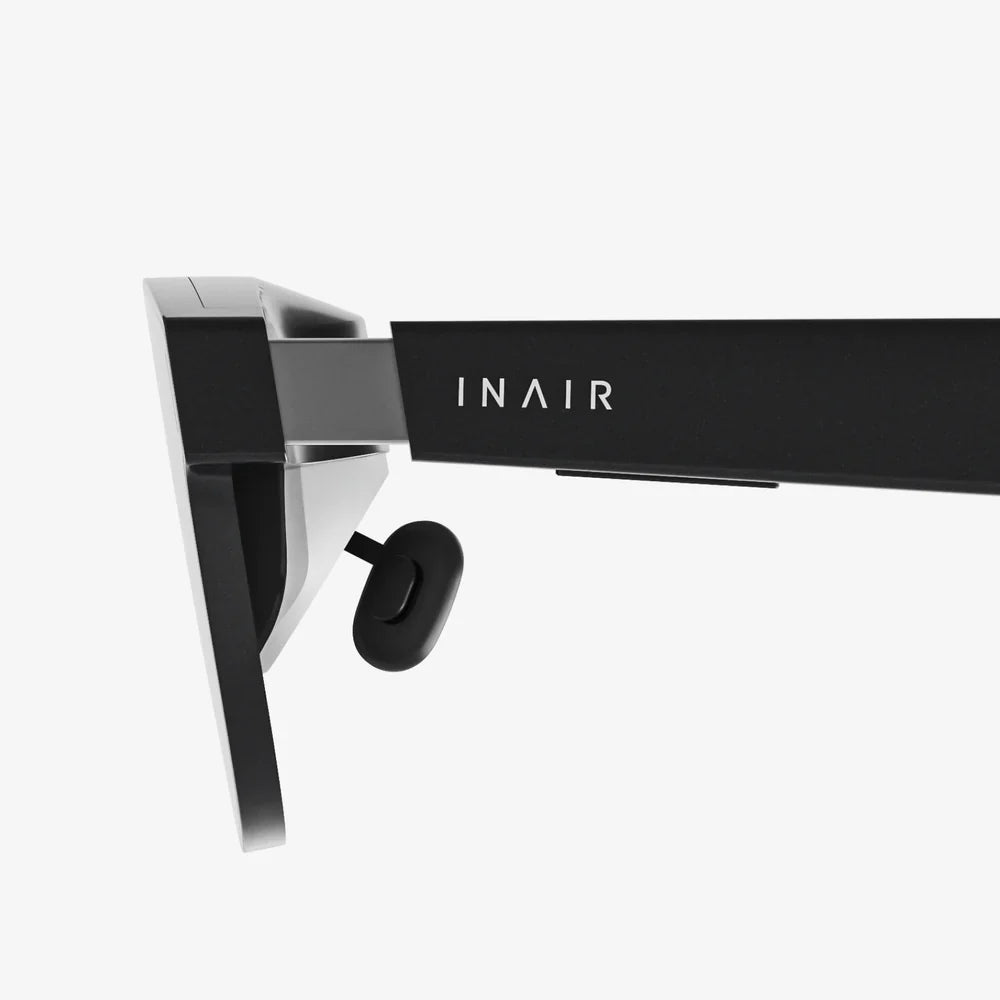
Imagine a world where digital information doesn’t just live on a screen in your hand or on your desk, but is seamlessly woven into the fabric of your physical reality. This is the tantalizing promise of augmented reality, a future brought closer than ever by the latest generation of AR headsets. These aren't just gadgets; they are portals to a new way of working, learning, creating, and connecting. Our deep dive into this cutting-edge technology will cut through the hype to explore what these devices are truly capable of today, who they are for, and what you need to know before you take the plunge into this immersive new dimension.
The Core Technology: How AR Headsets Actually Work
At their heart, AR headsets are sophisticated computers worn on your face. They combine a series of complex technologies to create the illusion that digital objects coexist with your real-world environment. Understanding these core components is key to appreciating the engineering marvel they represent.
Display Systems: Projecting the Digital onto the Real
The most crucial element of any AR headset is its display. Unlike Virtual Reality (VR) headsets that completely obscure your vision, AR devices use transparent lenses or waveguides to overlay imagery. There are several primary methods:
- Optical See-Through (OST): This method uses semi-transparent lenses that allow you to see the real world directly. miniature projectors within the headset then beam light onto these lenses, painting digital images that appear to float in your surroundings. This technology is prized for its ability to maintain a high-fidelity view of the real world.
- Video See-Through (VST): Here, outward-facing cameras continuously capture your real environment. This video feed is then combined with computer-generated graphics on an internal, non-transparent display. This allows for more dramatic alterations of reality but can sometimes introduce a slight latency between your movement and the video update.
- Retinal Projection: An emerging technology, this system projects light directly onto the user's retina. This can create incredibly sharp images that are always in focus, regardless of the user's eyesight, and allows for a much smaller and lighter form factor.
Sensors and Cameras: The Eyes of the Device
To understand and interact with the world, AR headsets are packed with a suite of sensors. This typically includes:
- Depth Sensors: Often using LiDAR (Light Detection and Ranging) or structured light, these sensors scan the environment to create a precise 3D map. This allows digital objects to be occluded by real-world furniture or walls, creating a convincing sense of depth and placement.
- High-Resolution Cameras: These are used for video pass-through and for computer vision tasks like reading text, recognizing objects, or scanning QR codes.
- Inertial Measurement Units (IMUs): These accelerometers and gyroscopes track the precise movement and rotation of your head with incredible speed, ensuring the digital overlay stays locked in place even as you look around.
- Eye-Tracking Cameras: A premium feature, eye-tracking monitors where you are looking. This enables intuitive interface navigation, dynamic focus rendering (where only what you look at is rendered in high detail to save power), and more realistic avatars in social applications.
Processing Power: The Brain Behind the Magic
All this sensor data must be processed in real-time. This requires immense computational power. Some headsets are tethered to a powerful external computer or game console, which handles the heavy lifting. Others are "standalone" devices, with all the necessary processing packed into the headset itself, offering complete freedom of movement at the potential cost of some graphical fidelity and battery life. The processors inside are specialized for tasks like simultaneous localization and mapping (SLAM), which is the process of building a map of an unknown environment while simultaneously keeping track of the device's location within it.
Weighing the Experience: The Pros and Cons of Modern AR
The current generation of AR headsets offers a breathtaking glimpse of the future, but they are not without their compromises. A balanced review must acknowledge both the revolutionary potential and the existing limitations.
The Advantages: A New Paradigm for Computing
- Spatial Context: Information is presented in the space where it's most relevant. A recipe can hover over your mixing bowl, a wiring diagram can be superimposed on the machine you're repairing, and navigation arrows can be painted onto the street in front of you.
- Hands-Free Operation: By using voice commands, hand tracking, and eye tracking, AR headsets liberate you from traditional input devices. This is a game-changer for fields like medicine, manufacturing, and field service, where workers need access to information without putting down their tools.
- Immersive Learning and Training: Complex procedures can be practiced on virtual models overlaid in a safe, real-world environment. Medical students can practice on digital cadavers, and mechanics can learn to repair an engine without needing the physical parts.
- Enhanced Remote Collaboration:
This is perhaps one of the most compelling use cases. With AR, remote assistance becomes spatial. An expert thousands of miles away can see what you see and draw arrows and diagrams directly into your field of view to guide you through a complex task, as if they were standing right beside you.
The Drawbacks: The Hurdles to Mainstream Adoption
- Battery Life: High-resolution displays and powerful processors are energy-intensive. Most standalone headsets currently offer only 2-3 hours of active use, which can be limiting for prolonged work sessions or watching a full movie.
- Form Factor and Comfort: While rapidly improving, many headsets are still relatively bulky and heavy. Wearing them for extended periods can cause fatigue, and they are not yet something most people would wear in public for everyday tasks.
- The "Pass-Through" Quality: For headsets using video pass-through, the quality of the cameras is paramount. Lower-quality pass-through can feel grainy, have a limited field of view, or exhibit a "tunnel vision" effect, breaking the sense of immersion.
- Software Ecosystem: The hardware is impressive, but the software is still in its relative infancy. While there are fantastic dedicated applications, the killer app that makes AR indispensable for the average consumer has arguably yet to arrive. The ecosystem is growing, but it's not yet as mature as that of smartphones or traditional computers.
- Social Acceptance and Privacy: Wearing a camera on your face raises legitimate privacy concerns for those around you. The social awkwardness of interacting with people while wearing a headset is also a significant barrier to all-day use in public spaces.
Real-World Applications: Beyond the Hype
While gaming and entertainment are often the first applications that come to mind, the true power of AR is being unlocked in enterprise and professional settings.
Transforming Industry and Enterprise
In factories, warehouses, and on construction sites, AR headsets are already delivering a tangible return on investment. Technicians can access schematics and receive remote expert guidance hands-free, drastically reducing downtime and errors. Warehouse workers are guided by digital pick-lists to the exact shelf location, with their vision highlighting the correct item, streamlining logistics and improving accuracy. Architects and designers can walk clients through full-scale 3D models of unbuilt structures, allowing for changes before a single brick is laid.
Revolutionizing Healthcare and Medicine
The medical field is embracing AR for everything from complex surgery to patient education. Surgeons can visualize CT scans and MRI data overlaid directly onto a patient's body during procedures, improving precision and safety. Medical students can learn anatomy through detailed 3D holograms, and physical therapists can use AR-guided exercises to help patients recover with proper form.
Redefining Design and Creativity
For artists and designers, AR offers a truly three-dimensional canvas. Sculptors can create digital clay models in physical space, interior designers can place virtual furniture in a client's real living room to scale, and concept artists can sketch and model characters that appear to stand in the room with them. This merges the digital and physical creative processes in unprecedented ways.
The Future of Communication and Social Connection
Platforms are emerging that use AR to create shared spaces where participants, represented by realistic avatars, can interact with 3D models, watch videos on a virtual big screen, or simply converse as if they were in the same room. This form of "spatial computing" promises a future for remote work and socializing that is far more natural and engaging than a grid of video calls.
Key Considerations Before You Buy
If you're considering investing in an AR headset, it's crucial to look beyond the specs and focus on the experience and your intended use case.
- Standalone vs. Tethered: Do you value complete freedom of movement, or do you require the highest possible graphical fidelity for development or gaming? Your answer will dictate which path to take.
- Comfort is King: The best technology is useless if it's uncomfortable to wear. Consider weight distribution, padding, and adjustability. If possible, try before you buy.
- Battery Life and Workflow: Honestly assess how long you need to use the device continuously. Can you work within 2-3 hour windows, or will you need an external battery pack?
- The App Landscape: Research the available applications. Is there software that serves your specific professional or personal needs? Check developer forums and app stores to see if the ecosystem supports your goals.
- Field of View (FOV): A wider FOV means a more immersive experience where digital objects feel more present. A narrow FOV can feel like looking through a letterbox. This is a critical spec to compare.
- Input Methods: Evaluate the controllers. Are they intuitive? Does the headset support high-quality hand tracking, and how accurate is it? This will be your primary way of interacting with the digital world.
The journey into mainstream augmented reality is well underway, but we are still in the early chapters. The current generation of AR headsets are powerful, provocative, and often magical devices that showcase a future where our digital and physical lives are no longer separate. They are catalysts for innovation across countless industries, offering glimpses of a more efficient, creative, and connected world. While they ask users to make certain compromises today, the pace of advancement is staggering. The question is no longer if this technology will redefine our reality, but how quickly we will adapt to and embrace the incredible possibilities it places right before our eyes.
Share:
AR PC Smart Glasses: The Invisible Computer Revolutionizing Your World
Best AI Product Optimization Tools 2025: The Ultimate Guide to Intelligent E-Commerce