


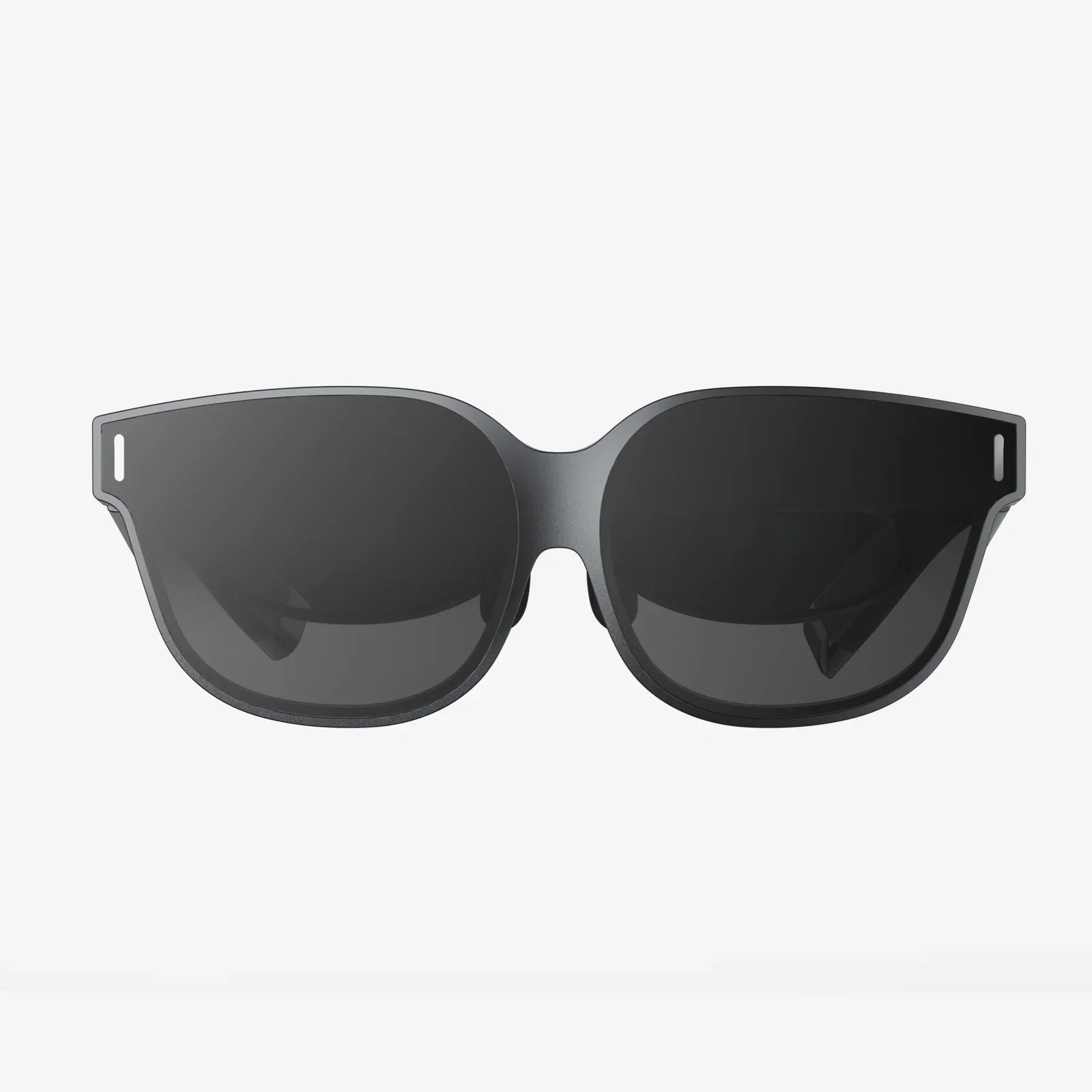
Imagine a world where your digital life doesn’t end at the edge of a screen but is seamlessly painted onto the canvas of your reality. This is the promise of AR PC smart glasses, a technological leap that is quietly moving from science fiction into the realm of tangible, world-altering hardware. This isn’t just about adding a digital layer to your morning run; it’s about fundamentally redefining the relationship between humans, computers, and the environment. We stand at the precipice of a new computing paradigm, one where information is contextual, interactive, and, most importantly, integrated directly into our field of view, untethered from our hands and pockets. The convergence of augmented reality and personal computing is set to unlock efficiencies, create new forms of entertainment, and change how we connect with each other and the world around us in ways we are only beginning to comprehend.
The Architectural Blueprint: More Than Just Glasses
To understand the revolutionary nature of AR PC smart glasses, one must first look past the familiar form factor. These are not simple displays but sophisticated, wearable computers. The architecture is a marvel of miniaturization, packing the core components of a traditional personal computer into a frame that rests on your nose and ears.
At the heart of the device lies a System-on-a-Chip (SoC), a powerhouse processor akin to those found in high-end mobile devices, but often optimized for the unique demands of spatial computing. This CPU and GPU combo is responsible for the immense task of rendering complex digital objects in real-time, tracking the user's position and orientation in space, and understanding the environment through a suite of sensors.
This sensor suite is the eyes and ears of the device. It typically includes:
- High-Resolution Cameras: These scan the environment, not for taking pictures, but for building a live 3D map of the surroundings. They identify surfaces, measure distances, and recognize objects.
- Depth Sensors: Using technologies like LiDAR or structured light, these sensors project and measure thousands of invisible points to create a precise depth map, allowing digital content to interact realistically with physical obstacles.
- Inertial Measurement Units (IMUs): A combination of accelerometers and gyroscopes that track the precise movement and rotation of your head, ensuring the digital overlay stays locked in place as you move.
- Eye-Tracking Cameras: These monitor the user's pupils, enabling intuitive control through gaze, optimizing rendering power by focusing only on where the user is looking (a technique called foveated rendering), and creating a more natural social experience for people around the wearer.
Finally, the display technology itself is the magic window. Using waveguides, micro-LEDs, or other advanced optical systems, these projectors beam light directly onto the user's retinas, creating the illusion of high-resolution, bright digital objects existing in the real world. The challenge of creating a wide field of view, high contrast, and all-day battery life within a small, lightweight, and socially acceptable form factor remains the single greatest engineering hurdle—and the most active area of development.
A New Interaction Paradigm: Beyond the Mouse and Touchscreen
With the computer now on your face, the traditional input methods of keyboard, mouse, and even touchscreen become obsolete or secondary. AR PC smart glasses necessitate and enable a new, more natural language of interaction, one that leverages our innate human abilities.
- Voice and AI Assistants: Conversational AI becomes the primary command interface. Instead of clicking icons, you simply ask your digital assistant to pull up a schematic, translate a sign, or schedule a meeting. The AI, with contextual awareness of what you're looking at, can provide profoundly more relevant assistance.
- Gesture Recognition: Pinching to select, swiping in the air to scroll through menus, or using fine finger movements to manipulate a 3D model—gesture control turns the space in front of you into an infinite, invisible touchscreen. It’s intuitive, immediate, and empowers a level of interaction with 3D content that 2D screens cannot match.
- Gaze and Dwell-Based Selection: Simply looking at a virtual button for a moment can act as a click. This hands-free method is perfect for quick selections and navigating interfaces without ever moving a muscle.
- Contextual UI: The operating system itself becomes spatial. Interfaces don't float arbitrarily; they snap to walls, hover above tables, or appear attached to physical objects. A recipe might open on your kitchen cabinet, a video call might appear as a large window in your living room, and your navigation path might be drawn onto the sidewalk ahead of you.
This shift marks a move from commanding a computer to collaborating with an intelligent environment. The computer fades into the background, and the information it provides feels like a natural extension of your own cognition.
Transforming Professional Landscapes: The Enterprise Revolution
While consumer applications often grab headlines, the most immediate and impactful adoption of AR PC smart glasses is occurring in enterprise and industrial settings. Here, the technology solves critical problems, saves money, and enhances safety, providing a clear return on investment.
- Remote Expertise and Guided Assistance: A field technician facing a complex repair can don a pair of smart glasses and share their live view with an expert thousands of miles away. The remote expert can then annotate the technician's real-world view with arrows, diagrams, and text instructions, literally guiding their hands. This drastically reduces travel costs, downtime, and errors.
- Digital Twins and Complex Assembly: In manufacturing, workers can see step-by-step instructions overlaid directly onto the machinery they are assembling. Parts lists, torque specifications, and wiring diagrams are presented contextually, reducing training time and minimizing mistakes on complex, low-volume production lines, such as in aerospace or custom machinery.
- Design and Prototyping: Architects and engineers can walk through full-scale 3D models of their designs long before ground is broken. They can assess spatial relationships, test structural ideas, and make changes in real-time, collaborating with colleagues who appear as avatars within the shared model.
- Healthcare and Surgery: Surgeons can have vital patient statistics, ultrasound data, or pre-op scans displayed in their periphery during a procedure, keeping their focus on the patient. Medical students can learn anatomy through immersive 3D models, and remote specialists can assist in complex operations.
- Logistics and Warehousing: Warehouse pickers are guided by digital navigation lines on the floor directly to the correct shelf, with the exact item and quantity highlighted in their vision. This streamlines fulfillment processes, accelerates training, and dramatically reduces picking errors.
In these professional contexts, AR PC smart glasses cease to be a novelty and become an indispensable tool, a true force multiplier for human skill and knowledge.
Reshaping Daily Life: The Consumer Horizon
The path to mainstream consumer adoption is longer, hinging on style, comfort, and killer applications, but the potential is staggering. These devices promise to weave computing into the fabric of our daily routines in a helpful, not intrusive, manner.
- Contextual and Personalized Information: Imagine walking through a foreign city, and subtitles automatically appear over street signs and menus. Historical facts pop up as you look at a monument. As you glance at a restaurant, you see its reviews and today's specials. The world becomes instantly more accessible and informative.
- Immersive Entertainment and Social Connection: Instead of watching a movie on a rectangle, you could watch it on a virtual cinema screen the size of your wall. Friends and family from across the globe could appear as holograms in your living room to watch with you, creating a powerful sense of shared presence. Games could transform your entire home into a dungeon, a puzzle, or a battlefield.
- Enhanced Navigation: Giant, floating arrows in the sky are a cliché. The reality is more subtle and useful: a colored path drawn onto the sidewalk at your feet, guiding you through a complex airport or a hiking trail, with points of interest flagged along the way.
- Fitness and Wellness: A personal trainer avatar could demonstrate exercises right in front of you, with your form analyzed in real-time. Performance metrics like heart rate, pace, and distance could hover in your peripheral vision during a run, without the need to look down at a watch.
The ultimate goal is ambient computing—where technology serves you proactively and disappears into the background until needed, a stark contrast to the demanding, attention-hungry smartphones of today.
Navigating the Obstacle Course: Challenges on the Path to Adoption
For all its promise, the journey to a world where everyone wears AR PC smart glasses is fraught with significant technical and social challenges that must be overcome.
- Battery Life and Thermal Management: High-performance computing and bright displays are immense power drains. Delivering a full day of use from a small, wearable battery is a monumental task, as is managing the heat generated by the powerful processors in such a compact form.
- Social Acceptance and Design: The "glasshole" stigma from early devices lingers. For mass adoption, these devices must be indistinguishable from fashionable eyewear—lightweight, comfortable, and available in a variety of styles. People will not wear something that makes them look awkward or socially disconnected.
- Privacy and the Societal Contract: This is perhaps the most critical hurdle. Devices with always-on cameras and microphones raise legitimate concerns about surveillance, data collection, and consent. Clear visual indicators when recording, robust data encryption, and new social etiquettes and laws will be essential to ensure this technology empowers rather than encroaches.
- Digital Divide and Accessibility: As with any transformative technology, there is a risk of exacerbating inequality. Ensuring these tools are affordable and designed with accessibility for all users, including those with disabilities, will be crucial to their success as a unifying, rather than divisive, force.
- Health and Safety: Long-term effects of having displays so close to the eyes are still being studied. Furthermore, user safety in public spaces—ensuring the digital overlay does not obscure critical real-world hazards—is a primary design consideration.
Overcoming these hurdles requires a collaborative effort from engineers, designers, ethicists, and policymakers. The technology cannot advance in a vacuum; it must develop hand-in-hand with the societal frameworks that will support it.
The Invisible Revolution
The development of AR PC smart glasses represents more than just the next product cycle; it signals a fundamental shift in our technological trajectory. We are moving away from isolated devices that demand our attention and toward a seamlessly integrated ecosystem that enhances our perception and amplifies our abilities. This is the true realization of the personal computer—not a box on a desk, but an intelligent companion that understands our context and empowers us within it. The potential to revolutionize education, create new artistic mediums, bridge cultural gaps, and solve complex problems is limited only by our imagination. The future is not about staring at a screen; it's about looking through a new lens that reveals the hidden layers of potential in our world. The revolution won't be televised; it will be illuminated, annotated, and experienced all around us, changing everything from how we work to how we see.
The bridge between our digital dreams and physical reality is being built, not with bricks and mortar, but with light and silicon, and it’s being worn on our faces. The next time you put on a pair of glasses, you might just be putting on the most powerful and intuitive computer the world has ever seen, unlocking a universe of information hidden in plain sight.
Share:
Mini Desktop The Compact Powerhouse Revolutionizing Personal Computing
AR Headset Review: A Deep Dive into the Future of Wearable Computing