


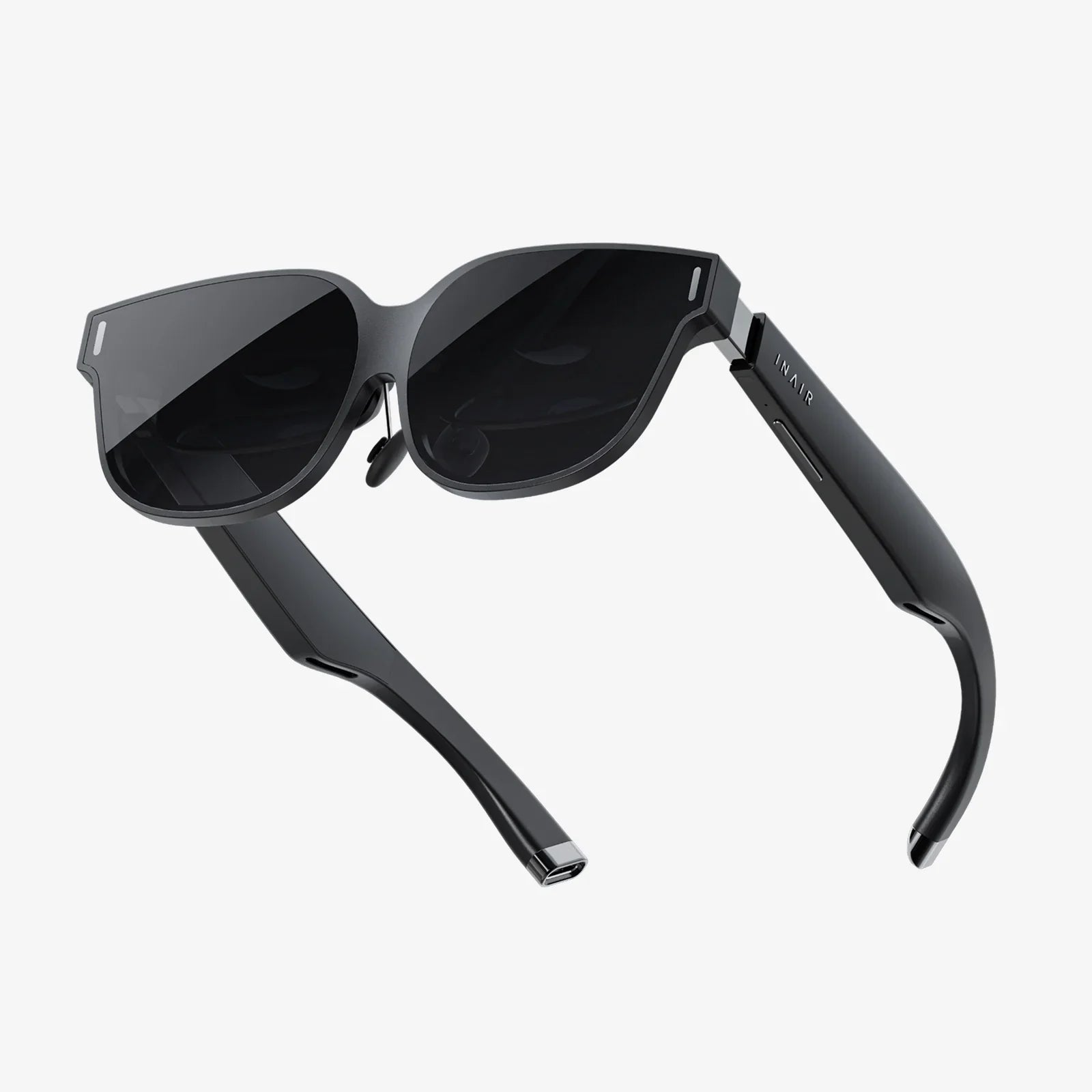
Imagine slipping a sleek, lightweight visor over your eyes and instantly transforming the world around you. Your smartphone, the device already fused to your daily life, becomes the engine for a breathtaking layer of digital intelligence, overlaying helpful arrows on the sidewalk to your destination, translating foreign street signs in real-time, or allowing a 3D model of a new sofa to materialize right in your living room. This is the promise of AR headsets compatible with smartphones in 2025, a technological synergy that is poised to move augmented reality from a niche curiosity to a mainstream revolution, and it’s a future that’s far closer than you think.
The Convergence: Why Your Smartphone is the Perfect AR Companion
The relationship between AR headsets and smartphones is a classic example of technological symbiosis. Rather than building expensive, heavy, and power-hungry components into a headset itself, manufacturers are leveraging the incredible supercomputer we all carry in our pockets. By 2025, the flagship smartphones powering these experiences will be more than capable.
The Processing Powerhouse
Modern smartphones are equipped with chipsets that rival laptops in computational power. These System-on-a-Chip (SoC) designs integrate incredibly powerful CPUs and, more importantly for AR, GPUs and dedicated Neural Processing Units (NPUs). The NPU is the silent hero of mobile AR, designed specifically for the complex matrix calculations required for real-time object recognition, spatial mapping, and gesture tracking. By offloading these intense tasks to the phone, headset designers can focus on comfort and display technology, avoiding the need for bulky cooling systems and large batteries on the user's face.
The Sensor Suite: A World of Data
Your smartphone is already a sophisticated sensor hub. High-resolution cameras, LiDAR scanners, depth sensors, accelerometers, gyroscopes, and magnetometers work in concert to understand its position in the world. In 2025, these sensors will be even more precise and power-efficient. When a headset taps into this sensor array, it gains an instant, high-fidelity understanding of the environment. The phone does the heavy lifting of creating a point cloud map of the room, while the headset uses that data to anchor digital objects with rock-solid stability.
Connectivity and Battery Life
Headsets connected via a robust physical connection like USB-C or a low-latency wireless protocol can draw power and data simultaneously. This setup offers a significant advantage: the headset itself doesn't need a large battery, keeping it light, while the smartphone's substantial battery capacity fuels the experience. Furthermore, the smartphone provides a constant, high-bandwidth connection to the cloud via 5G and future network advancements, enabling complex AR experiences that can be processed remotely and streamed to the device.
Defining the 2025 Smartphone AR Headset Experience
The headsets of 2025 will represent a dramatic evolution from the cardboard viewers and rudimentary plastic holders of the past. We can expect several key characteristics to define this new generation.
Form Factor: From Bulky to Barely There
The era of the cumbersome, goggle-like headset is fading. The 2025 aesthetic leans towards sleek, visor-style designs that prioritize social acceptance and all-day comfort. Think large sunglasses or a slim skiing visor rather than a welding mask. Materials will be lightweight composites and polymers, often with a focus on a stylish, consumer-electronics look rather than a tech-demo prototype.
Display Technology: Through-Lens Clarity
Waveguide and holographic optical elements will be the dominant display technology. These thin, transparent films or glass elements are embedded in the lenses and project light directly into the user's eyes, allowing them to see the real world with digital overlays seamlessly composited on top. Resolution and field of view (FOV) will see significant bumps, moving from a small "postage stamp" window of AR to a much more immersive view that fills a greater portion of your natural vision without sacrificing the crisp clarity of the real world.
Intuitive Interaction: Beyond the Touchscreen
While a smartphone can serve as a touchpad or controller, the most compelling headsets of 2025 will embrace more natural input methods.
- Voice Commands: Advanced natural language processing, powered by the phone's NPU, will allow for complex, conversational control.
- Hand Tracking: Miniaturized cameras on the headset will track finger movements and gestures with sub-millimeter accuracy, enabling you to pinch, grab, and manipulate digital objects as if they were really there.
- Eye Tracking: This will be a game-changer for both interaction and performance. Foveated rendering—where the highest detail is rendered only where your eyes are looking—will drastically reduce the processing load on the phone, improving battery life and performance. It also enables intuitive menu selection and deeper analytics for enterprise applications.
A Universe of Use Cases: Transforming How We Live and Work
The true power of this technology lies in its application. By being smartphone-compatible, these headsets instantly inherit the ubiquity and utility of the mobile platform.
Navigation and Exploration
Forget looking down at a map on your phone. AR navigation will project giant, floating arrows onto the road, highlight the exact entrance to a building, or show the names of mountain peaks as you hike. On a historical tour, ancient ruins could be reconstructed before your eyes, with figures acting out scenes from the past. Language barriers will dissolve as text on menus and signs is instantly translated and overlaid in your native language.
Social Connection and Entertainment
Social media will evolve from a screen-based experience to a shared spatial one. You could leave a virtual note for a friend at a specific location, or watch a live sports game with a virtual representation of a friend sitting on your couch, both of you seeing real-time stats floating around the screen. Gaming will explode, turning your local park into a fantastical battlefield or your coffee table into a intricate strategy game board.
Professional and Educational Tools
The impact on enterprise and education will be profound. A remote expert can see what a field technician sees and draw annotations directly into their vision to guide a complex repair. Medical students can practice procedures on detailed, interactive holograms of human anatomy. Architects and interior designers can walk clients through full-scale models of unbuilt structures. This "see-what-I-see" capability, powered by a device almost everyone owns, dramatically lowers the barrier to entry for these powerful tools.
Retail and Try-Before-You-Buy
Online shopping will become experiential. You'll be able to see how a new lamp looks on your end table, how a pair of sunglasses fits your face, or even how a car's dashboard feels before stepping into a dealership. This reduces purchase anxiety and returns, creating a more confident and efficient consumer experience.
Challenges and Considerations on the Road to 2025
While the future is bright, the path to widespread adoption is not without its obstacles.
The Standardization Hurdle
A fragmented ecosystem is a primary concern. For this vision to work seamlessly, operating systems and headset manufacturers will need to agree on robust connectivity and communication standards. A universal protocol for sensor data sharing, display output, and power delivery is crucial to ensure a plug-and-play experience across different phone and headset brands.
Balancing Power and Thermal Constraints
Pushing high-fidelity AR experiences will remain a demanding task. While NPUs help, sustained use could still lead to significant smartphone battery drain and potential thermal throttling, where the phone reduces performance to avoid overheating. Efficient software and cloud-based rendering will be essential to managing this balance.
The Social Contract: Privacy and Etiquette
As cameras become always-on in our field of view, society will need to establish new norms. Clear visual indicators that recording or AR is active will be necessary. Laws regarding recording in public and private spaces will need to be revisited. The etiquette of interacting with a digital world while physically present with others is a social challenge that technology alone cannot solve.
The Invisible Bridge to the Future
Smartphone-compatible AR headsets in 2025 represent more than just a new product category; they are the critical bridge to a fully realized augmented future. They democratize access to AR by leveraging existing hardware, they accelerate developer adoption by providing a massive potential user base, and they refine the user experience through a period of intense, real-world use. This iterative process, driven by millions of consumers, is what will ultimately pave the way for the standalone, all-in-one AR glasses of the next decade. They are the training wheels for a world where digital and physical are inextricably and usefully linked.
The revolution won't arrive with a bang, but with a gentle click as you snap your phone into a visor. In that moment, your everyday world will unlock a new dimension of information, creativity, and connection. The device that changed how we communicate is now set to change how we see, and the view is going to be spectacular. The gateway to this augmented age isn't a mysterious piece of specialized hardware—it's the familiar rectangle in your pocket, waiting for its partner to arrive.
Share:
Highest Resolution AR Headsets 2025: A New Era of Visual Fidelity and Immersive Computing
VR Hologram: The Future of Immersive Interaction is Here