


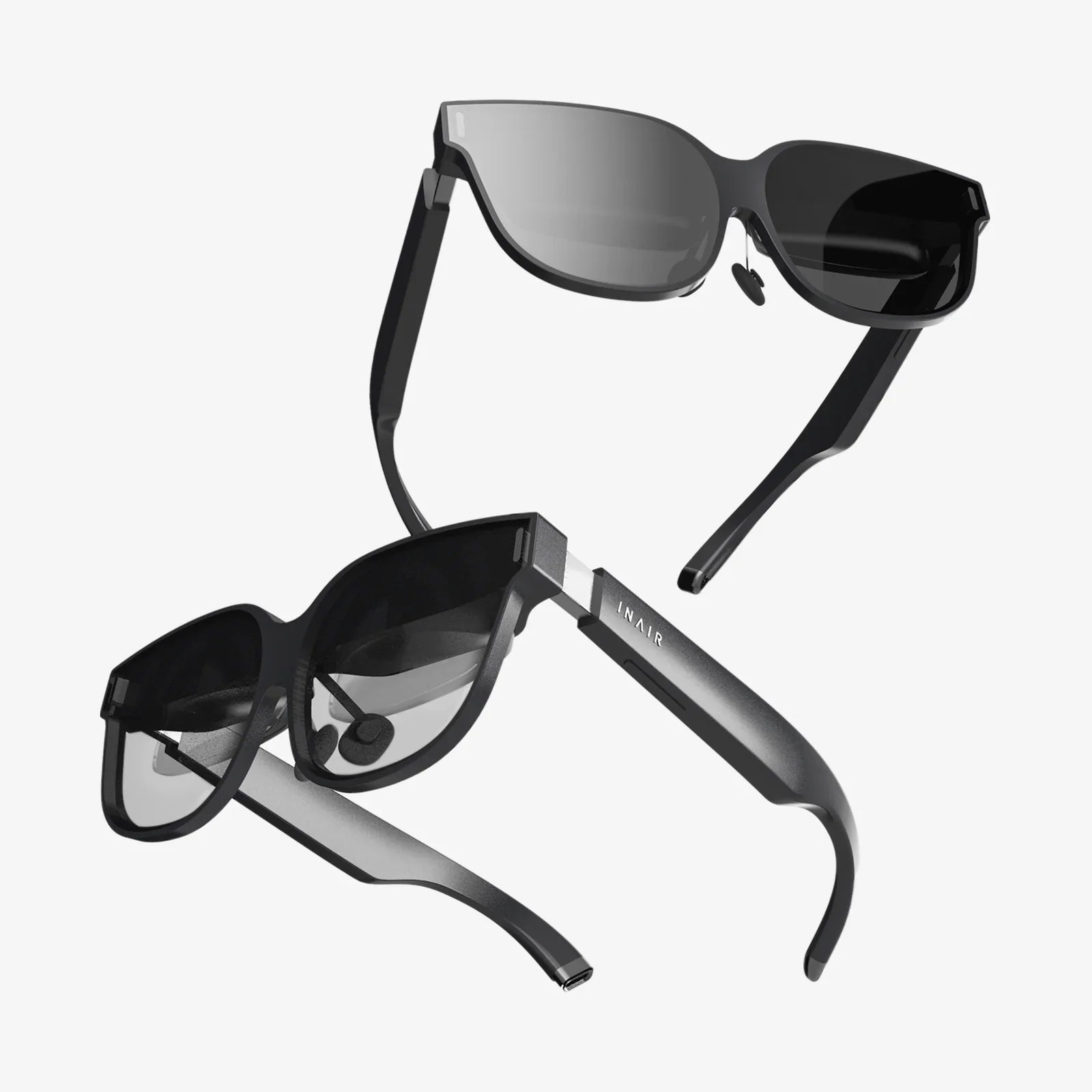
Imagine a world where the digital and physical seamlessly merge with such stunning clarity that you can no longer distinguish a holographic schematic from the real engine it's overlaid upon, where reading virtual text is as sharp as laser-printed paper, and social interactions with avatars feel tangibly present. This is not a distant sci-fi fantasy; it is the promise held within the highest resolution augmented reality headsets of 2025, a technological leap that is poised to redefine our perception of reality itself. The race for visual fidelity has reached its zenith, and the implications are nothing short of revolutionary.
The Resolution Revolution: Beyond Retina Displays
For years, the term 'Retina Display' represented the pinnacle of pixel density, a point where the human eye could no longer discern individual pixels at a standard viewing distance. However, AR headsets of 2025 are shattering this old paradigm. We are moving into an era of 'super-retinal' resolution, where displays are measured in pixels-per-degree (PPD) rather than pixels-per-inch.
The target for true visual immersion is widely considered to be 60 PPD, a figure that matches the resolving power of 20/20 human vision. The most advanced headsets emerging in 2025 are not just approaching this benchmark; they are surpassing it, reaching towards 80-100 PPD and beyond. This means a single, seamless digital canvas where text is razor-sharp, edges of virtual objects are perfectly defined, and there is absolutely no visible screen door effect—the grid-like artifact that has plagued earlier VR and AR devices.
This leap is achieved through a confluence of several cutting-edge display technologies. MicroLED displays, with their microscopic pixels, incredible brightness, and perfect blacks, are at the forefront. Paired with advanced waveguide optics and novel pancake lens designs that allow for a more compact form factor without sacrificing optical path, these systems are engineering marvels. Furthermore, the integration of foveated rendering, powered by internal eye-tracking systems, is crucial. This technique renders the center of your gaze in ultra-high resolution while subtly reducing the detail in your peripheral vision, dramatically reducing the computational load required to drive these incredibly dense displays.
The Engine Room: Powering Unprecedented Pixel Counts
Pushing billions of pixels per second is a task that would bring even the most powerful desktop computers of just a few years ago to their knees. The headsets of 2025 are feats of miniaturization and thermal management, packing specialized processing units that are a generation ahead.
These systems-on-a-chip (SoCs) are custom-designed for spatial computing. They feature dedicated cores for:
- AI and Machine Learning: For persistent scene understanding, object recognition, and predictive rendering.
- Computer Vision: Processing data from a suite of high-resolution cameras for inside-out tracking, depth sensing, and hand-tracking with sub-millimeter accuracy.
- Neural Rendering: Utilizing AI to upscale imagery, predict light paths, and generate complex visual effects in real-time, all while maintaining a stable, high frame rate essential for user comfort.
This immense processing happens both on the device, for low-latency responsiveness, and is often complemented by offloading heavier computations to edge computing networks via high-speed, low-latency 5G/6G connections. This hybrid approach ensures that the user experiences flawless, high-fidelity visuals without being tethered to a bulky external computer.
More Than Just Pixels: The Holistic Sensory Experience
While resolution is the headline-grabbing feature, the 2025 headsets offer a holistic sensory package that makes the high resolution meaningful. Visual fidelity is wasted if the virtual objects don't behave like they are part of the real world.
Dynamic Dimming: Advanced electrochromic layers allow these displays to dynamically dim individual pixels or entire sections of the lens. This creates true, deep blacks and allows virtual content to occlude (block the view of) real-world objects behind them, a critical factor for achieving convincing visual depth and immersion.
HDR and Expanded Color Gamuts: Supporting High Dynamic Range (HDR) means these displays can achieve incredible peak brightness levels (exceeding 3,000 nits) to combat even the brightest outdoor environments, while also representing a much wider and more vibrant range of colors. A virtual flame will look truly bright and hot, and a holographic gem will sparkle with realistic brilliance.
Audio-Visual Synchronization: High-resolution spatial audio is perfectly synced with the visual experience. The sound of a virtual hummingbird doesn't just come from a speaker; it emanates from the exact point in space where the photorealistic bird is hovering, moving naturally as you turn your head.
Transforming Industries: The Practical Power of Clarity
The impact of this resolution revolution extends far beyond entertainment. It is set to become one of the most transformative productivity tools ever created.
Precision Engineering and Remote Assistance
An engineer can stand before a complex jet engine and summon a full-scale, ultra-high-resolution 3D model of its internal components. They can peel back layers, view animated workflows, and see real-time sensor data overlaid with perfect alignment. A specialist located on another continent can join their field of view as a photorealistic avatar, using precise laser pointers and annotations to guide a repair procedure, with every detail visible to both parties.
Healthcare and Medical Visualization
Surgeons can overlay diagnostic imagery—such as MRI or CT scans—directly onto a patient's body with unprecedented accuracy. They can "see through" tissue to plan incisions, navigate around critical structures, and practice complex procedures on patient-specific holograms. Medical students can study intricate anatomical models with a level of detail previously only possible with a physical cadaver.
Design and Architecture
Architects and interior designers can walk clients through life-size, fully rendered models of unbuilt spaces. They can change materials, lighting, and furnishings in real-time, with the client experiencing the true texture of fabric and the gloss of a marble countertop as if it were physically present. The line between blueprint and building is erased.
The Human Factor: Comfort, Form, and the Path to Adoption
Packing this much technology into a device meant to be worn on the face presents immense challenges. The headsets of 2025 represent a significant evolution in industrial design, moving away from the bulky, face-encompassing goggles of the past.
The goal is all-day wearability. This is being approached through:
- Lightweight Materials: Increased use of advanced polymers, magnesium alloys, and carbon fiber to reduce weight.
- Balanced Weight Distribution: A significant portion of the processing and battery weight is often shifted to a separate module worn on a belt or in a pocket, connected via a slim, high-bandwidth cable, or to a behind-the-head battery pack that counterbalances the front display.
- Slimmer Optical Stacks: The adoption of pancake lenses and holographic optical elements has drastically reduced the distance between the display and the eye, allowing for a form factor that more closely resembles large sunglasses than a diving mask.
This focus on ergonomics is critical for transitioning AR from a novelty used for short bursts into a persistent, always-available tool that augments our daily lives.
Navigating the New Reality: Ethical and Social Considerations
As this technology becomes more convincing and pervasive, it raises profound questions. The concept of hyper-reality—a state where the simulated is indistinguishable from the real—becomes a tangible concern. How do we maintain a shared sense of objective reality when everyone can customize their visual field?
Issues of data privacy become paramount, as these devices continuously scan and interpret our personal environments. The potential for new forms of distraction, advertising, and even manipulation is significant. Establishing ethical frameworks, digital etiquette, and robust privacy controls will be just as important as the hardware breakthroughs themselves to ensure this powerful technology benefits society as a whole.
The highest resolution AR headsets of 2025 are more than just incremental upgrades; they are the key that unlocks the true potential of augmented reality. They move us from a era of promise and potential into one of practical, powerful, and pervasive utility. The barrier of visual imperfection has finally been broken down, revealing a future where our digital and physical realities can finally coexist in perfect harmony. The world is about to get a major resolution upgrade, and with it, a whole new way of seeing, working, and connecting.
Share:
Benefits of Wearable Technology: A Deep Dive into How Wearables Are Reshaping Our Lives
AR Headsets Compatible with Smartphones 2025: The Future is in Your Pocket