


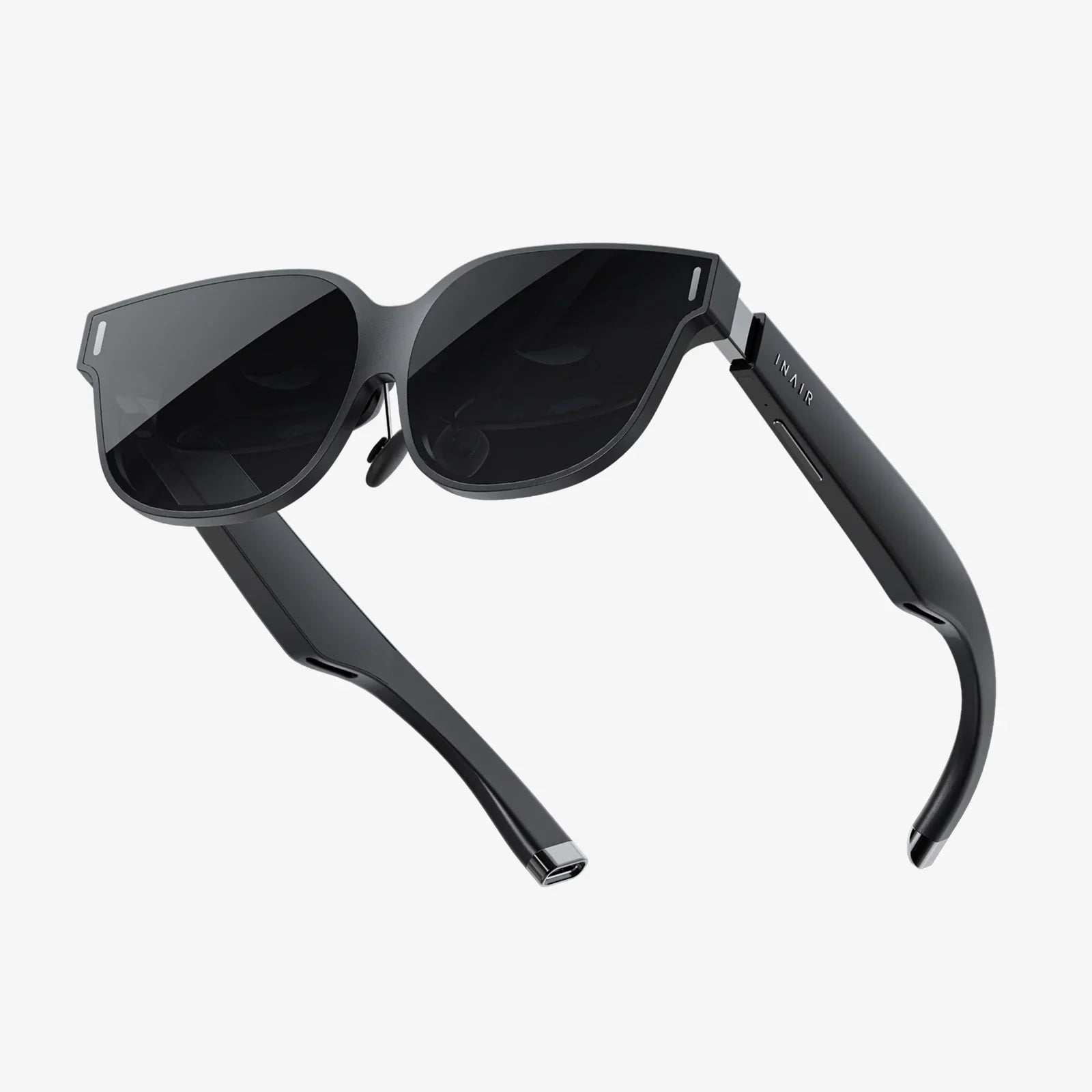
Imagine reaching out and touching a hologram, your bare fingers deftly manipulating a complex 3D model, playing a virtual piano with the nuance of a real musician, or assembling a piece of intricate furniture with step-by-step digital instructions that you can physically grab and place. This isn't a scene from a science fiction movie; it is the tangible, awe-inspiring reality being unlocked by the latest generation of augmented reality headsets with advanced hand-tracking support, set to redefine our world in 2025 and beyond. The barrier between the digital and the physical is not just blurring; it is dissolving at the tips of your fingers.
The Evolution of a Revolution: From Controllers to Natural Gestures
The journey to this point has been one of relentless innovation. Early virtual and augmented reality systems relied heavily on external sensors, complex setups, and handheld controllers. These controllers, while effective for certain applications, created a palpable barrier to immersion. They were an abstraction, a tool you had to learn and hold, constantly reminding you that you were interacting with a simulation.
The first iterations of hand-tracking were revolutionary in concept but often limited in practice. Early systems struggled with latency, occlusion (when one hand blocks the view of the other), and a limited gesture vocabulary. They could recognize a basic thumbs-up or a pinch but failed to capture the fluidity and complexity of natural human hand movements. The technology was promising, but it wasn't yet ready to become the primary interface for immersive computing.
By 2025, a confluence of technological advancements has catapulted hand-tracking from a novel feature to a core, indispensable technology. The leap in capability is driven by several key factors:
- Advanced Sensor Fusion: Modern AR headsets are equipped with a sophisticated array of sensors. High-resolution RGB cameras, depth-sensing LiDAR or time-of-flight sensors, and ultra-wideband radar work in concert to create a rich, real-time 3D map of your hands and the environment. This multi-modal approach ensures that tracking remains robust even in challenging lighting conditions or when fingers are partially hidden from view.
- On-Device AI Co-Processors: The real magic happens with dedicated neural processing units (NPUs) integrated directly into the headsets. These powerful chips are designed to run complex machine learning models for computer vision at incredibly high speeds and with low latency. They can predict hand positions, recognize micro-gestures, and understand intent by analyzing skeletal models of the user's hands—all in milliseconds, eliminating the disorienting lag that plagued earlier systems.
- Predictive Algorithms: Software has become incredibly sophisticated. Algorithms no longer just react to hand positions; they predict them. By understanding the biomechanics of the human hand and the likely path of a movement, the system can maintain a smooth and accurate representation even during rapid motions or brief moments of occlusion.
How 2025's Hand-Tracking Actually Works: A Technical Dive
To appreciate the marvel of modern hand-tracking, it's helpful to understand the process happening inside the headset thousands of times per second.
- Perception: The headset's cameras and sensors continuously capture raw data of the user's environment, including their hands.
- Segmentation: A machine learning model instantly identifies which pixels in the image belong to the user's hands, separating them from the background clutter.
- Skeletal Modeling: Another AI model constructs a precise digital skeleton of each hand, estimating the 3D position of 21 or more key points for each hand—the knuckles, joints, and fingertips. This creates a high-fidelity, real-time avatar of your hand.
- Gesture Recognition and Intent Parsing: The system interprets the skeletal model's pose and movement. It distinguishes between a deliberate pinch to select an object, a swipe to navigate a menu, a grab to manipulate a tool, or a relaxed, idle position. This is where context is key; the same hand shape might mean different things in a game versus a productivity application.
- Rendering and Feedback: The AR interface responds instantly. A virtual button you press visually depresses, a slingshot you pull back stretches, and a digital paintbrush follows the exact contour of your finger's movement. Haptic feedback, either through subtle vibrations in the headset's strap or through wearable bands, provides physical confirmation of your interactions, closing the loop between sight and touch.
Transforming Industries: The Practical Power of Intuitive Interaction
The implications of robust, controller-free hand-tracking extend far beyond entertainment. It is fundamentally changing how professionals work, learn, and create.
Design and Engineering
Architects and industrial designers can now step inside their 3D models. They can walk around a virtual building prototype, using their hands to resize walls, reposition structural elements, or change the texture of materials with a touch. This tactile interaction allows for a more intuitive understanding of scale, space, and design ergonomics long before any physical materials are used.
Medicine and Healthcare
Surgeons can practice complex procedures on detailed holographic anatomies, their hand movements tracked with precision to hone their skills without risk. Medical students can dissect virtual cadavers, peeling back layers of muscle and tissue with their fingers. Therapists are also using these systems for rehabilitation, guiding patients through precise physical exercises with gamified AR overlays that provide real-time feedback on their form and range of motion.
Manufacturing and Field Service
A technician repairing a complex piece of machinery can have schematic diagrams, instruction manuals, and animated tutorials projected directly onto the equipment they are working on. They can swipe through steps, zoom in on a specific component with a pinch, and even connect with a remote expert who can see their view and annotate the real world with virtual arrows and circles, all guided by natural hand gestures.
Education and Collaboration
Imagine a history class where students can collectively manipulate and explore a virtual ancient artifact, or a chemistry lesson where they can safely assemble and experiment with volatile molecules. In remote collaboration, colleagues from around the world can meet in a shared AR space around a virtual whiteboard, brainstorming ideas and manipulating 3D assets together as if they were in the same room, their hand gestures visible to all participants as virtual avatars.
The Human Factor: Accessibility and the Democratization of Technology
Perhaps the most profound impact of hand-tracking is its role in making technology more accessible and human-centric. Controllers can be intimidating and difficult for young children, older adults, or individuals with certain motor disabilities. The learning curve is eliminated when the interface is your own hand. The technology empowers a much broader range of people to create, communicate, and access information in entirely new ways. It represents a significant step towards the democratization of spatial computing, building a future where powerful digital tools are governed by the most universal and intuitive tools we possess: our hands.
Gazing into the Crystal Ball: What Comes After Hands?
As remarkable as 2025's hand-tracking is, it is merely a stepping stone. Researchers are already developing the next wave of interaction paradigms. Eye-tracking is becoming standard, allowing for foveated rendering (which drastically improves visual performance) and enabling gaze-based selection—where you simply look at an object to highlight it before using your hand to act upon it. Neural interfaces are in early development, exploring ways to decode neural signals from the brain or muscles to allow for even more subtle and direct control, potentially enabling interactions without any visible movement at all. The combination of hand, eye, and voice will create a multi-modal interface that is seamless, context-aware, and incredibly powerful.
Navigating the New Frontier: Privacy and Ethical Considerations
With great power comes great responsibility. The ability of these devices to perceive and interpret our most subtle gestures raises important questions about data privacy and security. The continuous visual data capture required for hand-tracking is intimate. Users and regulators will rightly demand transparency about how this data is processed, stored, and used. Will gesture data be used to build advertising profiles? Could it be subpoenaed as evidence? The industry must prioritize on-device processing, end-to-end encryption, and clear user controls to ensure that this powerful technology earns the trust required for widespread adoption. Establishing ethical guidelines for this new form of biometric data is not an option; it is an imperative.
The revolution will not be televised; it will be overlayed onto the world you see, and you will be its conductor. The clumsy controllers of the past are fading into obsolescence, replaced by the elegant, innate expressiveness of the human hand. This is more than just a new way to play games or filter a video call; it is a fundamental shift in our relationship with digital information, weaving it directly into the fabric of our physical actions. The devices arriving in 5are not just portals to a new reality; they are extensions of our own humanity, and they are waiting for you to reach out and take control.
Share:
Are Holograms Possible? The Science, Fiction, and Future of 3D Light
Best Gaming VR - The Ultimate Guide to Immersive Virtual Worlds