Imagine a world where the digital and physical realms don't just coexist but are perfectly, seamlessly blended for your eyes alone, without the awkward compromise of bulky frames or the constant switching between your reality and your vision. This is no longer a futuristic fantasy reserved for those with 20/20 vision. The emergence of AR headsets with prescription lenses support is shattering the final barrier to universal adoption, offering a crystal-clear portal into the metaverse for the billions of people who rely on corrective eyewear. This isn't a minor accessory update; it's a fundamental rethinking of how we interact with technology, prioritizing inclusivity and comfort to unlock a truly immersive experience for everyone.
The Vision Barrier: A Hurdle in Immersive Adoption
For years, augmented reality promised to overlay helpful information, captivating entertainment, and powerful productivity tools onto our perception of the real world. Yet, for a significant portion of the population, this promise fell flat. The experience was literally blurry. Users who wore prescription glasses faced a frustrating dilemma: struggle with the uncomfortable fit of a headset over their frames, risk damaging their expensive eyewear, or use custom-made inserts that were often an expensive, complex afterthought. This created a tangible friction between the user and the technology, constantly reminding them of the device's limitations rather than its possibilities. It was a glaring oversight that excluded a massive audience from fully participating in the next computing revolution.
The need for a integrated solution became increasingly apparent. For AR to move from a niche gadget to a mainstream platform, it had to accommodate the user's fundamental biological needs, starting with clear vision. Prescription support isn't a luxury; it's a necessity for accessibility, ensuring that the benefits of augmented reality are available to all, regardless of their visual acuity.
How Prescription Lens Integration Works: The Mechanics of Clarity
The integration of prescription lenses into an AR headset is a sophisticated feat of optical engineering. It goes far beyond simply slotting a pair of glasses into the device. The goal is to merge the corrective optics seamlessly with the advanced waveguide or projection systems that generate the digital imagery.
Magnetic and Custom Inserts
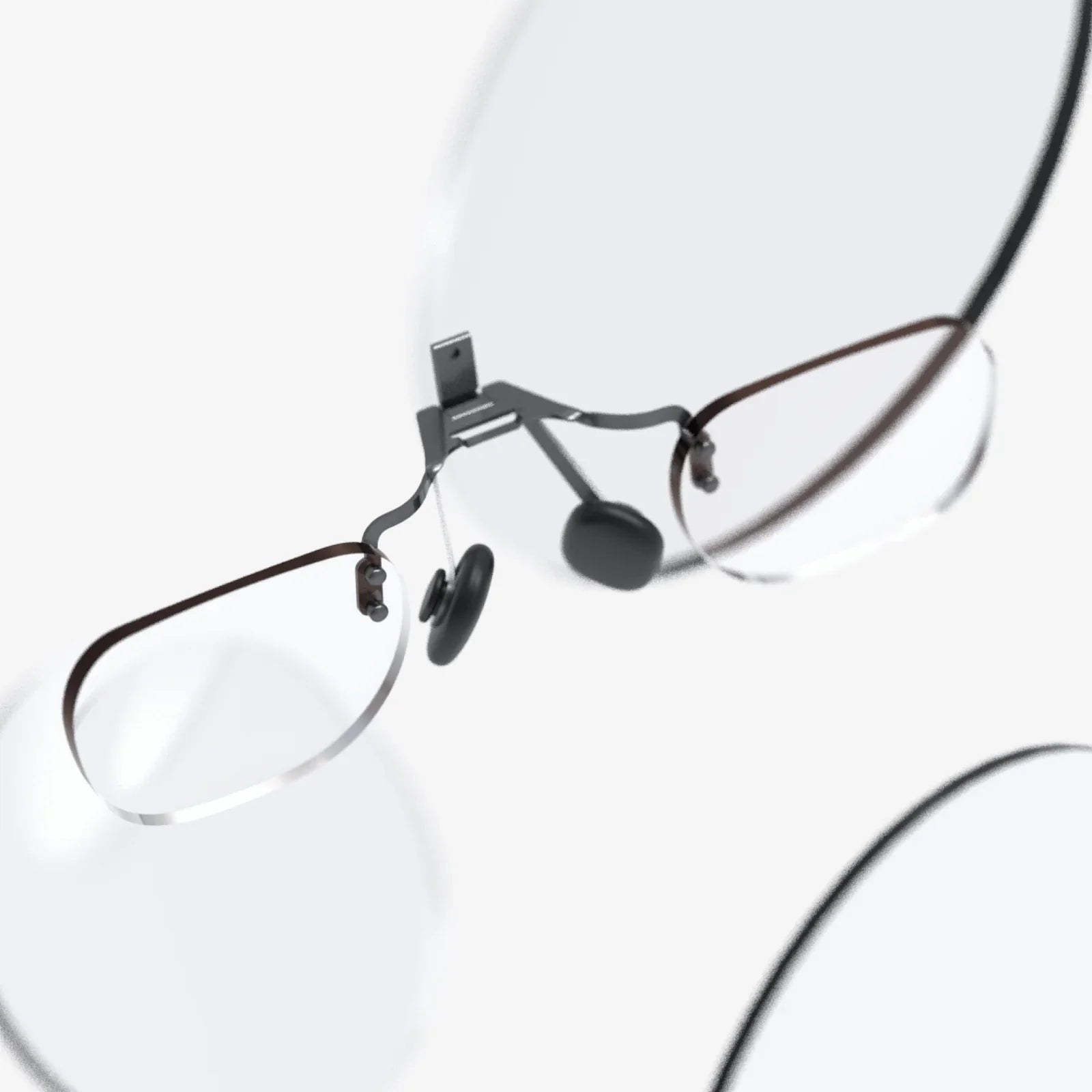
The most common and user-friendly approach involves custom magnetic inserts. Users provide their precise prescription details, including sphere, cylinder, axis, and pupillary distance (PD). A specialized optical lab then grinds lenses to these exact specifications and mounts them into a custom-designed frame that snaps securely and effortlessly into place via magnets within the headset's optical bay. This system allows for easy attachment and removal, enabling multiple users with different prescriptions to share a single device simply by swapping their personal inserts.
Advanced Optical Calibration
The true magic happens in software. Modern systems perform intricate optical calibration once the prescription inserts are in place. This process involves:
-
Rendering Engine Adjustment: The headset's software adjusts the rendering of the digital content to account for the specific distortions or focal properties introduced by the prescription lenses. This ensures that virtual objects remain stable, sharp, and properly positioned in 3D space.
-
Eye Tracking Synchronization: For headsets with advanced eye-tracking capabilities, the calibration ensures the system accurately understands where the user is looking through the corrective lenses. This is critical for foveated rendering (which saves processing power by rendering only the center of vision in high detail) and for intuitive interface control.
Beyond 20/20: The Multifaceted Benefits of Built-In Prescription Support
The advantages of this technology extend far beyond simply seeing a sharp image. It fundamentally enhances the entire user experience.
Unparalleled Comfort and Ergonomic Design
Eliminating the need to wear a headset over glasses is a game-changer for comfort. It reduces pressure on the nose and temples, eliminates the feeling of being "double-walled," and allows the headset to sit closer to the face. This improves the field of view, reduces light leakage, and makes the device significantly more comfortable for extended wear, which is essential for professional use cases and lengthy entertainment sessions.
Optimal Visual Performance and Immersion
A clear image is the foundation of immersion. When text is sharp, edges are defined, and virtual objects are perfectly focused, the user's brain is more readily tricked into accepting the digital overlay as part of their reality. This reduces cognitive load, minimizes eye strain, and creates a deeper, more believable and engaging experience. For tasks like reading complex data overlays or examining detailed 3D models, visual clarity is non-negotiable.
Accessibility as a Core Principle
This represents a monumental leap in accessibility. It democratizes access to cutting-edge technology for individuals who were previously sidelined. Students, professionals, artists, and enthusiasts with vision impairments can now engage with AR on a level playing field. This inclusivity fosters a larger, more diverse community of developers and users, which in turn drives more innovative and widely applicable software solutions.
Transforming Industries: Professional Applications in Sharp Focus
While gaming and entertainment are obvious beneficiaries, the impact of prescription-ready AR is perhaps most profound in enterprise and professional settings.
-
Healthcare: Surgeons can access vital patient statistics, imaging data, and guidance tools hands-free during procedures without visual compromise. Medical students can observe detailed anatomical overlays with perfect clarity.
-
Manufacturing & Field Service: Technicians can view schematics, instruction manuals, and remote expert guidance superimposed directly onto the machinery they are repairing, all while maintaining the precise vision needed for intricate work.
-
Design and Architecture: Architects and engineers can walk through full-scale 3D models of their creations, examining details and making adjustments without the barrier of blurred lines or inaccurate scales.
-
Logistics and Warehousing: Workers fulfilling orders can see picking lists, inventory locations, and optimal routing information overlaid on their environment, streamlining complex tasks with visual precision.
In these high-stakes environments, where accuracy, efficiency, and safety are paramount, the combination of hands-free operation and crystal-clear vision is not just convenient—it's transformative.
Navigating the Decision: A User's Guide to Getting Started
For those considering an AR headset with prescription support, the process is becoming increasingly streamlined.
-
Obtain a Current Prescription: A recent, accurate prescription from an optometrist is essential. Pay close attention to the PD measurement, as an incorrect value can cause eye strain and hinder the effectiveness of the lenses.
-
Research Compatible Platforms: Investigate which headset manufacturers offer first-party or certified third-party prescription solutions. First-party options are generally guaranteed to have undergone rigorous calibration with the device's display system.
-
Understand the Ordering Process: Typically, you will enter your prescription details directly on the manufacturer's or partner's website. The process is similar to ordering glasses online but with specific fields tailored to the headset's requirements.
-
Consider Your Needs: Think about your primary use cases. Do you need high-impact resistant lenses? Anti-reflective coatings? Blue light filtering? These options are often available and can further customize the experience for your comfort.
The Future is Clear: What's Next for Prescription AR?
The integration of prescription support is just the beginning. The future points toward even more personalized and dynamic vision solutions. We are moving toward headsets with:
-
Autofocus Capabilities: Using eye-tracking and liquid crystal lenses, future headsets could automatically adjust focus between virtual screens and the real world, potentially helping users with conditions like presbyopia (age-related farsightedness).
-
Electroactive Prescription Lenses: Imagine lenses whose prescription strength can be altered digitally with a software update, adapting to a user's changing vision over time without requiring new physical lenses.
-
Seamless Biometric Integration: These optical systems could also monitor eye health, track biomarkers from the tear film, and provide valuable health data, all through the same lenses that correct vision and display information.
This trajectory suggests a future where your AR headset doesn't just help you see the digital world—it helps you see everything better, acting as a dynamic, all-in-one window to both reality and virtuality.
The era of squinting at a blurry future is over. AR headsets with prescription lenses support are more than a convenience; they are the key that unlocks the full, breathtaking potential of augmented reality for everyone. This commitment to clear vision ensures that as we step into a blended world of bits and atoms, we will all be able to see it in perfect, stunning detail, finally merging our personal need for clarity with the boundless possibilities of the digital frontier.


Share:
XR Reality: The Blurring Line Between Our World and the Digital Frontier
3D Hologram Glasses: The Future of Visual Technology is Here