


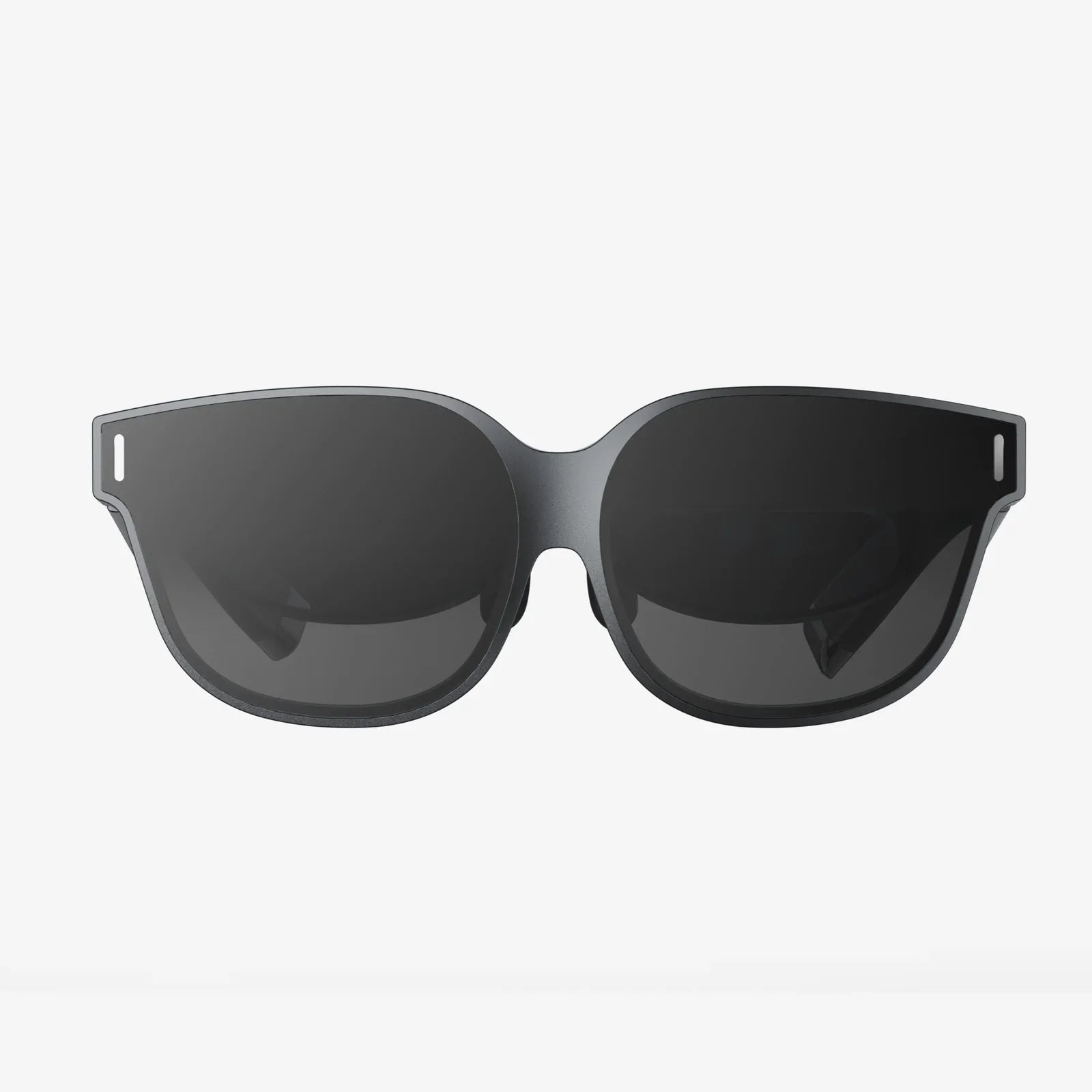
- by wangfred
XR Reality: The Blurring Line Between Our World and the Digital Frontier
- by wangfred
Imagine a world where your digital life doesn’t end at the edge of a screen, but spills out into your living room, overlays instructions onto your workspace, and transports you to fantastical realms with the flick of a switch. This is no longer the stuff of science fiction; it is the burgeoning promise of XR reality, a technological revolution quietly dismantling the barriers between the physical and the digital. This convergence is poised to redefine everything from how we work and learn to how we connect and create, offering a glimpse into a future where our reality is not a fixed state but a dynamic, customizable experience.
Before diving into the profound implications of this technology, it's crucial to understand its components. XR reality is not a single technology but an umbrella term encompassing a spectrum of immersive technologies.
Virtual Reality (VR) represents the far end of the spectrum. It is a fully digital, immersive experience that shuts out the physical world entirely. By wearing a headset, users are transported to computer-generated environments where they can look around, move, and interact as if they were truly there. This is the technology of complete escapism, used for gaming, virtual tourism, and high-fidelity training simulations.
Augmented Reality (AR) sits at the opposite end. Instead of replacing your world, AR enhances it by superimposing digital information—images, text, 3D models—onto your view of the real environment through a device like a smartphone, tablet, or transparent glasses. Think of navigation arrows painted onto the road in front of you or a digital dinosaur stomping through your backyard. The real world remains the foundation, simply augmented with a layer of useful or entertaining data.
Bridging these two is Mixed Reality (MR). This is often considered the most advanced and seamless form of XR. MR doesn't just overlay digital objects; it anchors them to the physical world, allowing for genuine interaction. A digital character in MR can hide behind your real sofa, and a virtual control panel can be placed on your real desk, responding to your touch. It understands and integrates with the geometry and physics of your environment, creating a cohesive blend where digital and physical objects coexist and interact in real-time.
XR reality is the overarching term that binds all these experiences together, representing the entire continuum from the completely real to the entirely virtual.
The magic of XR doesn't happen by accident. It is powered by a sophisticated symphony of hardware and software advancements working in perfect harmony.
For any XR device to interact with the real world, it must first understand it. This is achieved through a suite of sensors, including cameras, LiDAR (Light Detection and Ranging), depth sensors, and inertial measurement units (IMUs). These sensors work together to perform a critical process called simultaneous localization and mapping (SLAM). SLAM allows the device to map its surroundings in 3D in real-time while simultaneously tracking its own position and orientation within that mapped space. This creates a digital twin of your environment, enabling digital content to be placed and persist accurately.
Presenting a convincing digital world requires cutting-edge display technology. Modern XR headsets use high-resolution, fast-switching micro-displays positioned very close to the eyes. The real challenge for engineers is crafting the optics—the lenses—that make this comfortable and believable. Techniques like pancake lenses fold light to create a longer optical path in a compact form factor, while innovations like varifocal and light field displays aim to solve the vergence-accommodation conflict, a major source of eye strain where your eyes struggle to focus on virtual objects at different depths.
Rendering photorealistic 3D graphics at high frame rates is computationally intensive. This processing can happen on the device itself (standalone headsets), on a connected powerful computer (tethered headsets), or be offloaded to the cloud (cloud streaming). The rise of 5G networks, with their high bandwidth and low latency, is a key enabler for cloud-based XR, promising to deliver high-fidelity experiences to lighter, more affordable devices by handling the heavy lifting in remote data centers.
Keyboards and mice have no place in an immersive 3D world. XR relies on intuitive, natural forms of interaction. This includes:
While consumer entertainment grabs headlines, the most significant impact of XR reality is already being felt across numerous professional sectors.
On factory floors and in design studios, XR is driving unprecedented efficiency. Engineers and designers can collaborate on life-size, full-scale 3D models of new products or complex machinery long before a physical prototype is built, identifying issues and making changes at a fraction of the cost. For technicians, AR smart glasses can overlay step-by-step repair instructions, highlight specific components, and even allow a remote expert to see what they see and provide guidance, dramatically reducing downtime and errors.
The stakes in healthcare are high, and XR is proving to be a life-saving tool. Surgeons use AR to visualize patient anatomy, such as CT scans or blood vessels, superimposed directly onto the patient during procedures, improving precision and safety. Medical students are using VR to practice complex surgeries in a risk-free simulated environment. Furthermore, VR is being effectively used for pain management, physical rehabilitation by turning exercises into engaging games, and treating phobias and PTSD through controlled exposure therapy.
XR reality turns learning from a passive activity into an active experience. Instead of reading about ancient Rome, history students can take a virtual walking tour of the Forum. Instead of watching a video about cellular biology, they can step inside a human cell. For vocational training, from welding to electrical work, VR simulations provide a safe, scalable, and cost-effective way to practice dangerous skills without any risk, using virtual tools and materials.
Imagine trying on clothes virtually or seeing how a new sofa would look in your actual living room before you buy it. AR is transforming e-commerce by allowing consumers to visualize products in their personal space. In the realm of remote work, MR meeting spaces are evolving beyond flat video calls. Colleagues from around the world can meet as lifelike avatars in a shared virtual office, interact with 3D data on a virtual whiteboard, and collaborate as if they were in the same room, preserving the nuance and spontaneity of in-person interaction.
As with any transformative technology, the rise of XR reality brings a host of complex challenges that society must proactively address.
XR devices are arguably the most intimate data collection devices ever conceived. They don't just know your location; they map the detailed 3D layout of your home, track your eye movements, record your gestures, and potentially capture audio and video of your private life. This biometric and environmental data is incredibly sensitive. Robust regulations and transparent data policies are essential to prevent misuse and protect users from pervasive surveillance and data exploitation.
If a virtual world becomes more appealing than the real one—more stimulating, more rewarding, or simply easier—what are the psychological consequences? The potential for addiction is significant. Furthermore, as digitally altered perceptions become commonplace, we risk creating a "reality gap," where individuals experience vastly different versions of the same physical space, potentially eroding shared facts and common ground. The long-term psychological effects of prolonged immersion are still unknown.
There is a real danger that XR could exacerbate existing social and economic inequalities. High costs for advanced hardware could create a new digital divide, where immersive education and advanced professional tools are only available to the affluent. Furthermore, these technologies must be designed with inclusivity from the ground up, ensuring they are accessible to people with a wide range of physical abilities and neurological differences.
The XR devices of today are the clunky, monochrome monitors of the 1970s. The trajectory points toward a future of seamless, socially acceptable, and hyper-intuitive interfaces.
The ultimate goal is a shift from headsets to lightweight glasses and eventually to contact lenses or even direct neural interfaces, eliminating hardware barriers altogether. The concept of the spatial web or metaverse envisions a persistent, shared, and interconnected layer of information and experience overlaid onto our world—an internet you can step into. In this future, your digital identity, assets, and social connections will travel with you across different experiences and applications.
Artificial Intelligence will be the invisible engine that makes this all work, powering hyper-realistic avatars, generating dynamic virtual worlds, and acting as a personal guide through these new digital frontiers. The convergence of AI and XR will create experiences that are not only immersive but also intelligent, contextual, and personalized.
We are standing at the precipice of a fundamental shift in human-computer interaction. XR reality promises to weave computing seamlessly into the fabric of our daily lives, augmenting our abilities, transcending physical limitations, and unlocking new forms of creativity and connection. The journey has just begun, and the destination is a world limited only by our imagination.
The line on the horizon between the physical and digital is not just blurring—it's dissolving, and through that opening emerges a new kind of human experience, one where we are no longer mere consumers of content but active inhabitants of a dynamic, programmable universe. The next time you look at the world around you, remember: it's a canvas waiting to be painted with the brush of XR, and we are all holding the palette.
Share:
VR Is It Worth It? A Deep Dive Into The Virtual Future
AR Headsets with Prescription Lenses Support: The Ultimate Guide to Unlocking a Clearer Digital Future