


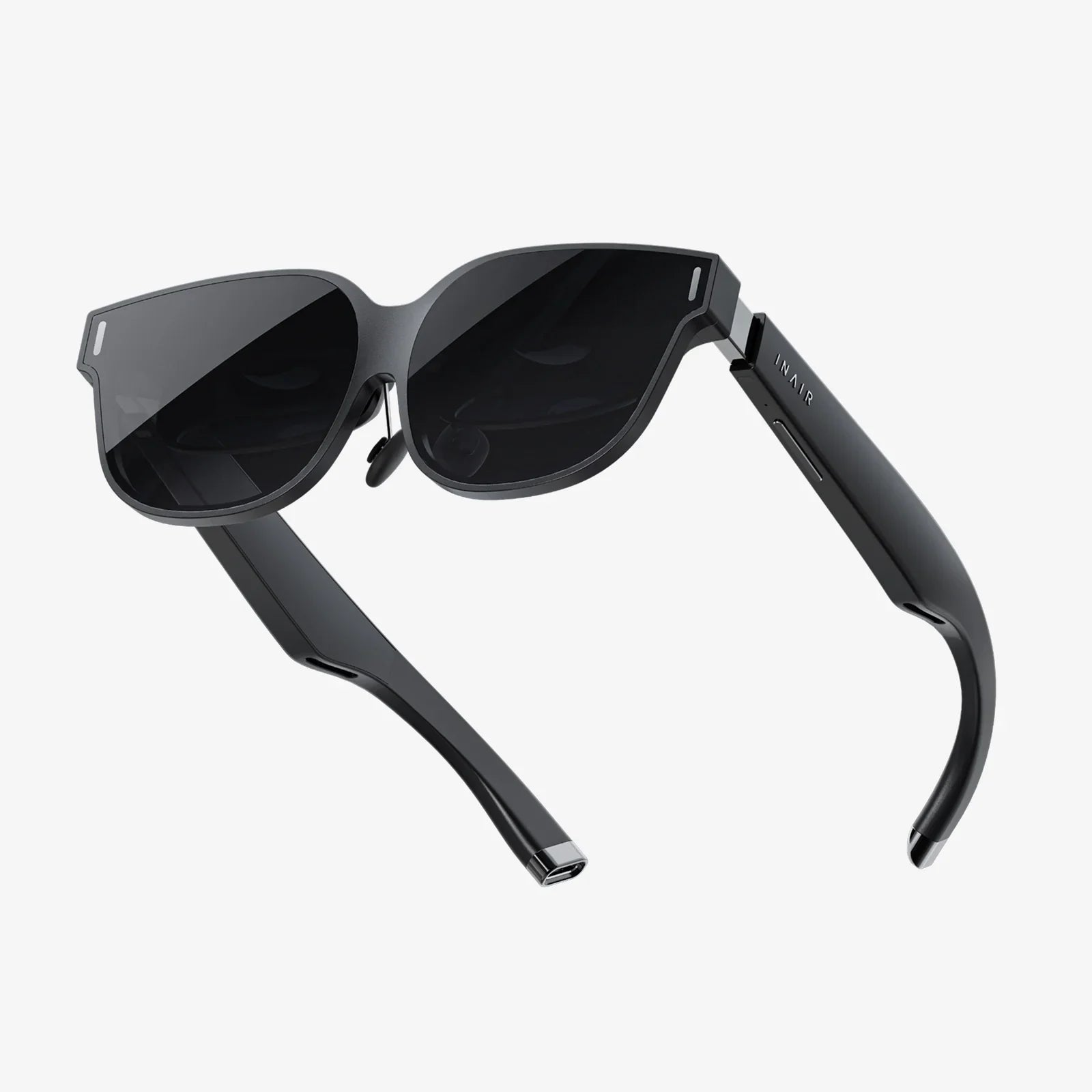
- by wangfred
AR Holographic Technology: Bridging Realities and Redefining Human Experience
- by wangfred
Imagine a world where the line between the digital and the physical not only blurs but disappears entirely, where information and imagination are painted onto the very fabric of reality, accessible with a glance or a gesture. This is the promise of AR holographic technology, a field that is rapidly evolving from science fiction into a tangible, world-altering toolset. It’s a gateway to a new layer of existence, and we are standing on its threshold.
At its core, AR holographic technology is a sophisticated dance of light, computation, and human perception. Unlike traditional augmented reality, which simply overlays two-dimensional images onto a screen view of the world, holographic AR aims to create solid, three-dimensional light structures that coexist within a user's environment.
The principle borrows from classical holography, invented in the late 1940s, which uses the interference patterns of light to record and later reconstruct a 3D light field. A traditional hologram is a static recording. AR holography makes this dynamic. It involves capturing or generating 3D digital models and then using advanced projection systems or waveguide displays to project those models as light fields into the real world. These systems must account for complex variables like depth, occlusion (where digital objects are hidden by real ones), and environmental lighting to achieve a convincing illusion.
Several key technologies enable this magic:
The true power of AR holographic technology lies not in parlor tricks but in its profound utility. It is becoming a pivotal tool across a vast spectrum of professional fields, augmenting human capability in unprecedented ways.
In healthcare, this technology is saving time, improving outcomes, and democratizing expertise. Surgeons can now don specialized headsets to see a patient's critical anatomical data—such as MRI or CT scans—projected as interactive holograms directly onto their body during procedures. This provides an X-ray vision-like capability, allowing for more precise incisions and navigation around vital structures. Medical students can practice complex procedures on incredibly detailed holographic cadavers, repeating steps without risk. Furthermore, a specialist located across the globe can be virtually "beamed" into an operating room or clinic, their holographic avatar able to point, annotate, and guide a local team through a procedure.
The design and manufacturing process is being fundamentally rewired. Engineers and architects can conjure full-scale prototypes of new products or buildings into an empty room. They can walk around the hologram, peer inside its components, and make adjustments to the digital model with hand gestures, collaborating with colleagues who see the same model from their own locations. On the factory floor, assembly line workers can have complex wiring diagrams or repair instructions holographically overlaid onto the machinery they are working on, reducing errors and drastically cutting training time. This digital twin approach allows for pre-emptive troubleshooting and streamlined production.
Education is transitioning from passive learning to active experiencing. Instead of reading about ancient Rome, students can walk through a holographic reconstruction of the Forum. Chemistry students can manipulate and combine hazardous elements as holograms to observe reactions without danger. Complex abstract concepts in physics or mathematics can be visualized as interactive 3D models, making them intuitively understandable. For vocational training, from welding to complex equipment operation, AR holographic simulations provide a safe, repeatable, and cost-effective training ground.
The retail experience is being personalized and elevated. Customers can see how a new sofa would look in their living room at true scale or "try on" clothes and accessories via a holographic mirror without ever entering a changing room. At concerts and live events, artists are deploying massive, venue-scale holographic effects, bringing legendary performers back to the stage or creating immersive visual spectacles that blend seamlessly with the live performance, offering audiences an experience that is impossible through a screen alone.
Despite its immense potential, the widespread adoption of AR holographic technology faces significant technical and social challenges that must be overcome.
As this technology integrates into daily life, it raises profound questions. How do we manage privacy when devices are constantly scanning and digitizing our surroundings? What are the psychological effects of a world where reality is constantly mediated and augmented? The potential for misinformation, digital vandalism, and new forms of addiction is significant. Establishing ethical frameworks, digital etiquette norms, and robust security protocols is not an afterthought but a prerequisite for a healthy augmented future.
The trajectory of AR holographic technology points toward a future of even deeper integration. We are moving toward contact lenses with embedded displays, neural interfaces that can project information directly into our visual cortex, and a persistent "metaverse" layer over the physical world. Holographic telepresence will make geographic location increasingly irrelevant for collaboration and social connection. The technology will become a fundamental part of the Internet of Things, allowing us to see and interact with the data generated by smart objects around us.
This evolution will be powered by advancements in AI, which will act as the intelligent engine behind the visuals, anticipating our needs and managing the flow of digital information. 5G and subsequent generations of connectivity will provide the high-bandwidth, low-latency backbone required for seamless cloud rendering and multi-user experiences.
We are not merely adding a new app to our phones; we are adding a new sense to our reality. AR holographic technology is the canvas for this new sense, a tool that will redefine how we work, learn, play, and connect. It promises to amplify human intelligence, creativity, and empathy on a scale never before possible. The digital and physical worlds have existed in parallel for decades; now, they are finally beginning to touch, and in that contact, something entirely new and extraordinary is being born. The next great leap in human-computer interaction is not on a screen; it’s all around you, waiting to be seen.
Share:
AR Visualization Tools: Transforming How We See, Interact, and Create in the Digital Age
Different Mobile and Wearable Devices: Reshaping Our Digital Existence