


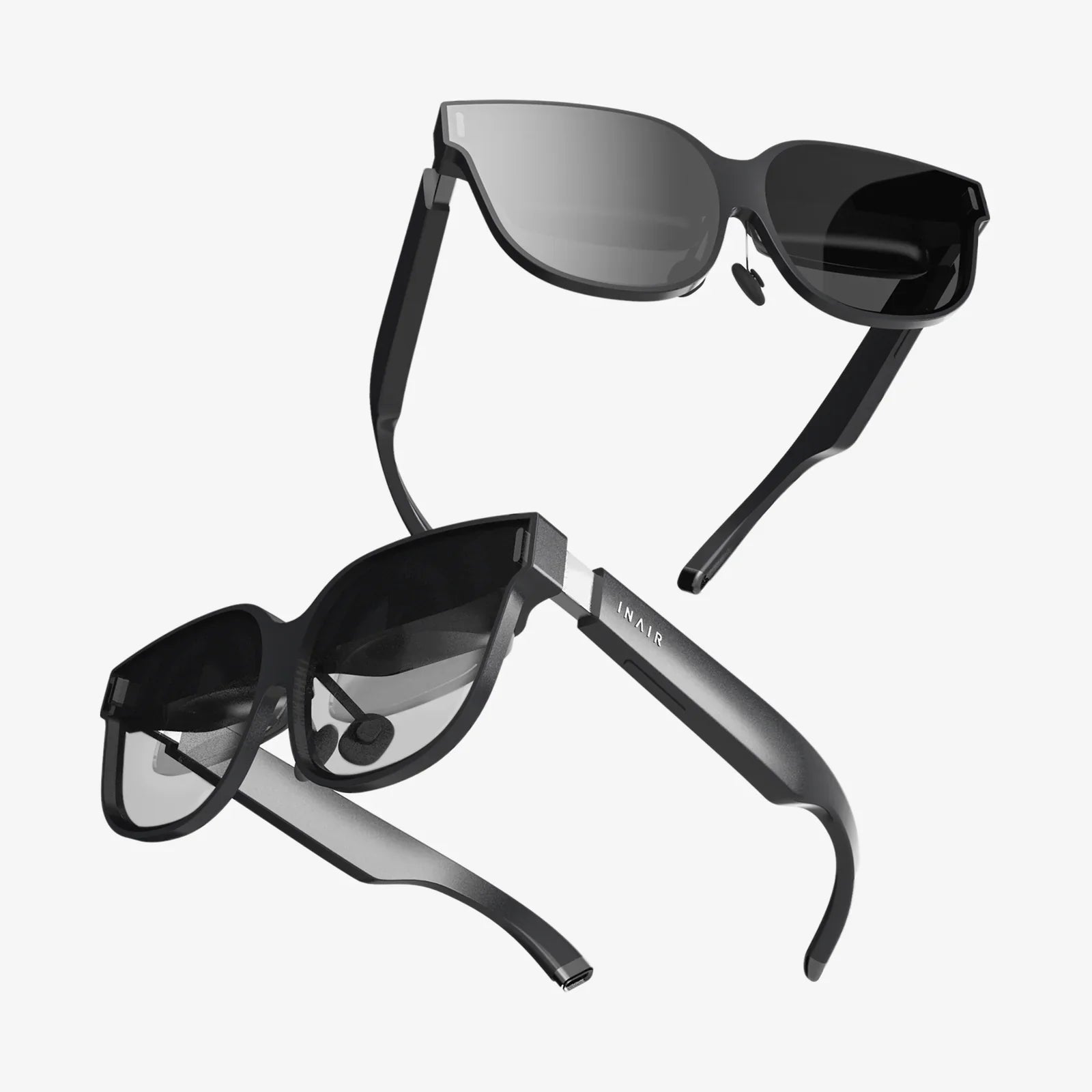
Imagine a world where digital information doesn't just live on a screen but is woven into the very fabric of your reality—a helpful arrow painted on the sidewalk guides you to your destination, historical figures stand beside their monuments to tell their stories, and a virtual repair manual overlays the exact engine part you need to fix. This is the dazzling promise of Augmented Reality (AR), a vision so compelling it has captivated technologists and dreamers alike. Yet, for all its potential, the path to this future is not one of pristine, flawless integration but one littered with glitches, ethical quandaries, and profound societal questions. The true story of AR is not one of perfection achieved, but of an AR Imperfect—a technology in its tumultuous, messy, and absolutely critical adolescence.
The Chasm Between Promise and Reality
The concept of augmentation is not new. For centuries, humans have used tools like eyeglasses and telescopes to enhance their perception of the world. Digital AR, however, represents a quantum leap. Its promise is nothing short of redefining human-computer interaction, moving us from a paradigm of looking at technology to looking through it at an enhanced world. The potential applications span every facet of life: revolutionizing education through immersive learning, transforming surgery with real-time data overlay, creating new forms of artistic expression, and redefining retail and remote collaboration.
Yet, anyone who has used current AR systems, from smartphone-based apps to more advanced head-mounted displays, has likely encountered the cracks in this vision. The virtual object that jitters unnaturally on a tabletop, the digital text that becomes unreadable in bright sunlight, the rapid battery drain that cuts the experience short, or the simple feeling of nausea after prolonged use. These are not mere bugs to be squashed; they are symptoms of fundamental, deep-seated challenges that define the current state of AR Imperfect.
Deconstructing the Imperfections: A Technical Deep Dive
The seamless blending of the digital and physical requires a symphony of advanced technologies to work in perfect harmony. Currently, the orchestra is still rehearsing, and the discordant notes are what we experience as imperfection.
The Tyranny of Latency and Tracking
For AR to feel real, it must be locked in place. A virtual vase sitting on a real table must not slide around when you move your head. This requires incredibly precise and fast spatial tracking and pose estimation. Systems use a combination of cameras, sensors, and complex algorithms like SLAM (Simultaneous Localization and Mapping) to understand their environment and their position within it. However, any delay—any latency—in this calculation breaks the illusion. This lag creates a jittery, unstable image that the human brain immediately rejects as artificial. Achieving the millisecond-level latency required for true immersion remains a colossal engineering challenge, especially in untethered devices with limited processing power.
The Computational Chokehold
AR is computationally voracious. It must process high-resolution camera feeds in real time, run complex environment-mapping algorithms, render high-fidelity 3D graphics, and do it all without overheating the device or draining its battery in minutes. This is the central paradox of mobile AR: the desire for freedom and mobility is shackled by the physical limitations of batteries and processors. This often forces developers to make difficult compromises on graphical fidelity, environmental understanding, and application complexity, leading to a experience that can feel simplistic or, once again, imperfect.
The Challenge of the Uncontrolled World
Unlike virtual reality, which creates a controlled, predictable digital environment, AR must contend with the messy, unpredictable, and infinitely variable real world. In a VR headset, lighting is consistent and surfaces are perfectly mapped. In AR, the technology must adapt on the fly to glaring sunlight that washes out digital images, poorly lit rooms that confuse object detection algorithms, and dynamic environments where people walk through digital objects and pets knock over virtual furniture. This environmental understanding is perhaps the most significant hurdle. Recognizing different materials, understanding occlusion (knowing that a real chair should block the view of a virtual character behind it), and dealing with reflective or transparent surfaces are problems that even the most advanced AI still struggles with.
Beyond the Code: The Human and Ethical Imperfections
The imperfections of AR extend far beyond technical glitches. The integration of persuasive digital content into our physical spaces raises a host of human and ethical dilemmas that we are woefully unprepared to address.
The Privacy Paradox Amplified
If you think smartphones are privacy-invasive, AR is a different beast entirely. To function, AR devices require a constant, intimate stream of data about your environment. Their cameras are always watching, mapping, and analyzing the world around you—which includes other people. This raises dystopian questions: Who owns the spatial data of a public park? Can a corporation create a persistent digital map of your home without your consent? The potential for ubiquitous surveillance, data harvesting on an unprecedented scale, and a complete erosion of public anonymity is the dark underbelly of the AR Imperfect future. Without robust ethical frameworks and privacy-by-design principles, the technology threatens to become a tool of control rather than empowerment.
The Reality of Digital Addiction and Physical Danger
Smartphone addiction is a well-documented societal issue. AR has the potential to deepen this dependency by making the digital layer ever more present and compelling. The temptation to always be connected, to always have a digital filter over reality, could further diminish our capacity for undivided attention, real-world interaction, and simply being present. Furthermore, overlaying digital content onto the physical world introduces tangible safety risks. A pedestrian engrossed in an AR game is not looking at traffic; a driver using an AR navigation windshield might be distracted by flashy notifications. Designing for safety and promoting digital wellness will be as important as solving technical problems.
The Societal Divide: The Digital and Physical Haves and Have-Nots
As with any transformative technology, there is a grave risk that AR will exacerbate existing social and economic inequalities. Access to advanced AR hardware, high-speed data networks, and the digital literacy required to navigate these new spaces will not be distributed equally. We risk creating a world where a privileged class interacts with an information-rich, augmented layer of reality, while others are left with only the bare, un-augmented physical world. This could widen the digital divide from a gap in access to information on a screen to a fundamental schism in how different groups perceive and experience reality itself.
Embracing the Imperfect: A Path Forward
Given this long list of challenges, it would be easy to dismiss AR as a technology not yet ready for primetime. However, that would be a mistake. The state of AR Imperfect is not a failure; it is an invitation. It is a call to action for developers, designers, ethicists, policymakers, and users to collaboratively shape what this technology will become.
We must move away from the pursuit of a sterile, perfect illusion and instead focus on building AR that is human-centric. This means:
- Prioritizing thoughtful design that understands context, minimizes distraction, and puts user safety and well-being first.
- Championing transparency and user control over data, ensuring people understand what is being collected and how it is being used.
- Developing strong ethical guidelines and regulations that protect individual rights in public and private spaces before the technology becomes ubiquitous.
- Building for accessibility and inclusivity from the ground up, ensuring the augmented world is designed for everyone, not just a select few.
The journey towards a mature AR future will be iterative. Each solved problem will reveal new, more complex challenges. The jittery virtual object of today is the foundation for the stable, believable object of tomorrow. The privacy concerns we grapple with now will forge the protective laws of the future. By acknowledging and working within the state of AR Imperfect, we engage in the essential, messy work of progress.
The most compelling AR future isn't the one that hides its flaws behind a perfect facade. It's the one that uses technology to enhance our humanity, not replace it. It's the one that helps a mechanic see the inner workings of a machine, that allows a medical student to practice a procedure on a holographic heart, or that lets a historian share a story where it actually happened. The magic won't come from flawless code alone, but from our ability to harness this powerful, imperfect tool to connect, learn, and create in ways we are only beginning to imagine. The perfect AR experience isn't a destination; it's the ongoing, collective effort to build a better reality for everyone.
Share:
Microdisplays Market: Illuminating the Future of Visual Technology and Its Explosive Growth
Spatial Computing AI News: The Next Digital Revolution Is Here