


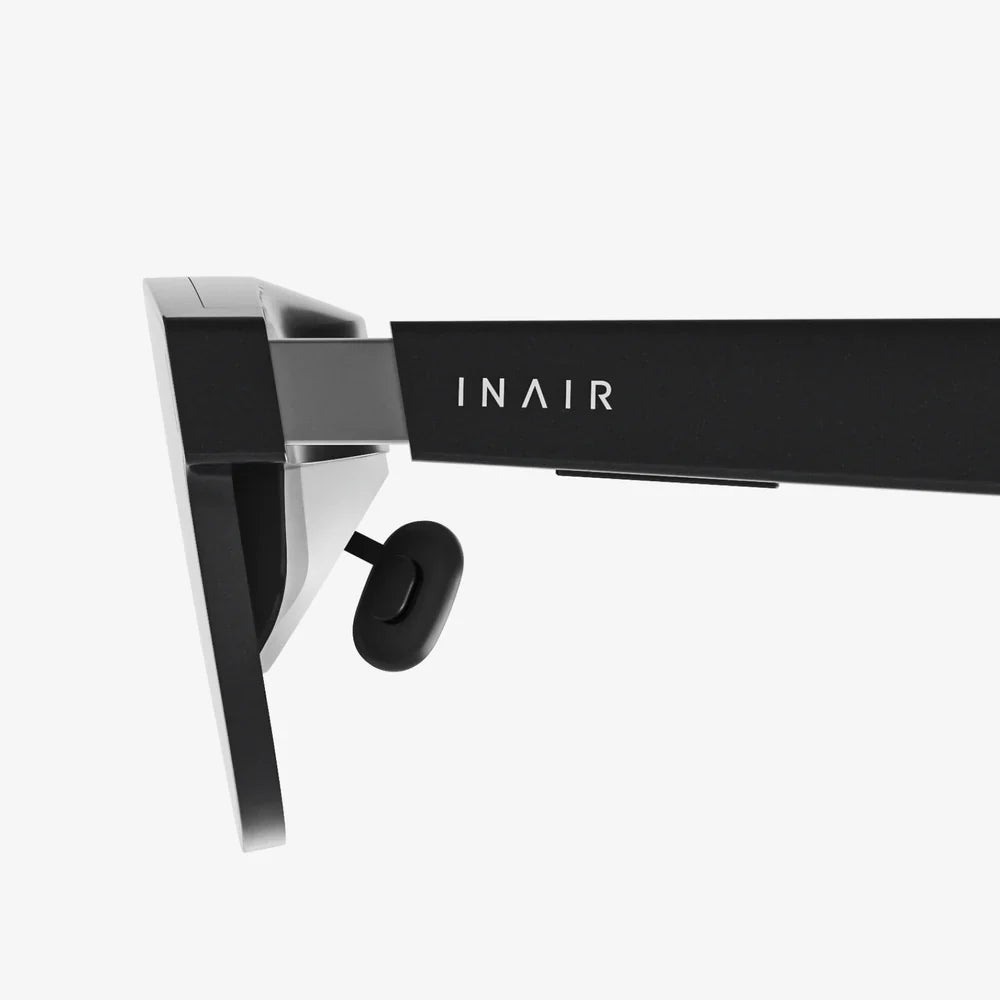
Imagine a world where your digital life isn't confined to a flat rectangle in your hand or on your desk, but is instead woven seamlessly into the fabric of your physical reality. This isn't a scene from a science fiction film; it's the imminent future being built today at the explosive intersection of spatial computing and artificial intelligence. This powerful convergence is poised to become the most significant technological shift since the advent of the smartphone, and staying informed through the latest spatial computing AI news is no longer a niche interest—it's a glimpse into the next chapter of human-computer interaction. The journey beyond the screen has begun, and it promises to redefine everything from how we work and learn to how we connect and create.
The Confluence of Two Giants: Defining the Revolution
To understand the significance of the current moment, we must first define the two powerhouse technologies driving it. Spatial computing is an umbrella term for platforms that use digital content to augment or create a sense of space. It encompasses augmented reality (AR), which layers digital information onto our view of the real world, virtual reality (VR), which immerses users in a completely digital environment, and mixed reality (MR), which blends the two, allowing digital and physical objects to interact in real-time. The goal is to use the space around us as a new medium for computing.
Artificial intelligence, particularly machine learning and computer vision, is the essential engine that makes advanced spatial computing possible and practical. AI algorithms are what allow a device to understand its environment—to map a room, identify surfaces like tables and walls, and recognize objects. This environmental understanding is the foundational layer upon which all spatial experiences are built.
The true revolution, however, is happening now as these fields don't just work alongside each other, but deeply integrate. We are moving from spatial computing that understands space to systems that comprehend and reason within it. This is the core of the latest spatial computing AI news: the shift from simple overlay to intelligent contextual integration.
How AI Powers the Spatial Realm: The Invisible Engine
The magic of modern spatial experiences is powered by a suite of AI capabilities working in concert behind the scenes. This sophisticated technological ballet is what transforms a simple headset into a window to a new reality.
Computer Vision: The Digital Nervous System
At the heart of every spatial computing device is computer vision, a field of AI that enables machines to derive meaningful information from visual inputs. Advanced neural networks process data from cameras and sensors in real-time to perform simultaneous localization and mapping (SLAM). This creates a live, 3D map of the environment, allowing digital content to be placed persistently and accurately on a physical table or attached to a specific wall. Beyond mapping, computer vision enables object recognition, allowing the system to distinguish a chair from a person, or a document from a coffee mug. This is critical for context-aware interactions.
Natural Language Processing: The Conversational Interface
While hand gestures and controllers are a method of input, the most intuitive way to interact with an intelligent system is through speech. AI-powered natural language processing (NLP) allows users to communicate with their spatial environment conversationally. Instead of navigating complex menus, you can simply say, “Bring my architectural model to the center of the room and scale it to life-size,” or “Find the document I was reading last night and pin it to my virtual office wall.” This moves the interface from a command-line structure to an intent-based one, making the technology accessible and powerful.
Generative AI: The Creative Heart
This is perhaps the most exciting area of development making headlines in spatial computing AI news. Generative AI models are moving into the spatial domain, allowing users to create and manipulate content in breathtakingly simple ways. Imagine using a gesture to carve out a 3D model from thin air simply by describing it, or having an AI generate a complex data visualization in the space around you based on a verbal query. Generative AI can dynamically create immersive environments for training, design, or entertainment, populating them with intelligent entities that can interact and respond. It transforms the user from a consumer of content into a creator, with AI as a collaborative partner.
Predictive and Contextual Awareness: The Anticipatory Mind
The most advanced spatial AI systems aim to be proactive, not just reactive. By learning from user behavior and understanding context, the AI can predict needs and surface information before it’s explicitly asked. If you walk into your kitchen while wearing a spatial computing device, it could proactively pull up a recipe you saved earlier. In a industrial setting, as a technician approaches a complex machine, the system could automatically overlay the specific maintenance manual they’ll need, predicted based on work order data and sensor information from the equipment itself. This seamless, anticipatory assistance is the ultimate goal of the technology.
Transforming Industries: The Practical Applications
The theoretical potential of spatial computing and AI is vast, but its real-world applications are already demonstrating profound value across numerous sectors. This is where the technology moves from concept to concrete tool.
Healthcare and Surgery: Precision in Practice
In medicine, spatial computing is revolutionizing patient care. Surgeons can don headsets to see critical patient data, like heart rate or MRI scans, overlaid directly onto their field of view without looking away from the operating table. AI can enhance this by highlighting areas of concern on a scan or guiding a surgeon through a complex procedure with step-by-step visual instructions. For medical training, students can practice surgeries on incredibly detailed, AI-generated holographic patients, receiving real-time feedback and analytics on their performance.
Engineering, Manufacturing, and Design
The design and manufacturing world is being upended. Engineers and architects can collaborate in a shared virtual space, interacting with life-size 3D models of their creations. AI can then simulate physics, stress tests, and airflow within this model, providing instant feedback on design choices. On the factory floor, assembly line workers can have instructions projected directly onto the components they are assembling, with AI-powered quality control systems checking their work in real-time and flagging any potential errors.
Education and Training: Immersive Learning
Education becomes an experience rather than a lecture. History students can walk through ancient Rome, biology students can journey through the human bloodstream, and astronomy students can stand on the surface of Mars. AI tutors, embodied as avatars in this space, can adapt the lesson in real-time based on the student's comprehension, answering questions and providing additional context. This creates a deeply personalized and engaging form of learning that was previously impossible.
Remote Collaboration and the Virtual Workspace
The concept of video conferencing is becoming obsolete. Spatial computing enables true telepresence, where remote colleagues appear as life-like avatars or holograms in your physical space, able to collaborate on 3D models, share virtual whiteboards, and interact with shared digital objects as if they were physically present. AI handles the complex tasks of rendering, spatial audio, and ensuring non-verbal cues are translated into the digital realm, making communication feel natural and effortless.
Retail and Commerce: Try Before You Buy
The retail experience is being reimagined. Consumers can use spatial computing to see how a new sofa would look in their living room, how a pair of glasses would look on their face, or how a car's interior would feel, all from their own home. AI recommendation engines can then suggest products that fit the user’s spatial environment and documented preferences, creating a highly personalized shopping journey.
Navigating the Challenges: The Road Ahead
For all its promise, the path forward for spatial computing powered by AI is not without significant hurdles. Addressing these challenges is a constant theme in spatial computing AI news and is critical for widespread adoption.
The Hardware Conundrum: Form Factor and Accessibility
Current hardware, while advanced, often faces a trade-off between power, battery life, size, and cost. For true mass adoption, devices need to become as socially acceptable and comfortable to wear as a pair of eyeglasses. This requires massive advancements in miniaturization, battery technology, display resolution, and processing efficiency, often leveraging AI on the edge to reduce latency and power consumption.
The Privacy Imperative: A World of Sensors
Spatial computing devices are, by nature, packed with sensors that continuously scan and interpret the world around them—including private homes and public spaces. This raises profound questions about data ownership, consent, and security. Who has access to the continuous stream of data about your life and environment? How is that data stored and used? Developing robust, transparent, and ethical frameworks for privacy is not an option but a necessity for this technology to earn public trust.
The Social and Ethical Dimension
The societal impact of blending the digital and physical must be carefully considered. How will these technologies affect human connection? Will they create new forms of addiction or dissociation? What are the ethical implications of AI-generated spatial content? Furthermore, the potential for a digital divide is significant; ensuring this technology does not become a luxury that exacerbates existing inequalities is a challenge that developers and policymakers must tackle together.
The Future is Spatial and Intelligent
The trajectory is clear. The next decade will see the boundaries between our physical and digital lives dissolve further. We will move from interacting with apps on a screen to interacting with contextually aware, intelligent agents that exist in our space. The concept of a “website” or an “app” may evolve into a spatial experience—a place you can visit and interact with, not just look at. AI will continue to be the driving force, making these experiences more intuitive, generative, and personalized.
Staying updated with spatial computing AI news is more than tracking gadget releases; it's about witnessing the birth of a new platform, a new medium, and a new way of being. The companies and innovators solving the hard problems of privacy, accessibility, and hardware today are building the infrastructure for tomorrow's reality. This isn't just about putting a screen on your face; it's about enhancing human potential, augmenting our intellect, and connecting us with information and with each other in ways we are only beginning to imagine. The spatial web is coming, and it will be woven together with artificial intelligence, creating a world limited not by technology, but only by our own creativity.
This fusion of the physical and digital, guided by intelligent systems, promises a future where technology doesn't demand our attention but quietly enhances our perception, amplifies our capabilities, and understands our world as we do. The next time you glance at your smartphone, remember—its successor won't be a better slab of glass, but an intelligent window into a layered reality, waiting for you to reach out and shape it with your words, your gestures, and your imagination. The revolution isn't coming; it's already being built, one algorithm and one spatial anchor at a time, and its full story is unfolding right now.
Share:
AR Imperfect: Navigating the Flawed Yet Transformative Reality of Augmented Technology
Smart Glasses Under 1000: A Comprehensive Guide to Affordable Augmented Reality