


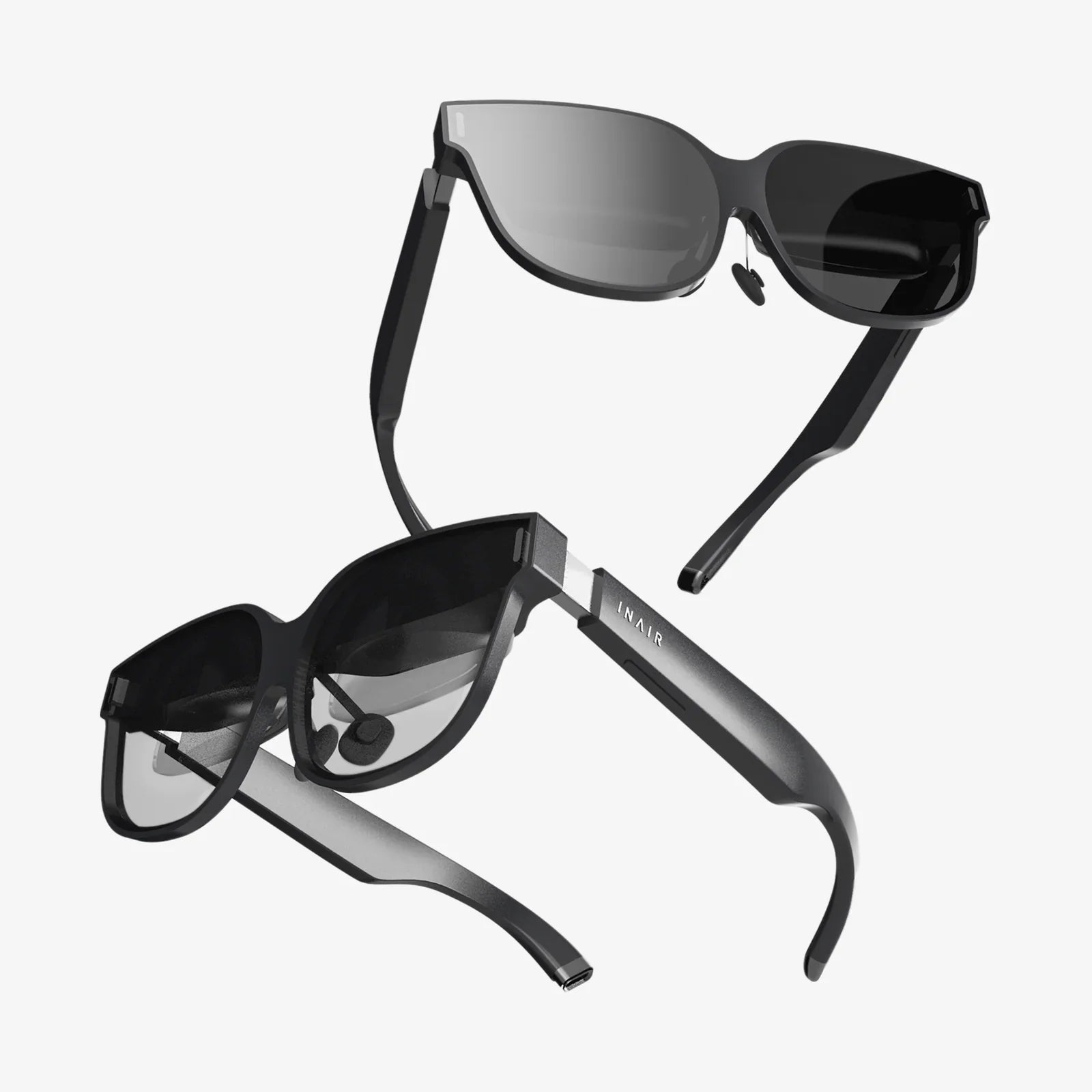
Imagine pointing a device at a blank wall and watching a life-sized historical figure step out to tell their story, or walking through a museum where ancient artifacts not only sit behind glass but spring to life, reconstructing themselves and demonstrating their use right before your eyes. This is the magic promised by the convergence of augmented reality and advanced video projection—a synergy that is quietly building an invisible digital layer atop our physical reality, poised to revolutionize everything from entertainment and education to industry and art. This isn't about putting on a headset to escape; it's about enhancing the world we already see, making the invisible visible and the impossible tangibly real.
Demystifying the Magic: From Simple Projection to Contextual Awareness
At its most fundamental level, a standard video projector is a one-way broadcast device. It takes a digital signal and throws light onto a surface, creating an image. It has no awareness of its environment; it doesn't know if it's projecting onto a flat screen, a curved wall, or a moving person. The result is often a passive viewing experience, limited by the static nature of the surface.
Augmented Reality (AR), in its common smartphone or glasses form, uses a camera to see the world, processors to understand it, and a display (like your phone screen or lenses) to overlay digital content. It is context-aware but often personal and confined to a small viewport.
The true revolution begins when these two technologies merge. AR in video projection, sometimes called spatial augmented reality or projection mapping, combines the immersive, shared quality of projection with the contextual intelligence of AR. Here’s how it works:
- Environmental Capture: A system, often comprising depth-sensing cameras (like LiDAR or structured light sensors) and traditional cameras, first scans the projection environment. It creates a precise 3D geometric model of the space, identifying objects, surfaces, distances, and even textures.
- Real-Time Tracking: The system continuously tracks the environment and any movement within it. This includes the position of people, objects, and even the perspective of the audience. Sophisticated algorithms ensure the digital content knows exactly where it is in relation to the physical world at every millisecond.
- Dynamic Calibration and Warping: Using the captured 3D model and tracking data, the software dynamically warps the projected image in real-time. This corrects for distortions caused by non-flat or irregular surfaces. If an object moves into the projection beam, the system can instantly adapt the imagery to fit its new shape or even avoid it entirely.
- Interactive Feedback: By analyzing camera feed, the system can see and interpret human gestures, touches, or movements. This allows the audience to physically interact with the projected content, turning a passive wall into a reactive, touch-sensitive display without any physical sensors.
This creates a seamless blend where digital content appears to be a natural, physical part of the environment, not just a image plastered on top of it.
A Canvas Without Limits: Transformative Applications Across Industries
The applications for this technology are as vast as human imagination, breaking down the barriers between the digital and the physical.
The Future of Storytelling and Immersive Entertainment
Live events and theme parks are being utterly transformed. Imagine a theatrical play where the entire stage set—the walls, furniture, and windows—are dynamic projections. A room can morph from a Victorian parlor to a futuristic spaceship in an instant, with digital effects interacting directly with the actors. Concertgoers are no longer just watching a screen; they are standing inside a pulsating, reactive visual ecosystem that responds to the music and the crowd's energy. In gaming, your entire living room can become the game board, with characters hiding behind your sofa and objectives materializing on your walls, encouraging physical movement and social play in a way no traditional console can.
Revolutionizing Education and Cultural Heritage
This is where the technology reveals its profound potential as a pedagogical tool. Textbooks become obsolete when students can gather around a projected, interactive 3D model of the human heart, watching it beat and able to "dissect" it with a wave of their hand. History lessons are no longer about dates and names but about experiential learning. A projector can resurrect ancient ruins in a classroom, rebuilding them to their former glory and populating them with holographic figures demonstrating daily life. Museums can create breathtaking exhibits where artifacts tell their own stories; a static fossil of a dinosaur can be projected over with skin, muscle, and movement, roaring to life and showing its scale in a way a skeleton alone never could.
Redefining Retail, Architecture, and Design
The commercial sector is leveraging this technology to bridge the gap between imagination and reality. In retail, customers can see how a piece of furniture would look in their actual home at true scale and under their lighting conditions before making a purchase. Fashion shows can project intricate, dynamic patterns and textures onto blank garments, allowing a single outfit to transform throughout a runway show. Architects and interior designers can project their 3D blueprints directly onto a construction site or an empty room, allowing clients to literally walk through their future building, making changes and understanding spatial relationships in an intuitive, error-preventing way.
Enhancing Industrial and Medical Workflows
On factory floors, the technology becomes a powerful tool for efficiency and safety. Complex assembly instructions can be projected directly onto the components a worker is handling, highlighting exactly where a part should be placed and which tool to use next, reducing errors and training time. In surgery, while still in development, projections could overlay critical patient data, like tumor margins or blood vessel pathways, directly onto the patient's body during an operation, providing surgeons with unparalleled, hands-free visual guidance.
Navigating the Challenges: The Path to Ubiquity
Despite its incredible potential, the widespread adoption of AR projection faces significant hurdles that engineers and designers are racing to overcome.
- Technical Complexity and Cost: The requirement for high-lumen projectors that are bright enough to work in ambient light, combined with powerful processing units for real-time tracking and rendering, makes current systems expensive and complex to set up.
- Precision and Latency: For the illusion to be perfect, the tracking must be millimeter-accurate and the image warping must occur with near-zero latency. Any lag or misalignment between the physical movement and the digital reaction instantly shatters the immersion.
- Ambient Light: Projected light is additive. It struggles in brightly lit environments, as the ambient light washes out the imagery. Future advancements in projector brightness and contrast ratios are crucial for moving beyond controlled, dark settings.
- Standardization and Content Creation: Creating content for dynamic, non-rectangular, and interactive 3D surfaces requires entirely new software tools and pipelines. A lack of universal standards can stifle creativity and scalability.
The Invisible Interface: What Lies Beyond the Horizon
The future of this field is moving towards complete invisibility and seamless integration. We are progressing towards projectors so small and efficient they can be embedded into everyday devices—ceiling lights, smart speakers, and even our phones. These micro-projectors will work in concert, creating a persistent, collaborative digital layer over our entire environment.
Advancements in artificial intelligence will be the key catalyst. AI will move beyond simple object recognition to true environmental understanding. A system will not just see a table; it will understand it's a table for dining, allowing it to project a place setting, a menu, or a board game appropriate for that context. It will learn user preferences and habits, proactively displaying information exactly when and where it is needed.
Ultimately, the goal is to dissolve the interface altogether. We won't interact with screens or specific apps; we will interact with our environment. Information will be ambient, responsive, and contextual. The world itself will become our display, our manual, and our playground. This isn't about replacing reality with a virtual one; it's about making our reality richer, more informative, and more magical. The blank walls, empty tables, and open spaces around you are not empty; they are a blank canvas, waiting for the light to bring them to life.
The next time you stand in a dark room, consider the humble wall in front of you. It’s no longer a boundary but a gateway. With the fusion of augmented reality and projection, every surface is a potential portal, every empty space a stage for digital creation, and our perception of what’s real is on the verge of a beautiful and fundamental expansion. The future isn't just on a screen; it's all around you, waiting for the right light to make it visible.
Share:
What Digital Products Are Trending 2025: A Glimpse Into The Next Tech Revolution
Different Types of Touchboards: A Complete Guide to Interactive Surfaces