


Imagine a world where digital information doesn't just live on a screen but is seamlessly woven into the fabric of your reality. Where a mechanic sees a schematic overlaid on a faulty engine, a surgeon visualizes a patient's anatomy in 3D during an operation, and a history student walks through ancient Rome on their way to class. This is not a distant sci-fi dream; it is the present and rapidly evolving future being built by AR innovation technology. This powerful convergence of hardware, software, and data is poised to revolutionize everything from how we work and learn to how we connect and play, fundamentally altering our perception of reality itself.
The Core Pillars of AR Innovation
At its heart, AR innovation technology is an intricate symphony of several advanced components working in perfect harmony. Understanding these core pillars is key to appreciating its complexity and potential.
Computer Vision and Scene Understanding
The magic of AR begins with its ability to see and understand the world. This is the domain of computer vision, a field of artificial intelligence that enables devices to interpret visual data. Through sophisticated algorithms and onboard sensors, an AR system performs several critical tasks in real-time:
- Simultaneous Localization and Mapping (SLAM): This is the navigational brain. SLAM technology allows a device to both map its unknown environment and pinpoint its own location within that map simultaneously. It creates a digital twin of the physical space, understanding the geometry of surfaces, corners, and objects, which serves as the canvas for digital overlays.
- Object Recognition and Tracking: Beyond mapping the environment, AR systems can identify specific objects—a coffee mug, a machine part, a human face—and track their movement. This allows digital content to interact with physical objects in believable ways, such as a cartoon character hiding behind your real-world sofa.
- Depth Sensing and Occlusion: Early AR often felt like a flat layer glued to the camera feed. Modern innovation employs depth-sensing cameras (like time-of-flight sensors) to understand the precise distance of objects. This enables occlusion, where digital objects can realistically be hidden behind physical ones, a crucial step for achieving true immersion.
Display Technology: The Window to a Mixed World
How digital content is presented to our eyes is another frontier of intense innovation. The goal is to make the transition between physical and digital as effortless as looking through a window.
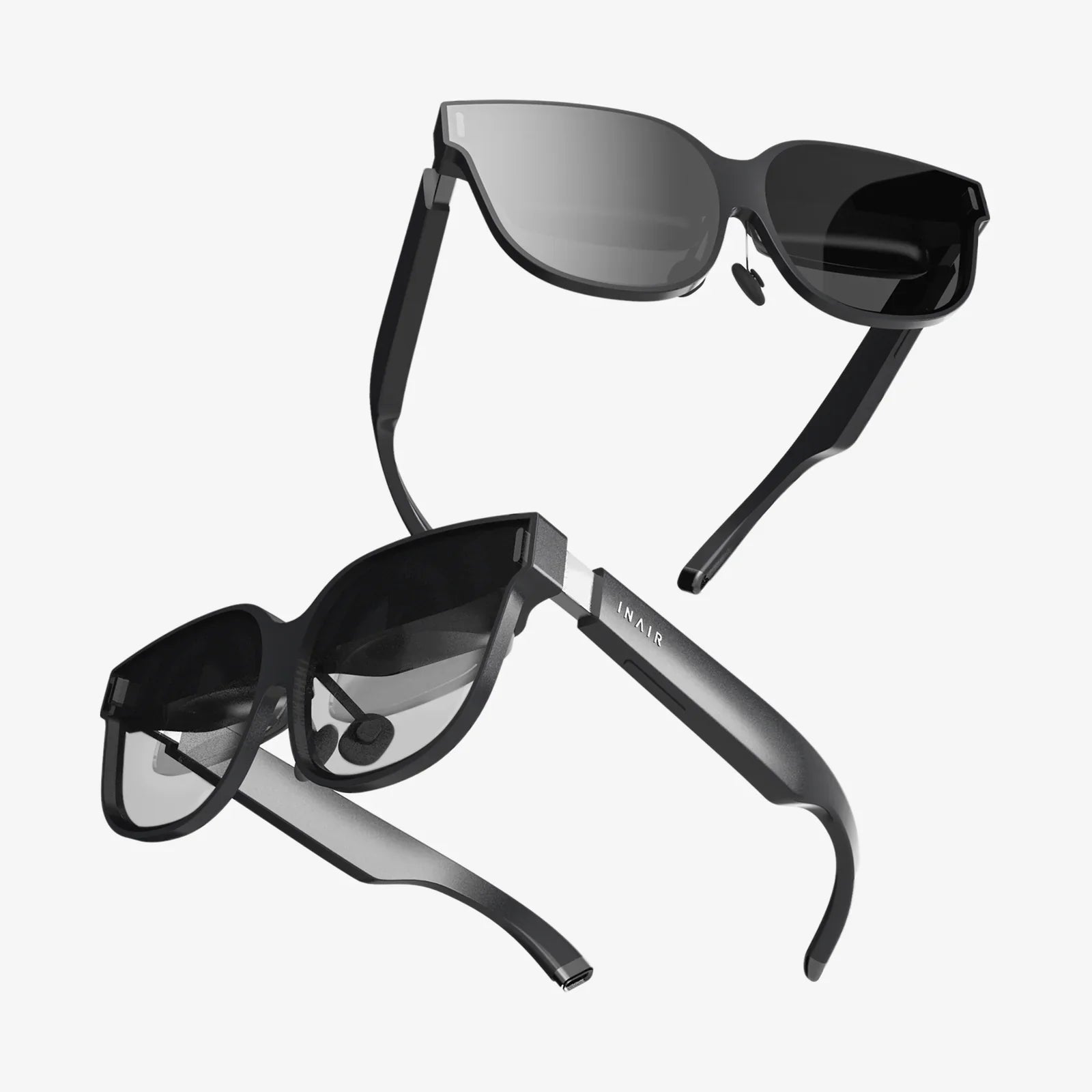
- Optical See-Through (OST): Used in smart glasses and headsets, OST displays allow users to see the real world directly through specialized lenses.微型 projectors or waveguides then beam light into the eye, superimposing images onto the real-world view. The challenge is achieving a wide field of view, high brightness to compete with ambient light, and a small, socially acceptable form factor.
- Video See-Through (VST): Common on smartphones and some headsets, VST uses cameras to capture the real world and then blends digital content into that video feed before displaying it on a screen. While it can offer more control over the blend of realities, it can sometimes create a lag or a sense of mediation between the user and their environment.
- Projection-Based AR: This approach bypasses screens altogether, projecting light directly onto physical surfaces to change their appearance. This can be used for everything from turning any desk into a touch interface to creating immersive art installations on buildings.
Processing Power and Connectivity
Delivering a convincing, low-latency AR experience requires immense computational power for rendering 3D graphics, running complex AI algorithms, and processing sensor data. This happens through a combination of:
- On-Device Processing: Dedicated processors and GPUs within headsets or phones handle the immediate tasks. The development of chipsets specifically designed for AR/VR workloads has been a major driver in improving performance and battery life.
- Edge and Cloud Computing (5G/6G): For the most demanding applications, the heavy lifting is offloaded to the cloud via high-speed, low-latency networks like 5G. This allows for incredibly complex simulations and vast amounts of data to be streamed to lightweight devices, effectively making them windows into a powerful remote computer.
Transforming Industries: The Practical Power of AR
While consumer applications like gaming capture headlines, the most profound impact of AR innovation technology is happening within enterprise and industrial sectors, where it is solving real-world problems and delivering tangible ROI.
Revolutionizing Manufacturing and Field Service
On the factory floor and in the field, AR is becoming an indispensable tool for efficiency and accuracy.
- Assembly Guidance and Digital Work Instructions: Instead of juggling paper manuals or tablet screens, assembly line workers can see digital arrows, animations, and instructions overlaid directly on the product they are building. This reduces errors, slashes training time, and accelerates production cycles.
- Remote Expert Assistance: A field technician facing a complex repair can wear AR glasses to stream their point-of-view live to an expert located anywhere in the world. The expert can then annotate the technician's real-world view with arrows, circles, and notes, guiding them through the process as if they were standing right there. This dramatically reduces travel costs and downtime.
- Design and Prototyping (Digital Twin): Engineers can project and interact with full-scale 3D models of new products into a physical space, allowing for collaborative design reviews and ergonomic studies before a single physical prototype is built.
Advancing Healthcare and Medicine
In medicine, AR innovation technology is moving from a novel tool to a life-saving technology, enhancing both education and patient care.
- Surgical Visualization: Surgeons can use AR headsets to see critical information—like MRI or CT scan data—precisely registered onto a patient's body during an operation. This provides X-ray vision, helping to locate tumors, navigate complex vasculature, and plan incision points with unparalleled precision.
- Medical Training and Education: Medical students can practice procedures on hyper-realistic virtual patients, and AR apps can overlay anatomical structures onto mannequins or peers, turning any room into an interactive learning lab.
- Patient Education and Rehabilitation: Doctors can use AR to visually explain a condition or procedure to a patient, improving understanding. In physiotherapy, AR games can motivate patients to complete repetitive movements by turning exercises into engaging challenges.
Redefining Retail and E-Commerce
The retail sector is leveraging AR to bridge the gap between online browsing and in-store confidence, creating entirely new shopping experiences.
- Try-Before-You-Buy: Customers can use their smartphone cameras to see how furniture would look in their living room, how a new shade of paint would transform their wall, or how a pair of glasses fits their face. This reduces purchase hesitation and lowers return rates.
- Virtual Showrooms and In-Store Navigation: Brands can create immersive virtual showrooms accessible from anywhere. Inside physical stores, AR wayfinding apps can guide shoppers to products, and scanning items can reveal additional information, videos, or reviews.
Enhancing Education and Cultural Preservation
AR has the unique power to make learning experiential and interactive, bringing abstract concepts to life.
- Interactive Textbooks and Learning Materials: A student studying astronomy can point their device at a textbook page to see a rotating model of the solar system emerge. History lessons can be transformed with AR reenactments on historical sites.
- Museum and Heritage Experiences: Museums are using AR to resurrect extinct animals, reconstruct ruined monuments, and allow visitors to see the layers of history on a single artifact, providing context and storytelling that static displays cannot.
The Future Horizon: Spatial Computing and the AR Cloud
The next evolutionary leap for AR innovation technology moves beyond isolated experiences to a persistent, shared digital layer over the entire world—a concept often called the AR Cloud or Spatial Computing.
Imagine a world where digital content is anchored to specific locations and persists over time, accessible to anyone. You could leave a virtual note for a friend on a park bench, see a restaurant's menu and reviews floating by its door, or collaborate on a 3D model that remains hovering over a meeting room table long after the meeting ends. This requires a persistent, collaborative, and context-aware digital layer that is precisely mapped to our physical reality—a monumental challenge that represents the next great frontier for the internet itself.
Navigating the Challenges: Privacy, Ethics, and Accessibility
With great power comes great responsibility. The widespread adoption of AR innovation technology raises critical questions that society must address.
- Privacy and Data Security: AR devices, by their very nature, are data collection machines—they have cameras, microphones, and sensors constantly scanning our environments. Who owns this data? How is it stored and used? Preventing a dystopian future of constant surveillance and data exploitation requires robust ethical frameworks and clear regulations.
- Digital Divide and Accessibility: There is a risk that advanced AR technology could become a luxury, exacerbating social and economic inequalities. Ensuring equitable access and designing for users with different abilities is paramount.
- Safety and Digital Addiction: Walking around with a headset that overlays digital information poses obvious physical safety risks. Furthermore, the potential for hyper-engaging, always-on digital experiences could lead to new forms of addiction and further disconnect us from the physical world and each other.
The line between our physical existence and our digital lives is not just blurring; it is being actively redesigned by the relentless march of AR innovation technology. This is not merely about donning a new type of gadget; it is about fundamentally expanding human potential. It offers a future where information is contextual, intuition is augmented, and collaboration is unbounded by geography. The canvas of our reality is being primed, and the tools to paint upon it are now in our hands. The question is no longer if this future will arrive, but what we will choose to build with it.
Share:
Cheap US Virtual Office: The Ultimate Guide to a Prestigious Address Without the Cost
Augmented Reality Glasses History: From Sci-Fi Fantasy to Mainstream Reality