


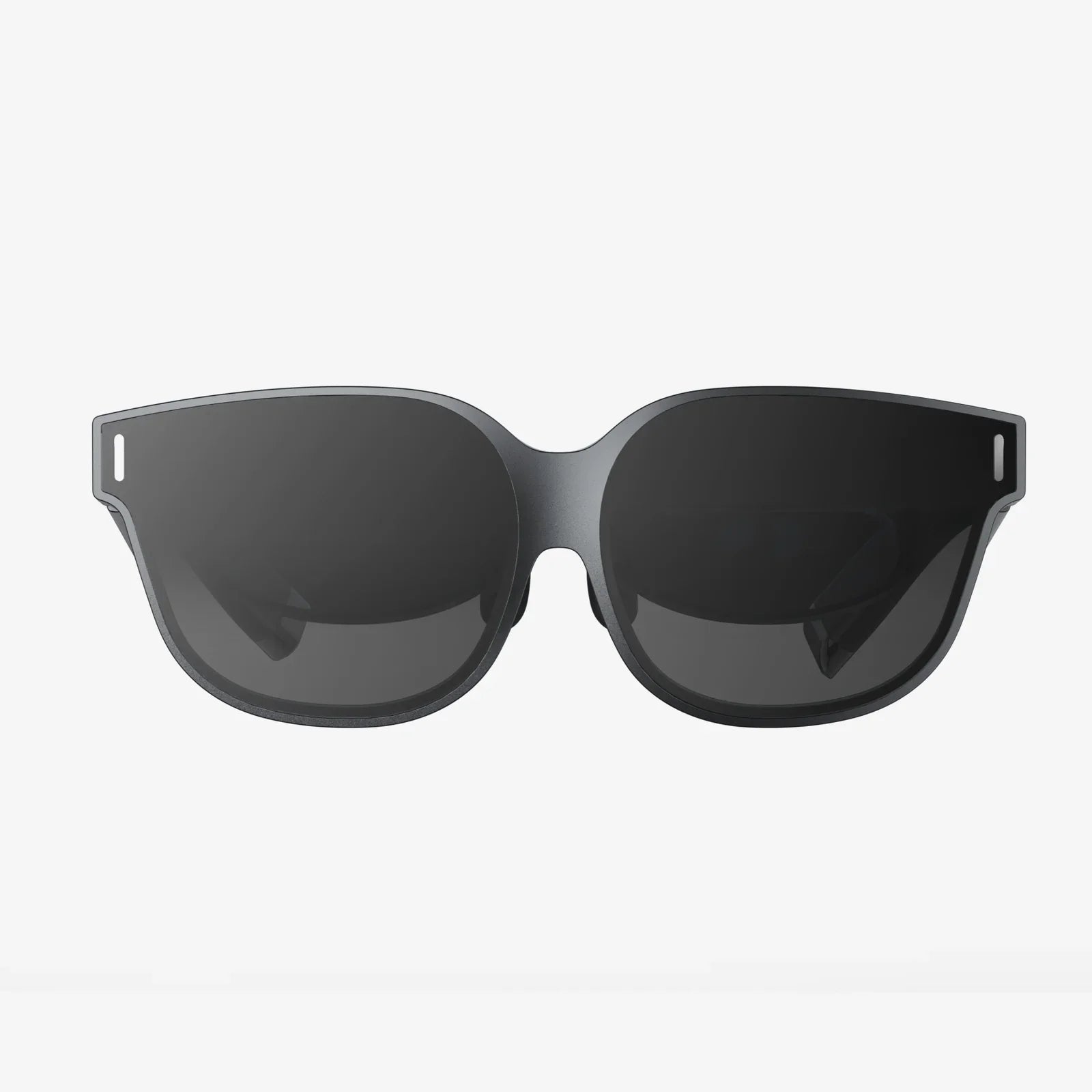
Imagine a world where digital information doesn't just live on a screen in your hand but is painted onto the very fabric of your reality. This is the promise of augmented reality glasses, a technology whose history is not a simple, linear progression but a rich tapestry woven from threads of science fiction, academic research, staggering failures, and breathtaking breakthroughs. The quest to overlay data onto our visual field is a story of human ingenuity pushing the boundaries of the possible.
The Conceptual Dawn: Before a Single Lens Was Ground
Long before engineers could miniaturize a projector or a depth-sensing camera, the idea of augmenting human perception was born in the realm of imagination. The term "augmented reality" itself wouldn't be coined until 1990, but the foundational concepts were laid out decades earlier.
In 1968, computer scientist Ivan Sutherland, often called the "father of computer graphics," and his student Bob Sproull created what is widely considered the first head-mounted display system, The Sword of Damocles. This terrifying contraption was so heavy it had to be suspended from the ceiling. It didn't overlay graphics on the real world; it presented a simple virtual wireframe cube. However, it established the core principle of a head-worn display tracked to the user's perspective, a fundamental pillar upon which all future AR and VR would be built. It was the primordial ancestor, proving the concept was technically feasible, however impractical.
The 1970s and 80s saw these ideas slowly migrate from pure academia into specialized industrial and military applications. Pilots were early beneficiaries, with head-up displays (HUDs) projecting critical flight data onto the cockpit canopy, allowing them to keep their "heads up" and focused on their environment. This was a form of augmented reality, albeit a fixed one not integrated into a pair of glasses. These systems were phenomenally expensive, confined to multi-million-dollar fighter jets, and far from a consumer product.
The 1990s: A Name and a New Direction
The decade marked a critical turning point. Thomas P. Caudell and David Mizell, researchers at Boeing, were working on simplifying the complex process of assembling aircraft wiring harnesses. They envisioned a head-worn apparatus that could display digital diagrams and instructions directly onto the physical wiring boards, guiding workers step-by-step. It was in their 1990 paper that they first used the term "augmented reality" to describe this new paradigm. This moment was pivotal; it gave a name to the field and demonstrated a clear, practical, and valuable use case beyond theoretical research.
Throughout the 90s, university labs and a few pioneering companies began exploring the potential. One of the most significant public demonstrations came in 1998 during a live sports broadcast. The virtual yellow "first down" line, magically painted onto the football field for TV viewers, was a watershed moment. It was a single-effect AR system, but it introduced millions of people to the magic of seamlessly blended realities, proving the technology could have mass appeal.
The 2000s: The Mobile Bridge and Specialized AR
The new millennium didn't immediately bring consumer AR glasses. The required technology—processing power, battery life, display resolution, and sensors—was still too bulky and costly. Instead, the decade became an era of incubation and indirect progress.
Two key developments acted as a bridge to the future. First, research prototypes became more sophisticated. The US military invested heavily in projects like TANGRAM, exploring AR for soldier navigation and battlefield awareness. Second, and perhaps more importantly, the smartphone revolution began. The rapid advancement of mobile processors, cameras, GPS, and orientation sensors (like accelerometers and gyroscopes) was essentially creating all the core components needed for AR, just packaged in a flat rectangle instead of on your face. Apps began to use the camera to overlay information on the world, a concept known as "magic window" AR. This kept the dream alive and built a software ecosystem while the hardware for glasses continued to mature in labs.
2010-2015: The Big Bang and The Hype Cycle
This period represents the most explosive chapter in augmented reality glasses history. In 2013, a small startup unveiled a prototype that sent shockwaves through the tech world. Their ambitious project promised a sleek, consumer-ready pair of glasses with a translucent display, voice control, a built-in camera, and a futuristic design. The demo video, showing real-time translation, navigation cues, and message pop-ups, captured the global imagination and sparked a frenzy of investment and competition.
However, the initial launch in 2014 became a cautionary tale. The technology was not yet ready for prime time. The device was criticized for its high price, short battery life, limited functionality, and significant social and privacy concerns, famously dubbed "the glasshole effect." It was a classic case of the "peak of inflated expectations" on the Gartner Hype Cycle. The product was ultimately repositioned as an enterprise tool for manufacturers, logistics companies, and medical professionals, where it found genuine, valuable utility away from the public eye. Despite its rocky consumer debut, its impact was undeniable: it defined the modern archetype for AR glasses and proved there was massive commercial interest.
2016-Present: Refinement, Diversification, and the Road to Ubiquity
The failure of the first high-profile consumer attempt led to a necessary and healthy period of recalibration. The industry split into two parallel paths, both critical to the technology's long-term history.
The Enterprise Path: Companies doubled down on building rugged, powerful, and purpose-built AR glasses for the workforce. These devices, often equipped with thermal sensors, depth cameras, and powerful processors, are now used to help factory technicians repair complex machinery with digital manuals overlaid on the equipment, allow warehouse workers to locate items instantly, and enable surgeons to visualize patient anatomy during procedures. This market has seen steady, successful growth, proving the undeniable ROI of AR in professional settings.
The Consumer Path: The quest for the perfect consumer AR glasses continued, but with a more pragmatic and phased approach. The immense challenge of packing a powerful computer, a high-resolution transparent display, and all-day battery life into a lightweight, fashionable form factor remained the industry's holy grail.
This led to the rise of two distinct categories. First, smart glasses emerged as an intermediate step. These focus on a single core feature, like audio or basic notifications, housed in a form factor that looks like regular glasses. They lack full visual AR overlays but have successfully normalized the idea of wearing intelligent eyewear.
Second, the concept of tethered AR glasses gained traction. These devices act as a secondary display, offloading the heavy processing to a nearby smartphone, gaming console, or computer. This approach has been particularly successful in gaming and entertainment, where users can experience immersive AR and VR worlds without needing all the technology contained in the headset itself. This hybrid model is a crucial stepping stone, providing compelling experiences today while the technology for fully standalone devices continues to evolve.
The Invisible Engine: The Technology Behind the Frames
The history of the hardware is only half the story. The evolution of the underlying technologies has been just as dramatic:
- Waveguide Displays: Early prototypes used small projectors and beam-splitters. Today, the industry standard is moving towards waveguide technology, using microscopic gratings etched into a clear lens to "pipe" light from a micro-projector into the eye. This allows for much thinner and lighter lenses.
- Spatial Computing: Modern AR glasses are not just displays; they are spatial computers. They use a suite of sensors—cameras, LiDAR, depth sensors, IMUs—to understand the geometry of the world around them. This allows digital objects to occlude behind real-world furniture or stick to a physical wall.
- AI and Computer Vision: Artificial intelligence is the brain of the operation. It's used for hand-tracking (allowing you to pinch and manipulate digital objects), object recognition (identifying a chair or a coffee cup), and semantic understanding (differentiating between a wall and a window).
Gazing into the Crystal Ball: The Future of Augmented Reality Glasses
The historical trajectory points toward a future where AR glasses become as ubiquitous as smartphones. The next breakthroughs will likely come from advancements in battery technology, holographic optics, and ever-more-efficient microchips. The goal remains a pair of glasses that are indistinguishable from regular eyewear in weight and style but capable of replacing every screen in our lives. The social and ethical questions around privacy, data ownership, and digital addiction, first raised a decade ago, will become central to the conversation as the technology matures.
The history of augmented reality glasses is a testament to the fact that the most transformative technologies are never invented in a single eureka moment. They are the result of a long, collaborative dance between visionary dreamers, meticulous engineers, and the iterative process of learning from both triumph and failure. From the ceiling-suspended Sword of Damocles to the sleek enterprise tools of today, each chapter has built upon the last, inching us closer to a future where the digital and physical are one. The next time you see someone wearing a pair, remember—you're not just looking at a gadget, you're looking at over half a century of perseverance, a dream that refused to fade away.
Share:
AR Innovation Technology: Redefining Reality and Reshaping Our Future
Pros and Cons of Virtual and Hybrid Meetings: A Deep Dive into the New Normal of Collaboration