


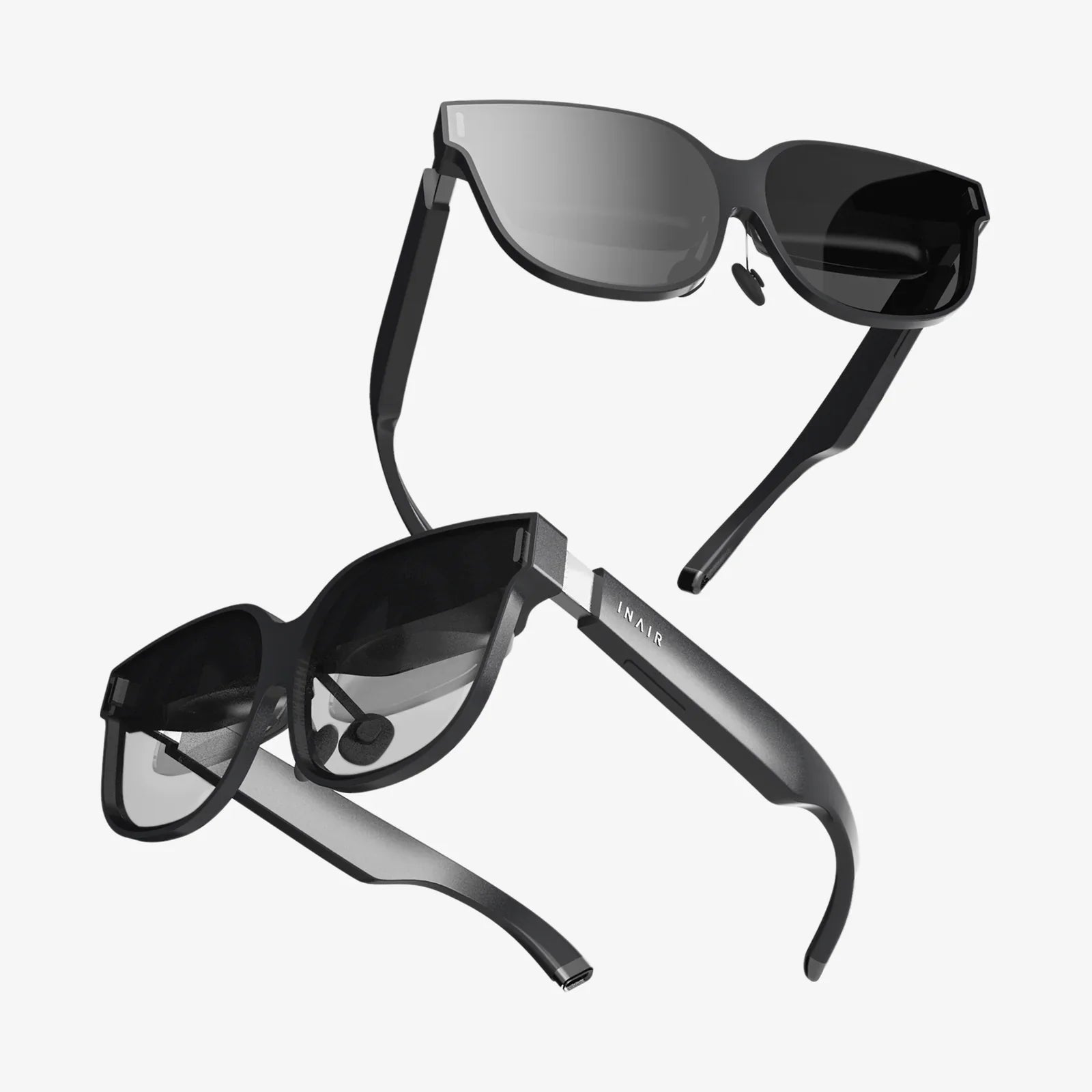
Imagine a world where digital information doesn’t live behind a screen but is seamlessly woven into the fabric of your reality, where instructions float over a complex machine you’re repairing, historical figures narrate their stories on the very street where they stood, and a new sofa can be perfectly visualized in your living room before you buy it. This is no longer the stuff of science fiction; it is the tangible present and explosive future being built today by the convergence of Augmented Reality and a sophisticated suite of IT technologies. This powerful fusion, often termed AR IT technologies, is not just about donning a headset; it’s about creating an intelligent, contextual, and interactive layer over our physical existence, fundamentally altering how we work, learn, play, and connect.
The Architectural Pillars: The IT Backbone of AR
The magic of a compelling AR experience lies in its invisibility—the user sees only the result, not the immense technological complexity working in real-time. This magic is powered by several critical IT pillars.
Spatial Mapping and Computer Vision: The Digital Nervous System
At the heart of any AR system is its ability to understand the environment. This is achieved through a combination of advanced sensors (LiDAR, depth sensors, RGB cameras) and sophisticated computer vision algorithms. This technology stack performs simultaneous localization and mapping (SLAM), creating a precise, digital twin of the physical space in real-time. It identifies planes (floors, tables, walls), understands depth, and recognizes objects, allowing digital content to be placed, occluded, and interacted with in a physically believable way. This digital nervous system is the foundational layer upon which all AR experiences are built, enabling the crucial alignment of the virtual and the real.
Edge Computing and Cloud Integration: The Brain and Brawn
Processing the vast amount of visual and spatial data required for high-fidelity AR is incredibly computationally intensive. While on-device processing handles immediate tasks like tracking, the heavy lifting often happens off-device. This is where edge computing and cloud architectures come in. By offloading complex rendering, data-intensive AI model inference, and persistent cloud anchor storage to powerful remote servers, AR devices can be lighter, more affordable, and have longer battery life. The cloud acts as the centralized brain, storing complex AR experiences and enabling shared, persistent experiences across multiple users and devices, ensuring everyone sees the digital object in the exact same physical location.
5G and Advanced Connectivity: The High-Speed Highway
For cloud-rendered AR and shared multi-user experiences to work without debilitating lag, ultra-low latency and high-bandwidth connectivity are non-negotiable. This is the promise of 5G networks. The high-speed, low-latency data transmission of 5G is the highway that connects the AR device's sensors to the powerful brain in the cloud, enabling real-time interaction and seamless streaming of high-resolution 3D content. It eliminates the jitter and delay that can break immersion and cause user discomfort, making robust, complex AR feasible in mobile and industrial settings.
Artificial Intelligence and Machine Learning: The Contextual Intelligence
AI is the catalyst that transforms AR from a simple display tool into a contextual intelligence engine. Machine learning models are trained to perform specific tasks that supercharge AR applications. This includes object recognition (identifying a specific engine part or a product on a shelf), gesture and hand tracking for intuitive interaction without controllers, and text translation overlayed directly onto foreign street signs. AI provides the ‘smarts,’ allowing the AR system to not just see the world, but to understand it and respond intelligently.
Transforming Industries: The Practical Application of AR IT
The convergence of these technologies is already delivering profound value far beyond gaming and entertainment, solving real-world problems and creating new paradigms for enterprise.
Revolutionizing Manufacturing and Field Service
In industrial settings, AR IT technologies are a game-changer. Technicians wearing AR smart glasses can see digital work instructions and animated diagrams overlaid directly onto the machinery they are assembling or repairing. Remote experts can see what the on-site technician sees and annotate their live field of view with arrows and notes to guide them through complex procedures, drastically reducing downtime, minimizing errors, and enabling less experienced workers to perform expert-level tasks. This digital thread connects the physical asset to its entire digital history— manuals, schematics, and IoT sensor data—all visible in context.
Redefining Retail and E-Commerce
The retail sector is being reshaped by the ability to ‘try before you buy’ in the digital realm. Customers can use their smartphone cameras or AR mirrors to see how clothes will look on them, how furniture will fit and look in their home, or how a new shade of paint will transform a room. This immersive preview reduces purchase uncertainty and product returns, while creating engaging and novel shopping experiences that drive sales and customer loyalty.
Advancing Healthcare and Medicine
In healthcare, the implications are life-changing. Medical students can practice procedures on detailed, interactive 3D holograms of human anatomy. Surgeons can use AR headsets to visualize critical information like patient vitals or 3D scans of tumors directly in their line of sight during operations, without looking away at a monitor. This enhances precision and improves patient outcomes. AR is also being used for physical therapy, guiding patients through exercises with proper form, and for aiding in complex diagnoses by visualizing medical scan data in 3D.
Enhancing Education and Training
Education is moving from passive learning to active exploration. History lessons can become immersive tours of ancient Rome. Biology students can walk through a scaled-up model of a human cell. Mechanics can train on virtual engines, making mistakes and learning without the cost or danger of working on real equipment. This hands-on, visual learning paradigm powered by AR IT technologies dramatically improves knowledge retention and engagement.
Navigating the Challenges: The Path to Ubiquity
Despite its immense potential, the widespread adoption of AR faces significant hurdles that the IT industry must overcome.
The Hardware Conundrum: Form Factor and Accessibility
For AR to become ubiquitous, the hardware must evolve. Today's smart glasses often face a trade-off between capability and social acceptability—they can be bulky, expensive, or have limited battery life. The holy grail is a device that is as socially acceptable and comfortable as regular eyeglasses, but with the power of a high-end computer. Advances in micro-optics, battery technology, and chip design are relentlessly pushing toward this goal.
The Software Imperative: Development and Interoperability
Creating AR experiences is currently complex, often requiring specialized skills in 3D modeling, game engines, and spatial computing. The ecosystem needs more robust and user-friendly development tools and platforms to empower a broader range of creators. Furthermore, the lack of universal standards threatens to create a fragmented landscape where experiences are siloed within specific hardware or software platforms. The industry must move toward open standards to ensure a cohesive and interoperable AR world.
The Privacy Paradigm: Data and Ethical Considerations
AR devices, by their very nature, are data collection machines. They have cameras and sensors that continuously scan and map their surroundings. This raises critical questions about privacy, data ownership, and security. Who has access to the 3D map of your home or office? How is that data stored and used? Establishing clear ethical guidelines, robust security protocols, and transparent user consent models is not just a regulatory necessity but a prerequisite for building the trust required for mass adoption.
The Future Horizon: The Invisible Interface
The trajectory of AR IT technologies points toward a future where the technology itself fades into the background. We are moving toward a world of ambient computing, where intelligence is everywhere yet invisible. The interface will not be a device we look at, but a environment we look through. This spatial web will blend our digital and physical lives so seamlessly that the distinction will become meaningless. It will enable new forms of collaboration, creativity, and human expression that we are only beginning to imagine.
The convergence of AR and advanced IT is not merely an incremental step in tech evolution; it is a foundational shift. It represents the creation of a new platform for human-computer interaction, one that is intrinsically intuitive, contextual, and spatial. From the engineer visualizing a jet engine's schematics to the medical student exploring the human heart in 3D, this invisible revolution is already unlocking human potential in extraordinary ways. The door to a truly augmented world is now open, and the journey to redefine reality itself has just begun.
Share:
Smart Glasses Augmented Reality Application: The Invisible Revolution Reshaping Our World
Interactive Digital Design: The Art of Crafting Dynamic User Experiences