


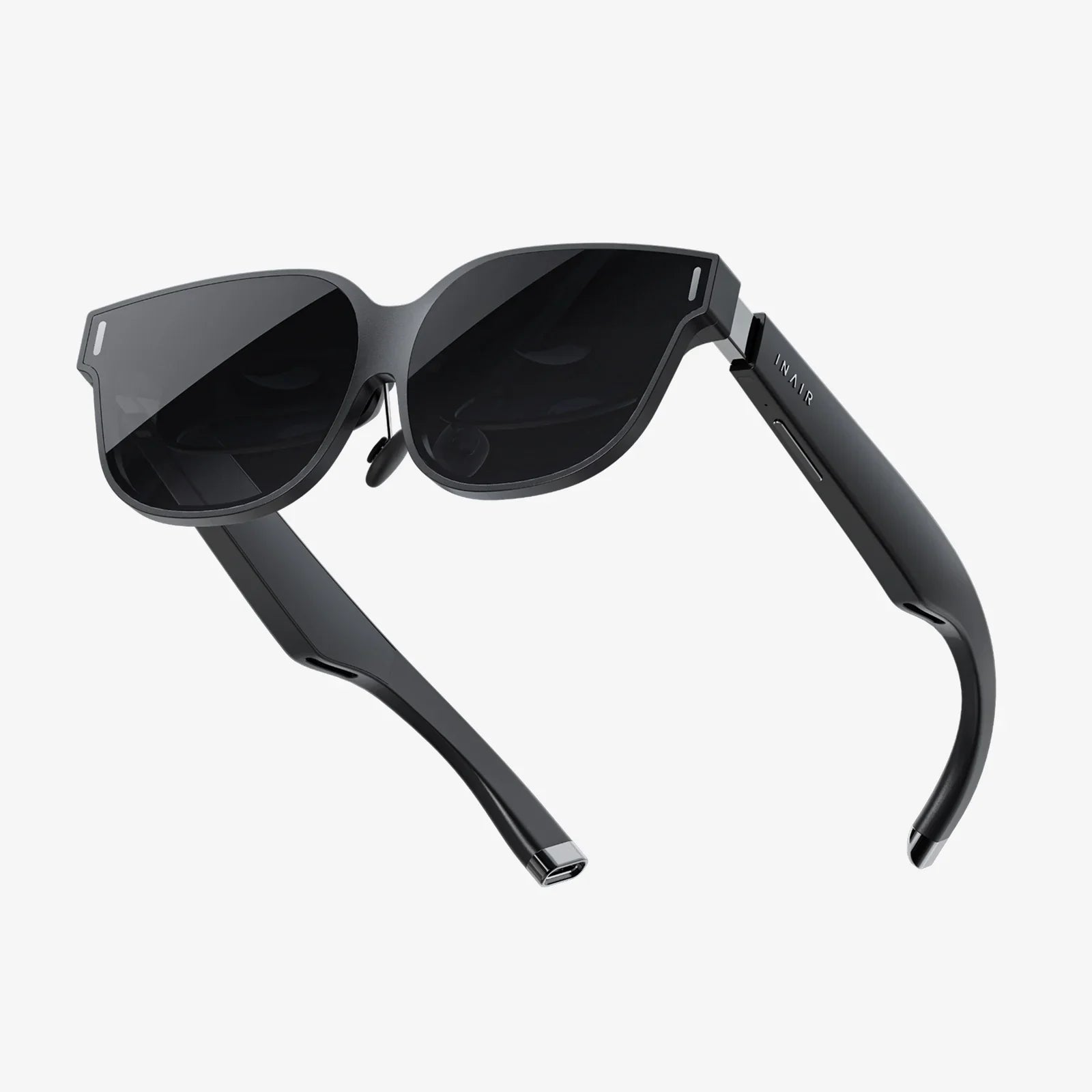
Imagine a world where information doesn’t live on a screen in your hand but is woven seamlessly into the fabric of your reality, where digital guides and data enhance your every task without ever demanding your full attention. This is the tantalizing promise of smart glasses augmented reality application, a technological evolution poised not just to change what we see, but to fundamentally redefine how we interact with the world around us. We stand on the precipice of a shift from a device-centric to an ambient-computing future, and it’s a future you’ll see through a new kind of lens.
The Architectural Framework: How It All Works
To understand the profound implications of smart glasses augmented reality application, one must first grasp the sophisticated symphony of technologies working in concert. At its core, AR is the real-time overlay of digitally created content onto the user’s view of their physical environment. But delivering this experience through a sleek, wearable form factor like smart glasses is a monumental feat of engineering.
The hardware foundation rests on several critical pillars. Optical systems, such as waveguide combiners or micro-LED projectors, are tasked with the delicate job of painting light onto the user’s retina, blending digital imagery with the real world. Sophisticated sensors—including inertial measurement units (IMUs), depth-sensing cameras, LiDAR scanners, and high-resolution RGB cameras—act as the eyes of the device, constantly mapping the environment and tracking the user’s head position and movements with astonishing precision.
This sensor data is processed by powerful, miniaturized chipsets that run complex algorithms for Simultaneous Localization and Mapping (SLAM). SLAM allows the device to understand its position within a space and construct a 3D map of that space in real time, ensuring that a virtual object placed on a physical table stays on that table even as the user moves around it. This is the magic of persistence, a critical element for believable AR. Furthermore, robust connectivity, often via 5G or Wi-Fi 6, ensures a constant flow of cloud-based data and processing power, enabling more complex applications than the onboard compute could handle alone.
Beyond Novelty: Transformative Applications Across Industries
The true power of smart glasses augmented reality application is revealed not in flashy demos but in its capacity to solve real-world problems, enhance human capability, and drive efficiency across diverse sectors.
Revolutionizing the Frontline Workforce
Perhaps the most immediate and impactful applications are emerging in industrial and field service settings. For a technician repairing a complex piece of machinery, smart glasses can project animated, step-by-step instructions directly onto the equipment they are working on, highlighting exactly which bolt to turn or which wire to check. This hands-free access to information drastically reduces error rates, slashes training time, and improves safety by keeping the worker’s focus on the task, not a manual or tablet. Remote experts can see what the on-site technician sees and provide guidance by drawing annotations that appear in the technician’s field of view, effectively teleporting expertise to any location in the world.
Redefining Healthcare and Medicine
In medicine, the stakes are even higher. Surgeons can have vital patient statistics, 3D reconstructions of anatomy, or guidance from pre-operative scans superimposed onto their view during a procedure, enhancing precision and reducing the need to look away from the operating field. Medical students can practice complex procedures on detailed, interactive holograms, and first responders can instantly access a patient’s medical history or receive remote triage instructions, potentially saving critical minutes in an emergency.
Unlocking New Dimensions in Design and Education
For architects and engineers, smart glasses allow them to walk through a full-scale, holographic model of a building before a single brick is laid, identifying design flaws and experiencing spatial relationships in a way blueprints cannot convey. In education, abstract concepts become tangible; students can dissect a virtual frog, explore the solar system from their classroom, or walk through ancient Rome, transforming learning from a passive to an immersive, experiential activity.
Enhancing Consumer Retail and Navigation
In the consumer realm, the potential is vast. Shopping for furniture becomes an exercise in precision as you see how a virtual sofa fits and looks in your actual living room. Navigating a new city is effortless as directional arrows and points of interest are painted onto the streets ahead of you. Language barriers dissolve with real-time translation of street signs and menus, displayed directly over the text. These applications move computing from something we interrupt our lives to use, to something that assists us continuously within our lives.
The Invisible Barrier: Challenges on the Path to Ubiquity
Despite the immense potential, the widespread adoption of smart glasses augmented reality application faces significant hurdles that must be overcome. The most prominent is the form factor. For consumers to wear these devices all day, they must be indistinguishable from traditional eyewear—lightweight, stylish, and socially acceptable. Current technology often forces a trade-off between capability and aesthetics, a gap that is narrowing but still present.
Battery life remains a persistent challenge. Processing high-fidelity graphics and streaming vast amounts of sensor data is incredibly power-intensive. Achieving all-day battery life without cumbersome external packs is a key engineering goal. Furthermore, creating intuitive and discreet user interfaces is paramount. Interactions must move beyond clumsy hand gestures or voice commands that fail in noisy environments. The development of neural interfaces, which can interpret subtle intentional commands, may be the ultimate solution.
Perhaps the most complex challenges are not technical but societal and ethical. The constant recording and analysis of one’s environment raise profound questions about privacy, data ownership, and surveillance. Who has access to the video feed from your glasses? How is the data being used? Establishing clear norms and robust, transparent regulations will be essential to building public trust. There is also the risk of digital overload, where the constant stream of notifications and information becomes overwhelming, or the potential for reality blurring, where the line between the virtual and the real becomes dangerously thin.
Glimpsing the Future: The Road Ahead
The evolution of smart glasses augmented reality application is not leading to a single destination but toward a spectrum of devices. We will see a range of products, from information-light ‘smart audio glasses’ focused on audio and minimal notifications, to task-specific industrial eyewear, and eventually, to full-featured, all-day AR companions that become as essential as the smartphone is today.
The next leap will be the development of the AR cloud—a persistent, shared, digital layer over the entire world. This will enable experiences where digital content is anchored to specific locations for everyone to see and interact with, transforming cities into collaborative canvases for art, information, and social connection. The convergence with Artificial Intelligence will be equally critical. AI will act as the brain behind the glasses, proactively surfacing relevant information, understanding context, and anticipating user needs, moving from a tool you command to an intelligent assistant that guides you.
We are moving toward a post-smartphone era, a future where the world itself becomes the interface. The magic of this next computing platform lies in its invisibility; the technology will recede into the background, and the enhanced human experience will move to the foreground. The goal is not to escape reality, but to make it richer, more efficient, and more deeply understood.
The path from clunky prototype to indispensable everyday companion is being paved right now, not in a distant lab, but in factories, operating rooms, and design studios around the globe. The revolution won’t arrive with a bang, but with a quiet, seamless integration into our daily rituals. The next time you struggle to find your phone for directions, squint at a complicated manual, or wish you could remember a colleague’s name, remember: the solution is already taking shape, designed to be looked through, not at, waiting for the moment it can finally show you what you’ve been missing.
Share:
Develop Augmented Reality Glasses: The Ultimate Engineering Challenge
AR IT Technologies: The Invisible Revolution Reshaping Our Digital and Physical Worlds