


Imagine a world where the digital and physical seamlessly intertwine, where information overlays your vision like a sixth sense, and where you can travel to distant galaxies or walk with dinosaurs from your living room. This is no longer the realm of science fiction but the burgeoning reality being built by the relentless innovation within the AR market and VR market. These twin pillars of immersive technology are not just reshaping entertainment; they are poised to revolutionize how we work, learn, connect, and interact with reality itself. The journey into these virtual and augmented worlds is just beginning, and understanding their trajectories is key to navigating the future.
Defining the Realms: AR vs. VR
While often mentioned in the same breath, Augmented Reality (AR) and Virtual Reality (VR) represent fundamentally different approaches to immersive computing.
Virtual Reality (VR) is an immersive, computer-generated simulation of a three-dimensional environment. Users, equipped with a headset that blocks out the physical world, are transported into a completely digital space. This environment can be a realistic simulation of a real place or a fantastical, imagined world. The core principle of the VR market is presence—the convincing feeling of being somewhere else.
Augmented Reality (AR), by contrast, does not replace the real world but enhances it. It superimposes digital information—images, data, 3D models—onto the user's view of their physical surroundings through a device, which can be a smartphone, tablet, or a pair of smart glasses. The AR market is built on the principle of context—providing relevant digital content anchored to the real world around you.
The Technological Engine Room
The progress of both markets is intrinsically linked to advancements in a suite of core technologies.
Hardware: The Gateways to Immersion
The VR market has seen significant evolution in head-mounted displays (HMDs). Early tethered headsets, requiring a connection to a powerful computer, deliver the highest fidelity experiences with precise tracking and stunning graphics. Standalone VR headsets, which contain all necessary computing power within the device, have dramatically increased accessibility and user adoption by removing the need for expensive external hardware.
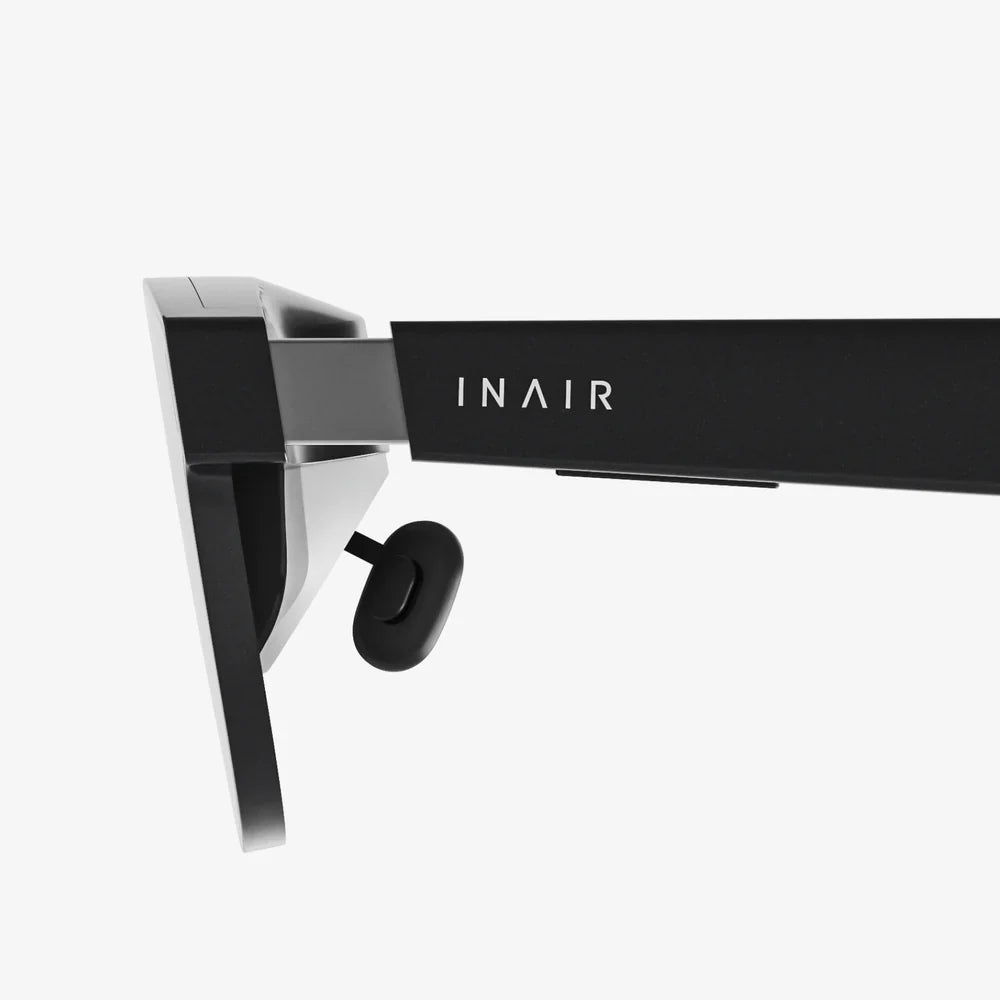
The AR market's hardware landscape is more diverse. Smartphone-based AR leverages the device nearly everyone already owns, using its camera and screen to overlay digital content. This has been a massive catalyst for market growth. However, the true potential of AR lies in wearable glasses. These range from simpler smart glasses displaying basic notifications to sophisticated enterprise-grade models with full spatial computing capabilities, though consumer-ready, stylish AR glasses remain a holy grail for the industry.
Software and Development Ecosystems
Powerful software development kits (SDKs) and game engines have been critical. These tools provide developers with the frameworks to create compelling experiences, handling complex tasks like 3D rendering, spatial mapping, and motion tracking. The maturation of these platforms has lowered the barrier to entry for creators, fueling an explosion of content for both markets.
Enabling Technologies
Several cutting-edge technologies are pushing both markets forward. Inside-out tracking, where cameras on the headset itself map the environment, has made setup easier and untethered movement possible. Eye-tracking technology allows for more intuitive interfaces and foveated rendering—a technique that focuses processing power only where the user is looking, drastically improving performance. Advances in 5G connectivity promise to offload heavy computation to the cloud, enabling thinner, lighter devices and complex multi-user experiences.
Market Dynamics and Growth Drivers
The AR market and VR market are on steep growth trajectories, albeit driven by different immediate use cases.
The VR Market: Gaming and Beyond
The VR market found its initial footing in gaming and entertainment. High-quality, immersive games have been the primary driver of consumer adoption. However, the market is rapidly expanding into other areas:
- Enterprise Training: Companies use VR to simulate dangerous or expensive scenarios for training in fields like aviation, surgery, manufacturing, and military operations. This allows for mistake-forgiving practice in a risk-free environment.
- Virtual Collaboration: Remote teams can meet in persistent virtual boardrooms, examine 3D prototypes together, or train on virtual equipment, creating a sense of shared presence that video calls cannot match.
- Healthcare: VR is used for pain management, exposure therapy for phobias and PTSD, and physical rehabilitation through gamified exercises.
The AR Market: The Enterprise Powerhouse
While VR captivates consumers, the AR market has found a powerful and lucrative home in enterprise and industrial applications. The ability to overlay instructions, diagrams, and data onto physical equipment is transforming workflows:
- Manufacturing and Maintenance: Technicians can see step-by-step repair instructions overlaid on a malfunctioning machine, identify parts with digital highlights, and connect with remote experts who can annotate their field of view.
- Logistics and Warehousing: AR smart glasses can display optimal picking routes, inventory information, and verify orders, dramatically increasing accuracy and efficiency in warehouses.
- Retail and Design: Customers can visualize furniture in their home before buying or try on clothes and makeup virtually. Architects and interior designers can walk clients through digital models overlaid onto physical construction sites.
Convergence: The Blurring Line Between AR and VR
The most exciting development is the convergence of these two markets. The concept of Mixed Reality (MR) exists on a spectrum between the purely physical environment (AR) and a fully immersive digital one (VR).
Passthrough VR is a key technology enabling this. Modern VR headsets use their external cameras to display a real-time video feed of the physical world. Digital objects can then be anchored within this space, effectively turning a VR device into an AR one. This allows users to interact with both high-fidelity virtual content and their real-world surroundings simultaneously, unlocking hybrid use cases for work and play that were previously impossible.
Challenges and Hurdles to Mass Adoption
Despite the promise, significant challenges remain for both the AR market and VR market before they can achieve ubiquitous adoption.
Technical and Hardware Limitations
For VR, headsets can still be bulky, leading to discomfort during extended use. Issues like simulator sickness, caused by a lag between a user's movement and the visual response, persist for some. For AR, the challenge is creating socially acceptable, all-day wearable glasses that are lightweight, have a long battery life, and offer a wide field of view with bright displays that work in all lighting conditions.
Content and The "Killer App"
While content libraries are growing, both markets still lack a definitive "killer app" for the average consumer beyond gaming for VR. The value proposition must be undeniable and widespread to justify the investment in hardware.
Social and Privacy Concerns
Always-on AR glasses raise profound questions about privacy, data collection, and social etiquette. The potential for constant recording and facial recognition presents a societal challenge that must be addressed with clear regulations and ethical guidelines. Furthermore, there is a risk of a digital divide, where these powerful tools are only accessible to those who can afford them.
The Future Horizon: A World Remade
The long-term vision for the AR market and VR market is nothing short of a new computing platform, often referred to as the spatial web or the metaverse—a persistent network of interconnected virtual spaces.
In this future, you might start your day in a VR meeting with colleagues from across the globe, then switch to AR glasses that guide you through a complex repair, translate street signs in a foreign language in real-time, and display a navigational path superimposed on the sidewalk. Education could become deeply experiential, with students exploring ancient Rome or the human bloodstream firsthand.
The distinction between the AR market and VR market will likely fade, giving way to a unified spectrum of immersive experiences accessed through a single, elegant device. The ultimate goal is for technology to fade into the background, enhancing human capability and connection without intruding on it.
The lines on the map are blurring, but the destination is clear: a future where our digital and physical lives are not separate realities but a continuous, integrated flow of information and experience. The AR market and VR market are the engines building this future, and we are all along for the ride. The next time you look at your smartphone screen, remember—it’s just a fleeting glimpse of a world that is about to burst into three dimensions all around you.
Share:
AR VR Design Trends 2025: The Future of Immersive Experiences
Virtual Reality for PC: The Ultimate Guide to Immersive Computing