


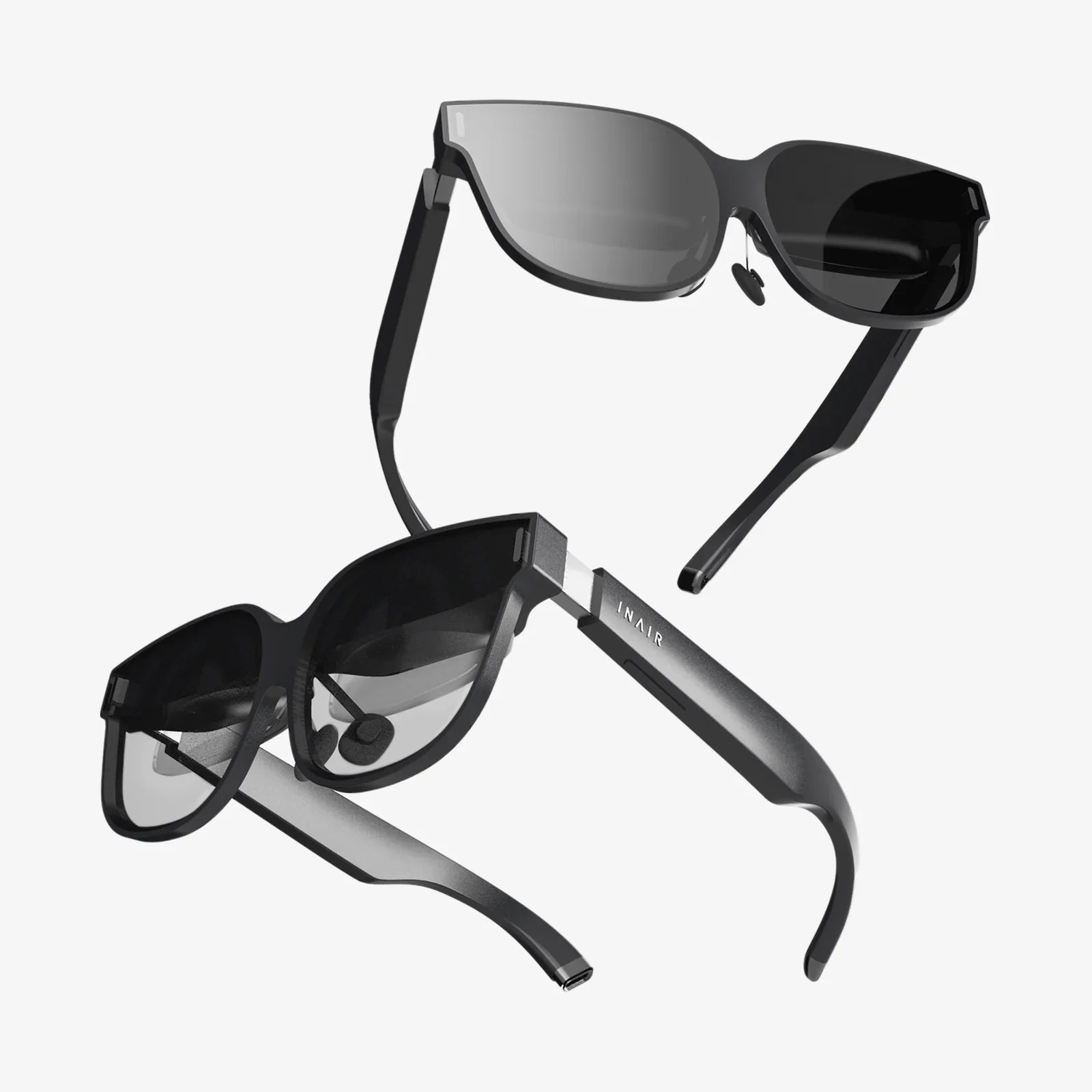
Imagine slipping on a pair of sleek, everyday glasses and instantly overlaying high-definition maps, responsive digital interfaces, and life-like holograms onto the world around you. This isn't a scene from a sci-fi blockbuster; it's the imminent future being forged in the secretive labs of display manufacturers worldwide. The race to dominate the next computing platform is heating up, and the battlefield is smaller than a fingernail. At the heart of this technological upheaval lies a critical, yet often overlooked, component: the augmented reality microdisplay. Recent breakthroughs in this field are not just incremental improvements; they are quantum leaps that promise to finally dissolve the barrier between the digital and the physical. For anyone watching the tech horizon, the latest AR microdisplay news signals a revolution that will redefine how we work, play, and connect.
The Core Challenge: Squeezing a Universe into a Speck
To understand the significance of recent developments, one must first appreciate the monumental engineering challenge a microdisplay presents. Unlike a television or a smartphone screen that you view directly, an AR microdisplay must project an image through a series of optics (waveguides, combiners, lenses) that eventually lands on the user's retina. This process demands an incredible combination of attributes that often work against each other. The holy grail is a display that is simultaneously high-resolution, incredibly bright for outdoor use, power-efficient for all-day wearable comfort, small enough to fit into an eyeglass form factor, and affordable enough for mass adoption. For years, the industry has been stuck in a cycle of trade-offs, forcing developers to choose between performance and practicality. However, the latest wave of announcements suggests we are on the cusp of breaking this deadlock.
LCoS: The Established Workhorse Gets a Major Upgrade
Liquid Crystal on Silicon (LCoS) has long been a stalwart in the microdisplay arena, prized for its excellent color reproduction and high resolution. The technology works by reflecting light off a mirrored silicon substrate covered with a liquid crystal layer, modulating the light to create an image. The recent news, however, centers on dramatic enhancements to this mature technology. Manufacturers are now demonstrating LCoS panels with resolutions soaring beyond 4K per eye, achieving pixel densities so high that the dreaded 'screen door effect'—where users can discern the gaps between pixels—becomes virtually imperceptible.
Furthermore, innovations in liquid crystal materials and drive circuitry have significantly improved the switching speed of these displays. This is critical for mitigating motion blur and artifacts in dynamic AR scenarios, such as a digital object staying locked in place as a user quickly turns their head. These advancements ensure that LCoS remains a fiercely competitive and highly viable technology, especially for enterprise and professional applications where top-tier image quality is non-negotiable.
The Rise of MicroLED: A Brighter, More Efficient Future
If one technology has dominated the AR microdisplay news cycle lately, it is undoubtedly MicroLED. This emerging technology represents a fundamental shift from the light-modulation approach of LCoS to an emissive one, where each microscopic pixel generates its own light. This architecture offers a compelling set of advantages: phenomenal brightness levels that can easily overpower direct sunlight, exceptional power efficiency that drastically extends battery life, true black levels for superior contrast, and a rugged solid-state construction with a long operational lifespan.
The central obstacle, and the focus of intense research and development, has been the mass transfer process. Fabricating millions of microscopic red, green, and blue LED chips and then accurately placing them onto a driver backplane at a low cost has been described as one of the hardest manufacturing problems in tech. Recent news highlights several promising breakthroughs. Some companies are pioneering methods using specialized stamp-like tools to transfer arrays of MicroLEDs in one go, while others are innovating with monolithic growth techniques, building all three colors on a single wafer to eliminate the transfer challenge altogether. These production victories are moving MicroLED from a promising prototype to a scalable reality, positioning it as the likely successor for next-generation consumer AR devices.
Scanning the Horizon: Laser Beam Scanning and Holography
Beyond the two front-runners, more exotic technologies are making waves and offering unique solutions. Laser Beam Scanning (LBS) systems, for instance, use miniature mirrors (MEMS) to raster-scan a single, intensely bright laser beam directly onto the retina. The key advantage here is the ability to create a always-in-focus image, known as a retinal projection, which can be a more natural viewing experience for users with vision correction needs. Recent news in LBS revolves around miniaturization and improving color gamut, making the systems compact and visually impressive enough for real-world use.
Perhaps the most futuristic entrant is holographic display technology. Rather than constructing an image pixel-by-pixel, this method uses computer-generated holography (CGH) to control the wavefront of light, reconstructing a light field that mimics how light behaves when reflecting off a real object. The potential benefits are staggering: perfect vergence-accommodation conflict (VAC) mitigation—the primary source of eye strain in current AR/VR—and incredibly realistic 3D depth cues. While still largely in the R&D phase, recent announcements from research institutes and startups show rapid progress in computational algorithms and spatial light modulators, bringing true holographic displays closer to feasibility.
Beyond the Display: The Ecosystem Required for Adoption
A perfect microdisplay alone does not make a perfect AR headset. The recent flurry of news underscores a vital industry truth: these displays are just one piece of a deeply interconnected puzzle. The optical waveguides that carry the image from the microdisplay to the eye are equally important, with new materials and nanofabrication techniques yielding wider fields of view and higher optical efficiency. Similarly, the development of ultra-low-power processing units and advanced computer vision algorithms is essential to drive these high-resolution displays without generating excessive heat or draining the battery in minutes. The synergy between these components is what will ultimately unlock a compelling user experience. The most positive news is that progress is being made across all these fronts in parallel.
The Implications: Reshaping Industries and Human Interaction
The ripple effects of these microdisplay advancements will be felt far beyond the consumer electronics aisle. With displays that are finally capable of blending digital information seamlessly with reality, entire industries stand to be transformed.
In enterprise and manufacturing, technicians will be able to see schematics and receive guided instructions overlaid directly on complex machinery, hands-free. Surgeons could have vital patient statistics and 3D imaging visualized atop their field of view during intricate procedures. In architecture and construction, blueprints could be walked through at life-size scale before a single foundation is poured. For everyday consumers, navigation will evolve from looking at a phone to having arrows painted onto the street, and social interaction could be enriched with shared digital artifacts and experiences. The barrier between learning and doing will crumble as information becomes contextual and immediately accessible.
The path forward is not without its hurdles. Questions about privacy, data security, and the societal impact of a perpetually augmented world demand careful consideration and ethical foresight. However, the technological momentum, as evidenced by the rapid pace of AR microdisplay news, is undeniable. We are building the lenses through which we will fundamentally re-see our world.
The tiny screens you haven't seen yet are about to change everything you see. The next time you glance at a pair of ordinary-looking glasses, remember: the most profound revolutions are not always the loudest or the largest. They are the ones that quietly come into focus, pixel by perfect pixel, ready to illuminate our reality in ways we are only beginning to imagine. The future is not just bright; it's high-resolution, power-efficient, and wearable.
Share:
AR Advanced Technology Inc. Is Pioneering the Next Industrial Revolution
Virtual Meeting Room VR: The Dawn of a New Collaborative Reality