


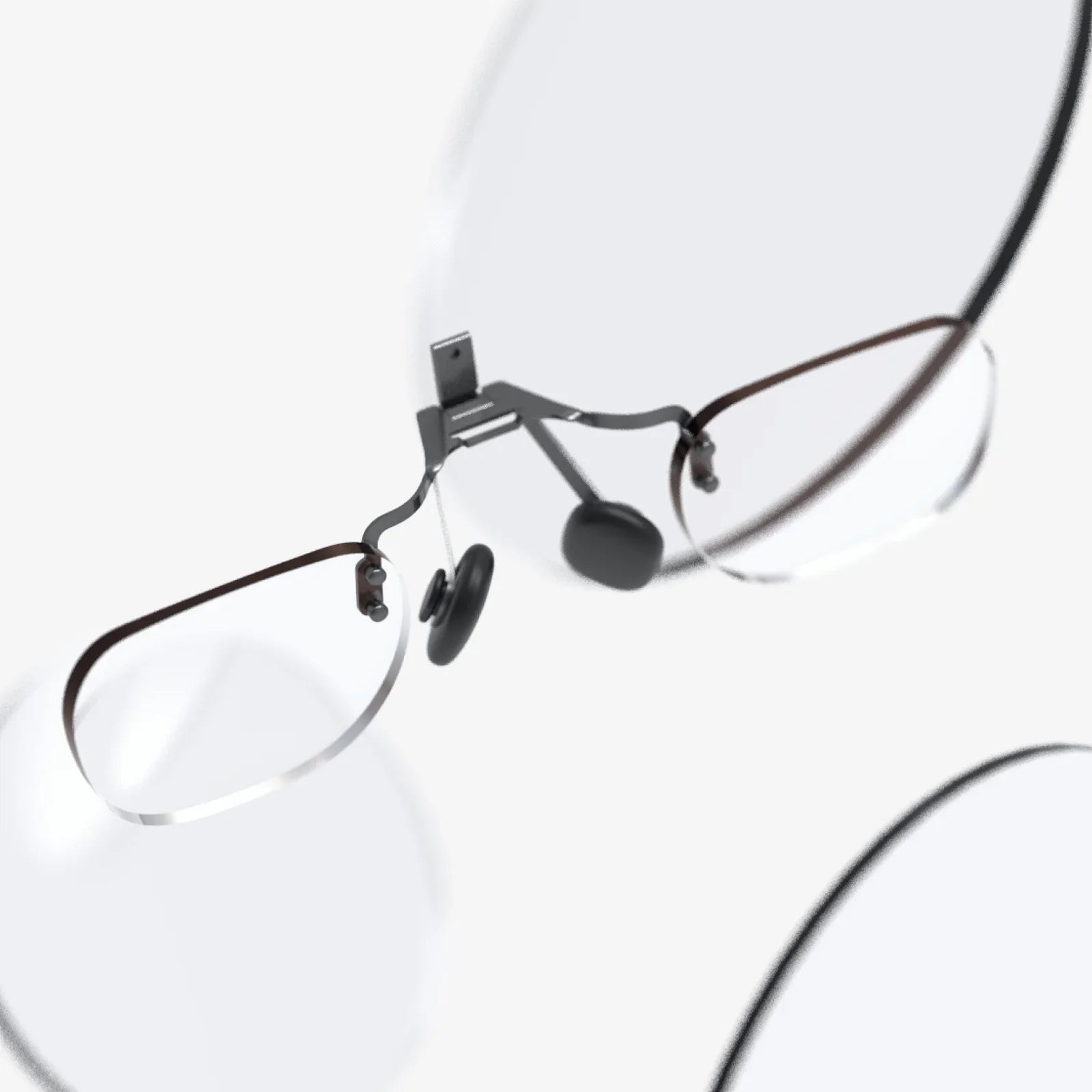
Imagine stepping in front of your mirror and not just seeing your reflection, but interacting with it. Your reflection is now a canvas—you can try on a jacket that doesn’t physically exist, receive real-time makeup application tutorials, or have a remote expert guide your hands through a complex repair, their annotations floating in the space between you and the glass. This is not a scene from a science fiction film; it is the tangible, revolutionary present made possible by AR Mirror Technology. This technology is poised to fundamentally alter our relationship with both the digital and physical worlds, transforming a simple reflective surface into a dynamic gateway to information, experience, and connection.
The Core Mechanics: How an AR Mirror Actually Works
At its essence, an AR Mirror is a sophisticated system that merges the real-time capture of a user's reflection with computer-generated perceptual information. It’s a seamless ballet of hardware and software working in perfect concert.
The process begins with a high-definition camera, typically embedded within or positioned above the mirror frame, which captures a live video feed of the user and their immediate environment. This raw video data is the foundational layer of reality.
Simultaneously, sophisticated software springs into action. This is where the true magic happens. Using advanced computer vision algorithms and, in many cases, artificial intelligence, the software performs a series of complex tasks in milliseconds:
- User Detection and Skeleton Tracking: The system identifies the human form within the frame, mapping key points like the shoulders, elbows, wrists, and head to create a digital skeleton. This allows the mirror to understand the user's pose, movements, and orientation in 3D space.
- Facial Mapping and Landmark Detection: For applications involving the face, the AI pinpoints precise facial landmarks—the contours of the eyes, lips, nose, and jawline. This creates a hyper-accurate mask onto which virtual elements like makeup, glasses, or accessories can be anchored and made to move naturally with the user's expressions.
- Environment Understanding: The system analyzes the surroundings to understand depth, lighting, and perspective, ensuring that virtual objects don’t just overlay the image but appear to exist within the user's world, casting appropriate shadows and reacting to ambient light.
Finally, the processed video feed, now enriched with the perfectly aligned digital content, is projected or displayed back onto a semi-transparent mirror or a standard display panel with a mirrored surface. The result is a cohesive, interactive illusion where the user sees themselves enhanced by a digital layer that feels utterly real.
Beyond the Dressing Room: Expansive Applications Across Industries
While virtual try-ons in retail are the most visible application, the potential of AR mirror technology extends far beyond fashion, infiltrating and improving sectors from healthcare to heavy industry.
Revolutionizing the Retail Experience
The retail sector has been an early and enthusiastic adopter. AR mirrors in stores allow customers to try on hundreds of clothing items, accessories, or pairs of glasses in minutes without ever entering a physical changing room. This not only creates a fun, engaging “wow” factor but also solves practical pain points: it increases efficiency, reduces garment contamination from multiple try-ons, and provides valuable data on customer preferences. For online retail, virtual fitting rooms on e-commerce platforms powered by similar technology drastically reduce return rates by giving shoppers more confidence in their purchases.
Transforming Beauty and Personal Care
In cosmetics, AR mirrors are a game-changer. Customers can experiment with thousands of shades of lipstick, eyeshadow, and foundation with a simple touch, seeing how products look under different lighting conditions. This technology empowers personalized consultations, allowing beauty advisors to make precise recommendations. Furthermore, these mirrors can serve as interactive tutors, offering step-by-step augmented reality tutorials for applying products, teaching techniques like contouring or smoky eye application directly over the user's reflection.
Innovating Healthcare and Telemedicine
The implications for healthcare are profound. Medical professionals can use AR mirrors for physical therapy and rehabilitation. A patient recovering from a stroke could see digital guides overlaid on their limbs, demonstrating the correct movement patterns for their exercises. In telemedicine, a doctor could remotely see a patient's reflection and annotate directly onto it, circling areas of concern or guiding a self-examination. It also holds potential for mental health therapies, such as exposure therapy for phobias or body image treatment, by allowing controlled, augmented experiences within a safe environment.
Enhancing Training and Remote Assistance
In industrial and technical fields, AR mirror technology enables a new paradigm for remote expertise. A field technician repairing a complex piece of machinery can stand before a mirror-equipped station. A remote expert, seeing what the technician sees, can then draw arrows, highlight components, and display instructional manuals or schematics that appear to float in the space around the equipment. This “see-what-I-see” guidance is vastly more intuitive than a phone call or a static manual, reducing errors, improving first-time fix rates, and preserving crucial institutional knowledge.
Creating Immersive Fitness and Wellness
The fitness industry is leveraging this technology to create next-generation home gyms and wellness experiences. An AR mirror can display a user's real-time form metrics—correcting their squat posture, showing their heart rate, or counting their repetitions—all while they watch themselves perform the movements. Yoga and meditation apps can project calming environments and guides into the user's space, transforming a simple room into a serene sanctuary for mindfulness practice.
The Hardware Ecosystem: Cameras, Sensors, and Displays
The illusion of a flawless AR experience is underpinned by a robust hardware ecosystem. While a standard camera captures the initial image, depth-sensing technologies like LiDAR (Light Detection and Ranging) or structured light sensors are often employed to create a detailed 3D map of the user and their environment. This depth information is critical for ensuring virtual objects occlude correctly and interact realistically with the space.
The display technology itself is also pivotal. Many systems use a combination of a high-brightness display panel and a beamsplitter, a semi-transparent glass that reflects the displayed image while allowing the user to see through it. This creates the ghostly, superimposed effect. Other implementations use standard LCD screens with a camera mounted directly behind a two-way mirror, creating a more integrated but equally compelling unit. The choice of hardware depends on the desired fidelity, cost, and specific use case.
Navigating the Challenges: Privacy, Accuracy, and Accessibility
Despite its promise, the path forward for AR mirror technology is not without significant hurdles. The most pressing concern is privacy and data security. These devices are, by design, capturing highly detailed visual and biometric data. The continuous, intimate surveillance required for them to function raises critical questions: Where is this data stored? How is it used? Could facial mapping data be repurposed for unauthorized identification? Robust, transparent data governance and clear user consent protocols are not optional; they are fundamental to earning and keeping public trust.
Another challenge is achieving true visual fidelity and accuracy. While technology has advanced leaps and bounds, slight latency, color mismatches between virtual and physical items, or imperfect fit simulations can break the illusion and lead to user frustration. The “uncanny valley” effect—where a digital representation is close to real but just off enough to be unsettling—is a constant design battle. Continuous improvements in AI training, sensor resolution, and rendering algorithms are essential to cross this chasm.
Finally, there is the matter of cost and accessibility
The evolution of AR mirror technology is accelerating toward even more immersive and integrated experiences. We are moving toward a future where these displays will be ubiquitous, perhaps as common in homes as televisions are today. They will evolve from single-purpose devices into central hubs for smart homes, displaying information, controlling IoT devices, and serving as communication portals. We can anticipate the integration of more advanced AI, capable of not just overlaying content but understanding context and intent, offering proactive suggestions and personalized experiences. Haptic feedback technology could eventually allow users to “feel” the texture of a virtual fabric they are trying on. Furthermore, the convergence with the metaverse concept suggests that our reflections could become our avatars, bridging our physical presence into persistent digital worlds for work, socializing, and play. The mirror, one of humanity’s oldest and most simple tools for self-perception, has been reborn. It is no longer a passive observer but an active participant in our daily lives. It is a fitting symbol for our age: a surface that reflects not only who we are but, increasingly, who we aspire to be and what we aspire to create. The glass is no longer half-empty or half-full; it is now a window to infinite possibilities, waiting for us to reach out and interact.The Future Reflection: What Lies Ahead
Share:
Current AR Technology: Bridging the Digital and Physical Worlds
Wearable Smart Display Glasses: The Invisible Revolution Reshaping Reality