


Imagine a world where digital information doesn’t live trapped behind a screen but flows seamlessly into your physical environment, enhancing everything from how you work and learn to how you play and connect. This is no longer the stuff of science fiction; it is the tangible, accelerating reality being built by current Augmented Reality (AR) technology. We are standing at the precipice of a fundamental shift in human-computer interaction, and AR is the bridge.
The Essence of Augmented Reality: More Than Just a Filter
At its core, Augmented Reality is a technology that superimposes a computer-generated image, video, or 3D model onto a user's view of the real world, creating a composite view that augments the natural environment. It’s crucial to distinguish AR from its close cousin, Virtual Reality (VR). Where VR aims to replace the user's reality with a fully digital, immersive experience, AR's power lies in its ability to enhance and annotate the real world, allowing users to remain present and engaged in their actual surroundings.
Current AR technology achieves this magic through a sophisticated combination of hardware and software. The process typically involves three key steps:
- Scene Capture: A camera, often on a smartphone, tablet, or dedicated AR headset, captures the user's real-world environment.
- Processing and Understanding: Sophisticated algorithms, including Simultaneous Localization and Mapping (SLAM), analyze the video feed in real-time. They identify flat surfaces (like floors and tables), track the device's position and orientation in space, and understand depth and lighting conditions. This is the critical step that allows digital objects to sit realistically in the world.
- Rendering and Alignment: The AR software then renders the digital content—a piece of furniture, an informational label, an animated character—and perfectly aligns it within the captured scene, compositing the final image for the user to see on their display.
The Hardware Ecosystem: From Smartphones to Smart Glasses
The accessibility of current AR technology is one of its most defining characteristics. It exists on a spectrum of hardware, each offering a different level of immersion and capability.
- Smartphone and Tablet-Based AR: This is the most widespread and democratized form of AR. Leveraging the powerful processors, high-resolution cameras, and suite of sensors (gyroscopes, accelerometers) in modern mobile devices, app-based AR has reached hundreds of millions of users. It's the technology behind social media filters, interactive gaming experiences, and retail apps that let you "try on" products virtually.
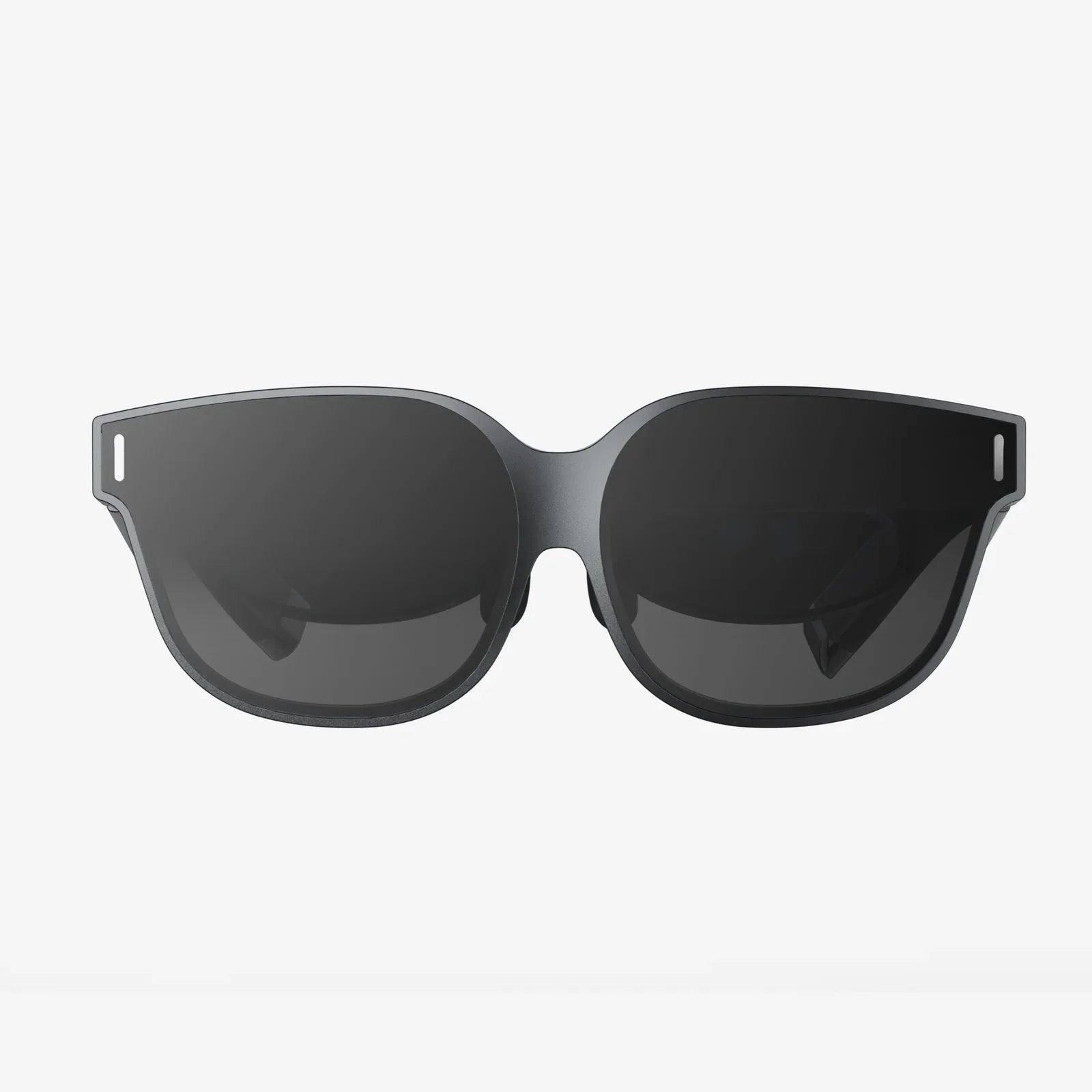
- Standalone AR Headsets (Smart Glasses): This category represents the next evolutionary step. These wearable devices are designed specifically for AR, featuring transparent waveguides or micro-displays that project imagery directly into the user's field of view. They free the user's hands and offer a more natural, always-available experience. Current iterations range from simpler forms displaying notifications and basic information to more advanced models capable of full 3D object rendering and complex spatial interactions.
- Tethered AR Headsets: These systems, often connected to a powerful external computer, represent the high-end of current AR technology. They prioritize extreme graphical fidelity, precise tracking, and advanced features like eye-tracking and wider fields of view. They are primarily used in enterprise, industrial, and research settings for complex design, simulation, and training applications.
The Software and Enabling Technologies: The Brains Behind the Beauty
The hardware is nothing without the advanced software that drives it. Several key technologies form the backbone of current AR experiences:
- Computer Vision: This is the eyes of the operation. CV algorithms enable the device to recognize and understand the world. This includes object recognition (identifying a specific product or machine part), plane detection (finding a surface to place a virtual object), and image tracking (using a 2D image as a trigger for AR content).
- SLAM (Simultaneous Localization and Mapping): Arguably the most critical enabling technology for persistent AR, SLAM allows a device to both map an unknown environment and simultaneously track its own location within that map in real-time. This is what allows digital content to stay locked in place, even as you move around it.
- Cloud AR: Offloading intensive processing tasks like rendering complex 3D models or running powerful AI algorithms to the cloud allows for richer experiences on less powerful devices. The device streams the AR scene, while the heavy computing is handled remotely, ensuring smooth performance and potentially limitless complexity.
- 5G Connectivity: The high bandwidth and low latency of 5G networks are a perfect match for Cloud AR and multi-user AR experiences. They enable the rapid streaming of high-fidelity content and ensure that interactions between users in a shared AR space are instantaneous and seamless.
Transforming Industries: AR in the Real World
The theoretical potential of AR is vast, but its current applications are already delivering profound value across numerous sectors.
Revolutionizing Enterprise and Manufacturing
Perhaps the most mature and impactful use of current AR technology is in the industrial world. Enterprises are leveraging AR to increase efficiency, reduce errors, and enhance safety.
- Remote Assistance and Expert Guidance: A field technician facing a complex repair can wear AR glasses to stream their point-of-view to an expert thousands of miles away. The expert can then annotate the technician's real-world view with arrows, diagrams, and notes, guiding them through the process step-by-step as if they were there. This drastically reduces travel costs, downtime, and resolution times.
- Assembly and Quality Control: Digital work instructions can be overlaid directly onto an assembly line or complex machinery. Workers see precisely which part goes where, the correct torque settings, and the proper wiring connections, minimizing errors and accelerating training for new employees. AR can also highlight potential defects or missing components during quality inspections.
- Design and Prototyping: Engineers and designers can visualize and interact with full-scale 3D models of products long before physical prototypes are built. They can assess ergonomics, fit within a physical space, and identify potential design flaws, saving immense time and resources in the development process.
Redefining Retail and E-Commerce
AR is closing the gap between online shopping and the in-store experience, giving consumers unprecedented confidence in their purchasing decisions.
- Virtual Try-On: Customers can "try on" glasses, makeup, jewelry, and even clothes using their smartphone camera. Furniture retailers allow users to place true-to-scale 3D models of sofas, tables, and decor into their own living rooms to see how they look and fit with their existing space.
- Interactive In-Store Experiences: Pointing a phone at a product on a shelf could trigger an AR experience showing detailed specifications, demonstration videos, customer reviews, or even the item's journey through the supply chain, enriching the shopping experience with deeper information.
Advancing Healthcare and Medicine
In healthcare, AR is moving from a novel tool to a life-changing technology with serious applications.
- Enhanced Medical Training: Medical students can practice procedures on detailed, interactive holographic anatomy models, gaining valuable experience without risk to patients. Surgeons can study a patient's unique anatomy from MRI or CT scans overlaid onto a mannequin or even directly onto the patient themselves before making an incision.
- Surgical Navigation: During operations, AR can project critical information—such as the location of tumors, blood vessels, or nerves—directly onto the surgeon's field of view, allowing them to maintain focus on the patient without constantly glancing away at separate monitors.
- Patient Education and Rehabilitation: Doctors can use AR to visually explain complex conditions and procedures to patients, improving understanding and easing anxiety. AR is also being used in physical therapy to create engaging exercises and games that guide patients through their recovery movements.
Enhancing Education and Navigation
AR has the power to turn learning and exploration into an immersive, interactive adventure.
- Interactive Learning: Textbooks and museum exhibits come to life. Students can point their device at a diagram of the solar system to see planets orbiting in 3D, or at a historical artifact to watch a reenactment of its use. This "see what I'm seeing" model makes abstract concepts concrete and deeply engaging.
- Contextual Navigation: Instead of looking down at a 2D map on a phone, AR navigation apps can overlay directional arrows, street names, and points of interest directly onto the real world through the camera view. This is being extended indoors for use in vast spaces like airports, malls, and hospitals, helping people find their gate, a specific store, or a clinic with ease.
Challenges and Considerations on the Path Forward
Despite its rapid progress, current AR technology is not without its hurdles. Overcoming these challenges is essential for its transition from a promising technology to a ubiquitous utility.
- Hardware Limitations: For wearable AR to become mainstream, devices need to become smaller, lighter, more socially acceptable (looking like regular glasses), and offer all-day battery life. Improving field of view, display brightness, and graphical resolution remains a key focus for engineers.
- User Experience (UX) and Interaction Paradigms: Designing intuitive ways for users to interact with AR content—through gesture, voice, gaze, or touch—is an ongoing challenge. Creating interfaces that are powerful yet not overwhelming is critical for user adoption.
- Privacy and Security: AR devices, with their always-on cameras and sensors, collect vast amounts of data about the user and their environment. Establishing clear, ethical guidelines on data collection, usage, and storage is paramount. The potential for unauthorized surveillance or "reality hacking" presents serious security questions that must be addressed.
- Digital Divide and Accessibility: Ensuring that the benefits of AR are accessible to all, regardless of socioeconomic status or physical ability, is crucial to prevent a new form of digital divide. The technology must be designed with inclusivity at its core.
The Invisible Interface: What the Future Holds
The ultimate goal of AR is to become an "invisible interface"—a seamless layer of computing woven so perfectly into our perception of the world that we stop thinking of it as technology at all. The trajectory of current AR technology points toward a future where contextually relevant information is available to us instantly, simply by looking at the world around us.
We are moving toward a world of spatial computing, where the digital and physical are inextricably linked. This will enable new forms of collaboration, with colleagues from across the globe appearing as holograms in your living room to work on a 3D model together. It will create persistent digital layers over cities, allowing for rich historical tours, interactive public art, and enhanced social connection. The very way we access information will shift from searching on a screen to asking the world around us and having it answer.
The evolution of current AR technology is not just about better graphics or smaller devices; it is about redefining the fundamental contract between humans, computers, and reality itself. It promises a future where our digital tools enhance our human capabilities without isolating us from each other or the physical world we inhabit. The bridge is being built, and we are already starting to cross it.
This isn't a glimpse of a far-off future; the tools to overlay a new layer of understanding onto your world are in your pocket or on the horizon, waiting for you to look up and see the potential. The next time you aim your phone's camera, remember you're not just capturing reality—you're standing at the gateway to augmenting it, and the view from here is only going to get more incredible.
Share:
Develop AR HoloLens Technology: The Future of Human-Computer Interaction
AR Mirror Technology is Reshaping Reality From Retail to Remote Assistance