


Imagine a world where information doesn’t just live on your screen but is painted onto the very fabric of reality around you. Where directions aren’t a blue dot on a map but a glowing path laid over the sidewalk, where historical figures stand on the street corners they once walked, and where the instruction manual for assembling furniture appears as a holographic guide hovering over the pieces. This is not a distant sci-fi dream; it is the burgeoning reality being unlocked by the powerful convergence of AR mobiles & technology, a revolution quietly unfolding in our pockets and poised to redefine our perception of the world itself.
The Foundation: Understanding the Magic Behind the Screen
At its core, Augmented Reality is a technology that superimposes a computer-generated layer of information—be it images, sounds, video, or data—onto a user's view of the real world. Unlike Virtual Reality (VR), which creates a completely immersive, digital environment, AR enhances the real world by adding a digital dimension to it. The magic of modern AR mobiles lies in their sophisticated suite of hardware and software working in perfect harmony.
This seamless integration is powered by a combination of advanced components. High-resolution cameras act as the eyes, constantly capturing the environment. Powerful processors serve as the brain, interpreting this visual data at lightning speed. Inertial Measurement Units (IMUs), including gyroscopes and accelerometers, track the phone's precise orientation and movement in space. Finally, sophisticated algorithms, particularly those for SLAM (Simultaneous Localization and Mapping), construct a digital understanding of the physical space in real-time, allowing virtual objects to be placed and anchored with astonishing accuracy. This complex dance of components is what allows a digital dinosaur to convincingly stomp across your living room floor without sliding through the sofa.
From Novelty to Necessity: The Pervasive Applications of AR
The journey of AR mobiles began with simple filters and games, but its applications have rapidly expanded into nearly every facet of modern life, evolving from a entertaining gimmick into a genuinely useful tool.
Transforming Retail and E-Commerce
Shopping has been utterly revolutionized. Instead of guessing whether a new sofa will fit in your lounge or how a shade of paint will look on your wall at different times of day, you can now use your mobile device to project a life-size 3D model of the furniture into your room or virtually paint the walls. Trying on clothes, sunglasses, or makeup virtually has become increasingly sophisticated, reducing return rates and increasing consumer confidence. This "try before you buy" capability, powered by AR, is closing the gap between the convenience of online shopping and the certainty of physical retail.
Revolutionizing Education and Training
AR mobiles are turning classrooms and training facilities into dynamic, interactive learning environments. Instead of staring at a static diagram of the human heart in a textbook, students can use their devices to make a beating, interactive heart appear on their desk, allowing them to explore its chambers and valves from every angle. Mechanics in training can see instructions and part names overlaid directly on the engine they are repairing. This hands-on, visual form of learning dramatically improves comprehension and retention of complex information.
Redefining Navigation and Exploration
Turn-by-turn navigation is being replaced by world-scale AR wayfinding. Instead of constantly glancing down at a map, users can simply hold up their phone and see arrows and directions superimposed onto the live view of the street, making navigating complex intersections or large campuses intuitive and effortless. Beyond directions, AR can enrich tourism by resurrecting historical sites, overlaying information about landmarks, or translating street signs in real-time, transforming any walk into an educational tour.
Enhancing Social Connection and Entertainment
Social media platforms have massively popularized AR through filters and lenses, allowing users to play with their digital identity in fun and creative ways. But this is just the beginning. Multiplayer AR games create shared experiences in physical spaces, encouraging social interaction and physical activity. The line between content consumption and creation is blurring, as users become the directors of their own augmented narratives.
The Invisible Engine: Key Technologies Powering the AR Revolution
The user experience is meant to feel like magic, but it is underpinned by several critical technological advancements.
Computer Vision: The Art of Seeing and Understanding
This is the cornerstone of AR. Computer vision algorithms enable the device to identify objects, surfaces, planes, and even specific images (image targets) in the environment. This allows the digital content to interact intelligently with the real world—a virtual ball can bounce off a real table, or a character can hide behind a real chair.
5G and Edge Computing: The Need for Speed
For AR to be truly seamless and responsive, it requires immense bandwidth and incredibly low latency. The rollout of high-speed mobile networks is crucial for streaming rich, complex AR experiences without pre-downloading massive files. Edge computing, which processes data closer to the user rather than in a distant data center, further reduces latency, ensuring that digital overlays remain perfectly locked to the real world without any perceptible lag.
Cloud AR and the Semantic Web
The future of AR lies beyond what a single device can process. Cloud-based AR offloads the heavy rendering and tracking work to powerful remote servers, enabling more detailed and persistent experiences that can be shared across multiple devices. Furthermore, the development of a "semantic understanding" of the world—where devices don't just see shapes but understand that an object is a "chair," a "door," or a "car"—will unlock even more intuitive and context-aware interactions.
Navigating the New Frontier: Challenges and Considerations
Despite its immense potential, the path forward for AR mobiles & technology is not without its obstacles. Widespread adoption hinges on addressing several significant challenges.
Privacy and Data Security: AR devices are data collection powerhouses, constantly scanning and processing our most intimate spaces—our homes, offices, and public places we frequent. This raises profound questions about who owns this data, how it is stored, and how it might be used. The potential for unauthorized surveillance or data breaches presents a serious risk that must be addressed with robust ethical frameworks and transparent privacy policies.
Digital Divide and Accessibility: High-end AR experiences require powerful, and often expensive, mobile hardware. There is a risk that the benefits of this technology could become limited to those who can afford the latest devices, exacerbating existing digital inequalities. Furthermore, designing AR experiences that are accessible to people with different abilities is a critical and complex challenge that must be prioritized.
User Experience and Interface Design: How do we interact with a digital layer that has no physical form? Designers are still grappling with creating intuitive user interfaces for AR. Voice commands, gesture control, and gaze tracking are all emerging as potential solutions, but establishing a standardized, frictionless, and socially acceptable method of interaction remains a key hurdle.
Digital Litter and Augmented Fatigue: As the digital and physical worlds merge, there is a potential for "digital litter"—a clutter of unwanted advertisements, notifications, and virtual objects polluting our view of the real world. Furthermore, constant sensory augmentation could lead to a new form of fatigue, overwhelming users and detracting from genuine human connection and the simple experience of being present in the moment.
The Future is Overlaid: What Comes Next?
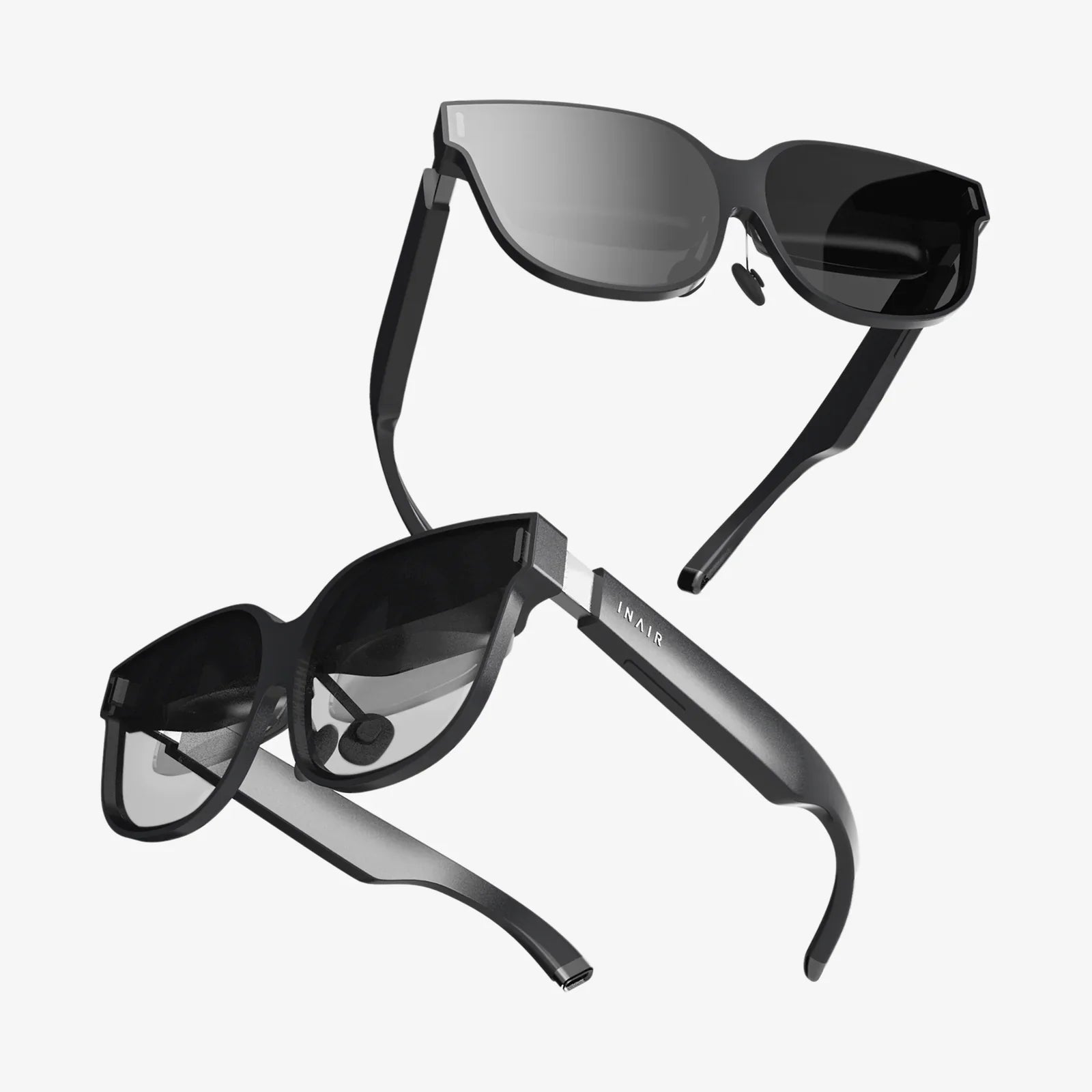
The evolution of AR will not stop at the smartphone screen. The ultimate destination for this technology is a move towards more lightweight, socially acceptable, and always-available form factors like smart glasses and eventually contact lenses. These devices aim to make the technology truly pervasive and invisible, removing the barrier of holding up a phone.
We are moving towards a world of the AR cloud—a persistent, shared digital copy of the real world that multiple users can interact with simultaneously. This will enable experiences where a note left on a virtual bulletin board in a park remains for others to see days later, or where a collaborative design session can take place around a holographic model visible to team members across the globe.
Furthermore, the convergence of AR with other transformative technologies like Artificial Intelligence (AI) and the Internet of Things (IoT) will create a powerful symbiotic relationship. AI will make AR smarter and more context-aware, while AR will provide a revolutionary visual interface for interacting with the vast network of connected IoT devices in our smart homes and cities.
The trajectory is clear: the boundary between the digital and the physical is dissolving. Our mobile devices have been the catalyst, the first widespread portal into this augmented age. They have democratized a technology that was once confined to research labs and military applications, placing it into the hands of billions. This is just the beginning of a fundamental shift in how we compute, communicate, and comprehend the world around us. The screen is fading away, and the world itself is becoming the interface. The revolution isn't coming; it's already here, waiting for you to look up and see it.
Share:
New AI Glasses With Display: The Invisible Computer Revolutionizing Your World
Holographic Display Market Trends: A Glimpse into the Future of Visual Technology