


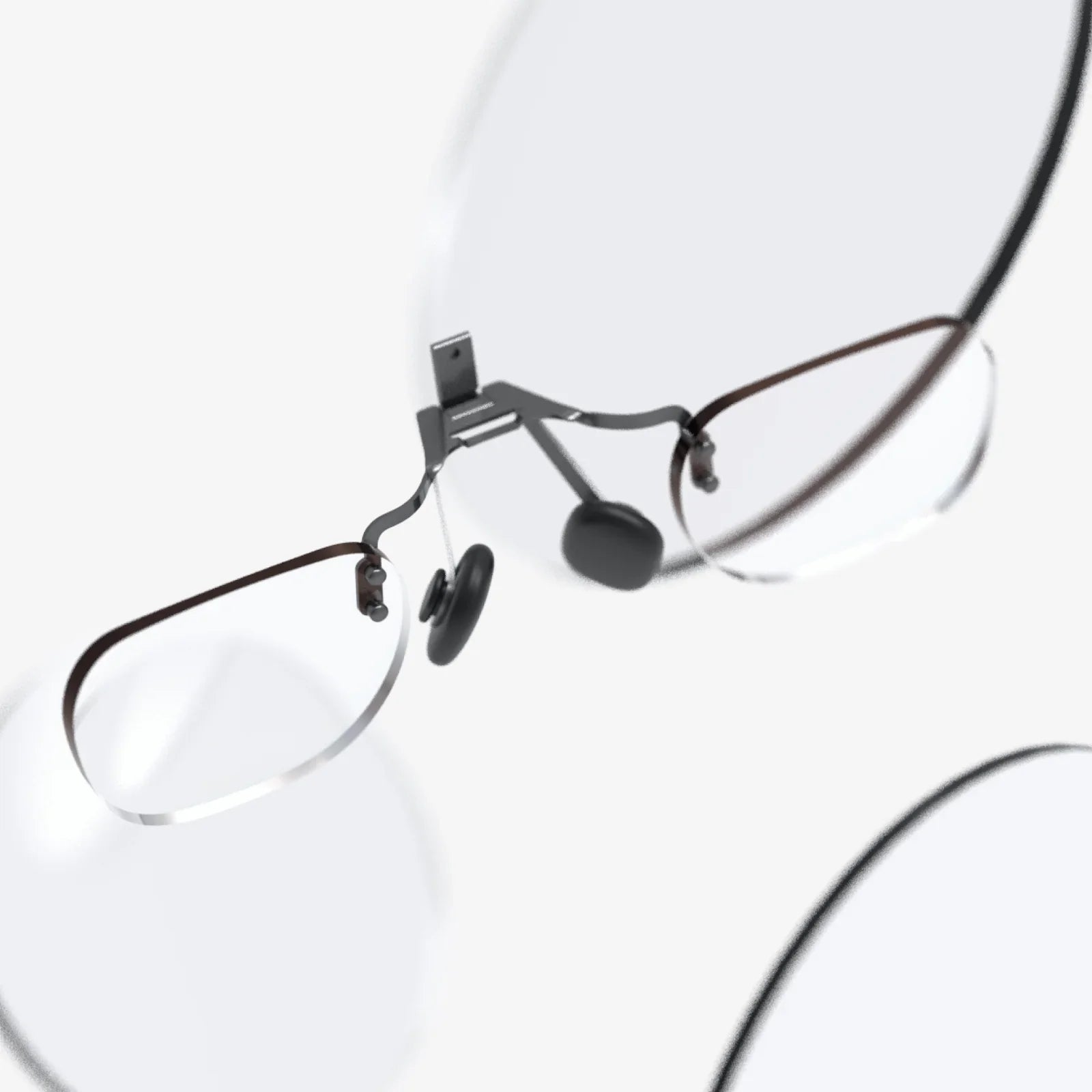
Imagine a world where information doesn’t live on a screen in your hand, but floats effortlessly in your field of vision, accessible with a glance and a whisper. A world where directions are painted onto the sidewalk in front of you, where a foreign language is instantly translated and subtitled onto the speaker’s face, and where the name of that elusive constellation is simply written across the night sky. This is the future being unlocked today by the advent of new AI glasses with display technology, a seismic shift in personal computing that promises to make the digital world an intuitive, context-aware layer atop our physical reality.
Beyond Science Fiction: From Concept to Reality
The concept of augmented reality (AR) eyewear has been a staple of futuristic visions for decades, immortalized in popular culture. However, for years, the technology remained clunky, expensive, and limited to niche industrial or enterprise applications. Early iterations were often hampered by a fundamental trade-off: they were either powerful with a limited field of view and short battery life, or they were stylish but functionally simplistic, offering little more than notifications and basic audio features.
The current generation represents a quantum leap forward. The convergence of several critical technological advancements has finally made truly consumer-friendly AI glasses with integrated displays not just possible, but imminent. These advancements include:
- Micro-OLED and Waveguide Displays: The development of incredibly small, high-resolution micro-OLED panels, coupled with advanced optical waveguides, allows digital images to be projected directly onto the lenses. This creates the illusion of a floating screen that is both transparent and bright enough to be seen in various lighting conditions, all without obstructing the user’s natural view.
- On-Device AI Processing: The integration of powerful, yet incredibly efficient, neural processing units (NPUs) means these devices no longer need to be perpetually tethered to a smartphone for complex computations. This enables real-time AI analysis—from object recognition to live translation—directly on the glasses, drastically reducing latency and preserving battery life.
- Spatial Audio and Advanced Voice Interaction: Multi-microphone arrays with advanced noise cancellation allow for crystal-clear voice commands and calls, while tiny, directional speakers beam audio directly into the user’s ears without broadcasting it to everyone nearby, creating a private auditory experience.
- Slimmer, Lighter Form Factors: Innovations in materials science and miniaturization have allowed manufacturers to pack all this technology into a form factor that increasingly resembles standard eyeglasses, moving away from the bulky, robotic look of previous prototypes.
How They Work: The Magic Behind the Lenses
At their core, these devices are a symphony of sensors and silicon. A typical pair is equipped with a suite of outward-facing cameras and sensors that continuously scan the environment. This visual data is fed instantly to the on-board AI engine, which acts as the brain of the system.
This AI is not a simple assistant; it is a contextual genius. It can identify objects, people, text, and environments. It understands spatial relationships, mapping the room you’re in to place digital objects persistently on a table or a wall. When you look at a menu, the AI can recognize it as text, translate it, and project the translation over the original words. When you’re following a recipe, it can recognize each ingredient you pick up and display the next step without you ever touching a screen with flour-covered hands.
The display technology itself is the true magic trick. Using principles of light projection and reflection through nano-etched glass waveguides, these systems paint information onto your retina. The result is a bright, sharp image that appears to exist in the world at a distance of several feet, all while remaining completely transparent when not in use. This seamless integration of the digital and physical is what sets this technology apart from any that has come before it.
A Universe of Use Cases: More Than Just Notifications
The potential applications for this technology are as vast as human activity itself. While receiving messages and notifications is a basic function, the true power lies in context-aware augmentation.
- Navigation Reimagined: Forget looking down at a phone map. With AI glasses, giant, friendly arrows can appear on the road itself, guiding you turn-by-turn. Points of interest can be highlighted in your surroundings, and public transport schedules can be displayed in real-time at the bus stop.
- Revolutionizing Learning and Memory: Imagine a mechanic seeing a schematic overlaid on the engine they are repairing, or a medical student observing anatomical labels on a training model. For everyone else, it’s the end of forgetting names at a networking event, as the AI can discreetly display the name and last conversation topic of the person walking toward you.
- The Ultimate Travel Companion: These glasses are the fabled Babel Fish made real. They can translate street signs, menus, and conversations in real-time, breaking down language barriers like never before. They can also act as a personal tour guide, identifying landmarks and providing historical context as you gaze upon them.
- Accessibility and Empowerment: This technology holds profound promise for accessibility. For the hard of hearing, conversations could be captioned in real-time. For those with low vision, the world could be enhanced with higher contrast and object recognition, helping to identify obstacles or read labels.
- Professional and Creative Work: Architects could walk clients through digital models of buildings on empty lots. Designers could manipulate 3D models with hand gestures. Remote collaborators could appear as holograms in the room, able to point to and interact with physical objects.
The Inevitable Challenges: Privacy, Social Acceptance, and the Road Ahead
No transformative technology arrives without its set of complex challenges. The most significant hurdle for AI glasses with displays is the question of privacy. A device that is always on, always seeing, and always listening is a legitimate concern. The prospect of a society where people can record video or look up personal information about strangers discreetly raises serious ethical and legal questions. Manufacturers will need to implement clear and robust privacy controls—physical shutters for cameras, obvious recording indicators, and transparent data policies—to gain public trust.
Furthermore, social acceptance, or the “glasshole” stigma, remains a barrier. People will need to feel comfortable that the person wearing glasses across from them on the subway isn’t recording them. Norms around usage in social settings, meetings, and public spaces will need to be established organically over time.
Finally, there are the technical challenges of perfecting the technology: achieving all-day battery life, ensuring seamless connectivity, and creating a digital ecosystem of apps and services that truly leverage the platform’s unique capabilities, moving beyond simple ports of smartphone applications.
A New Lens on Life
The development of new AI glasses with integrated displays is more than just another product launch; it is a fundamental reimagining of our relationship with technology. It represents a move away from the immersive, isolating rectangles of glass we carry in our pockets and toward a more integrated, ambient, and human-centric form of computing. It’s about enhancing our perception of the world, not replacing it. This technology promises to make us more present, more knowledgeable, and more connected to the reality around us, all while unlocking a layer of digital magic we once only dreamed of. The invisible computer is finally here, and it’s ready to change everything you see.
We stand at the precipice of a new era, one where the line between the digital and the physical will blur into irrelevance. The next time you put on a pair of glasses, you might not just be correcting your vision—you might be upgrading your entire reality, with a world of information waiting just behind your eyes, ready to be discovered with a simple look.
Share:
Best New Wearable Tech: Beyond the Wrist, A Revolution in Personal Data
AR Mobiles & Technology: The Invisible Revolution Reshaping Our Digital Lives