


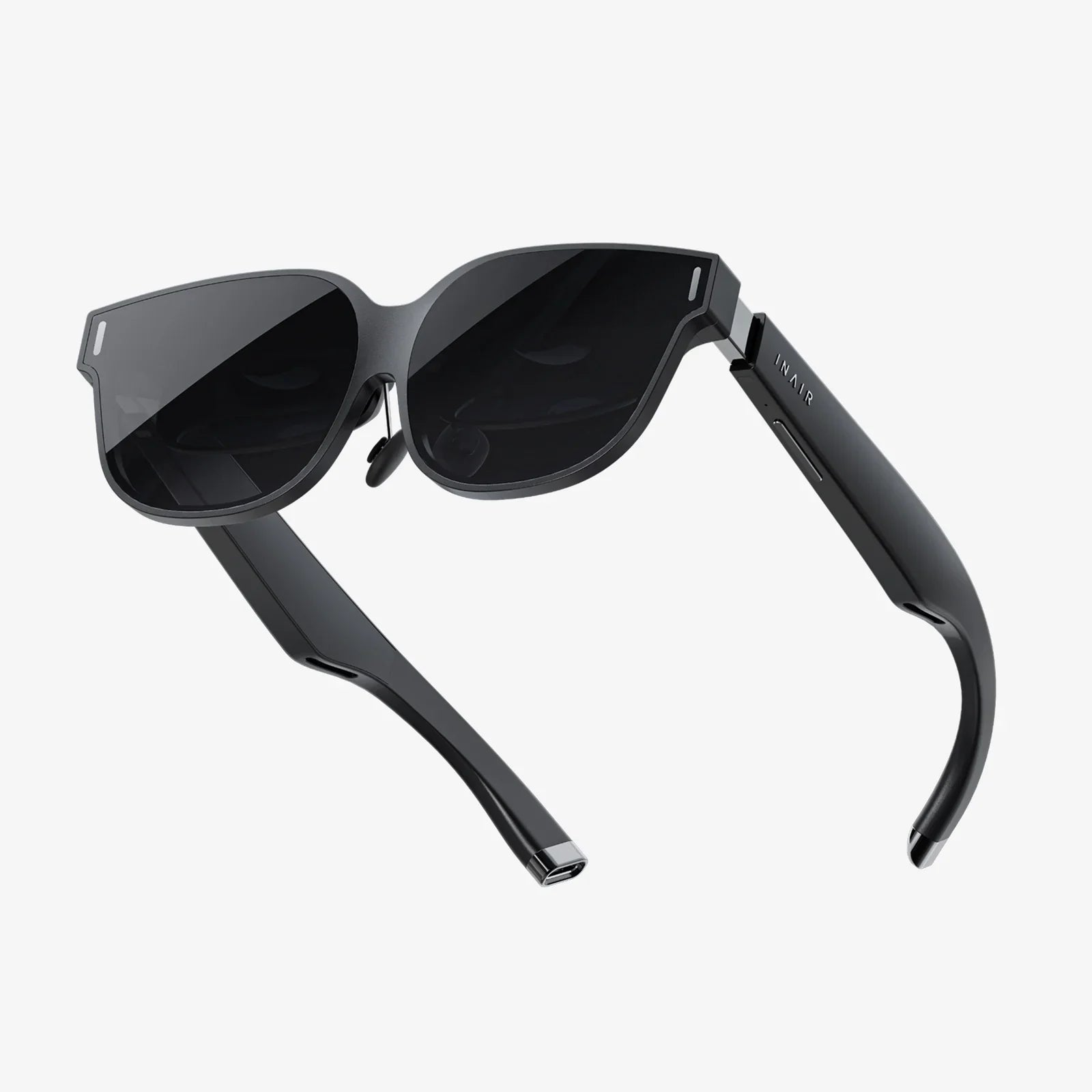
Imagine a world where digital information doesn’t just live on a screen but is seamlessly woven into the fabric of your reality. Where helpful holographic guides appear to assist with complex tasks, historical figures materialize in your living room to tell their stories, and the line between the physical and digital worlds becomes beautifully, functionally blurred. This is the incredible promise held within the sleek, sophisticated frames of the modern AR MR headset, a device poised to redefine our relationship with technology and with each other. It’s not just a piece of hardware; it’s a portal to a new way of seeing, learning, and connecting.
Demystifying the Spectrum: From AR to VR and the MR Sweet Spot
To truly understand the power of an AR MR headset, we must first navigate the often-conflated terms that describe this new frontier of experience.
Augmented Reality (AR) overlays digital content—images, text, 3D models—onto the user’s view of the real world. The primary environment remains the physical one, enhanced with a digital layer. Think of smartphone filters that place virtual sunglasses on your face or navigation apps that project directions onto a live video feed of the street. The key characteristic of AR is that it augments your reality without occluding it.
Virtual Reality (VR), by contrast, is an entirely immersive experience. A VR headset blocks out the physical world entirely, replacing it with a computer-generated simulation. Users are transported to fully digital environments, whether that’s a game world, a virtual meeting space, or a 360-degree video. The experience is closed off from immediate surroundings.
This brings us to the pivotal concept: Mixed Reality (MR). MR is not merely a midpoint on the spectrum between AR and VR; it represents a significant leap in capability and interaction. An MR experience allows digital and physical objects to coexist and interact in real-time. A virtual character can hide behind your real sofa. A digital tennis ball can bounce off your actual wall. This requires a sophisticated understanding of the physical environment—its geometry, lighting, and surfaces—which is why advanced sensors and powerful processing are hallmarks of a true MR headset.
Therefore, an AR MR headset is a device capable of a range of experiences, from simple AR overlays to complex, interactive MR scenarios where the virtual and real are inextricably linked. It is the ultimate fusion device, offering the full spectrum of mediated reality.
The Technological Marvels Inside Your View
The magic of an AR MR headset is made possible by a symphony of cutting-edge technologies working in perfect harmony. Peering inside reveals a feat of modern engineering.
Display Systems: Painting Light onto the World
How do you make a hologram appear solid in your living room? The answer lies in advanced display technology. Most high-end headsets use a combination of micro-OLED displays and complex optical systems involving waveguides and holographic lenses. These systems project light directly into the user’s eyes, carefully matching the focal depth of the digital object to its real-world placement. This solves a critical challenge known as the vergence-accommodation conflict, where your eyes struggle to focus on a virtual object that appears to be at a different distance than the screen displaying it. Modern solutions create a convincing sense of depth and presence, making digital content feel truly part of the world.
Sensing the World: The Digital Nervous System
For a headset to understand and interact with your environment, it needs a digital nervous system. This is achieved through a suite of sensors:
- Cameras: Multiple high-resolution cameras track the user’s hand movements with incredible precision, enabling natural gesture controls. Others are dedicated to capturing the environment in full color for video pass-through or for creating a real-time video feed of the user for social connectivity.
- Depth Sensors: LiDAR (Light Detection and Ranging) scanners or similar time-of-flight sensors fire out invisible beams of light to measure the exact distance to every surface in a room. This instantly creates a detailed 3D mesh map of the space, allowing virtual objects to collide with real tables or roll across the floor realistically.
- Inertial Measurement Units (IMUs): These accelerometers and gyroscopes track the precise movement and rotation of the headset itself, ensuring the digital world stays locked in place even as you move your head.
Processing Power: The Brain of the Operation
All this sensor data must be processed instantaneously. This requires immense computational power for tasks like simultaneous localization and mapping (SLAM), which builds and updates the map of the environment while tracking the headset's location within it, and for rendering high-fidelity 3D graphics. This processing can happen on-board the device using custom-built chipsets optimized for spatial computing or can be offloaded to a connected computing unit, each approach offering a trade-off between mobility and raw power.
Transforming Industries: The Professional Powerhouse
While consumer applications are thrilling, the most immediate and profound impact of AR MR headsets is being felt across numerous professional sectors, revolutionizing workflows and unlocking new possibilities.
Design and Manufacturing
Engineers and designers are using headsets to visualize and interact with 3D prototypes at full scale before a single physical part is manufactured. They can walk around a virtual engine, inspect the internals of a complex assembly, or see how a new piece of furniture will look in a client’s home. This accelerates design iteration, reduces costly physical prototyping, and improves collaboration, as teams in different locations can meet inside the same holographic model.
Healthcare and Medicine
The applications in medicine are nothing short of revolutionary. Surgeons can use headsets to overlay critical patient data, like MRI scans or ultrasound imagery, directly onto their field of view during procedures, improving precision and safety. Medical students can practice complex surgeries on holographic patients, and therapists can use immersive environments to treat phobias or aid in physical rehabilitation. The technology is becoming a powerful tool for both training and treatment.
Remote Assistance and Field Service
A field technician facing a complex repair can don a headset and share their live view with an expert thousands of miles away. The remote expert can then annotate the technician’s real-world view with arrows, diagrams, and instructions, effectively guiding their hands. This dramatically reduces downtime, minimizes travel costs for specialists, and ensures problems are solved correctly the first time.
Education and Training
Imagine learning about ancient Rome by walking through a holographic recreation of the Forum, or understanding human anatomy by exploring a life-sized, interactive hologram of the human heart. AR MR headsets enable experiential learning, transforming abstract concepts into tangible, memorable experiences. From corporate training simulations to immersive historical lessons, this technology has the potential to fundamentally reshape education.
The Social and Ethical Frontier: A New Reality Demands New Rules
As with any transformative technology, the rise of always-on, environment-aware headsets brings a host of social and ethical questions that society must grapple with.
Privacy in a Mapped World
These devices are, by their very nature, data collection machines. They continuously scan and map private spaces—our homes, offices, and beyond. Who owns this spatial data? How is it stored, secured, and used? The potential for misuse is significant, necessitating robust privacy frameworks, transparent data policies, and perhaps even on-device processing that ensures sensitive environmental data never leaves the user’s control.
The Digital Divide and Accessibility
There is a genuine risk that the cost of advanced headsets and the powerful computing required could create a new “reality divide,” where only certain socioeconomic groups have access to the enhanced productivity and social experiences they offer. Furthermore, developers must prioritize inclusive design to ensure these new interfaces are accessible to people with a wide range of physical abilities and neurodiversities.
Reality Filtration and Mental Health
If we can layer any digital reality over our own, who gets to control that layer? The ability to filter out unwanted advertisements or unpleasant elements of the real world could be empowering, but it also raises concerns about further societal fragmentation and echo chambers. Over-reliance on idealized digital overlays could also impact our mental health and connection to the un-augmented world. Establishing healthy usage norms will be a critical challenge.
Gazing into the Crystal Ball: The Future of Seeing
The current generation of headsets, while impressive, is merely the first step on a long evolutionary path. The future promises devices that are lighter, more powerful, and more socially integrated.
We are moving toward form factors that resemble everyday eyeglasses, offering all-day comfort and usability. Advancements in battery technology, photonics, and AI will be key to achieving this goal. We can also expect a flourishing ecosystem of spatial applications that we haven’t even conceived of yet, much like the smartphone app revolution that followed the iPhone.
Ultimately, the trajectory points toward a world where the AR MR headset evolves from a separate device we put on to a constant, ambient companion—a fundamental part of how we perceive and interact with information. It could become the successor to the smartphone, the personal computer, and the television, merging all these functions into a context-aware interface that is always available, yet never obtrusive.
The journey into this blended world is already underway, and it’s a journey that will reshape everything from how we work and learn to how we socialize and understand reality itself. The humble screen is beginning to fade, and in its place, a new, richer, and more immersive layer of existence is waiting to be explored. The only question that remains is not if you will step through, but when.
Share:
Can You Take a VR Headset on an Airplane? The Ultimate Traveler's Guide
Best PC Only VR Headset: The Ultimate Guide to High-Fidelity Immersion