


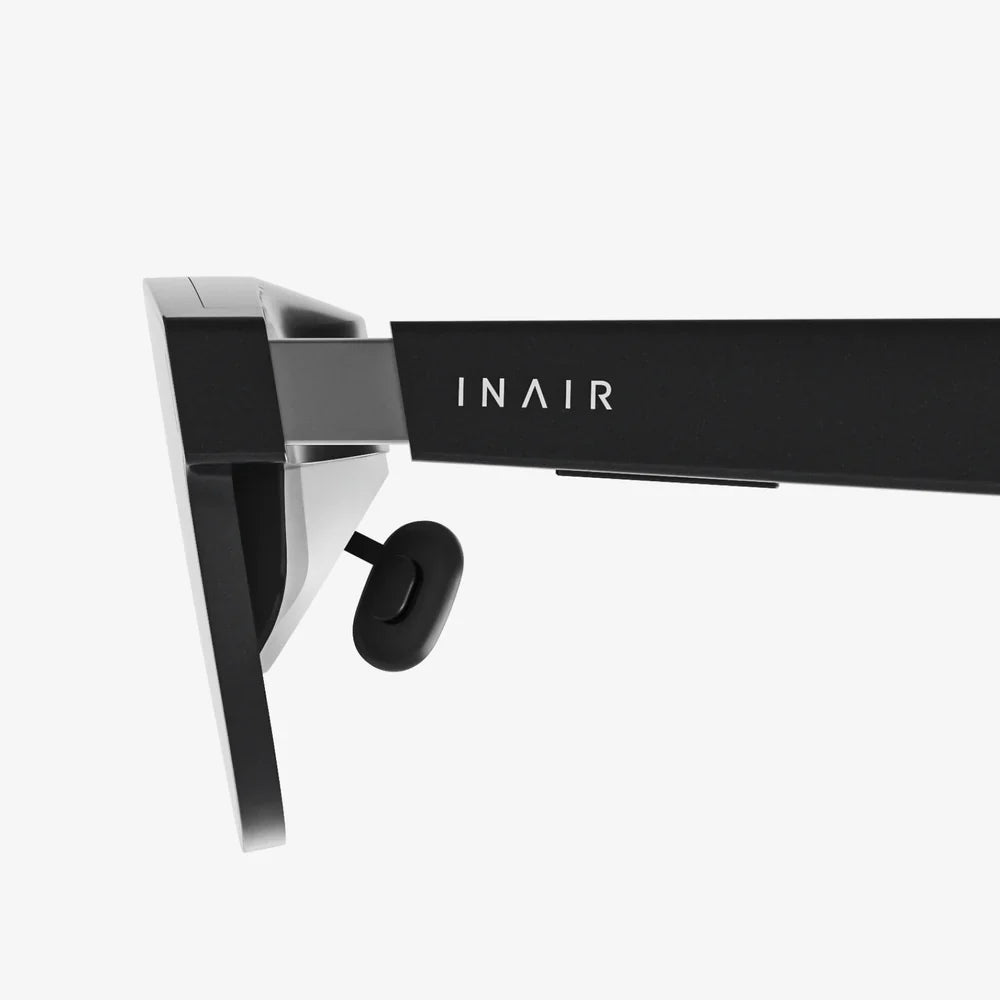
Imagine a world where your physical surroundings are not a boundary but a canvas. Where information doesn’t live on a screen in your hand but is woven seamlessly into the fabric of your reality. Where a historical monument can spring to life before your eyes, a complex engine schematic can hover over a workbench, and a colleague from across the globe can sit on your sofa as a photorealistic hologram. This is the promise held within the powerful, often conflated, but distinct realms of Augmented Reality (AR) and Mixed Reality (MR)—technologies that are not just evolving but are rapidly converging to redefine the very nature of human-computer interaction.
Demystifying the Spectrum: From Augmentation to Immersion
To understand the convergence, we must first distinguish between the two. Think of them not as separate boxes but as points on a continuous spectrum known as the Reality-Virtuality Continuum. On one end, we have our unadulterated physical reality. On the other, a completely synthetic, virtual reality. AR and MR occupy the crucial middle ground.
Augmented Reality (AR) is the simpler of the two concepts. It overlays digital information—be it text, images, or simple 3D models—onto the user’s view of the real world. The key principle is that the digital elements simply coexist with reality; they do not interact with it in a meaningful spatial way. A classic example is the popular mobile game that placed digital creatures in parks and streets, viewable through a smartphone camera. The creatures were pinned to a location, but they didn’t understand the environment. They couldn't hide behind a real tree or sit on a real bench. The digital and the physical remain separate layers.
Mixed Reality (MR) is the more advanced evolution. It doesn’t just overlay digital content; it anchors it to the physical world, allowing for genuine interaction. MR systems use advanced sensors, cameras, and spatial mapping to understand the geometry of their environment—the walls, floors, tables, and chairs. This allows digital objects to behave like physical ones: a virtual character can jump off a real table and run down a real hallway. A virtual television can be placed on a real wall and stay there, even if you leave the room and come back. MR creates a persistent blend where the virtual and real worlds coexist and influence each other.
The Engine Room: The Technologies Powering The Convergence
The blurring line between AR and MR is being drawn by breathtaking advancements in several key technological domains. These are the unsung heroes making the magic possible.
Spatial Mapping and Scene Understanding
This is the foundational technology for MR. Using technologies like SLAM (Simultaneous Localization and Mapping), depth-sensing cameras, and LiDAR scanners, devices can scan a room and create a precise 3D mesh in real-time. This digital twin of the environment allows the system to understand surfaces, occlusions, and physics, enabling digital objects to respect the real world. This is what allows a virtual ball to bounce off your real couch.
Advanced Display Systems
How we see this merged reality is critical. Current AR often relies on smartphone screens or see-through glasses that project images onto lenses. True MR, however, is pushing towards more sophisticated solutions like holographic waveguides and light-field technology. These aim to project light rays that perfectly mimic how light behaves in the real world, allowing digital holograms to blend naturally with physical objects at various focal depths, reducing eye strain and increasing realism.
AI and Machine Learning
Artificial Intelligence is the brain that makes sense of the spatial data. Machine learning algorithms can classify objects detected by the cameras—identifying a chair versus a table, a wall versus a window. This allows for more intelligent interactions. An MR system powered by AI could not only place a virtual lamp on your side table but also understand that the table is a surface for placing objects and that the lamp should cast a realistic shadow.
Connectivity and Edge Computing
Processing the immense amount of data required for high-fidelity MR is incredibly demanding. The advent of high-speed, low-latency 5G networks and powerful edge computing servers means that some of this heavy processing can be offloaded from the wearable device itself. This allows for smaller, lighter, more comfortable headsets without sacrificing computational power, as complex rendering and AI tasks are handled remotely and streamed to the device almost instantaneously.
A World Transformed: The Practical Applications of Converged AR/MR
The theoretical potential of this technology is vast, but its practical applications are already taking shape across industries, promising to revolutionize how we work and live.
Revolutionizing Enterprise and Manufacturing
This is where AR/MR is having the most immediate and profound impact. Technicians performing complex repairs on industrial equipment can have step-by-step instructions and animated diagrams overlaid directly onto the machinery, highlighting exactly which bolt to turn next. Designers and engineers can collaborate on 3D holographic prototypes at life-size scale, making changes in real-time without the cost of physical models. Architects can walk clients through a full-scale holographic rendering of a building before the foundation is even poured.
Redefining Healthcare and Medicine
Surgeons can use MR to visualize a patient’s internal anatomy, such as CT or MRI scans, projected directly onto the patient’s body during a procedure, effectively giving them X-ray vision. Medical students can practice complex procedures on detailed holographic patients, accelerating learning and improving outcomes. Therapists are using AR to help patients with phobias or PTSD through controlled exposure therapy in safe, simulated environments.
Transforming Education and Training
Imagine learning about ancient Rome by walking through a digitally reconstructed Forum, or understanding astronomy by having the solar system spin in the middle of your classroom. AR/MR makes experiential, immersive learning a reality. Trainees for high-risk jobs, from pilots to electricians, can practice skills in realistic simulations where mistakes have no real-world consequences, building muscle memory and confidence.
The Future of Social Connection and Remote Work
The concept of the "metaverse" is deeply tied to AR/MR. It envisions a future where our digital and physical social lives merge. Instead of a grid of faces on a video call, remote work could involve sitting around a virtual conference table with holographic representations of your colleagues, all able to interact with shared 3D data. You could watch a concert with friends from across the country, all seeing the same holographic performance in your own living rooms.
Navigating the New Frontier: Challenges and Ethical Considerations
This powerful convergence is not without its significant hurdles and profound questions. The path to an AR/MR-saturated world is fraught with technical, social, and ethical challenges.
Technical Hurdles: For widespread adoption, devices need to become smaller, lighter, more powerful, and have all-day battery life. They must achieve visual fidelity so high that the digital is indistinguishable from the real—a challenge known as "visual coherence." Solving these problems requires breakthroughs in materials science, optics, and battery technology.
The Privacy Paradox: An AR/MR device is, by its nature, a sensor-rich camera constantly capturing its environment. This raises enormous privacy concerns. Who has access to this continuous video feed of your life? How is that data stored and used? The potential for surveillance, both corporate and governmental, is unprecedented. Robust ethical frameworks and regulations will be essential to prevent a dystopian future of perpetual monitoring.
The Digital Divide 2.0: If these technologies become central to how we work, learn, and access information, a new form of inequality could emerge between those who can afford advanced AR/MR systems and those who cannot. This could exacerbate existing social and economic divides.
Reality Ownership and Digital Vandalism: If we all share a common augmented layer over the world, who controls what we see? Could individuals or corporations pollute our reality with unwanted advertisements or graffiti? Establishing standards for a shared, persistent AR layer will be a complex societal challenge, balancing free expression with the integrity of our perceived reality.
The Human Dimension: Adapting to a New Layer of Existence
Beyond the hardware and software lies the most important component: us. How will perpetual augmentation affect human psychology, social interaction, and our connection to the unmediated world? There is a risk of sensory overload, where the constant stream of digital information becomes overwhelming. We might also see a further diminishment of attention spans and a struggle to be present in the moment.
Conversely, these technologies could enhance our humanity. They could offload cognitive burdens, allowing us to be more creative and focus on higher-level tasks. They could connect us with information and with each other in more intuitive and meaningful ways. The ultimate success of AR and MR will not be measured by their technical prowess alone, but by their ability to augment human potential without diminishing the human experience.
The boundary between the atoms of our world and the bits of the digital one is becoming porous. AR and MR are the tools crafting this new, hybrid existence—a world where our environment is alive with context, knowledge, and connection, waiting for us to simply look up and see it.
Share:
VR Headset Specs: The Ultimate Guide to Understanding Virtual Reality Hardware
Virtual and Augmented Reality Solutions Are Reshaping Our World