


Imagine a world where a surgeon in one country can guide a complex procedure in another, their hands moving as digital avatars superimposed onto the real-world operating theater. Envision an engineer, standing in an empty field, watching a full-scale 3D model of a new building rise before their eyes, able to walk through its halls before a single brick is laid. Picture a history student, not just reading about ancient Rome, but strolling through its bustling forums, hearing the echoes of its citizens. This is not a distant science fiction fantasy; it is the rapidly emerging reality being built today by the relentless advancement of virtual and augmented reality solutions. These technologies are breaking free from their entertainment origins to fundamentally reshape the fabric of our professional, educational, and social lives, promising a convergence of the physical and digital that will redefine human experience.
The Foundational Divide: Understanding VR and AR
While often grouped together, Virtual Reality (VR) and Augmented Reality (AR) represent two distinct approaches to altering human perception. Understanding this distinction is crucial to appreciating their unique applications and potential.
Virtual Reality is an immersive, all-encompassing technology. It functions by completely replacing the user's real-world environment with a simulated one. Through a head-mounted display that blocks out the external world and tracks head movements, the user is transported into a computer-generated reality. This reality can be a photorealistic recreation of a real place, a fantastical game world, or an abstract data visualization. The key principle is immersion—the feeling of "being there," known as presence. High-end systems enhance this feeling with spatial audio and haptic feedback controllers that allow users to interact with and manipulate the virtual world. VR is, by its nature, an isolating experience, designed to focus the user's entire sensory input on the digital realm.
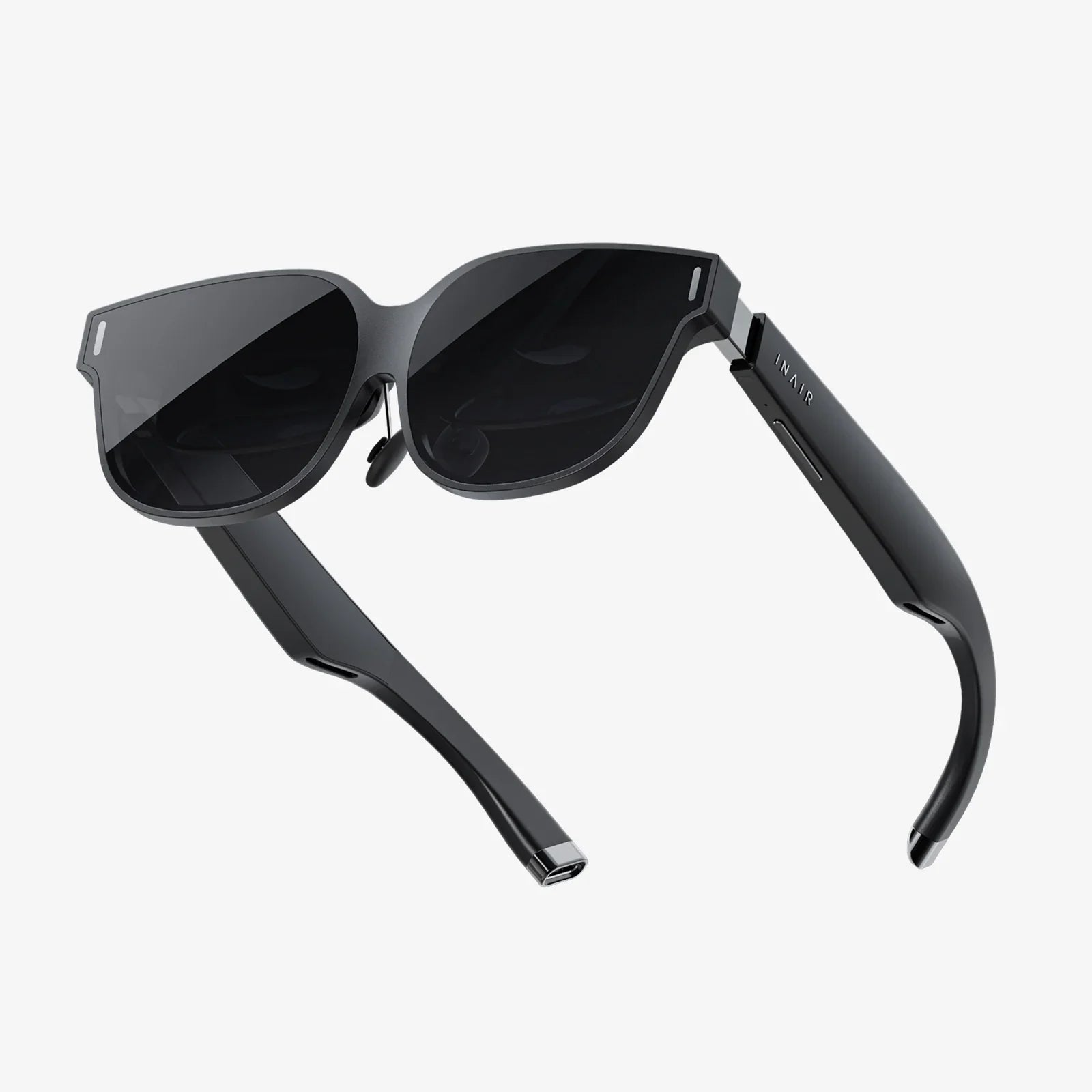
Augmented Reality, by contrast, is an additive technology. It superimposes digital information—images, text, 3D models, animations—onto the user's view of the real world. Instead of creating a new reality, AR enhances the existing one. This is most commonly experienced today through smartphone cameras, which can overlay navigation arrows onto a live street view or place a digital sofa in your living room. More advanced AR is delivered through transparent glasses or lenses that allow the user to see their surroundings naturally while digital content is projected onto them. The core principle of AR is contextualization—providing relevant data exactly when and where it is needed. It is inherently a technology of connection, linking the digital and physical in real-time.
The Engine Room: Core Technologies Powering the Revolution
The magic of VR and AR is powered by a sophisticated stack of hardware and software technologies working in concert.
Hardware: The Gateways to New Realities
The most visible component is the headset, but its functionality relies on several integrated systems:
- Visual Displays: High-resolution, high-refresh-rate displays are critical for realism and to prevent motion sickness. VR uses two displays (one per eye) for stereoscopic 3D, while AR uses waveguides or micro-LED projectors to beam light onto transparent lenses.
- Tracking Systems: To make the virtual world feel solid, the system must track the user's head and, often, their hands. This is achieved through a combination of internal sensors (accelerometers, gyroscopes) and external cameras or lasers (outside-in tracking) or onboard cameras that map the environment (inside-out tracking).
- Processing Power: Rendering complex, interactive 3D environments in real-time requires immense computational power. This can be handled by a tethered connection to a powerful computer, a built-in mobile processor, or increasingly, standalone chipsets designed specifically for these tasks.
- Haptics and Input: Interaction is key. This ranges from simple controllers with rumble feedback to advanced gloves that simulate touch and pressure, and even full-body suits for complete tactile immersion.
Software: Building the Worlds
On the software side, game engines have become the unexpected workhorses. Their ability to render real-time 3D graphics makes them ideal for creating immersive experiences. Developers use software development kits (SDKs) to build applications that can leverage all the hardware's capabilities, from precise tracking to hand gesture recognition.
Transforming Industries: The Practical Applications
The true power of VR and AR is revealed not in their technical specs, but in their transformative impact across diverse sectors.
Revolutionizing Healthcare and Medicine
The healthcare industry is embracing immersive technology for its life-saving potential. VR is being used for surgical training, allowing medical students to practice complex procedures on virtual patients in a risk-free environment, drastically reducing errors in real operations. It is also a powerful tool for pain management and physical therapy. Immersive environments can distract burn victims during painful wound care, and guided VR exercises can make physical rehabilitation more engaging for patients. For mental health, VR exposure therapy is helping patients safely confront and manage phobias, anxiety, and PTSD. AR, meanwhile, is entering the operating room, overlaying critical patient data like ultrasound scans or vital signs directly into the surgeon's field of view during a procedure, allowing them to keep their focus on the patient.
Redefining Manufacturing and Design
In industrial settings, VR and AR are streamlining processes and enhancing safety. Engineers and designers use VR to create and collaborate on digital prototypes of cars, aircraft, and machinery. They can explore every component at a 1:1 scale, identifying design flaws long before physical manufacturing begins, saving millions in development costs. On the factory floor, AR is a game-changer for assembly, maintenance, and repair. Technicians wearing AR glasses can see digital work instructions overlaid directly onto the equipment they are servicing. An arrow can point to the exact bolt to tighten, a tutorial video can play next to a complex component, and a remote expert can see what the technician sees and annotate their view to guide them through a repair, reducing downtime and errors dramatically.
Elevating Education and Corporate Training
Immersive learning is proving to be far more effective than traditional methods. VR can transport students to the pyramids of Egypt, the surface of Mars, or inside the human bloodstream, creating unforgettable educational experiences that boost engagement and knowledge retention. For corporate training, VR simulations are used to train employees in high-stakes scenarios, from public speaking and leadership to handling dangerous machinery or emergency evacuations. Trainees can practice and fail safely in a realistic simulation, building muscle memory and confidence without any real-world risk.
Enhancing Retail and Remote Collaboration
The retail sector is leveraging AR to bridge the gap between online and in-store shopping. Customers can use their smartphones to see how a new piece of furniture would look in their home, how a pair of glasses fits their face, or how a shade of paint appears on their wall. This "try before you buy" experience reduces purchase hesitation and product returns. For collaboration, VR and AR are creating the next evolution of video conferencing. Instead of looking at a grid of faces on a screen, remote teams can meet in a shared virtual boardroom, interact with 3D models together, or collaborate on a virtual whiteboard as if they were in the same physical space, fostering a stronger sense of connection and teamwork.
Navigating the Challenges: Obstacles on the Path to Adoption
Despite the immense promise, widespread adoption of VR and AR faces significant hurdles that must be overcome.
- Technical Limitations: Issues like motion sickness in VR, limited field of view, the need for higher resolution displays, and the challenge of achieving photorealistic graphics in real-time remain active areas of development. Battery life for wireless devices is also a constraint.
- Cost and Accessibility: High-end, enterprise-grade systems require a substantial investment in both hardware and software development, putting them out of reach for many smaller businesses and consumers.
- User Experience (UX) Design: Designing intuitive interfaces for 3D spaces is a new and complex discipline. Clunky menus and awkward controls can break immersion and frustrate users. Establishing universal design principles is critical.
- Social and Ethical Concerns: The potential for addiction to virtual worlds is a real concern. The collection of vast amounts of biometric and spatial data (e.g., mapping users' homes) raises serious privacy and security questions. Furthermore, as these realities become more persuasive, the potential for misuse in propaganda, misinformation, and creating deeply realistic but false experiences is a profound societal challenge that must be addressed proactively.
- The Digital Divide: There is a risk that these powerful tools could exacerbate existing inequalities, creating a gap between those who have access to immersive education and training and those who do not.
The Future Horizon: From Mixed Reality to the Metaverse
The trajectory of this technology points toward an even more integrated future. The lines between VR and AR are already blurring into a spectrum often referred to as Mixed Reality (MR) or Extended Reality (XR). MR headsets aim to seamlessly blend the real and virtual, allowing digital objects to interact with and be occluded by the physical world in a believable way.
Beyond this, the long-term vision for many in the tech industry is the metaverse—a persistent, shared, and interconnected universe of virtual spaces and experiences, accessible through various devices, including VR and AR. In this conception, the internet evolves from something we look at on a screen to something we are inside of. We would have digital avatars for work, socializing, learning, and entertainment, moving between experiences with continuity. While the full realization of this concept is likely years away, the foundational technologies being built today with VR and AR are the first steps toward this ambitious future. Advances in artificial intelligence, 5G/6G connectivity, and cloud computing will be essential to making this vision a smooth and responsive reality.
The journey of virtual and augmented reality is just beginning. We are moving from an era of novelty to one of utility, where these tools become as indispensable as the smartphone is today. They hold the potential to solve real-world problems, to connect us in new ways, and to expand the horizons of human creativity and understanding. The challenge ahead is not just to build more powerful headsets, but to guide this technology with careful consideration, ensuring it enhances our humanity rather than diminishes it, and that its benefits are accessible to all. The door to new realities is now open, and we are only starting to imagine what lies on the other side.
The next time you put on a headset or point your phone at the world around you, remember you're not just playing a game or trying on virtual clothes—you're test-driving the future. You're peering into a paradigm shift that will redefine how we work, learn, heal, and connect, making the once impossible an everyday tool and blurring the very line between the world we live in and the worlds we create. The revolution will not only be televised; it will be fully immersive.
Share:
AR MR The Blurring Line Between Our World and The Digital One
What Is Augmented Reality (AR) Technology - A Comprehensive Guide