


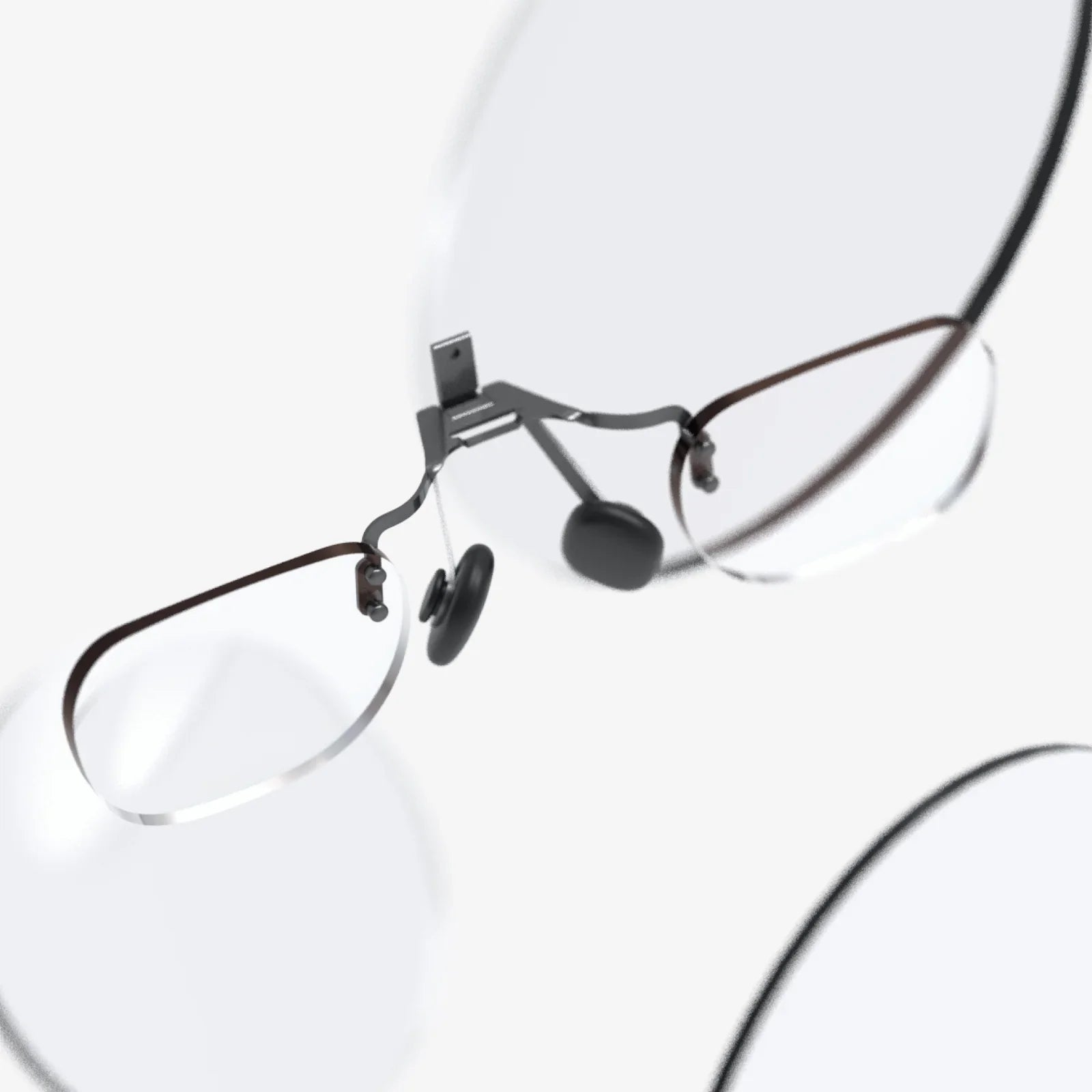
Imagine a world where complex machinery repairs themselves through digital overlays guiding a technician’s every move, where architects can walk clients through a building years before the foundation is poured, and where factory floors are optimized in real-time by visualizing data directly onto equipment. This is not a distant science fiction fantasy; it is the present and rapidly evolving future being built by AR production technology. This powerful convergence of the digital and physical is breaking down barriers between conception and creation, fundamentally reshaping how we design, build, maintain, and understand the industrial world around us.
The Core Mechanics: How AR Production Technology Works
At its heart, AR production technology is about seamlessly superimposing computer-generated information—be it 3D models, text, data streams, or animations—onto a user’s view of the real world. This requires a sophisticated stack of hardware and software working in perfect harmony. The process begins with sensors, including cameras, LiDAR, accelerometers, and gyroscopes, which constantly scan the environment. This sensor data is processed to understand the user’s position and orientation in space, a critical function known as tracking.
There are several primary methods of tracking. Marker-based tracking uses predefined visual cues, like a QR code, to anchor digital content. Markerless tracking, which is more common in industrial settings, relies on recognizing objects or features in the environment itself, such as a specific machine part. Simultaneous Localization and Mapping (SLAM) is a more advanced technique where the system builds a map of an unknown environment while simultaneously tracking the user's location within it, allowing for persistent digital content that stays locked in place.
Once the environment is understood, the rendering engine generates the appropriate digital content and aligns it with pinpoint accuracy onto the user’s display. This can be achieved through various devices: from ubiquitous smartphones and tablets, which act as a window into the augmented world, to more advanced head-mounted displays (HMDs). These range from sleek smart glasses, which offer a see-through display for a lightweight experience, to more immersive tethered units with greater processing power and a wider field of view. The ultimate goal is to make the digital elements so perfectly integrated that they are perceived as a natural part of the physical space.
From Blueprint to Build: Revolutionizing Design and Prototyping
The journey of any physical product begins with an idea, and AR production technology is profoundly accelerating the path from concept to tangible object. Traditional prototyping is a time-consuming and expensive process, often involving multiple iterations of physical models. AR disrupts this entirely by enabling virtual prototyping. Designers and engineers can now project life-size, interactive 3D models of their creations into the real world.
This allows for unprecedented design validation. An automotive engineer can project a full-scale engine model onto a physical chassis to check for fit and interference issues long before any metal is cut. An industrial designer can place a new piece of furniture into a client’s actual living room to assess its scale, style, and functionality. This immersive review process facilitates better collaboration; stakeholders from different disciplines can gather around a virtual model, make real-time annotations, and discuss changes in the context of the intended environment. This not only slashes prototyping costs and material waste but also dramatically shortens development cycles, fostering innovation and allowing for more iterative and user-centered design.
The Intelligent Factory Floor: Assembly, Logistics, and Quality Control
Perhaps the most impactful application of AR production technology is on the factory floor, where it is creating the concept of the ‘smart factory’ or ‘operator 4.0’. Complex assembly processes, which traditionally relied on voluminous paper manuals or stationary computer screens, are being transformed. AR smart glasses can now project digital work instructions directly into a technician’s field of view. These instructions can highlight the exact location for a part, show the precise torque sequence for fasteners with animated guides, and automatically confirm the completion of each step using integrated scanners. This reduces cognitive load, minimizes errors, and significantly shortens training times for new employees, as the expertise is built into the system itself.
In logistics and warehousing, AR is streamlining picking and packing operations. Workers wearing AR glasses can see the most efficient route through a warehouse, with digital arrows guiding them to the correct bin. The required item and quantity can be highlighted visually, drastically reducing search times and improving order accuracy. For quality control, inspectors can compare a physical product against its perfect digital twin. The AR system can overlay tolerances, highlight potential defects, and even take precise measurements using the device’s cameras, ensuring a level of consistency and quality that was previously difficult to achieve at scale.
Predictive Maintenance and Remote Expert Assistance
Downtime is the enemy of production. AR production technology is a powerful weapon in the fight against unplanned equipment failures. Through integration with IoT sensors and predictive analytics software, AR can visualize the health of machinery in real-time. A technician walking through a plant could see the temperature, pressure, and performance metrics of a pump overlaid directly on the device itself, with warnings highlighted in red if a parameter is trending toward a failure point.
When a problem does occur, the resolution is accelerated through remote expert assistance. Instead of flying a specialist to a remote site, an on-site worker equipped with AR glasses can share their live point-of-view with an expert located anywhere in the world. This remote expert can then draw digital annotations—arrows, circles, notes—directly into the on-site worker’s field of view to guide them through complex repair procedures. This ‘see-what-I-see’ collaboration empowers less experienced technicians to perform advanced repairs, reduces mean time to repair (MTTR), and captures the knowledge of retiring experts, preserving it within the organization’s digital framework.
Transforming Training and Skill Development
The skills gap in advanced manufacturing is a significant challenge. AR production technology offers a revolutionary solution for training and upskilling the workforce. Instead of learning on multi-million dollar equipment, trainees can practice on virtual replicas. They can disassemble and reassemble complex machinery, follow safety procedures, and troubleshoot faults—all within a risk-free, digital environment. This experiential learning is far more effective than reading manuals or watching videos, leading to better knowledge retention and increased confidence.
This technology also enables just-in-time learning. A worker faced with an unfamiliar task can pull up a guided AR tutorial on the spot, receiving contextual information exactly when and where it is needed. This transforms the workplace into a continuous learning environment, flattening the learning curve and ensuring that the entire workforce can operate at a higher level of competency and safety.
Navigating the Challenges: Implementation and the Human Factor
Despite its immense potential, the widespread adoption of AR production technology is not without hurdles. A significant challenge is the technological infrastructure. Robust, high-speed wireless connectivity is essential for cloud-based processing and real-time data streaming. The hardware itself must continue to evolve, becoming more lightweight, durable, and offering longer battery life to withstand demanding industrial shifts. Crucially, the user interface and experience must be intuitive; cumbersome or confusing systems will be rejected by the workforce.
Beyond the hardware, there are significant software integration challenges. For AR to deliver on its promise, it must be deeply integrated with existing enterprise systems: Product Lifecycle Management (PLM), Enterprise Resource Planning (ERP), Manufacturing Execution Systems (MES), and IoT platforms. This requires a clear strategy and often a cultural shift within organizations. There are also valid concerns around data security, as these devices capture vast amounts of visual and operational data from the factory floor. Furthermore, the human factor cannot be ignored; successful implementation requires change management, clear demonstrations of value, and training to ensure that employees see AR as a tool that augments their capabilities rather than one that seeks to replace them.
The Future is Overlaid: Next-Generation Applications
The evolution of AR production technology is accelerating toward even more transformative applications. The concept of the ‘Digital Twin’ is set to become fully interactive through AR. Instead of a digital model existing solely on a computer screen, it will be perfectly mapped onto its physical counterpart via AR, allowing for real-time simulation, monitoring, and control. Imagine adjusting a parameter on a virtual control panel overlaid on a machine and seeing the physical machine respond instantly, or running a simulation of a new production process in AR before deploying it live.
Advancements in AI will make AR systems truly context-aware. They will not only display information but also understand the task at hand, anticipate the user’s needs, and proactively offer the most relevant data and instructions. As 5G and subsequent networks become ubiquitous, they will enable the offloading of heavy processing to the cloud, allowing for thinner, more powerful AR devices. Furthermore, the development of more natural human-machine interfaces, like gesture control and eventually brain-computer interfaces, will make interacting with digital overlays as intuitive as interacting with the physical world itself.
The line between the digital and physical realms in industry is not just blurring; it is being deliberately and intelligently woven together. AR production technology is the loom, and it is creating a fabric of reality that is richer, more efficient, and more responsive than ever before. This is the foundation of the next industrial revolution, and it is already being built, one digital overlay at a time.
The potential of AR extends far beyond a single assembly line or training module; it represents a fundamental rewiring of our industrial DNA. This is not merely an incremental improvement but a paradigm shift that empowers human workers with superhuman perception and knowledge, creating a symbiotic relationship between human intuition and machine precision. The factories, construction sites, and design studios of tomorrow will be immersive data-rich environments where every action is informed, every process is optimized, and every mistake is foreseen and prevented. The future of production is not just automated; it is augmented, and it is arriving faster than we think.
Share:
Ways AR Technology Is Used: Transforming Industries and Redefining Reality
Audio Eyewear: The Invisible Revolution Blending Sound and Sight