


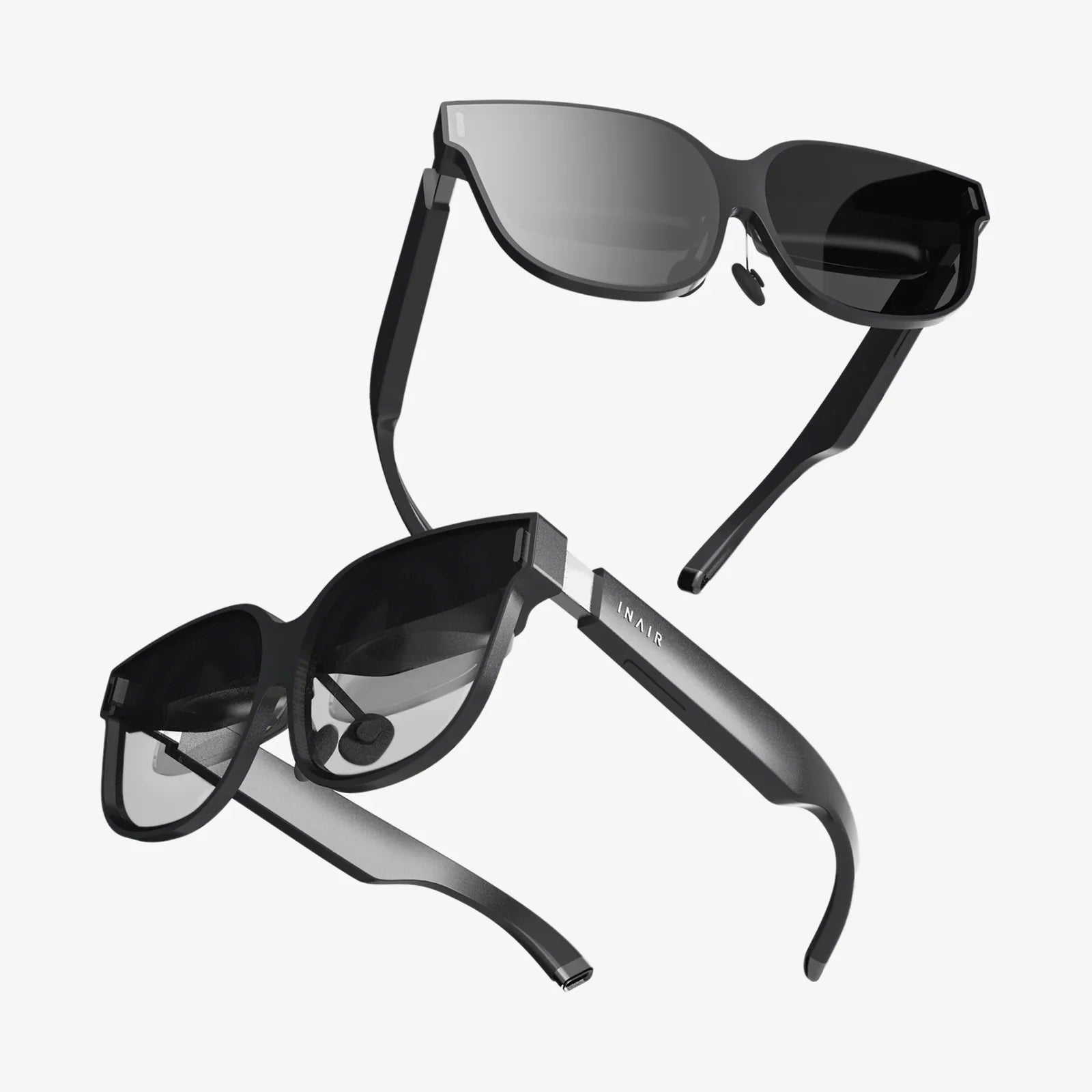
Imagine a world where digital information doesn't just live on your screen but is seamlessly woven into the fabric of your physical reality, enhancing everything you see, do, and learn. This is no longer the stuff of science fiction; it's the powerful promise of Augmented Reality (AR), a technology that is rapidly moving from novelty to necessity. While many first encountered AR through playful social media filters, its true potential lies in its profound and practical applications across a stunning array of industries. From surgeons performing life-saving procedures with X-ray vision to mechanics fixing complex engines with digital overlays, the ways AR technology is used are fundamentally transforming how we work, learn, shop, and interact with the world around us. This deep dive explores the multifaceted and revolutionary applications of AR, revealing how it is quietly reshaping our present and boldly constructing our future.
Revolutionizing Retail and the Shopping Experience
The retail sector has been one of the earliest and most enthusiastic adopters of AR, leveraging its power to bridge the gap between online browsing and in-store confidence. This technology directly addresses one of e-commerce's biggest hurdles: the inability to physically interact with a product before purchase.
Virtual Try-On and Visualization
One of the most popular ways AR technology is used is through virtual try-on applications. Customers can now see how furniture would look in their living room, accurately scaled to their space, before clicking "buy." They can "try on" glasses, makeup, and even clothing from the comfort of their homes, using their smartphone camera to project digital renderings onto their own reflection. This not only drastically reduces purchase anxiety and the likelihood of returns but also creates an engaging, interactive, and fun shopping experience that boosts customer satisfaction and brand loyalty.
In-Store Navigation and Product Information
Inside physical stores, AR is enhancing the brick-and-mortar experience. Smartphone apps can overlay navigational arrows onto the live video feed of a store, guiding customers directly to the aisle containing the item on their shopping list. By pointing their device at a product, shoppers can instantly pull up a wealth of additional information—customer reviews, detailed specifications, sourcing information, or even tutorial videos—transforming a simple product label into an interactive portal of knowledge and empowering more informed purchasing decisions.
Transforming Manufacturing, Maintenance, and Design
Perhaps the most impactful ways AR technology is used are found in industrial settings, where it is boosting efficiency, enhancing safety, and reducing costly errors.
Assembly, Maintenance, and Repair
Technicians wearing AR smart glasses can see digital work instructions and animated guidelines overlaid directly onto the physical machinery they are assembling or repairing. Instead of constantly glancing back and forth between a complex paper manual or a computer screen and the task at hand, the information is contextually presented in their field of view. This can highlight the specific part to be installed, show the exact torque setting for a bolt, or play a video demonstrating a complex procedure precisely where it's needed. This hands-free access to information drastically reduces errors, slashes training time for new employees, and improves overall workflow efficiency.
Design and Prototyping
In the design phase, engineers and architects are using AR to visualize and interact with 3D models at full scale. Instead of examining a new engine component on a computer monitor, they can project a life-size hologram of it onto a workbench, walk around it, and identify potential design flaws or assembly conflicts long before a physical prototype is ever built. This accelerates the design iteration process, saves immense resources on physical materials, and fosters better collaboration among design teams who can all interact with the same virtual model in a shared physical space.
Remote Expert Assistance
When a field technician encounters a problem they can't solve, instead of waiting days for a specialist to fly to the site, they can use AR for remote assistance. By wearing AR glasses equipped with a camera, they can stream their live point-of-view to an expert located anywhere in the world. The expert can then see exactly what the technician sees and can draw digital arrows, circles, or annotations directly into the technician's field of view, guiding them through the repair process step-by-step. This "see-what-I-see" capability minimizes equipment downtime, reduces travel costs, and leverages centralized expertise instantly and efficiently.
Advancing Healthcare and Medicine
The ways AR technology is used in medicine are nothing short of revolutionary, providing new tools for diagnosis, treatment, and medical training that were once unimaginable.
Enhanced Surgical Precision
Surgeons are beginning to use AR headsets to project critical information—such as MRI or CT scan data—directly onto their view of the patient during operations. This creates a kind of "X-ray vision," allowing them to see beneath the surface to precisely locate tumors, blood vessels, or nerves without making larger incisions. This enhanced visual guidance increases surgical accuracy, minimizes risks, and can lead to less invasive procedures and faster patient recovery times.
Medical Training and Education
Medical students are using AR to learn anatomy in profoundly immersive ways. Instead of relying solely on cadavers or textbooks, they can use AR applications to project detailed, interactive, and layered 3D models of the human body onto a table or even a fellow student. They can virtually "dissect" these models, isolate specific systems like the circulatory or nervous system, and gain a deeper, three-dimensional understanding of human anatomy that was previously very difficult to achieve.
Patient Education and Rehabilitation
AR is also improving doctor-patient communication. A physician can use an AR model to show a patient exactly what a procedure will entail or to explain a diagnosis, making complex medical information much easier to understand. In physical therapy and rehabilitation, AR games and exercises can motivate patients by turning repetitive movements into engaging activities, helping them adhere to their recovery programs and track their progress in real-time.
Reimagining Education and Training
Beyond medical schools, AR is transforming educational paradigms at all levels, moving learning from passive absorption to active exploration.
Interactive Learning
History students can walk through ancient Roman ruins rebuilt in AR right in their classroom. Biology students can watch a life-size heart pump in the middle of their desk. Chemistry students can combine virtual elements to see the reactions without any risk or mess. AR brings abstract concepts to life, creating immersive, interactive, and memorable learning experiences that cater to various learning styles and significantly improve knowledge retention.
Skill-Based and Vocational Training
From welding to electrical work, AR provides a safe and cost-effective training sandbox. Trainees can practice complex procedures on virtual equipment, receiving real-time feedback and guidance without the risk of injury or the cost of wasted materials. This allows them to gain proficiency and confidence before they ever touch real, potentially dangerous machinery.
Enhancing Navigation and Wayfinding
The ways AR technology is used are also guiding us literally, changing how we navigate both large-scale environments and complex indoor spaces.
Urban Navigation
AR navigation apps overlay directional arrows, street names, and points of interest directly onto the live camera view of a smartphone. Instead of looking at a abstract 2D map and then translating that to the real world, users simply follow the digital path superimposed on the street in front of them, making navigation incredibly intuitive and reducing the disorientation that can come with traditional GPS.
Indoor and Complex venue Navigation
This is particularly useful inside large, complex spaces like airports, shopping malls, university campuses, or subway stations. AR wayfinding can direct travelers to their correct gate, highlight the nearest restroom, or guide a visitor to a specific exhibit in a museum, transforming potentially stressful journeys into seamless experiences.
Creating New Frontiers in Entertainment and Live Events
The entertainment industry continues to be a fertile ground for AR innovation, creating shared and personal experiences that blur the line between audience and performer.
Live Events and Performances
At concerts and sporting events, AR is being used to enhance the live experience. Fans pointing their phones at the stage or field might see player stats float overhead, witness stunning visual effects that are invisible to the naked eye, or participate in arena-wide interactive games. This adds a rich, digital layer to the physical event, creating a more dynamic and engaging spectacle.
Interactive Storytelling and Gaming
While gaming popularized AR, its applications are evolving beyond catching virtual creatures in the park. AR is enabling new forms of interactive storytelling where narratives unfold in the user's own environment, and tabletop games can come to life with animated characters and landscapes projected onto the playing surface, creating a magical blend of physical and digital play.
The Future is Overlaid: What's Next for AR?
The trajectory of AR points towards even deeper integration into our lives. The future will likely see the evolution from holding up a smartphone to wearing lightweight, stylish smart glasses that provide a continuous AR interface with the world. Advances in artificial intelligence, 5G connectivity, and spatial computing will make AR interactions more responsive, contextual, and intelligent. We can anticipate a world where translation overlays appear instantly on foreign street signs, where historical facts pop up as we gaze at monuments, and where our digital world is perfectly and persistently anchored to our physical one. The potential is limited only by our imagination.
The true power of AR lies not in replacing our reality, but in enriching it, providing a digital lens that reveals a deeper layer of understanding, efficiency, and connection hidden within the physical world. It’s quietly becoming the invisible engine powering a smarter, safer, and more intuitive future, and it’s already changing everything from how a student learns about the cosmos to how a surgeon saves a life. This is just the beginning; the overlay has only just appeared.
Share:
Advantages Offered by Virtual Office: A Complete Guide to Modern Business Agility
AR Production Technology is Reshaping Reality and Revolutionizing Industries