


- by wangfred
AR Projection Companies: Shaping Reality and Redefining the Future of Experience
- by wangfred
Imagine walking through a historical ruin, and with a simple glance, seeing the grand columns and intricate frescoes spring back to life in their full, vibrant glory right before your eyes. Envision a surgeon seeing a patient’s vital signs and a 3D model of a tumor overlaid directly onto their field of view during a complex procedure. Picture a mechanic, hands-free, following animated repair instructions projected onto the very engine they are fixing. This is not science fiction; this is the present and future being built by innovative AR projection companies, the architects of a new, augmented layer of reality. They are not just creating apps; they are building the foundational technology and experiential frameworks that will redefine how we work, learn, play, and interact with the world around us.
To understand the impact of these companies, one must first grasp the technological symphony they conduct. Augmented Reality, particularly through projection, is a complex interplay of hardware and software, each component critical to creating a seamless illusion.
Before any digital content can be placed in the real world, the system must understand that world. This is the first and most crucial step. AR projection companies invest heavily in advanced algorithms for simultaneous localization and mapping (SLAM). Using sensors like LiDAR, depth cameras, and RGB cameras, these systems scan the environment to create a precise digital twin—a millimeter-accurate 3D map of the physical space. This map allows the AR system to understand surfaces, edges, distances, and occlusions, ensuring that a virtual dragon can convincingly land on your actual coffee table, knowing exactly where the table is in relation to you.
While smartphone-based AR uses the device's screen, projection-based AR physically casts light onto surfaces. This requires incredibly sophisticated hardware. Companies develop and utilize:
The computational demand of real-time spatial mapping, object recognition, and high-resolution rendering is immense. Leading AR projection companies are tackling this through specialized processing units (APUs) and a growing reliance on edge computing. By offloading heavy processing to nearby devices or servers with ultra-low latency 5G connections, they can create more complex and persistent AR experiences without burdening the wearable device, leading to longer battery life and lighter hardware.
The hardware is nothing without the software to command it. These companies create robust software development kits (SDKs) and platforms that allow third-party developers to build applications. These platforms provide the essential tools: the spatial mapping engine, gesture recognition APIs, persistent world anchors (so your virtual object stays in the same real-world location across sessions), and cloud services for multi-user shared experiences. They are the operating systems for augmented reality.
The true measure of this technology's potential is seen in its practical applications. AR projection companies are moving beyond novelty demos to deliver tangible value and ROI across the economic spectrum.
This is perhaps the most mature and impactful sector. Here, AR is a tool for efficiency, accuracy, and safety.
In healthcare, AR projection is literally providing a new vision for diagnosis and treatment.
AR projection companies are revolutionizing the consumer journey, merging online and offline shopping into a seamless experience.
Textbooks and static museum displays are being transformed into immersive, interactive experiences. Students can witness a historical battle unfold on their desk or walk alongside virtual dinosaurs. Museums can project ancient civilizations back onto their ruins, allowing visitors to experience the scale and grandeur of sites that have been eroded by time. This contextual learning is far more powerful and memorable than traditional methods.
Despite the incredible progress, the path to mainstream adoption for technology developed by AR projection companies is fraught with significant hurdles.
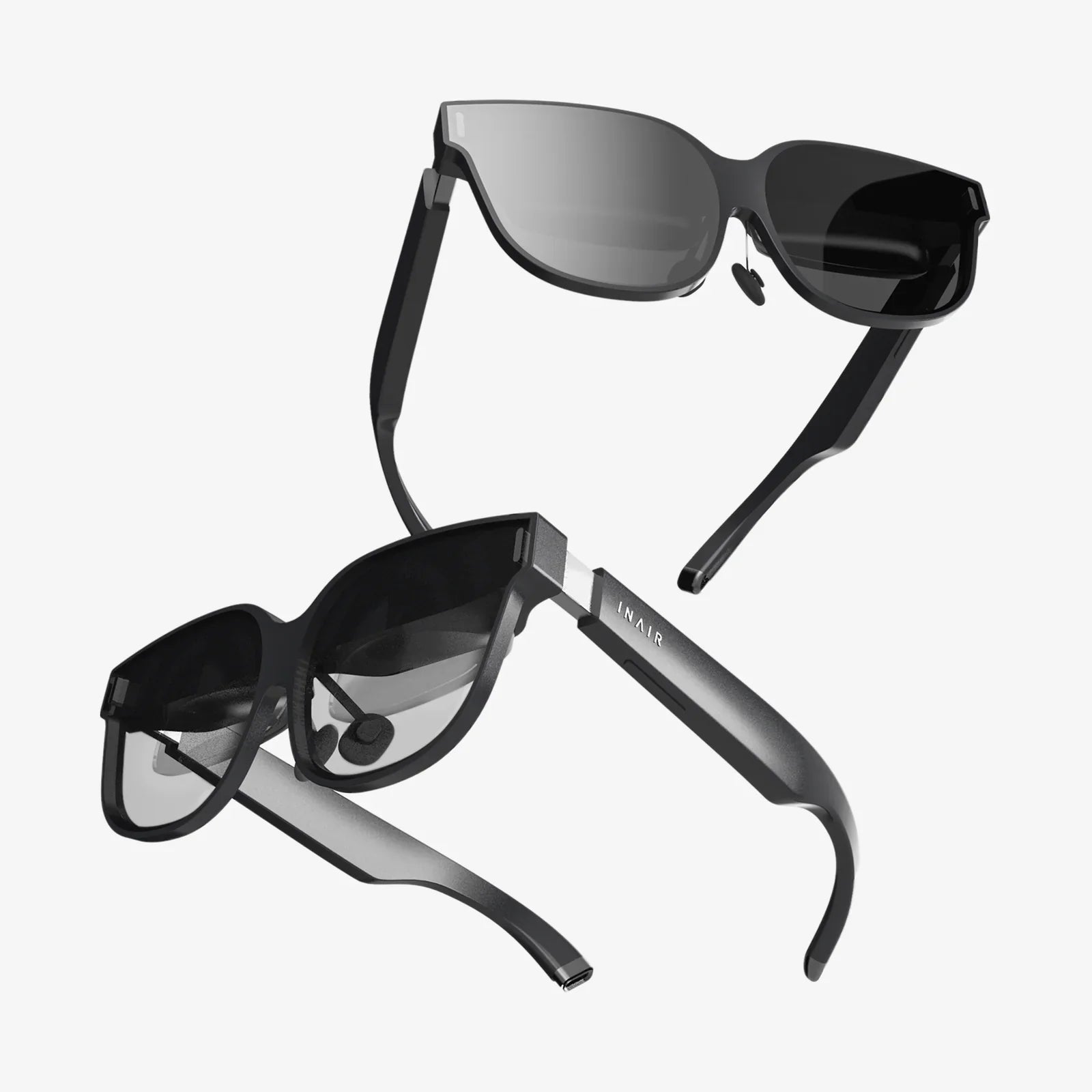
The classic vision of AR—stylish glasses that you wear all day—remains the holy grail. Current generation smart glasses often face a trade-off between capability and social acceptability. Powerful units can be bulky, heavy, and have limited battery life, while sleeker models often sacrifice features like a wide field of view or high brightness. Furthermore, the social awkwardness of wearing cameras and displays on your face, alongside very real concerns about being recorded, presents a barrier that only elegant design and clear social norms can overcome.
Hardware is useless without compelling software, a lesson learned from every new computing platform. There is a pressing need for a rich and diverse ecosystem of AR applications that provide continuous value. This requires convincing developers to invest time and resources into a market that, while growing, is not yet as vast as mobile. The "killer app" for all-day AR wearables has yet to emerge, though many candidates exist in enterprise niches.
This is perhaps the most profound challenge. AR devices, by their nature, are data collection machines. They have always-on cameras and microphones, constantly scanning and mapping their environment. This raises critical questions:
AR projection companies must prioritize privacy-by-design principles, ensuring data is processed securely on-device whenever possible and establishing transparent, user-centric data policies. Without trust, the technology will never achieve widespread adoption.
The work of today's AR projection companies is merely laying the foundation for a future that is more interconnected and intelligent than we can currently imagine. Several key trends are poised to accelerate this evolution.
AI is the brain that will give AR true intelligence. Instead of just placing a static virtual object in your room, future AR systems powered by generative AI will understand context and intent. They could proactively offer information, translate a foreign language sign in real-time, or even generate custom AR experiences on the fly based on your preferences and surroundings. AI will make AR contextual, predictive, and genuinely useful.
The next evolution of the internet will not be on pages but placed in spaces. The "Spatial Web" will be a universally accessible layer of information and experience anchored to the physical world. AR projection companies are building the browsers for this new web. Imagine a world where you can leave a virtual note for a friend on a restaurant table, or where historical landmarks have permanent, curated AR exhibits visible to anyone. This requires a shared, persistent coordinate system for the planet—a monumental technical challenge that is already being pursued.
The line between the real and the virtual will continue to blur. Advances in real-time ray tracing and light-field projection will make virtual objects indistinguishable from real ones, responding accurately to the lighting and shadows of your environment. Furthermore, the integration of haptic feedback gloves and wearables will add the sense of touch, allowing you to feel the texture of a virtual fabric or the resistance of a virtual control. This will be crucial for complex training simulations and teleoperation.
The silent revolution engineered by AR projection companies is steadily dismantling the barrier between the digital and the physical, promising a world where information is not something we go to a screen to find, but something that appears in our world exactly when and where we need it. The screen itself is beginning to fade away, and in its place, a new, dynamic, and intelligent reality is being projected—one immersive experience at a time.