


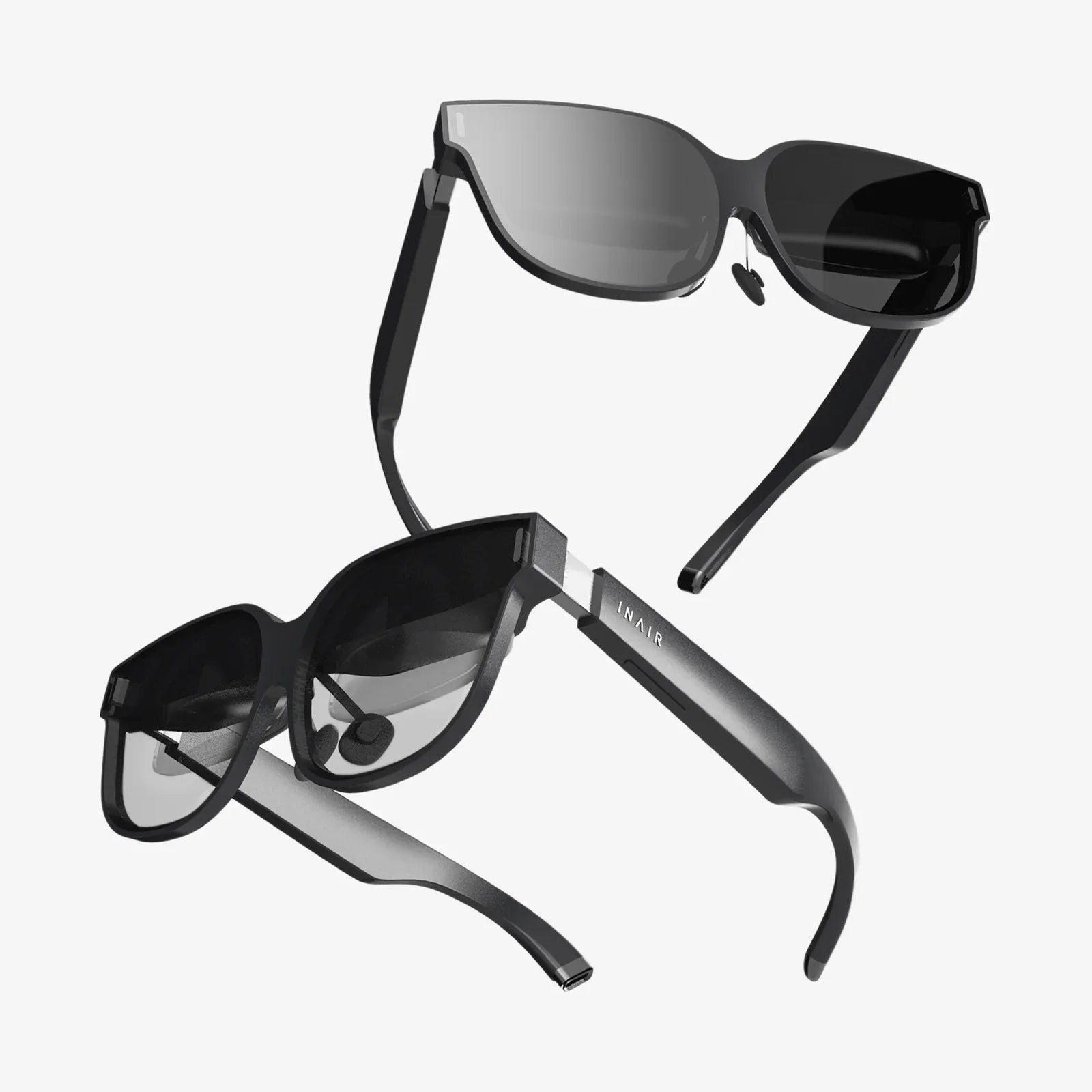
- by wangfred
Augmented Reality Wearable Computer: The Invisible Revolution Reshaping Our Reality
- by wangfred
Imagine a world where information doesn’t live on a screen in your hand but is seamlessly woven into the very fabric of your perception. Where directions float on the sidewalk before you, the history of a monument unfolds as you gaze upon it, and a complex engine repair is guided by digital arrows superimposed on the machinery itself. This is not a distant sci-fi fantasy; it is the imminent future being built today by a single, revolutionary technology: the augmented reality wearable computer. This is the story of the most intimate and profound technological shift since the smartphone, a device poised to dissolve the boundary between the digital and the physical, forever changing how we work, learn, connect, and see the world itself.
To understand the revolution, we must first move beyond simplistic definitions. An augmented reality (AR) wearable computer is not merely a pair of smart glasses or a head-mounted display. It is a sophisticated, body-worn computing system that fulfills three core functions: it perceives the environment, processes data in real-time, and projects digital information onto the user’s field of view in a way that aligns with and enhances their physical surroundings.
This triad of perception, processing, and projection is what separates true AR wearables from their more primitive cousins. The magic lies in the synergy of its components. Advanced sensors, including cameras, LiDAR, accelerometers, and gyroscopes, act as the device’s eyes and ears, constantly mapping the geometry, depth, and lighting of the environment. This raw data is fed to a powerful onboard computer, the brain of the operation, which uses complex algorithms and simultaneous localization and mapping (SLAM) technology to understand the user’s position and orientation in space. Finally, a projection system, often using waveguide optics or micro-LED displays, paints the digital information directly onto the user’s retina, creating the illusion that holograms and interfaces exist in the real world.
The development of a functional and socially acceptable AR wearable is a monumental feat of engineering, balancing immense computational power with the need for minimal size and weight. Several key technological pillars have converged to make this possible.
The device’s ability to see and understand the world is its foundational layer. This goes far beyond a simple camera. Depth sensors measure distances to create a 3D point cloud of the environment. Inertial measurement units (IMUs) track head movement with incredible precision to keep digital objects locked in place. High-resolution RGB cameras capture text, recognize objects, and identify faces. This constant, multimodal data stream allows the wearable to build a dynamic, digital twin of the user’s immediate reality, which is the canvas upon which AR is painted.
Interpreting this torrent of sensor data requires immense processing power. The challenge is housing a supercomputer in a form factor that rests comfortably on a human face. This has been made possible by advancements in mobile processors, neural processing units (NPUs), and edge computing. By processing data locally on the device (at the “edge” of the network) rather than shipping it to a remote cloud server, these wearables achieve the low latency absolutely crucial for a convincing AR experience. A delay of even a few milliseconds between your head moving and the digital overlay adjusting would break the illusion and cause user discomfort. This on-device intelligence is non-negotiable.
Perhaps the most visible and critical pillar is the display. The goal is to project bright, high-resolution, and interactive graphics onto a transparent lens without blocking the user’s view of the real world. Several approaches are competing for dominance. Waveguide optics use microscopic gratings to bend light, projecting an image from a small projector on the temple into the eye. This allows for a sleek, glasses-like design. Alternative approaches include using micro-LEDs mounted directly on ultra-thin, transparent surfaces. The holy grail is a display that offers a wide field of view, high resolution, and all-day battery life in a form factor indistinguishable from regular eyewear.
While consumer applications often grab headlines, the most immediate and profound impact of AR wearables is occurring in the professional and industrial sectors. Here, they are not a novelty but a powerful tool solving real-world problems and boosting efficiency to unprecedented levels.
In manufacturing and field service, technicians are using these devices for complex assembly and maintenance. Digital work instructions, 3D diagrams, and animated guides are overlaid directly onto the equipment they are repairing. This provides hands-free access to expert knowledge, reduces errors, and drastically cuts down training time. A novice mechanic can perform like a veteran with a remote expert seeing their view and annotating the real world in front of them to guide the process.
In architecture, engineering, and construction (AEC), professionals can walk through a building site and see the proposed structural designs, plumbing, and electrical conduits superimposed onto the unfinished space. This allows for clash detection before a single pipe is laid, saving millions in rework. Surgeons are experimenting with AR wearables to see patient vitals, MRI scans, and critical data without looking away from the operating field, maintaining focus and potentially improving outcomes.
As this technology prepares to step out of the factory and into the café, it brings with it a host of complex social and ethical questions that society is woefully unprepared to answer. The very intimacy of the device—worn on the face and integrated into perception—makes these concerns particularly acute.
An AR wearable is, by its nature, a surveillance device. Its constant goal is to see and interpret everything the user sees. This raises monumental privacy concerns. If these devices become ubiquitous, who has access to the video and data they are constantly collecting? The potential for unauthorized facial recognition, the logging of daily habits, and the creation of perpetual, life-logging databases is a dystopian nightmare. Robust legal frameworks defining data ownership, usage limits, and the concept of digital consent in public spaces must be established before widespread adoption can occur.
Smartphones already fracture our attention. An AR wearable could shatter it entirely. If we can layer endless notifications, games, and digital distractions over the real world, what happens to genuine, uninterrupted human connection? Will we be physically present but digitally absent? There is a risk of creating two separate realities: a rich, augmented one for those who can afford it, and a standard one for everyone else, exacerbating existing digital divides. Furthermore, the ability to alter or filter one’s perception of reality has profound psychological implications, potentially enabling new forms of isolation and escapism.
The current generation of AR wearables are still in their relative infancy, often plagued by limited field of view, short battery life, and clunky aesthetics. However, the trajectory is clear. Moore’s Law, advancements in battery technology, and breakthroughs in materials science will relentlessly drive these devices toward the ideal: a pair of lightweight, all-day glasses that offer a compelling, visually rich experience.
The next decade will be defined by the race to perfect this form factor and, more importantly, to build the ecosystem that supports it. The true value of an AR wearable is not in the hardware but in the software and services it enables. The “killer app” for AR remains undiscovered, much like the killer app for the iPhone was not revealed until the App Store unleashed the creativity of millions of developers. The platform that can attract developers to build intuitive, useful, and magical experiences will ultimately win the day.
We are standing at the precipice of the next major computing platform, one that promises to be more intuitive and powerful than any that came before it. The augmented reality wearable computer will not just change what we do; it will change how we see, think, and interact with the universe of information and with each other. The revolution will not be televised. It will be illuminated, annotated, and experienced directly on the world around us, and the time to prepare for its arrival is now.
The line between the digital and the physical is blurring, and the gateway is a device perched on your nose. This isn't just an upgrade to your tech arsenal; it's a fundamental upgrade to human capability itself. The question is no longer if this future will arrive, but how quickly we can adapt to a world where our reality is endlessly enhanced, our hands are forever free, and every blank space around us holds the potential for information, interaction, and magic. The next time you look at a blank wall, remember—it won’t be blank for long.